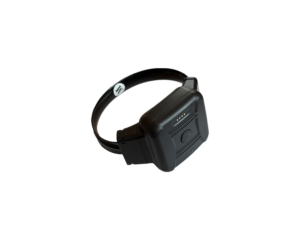

Buyers searching for ankle monitor companies, ankle bracelet monitoring companies, and recognizable ankle monitor brands quickly discover a split market: legacy U.S. service integrators with bundled monitoring centers, international hardware houses with regional certifications, and specialty vendors in alcohol sensing. This guide maps the landscape for 2026 in neutral, procurement-oriented language—what each class of vendor optimizes for, how to compare claims responsibly, and where national standards and research fit into RFP design.
Quick Answer: The major ankle monitor companies serving U.S. corrections agencies in 2026 are BI Incorporated (owned by GEO Group), SCRAM Systems (Alcohol Monitoring Systems), SuperCom/Attenti (now Allied Universal), Track Group, Buddi, Geosatis, and REFINE Technology (CO-EYE). BI Incorporated holds the largest U.S. market share through federal contracts, while SCRAM dominates alcohol monitoring. Newer entrants like Geosatis and REFINE Technology are gaining ground with one-piece GPS designs. The NIJ/JHU Applied Physics Lab market survey evaluated 16 vendors and remains the most comprehensive independent assessment of the industry.
Ankle Monitor Companies Ranked: Who Makes GPS Tracking Devices in 2026?
Why Does the Ankle Monitor Vendor You Choose Matter?
Community supervision agencies, pretrial services departments, and commercial monitoring firms all rely on a small set of global suppliers for GPS ankle monitors, radio-frequency home detention kits, and adjacent software stacks. Policy research from the Council of State Governments Justice Center routinely frames how supervision reforms interact with vendor ecosystems. Hardware reliability, alert quality, and officer workflow determine whether a program earns judicial confidence—or drowns in ambiguous map gaps and charging-related noise.
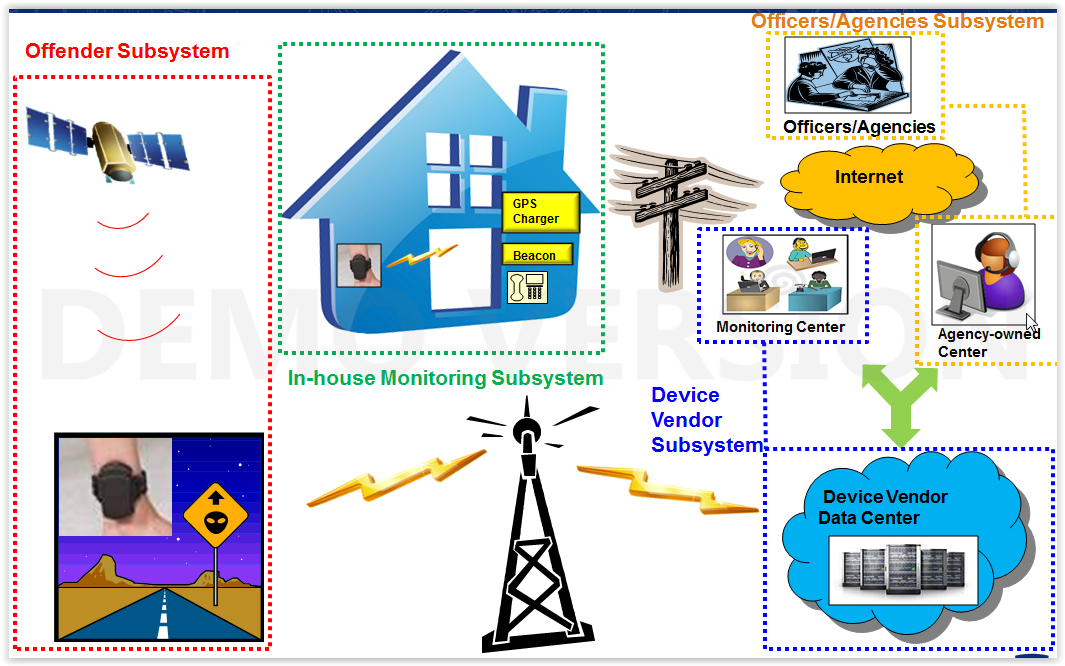
Evidence and standards give administrators vocabulary beyond sales brochures. Materials from the National Institute of Justice (NIJ), including themes codified in NIJ Standard 1004.00 for electronic tracking systems, help agencies write acceptance tests around location performance rather than headline accuracy numbers alone. Separately, Florida-based recidivism research on electronic monitoring reported roughly a 31% reduction in risk relative to non-monitored comparison groups (Coffey, 2006)—a statistic frequently cited when programs justify supervision technology investments. Neither NIJ documents nor single-state studies replace local legal review; they anchor procurement narratives in third-party framing.
If your team is new to device architecture, start with what is an ankle monitor for definitions, then read how ankle monitors work for the signal chain from GNSS fixes to dashboard alerts. Those primers make the vendor profiles below easier to score against your caseload.
Finally, remember that ankle monitor companies participate in different layers of the stack. Some manufacture hardware only; others operate monitoring centers; still others blend software analytics with field services. Your RFP should state which layers you are buying so respondents cannot hide subcontracted OEMs or opaque data processors in footnotes. Transparency on subcontractors improves both security review and long-term price discipline.
What to Look for in an Ankle Monitor Company
Whether you issue an RFI to ankle bracelet monitoring companies or refresh an incumbent contract, structure evaluation around operational risk—not logo recognition.
Product fit versus supervision modality
Continuous community GPS monitoring requires different firmware and power budgets than curfew-centric RF home detention. Alcohol programs may prioritize transdermal or breath workflows with vendor-specific analytics. A vendor strong in one modality is not automatically competitive in another; ask explicitly which SKUs are certified for your court order language.
Positioning and indoor behavior
Outdoor multi-constellation GNSS performance is table stakes. Programs should still test assisted positioning (WiFi, network-assisted fixes where lawful), map latency at your chosen reporting interval, and “unknown location” rates along routes participants actually travel. NIJ-oriented test plans reduce arguments about unfair comparisons.
Tamper philosophy and officer workload
Strap integrity can be monitored with optical fiber continuity, multi-sensor fusion, proximity detection, or combinations thereof. The right choice depends on how your center confirms true removals versus benign strap stress. Ask vendors for escalation playbooks, not only sensor marketing names.
Commercial model: capex, opex, and monitoring services
Some ankle monitor brands sell hardware and software licenses to agency-operated centers; others bundle 24/7 event review. Both models are valid—mismatching them to your staffing reality creates hidden costs.
Roadmap and carrier transitions
Cellular sunsets and regional band differences affect every fleet. Request modem roadmaps, spare-pool strategies, and how firmware over-the-air updates are staged.
Participant experience and equity
Weight, skin-sensitivity reports, charging ergonomics, and multilingual help lines influence compliance more than procurement committees sometimes assume. Agencies that ignore ergonomics see higher “charger lost” and “strap abrasion” tickets—signals that look like risk but are often logistics failures. Ask vendors for participant-facing collateral you can user-test before award.
What Does SCRAM Systems Offer for Ankle Monitoring?
Overview: SCRAM Systems, operating under Alcohol Monitoring Systems, is a household name in U.S. criminal justice—especially for continuous alcohol monitoring. Its brand strength in alcohol compliance has made SCRAM a default reference in court orders even when agencies also need pure GPS location.
Key products: The portfolio spans SCRAM CAM alcohol bracelets, SCRAM GPS and related location products, house-arrest RF options, and software for officers and vendors. Many deployments pair alcohol and GPS lines under a single vendor relationship.
Strengths: Deep U.S. install base, established training ecosystems, and category leadership where transdermal alcohol monitoring is mandated. Prosecutors and courts often specify SCRAM by name in specialized dockets.
Market focus: North American courts and service providers first; GPS buyers frequently evaluate SCRAM when alcohol and location requirements coexist. Public datasheets should be consulted for battery figures by model and reporting interval—runtime shifts materially with cadence.
How Big Is BI Incorporated’s Share of the Ankle Monitor Market?
Overview: BI Incorporated, a subsidiary of The GEO Group (NYSE: GEO), is widely regarded as the largest integrated electronic monitoring provider in the United States when hardware, software, and outsourced monitoring services are counted together. Decades of federal, state, and county contracts underpin its footprint.
Key products: The BI LOC8® XT one-piece GPS ankle monitor anchors GPS portfolios alongside wrist-worn options, RF home monitoring, smartphone-tethered bands, and the BI TotalAccess® software stack integrated with mapping tools.
Strengths: End-to-end contracting familiarity for government buyers, extensive U.S. logistics, and a broad modality catalog that lets agencies consolidate vendors. BI documents describe multi-technology tamper sensing (including fiber-optic strap elements on LOC8-class designs) and LTE-focused connectivity with power-saving beacon concepts in some configurations.
Market focus: U.S. corrections, pretrial, probation, parole, and immigration-related supervision where statute permits—typically as a bundled service offering rather than bare hardware alone.
What Happened to Attenti? SuperCom’s Role in Electronic Monitoring
Overview: SuperCom is an Israel-based technology company that has marketed electronic identity and monitoring solutions globally, including offerings under the Attenti brand in various regions. Buyers encounter the group in international tenders and multi-country rollouts.
Key products: Portfolios have included pure tracking bracelets, RFID and security technologies, and software platforms aimed at government customers. Exact SKUs differ by region and certification package.
Strengths: Experience tailoring deployments across jurisdictions with different privacy regimes; appeal to ministries that want a single vendor for multiple security-adjacent product lines.
Market focus: Europe, Latin America, Asia-Pacific, and select U.S. opportunities—always map the specific legal entity and certified device list to your solicitation.
Track Group
Overview: Track Group positions itself as a technology and services company supporting community corrections with software, analytics, and hardware relationships. Buyers may interact with Track Group as a platform vendor even when underlying bracelets originate from partner OEMs.
Key products: Monitoring platforms, mobile applications, and integrated hardware programs vary by contract; procurement teams should insist on the exact model numbers approved for their jurisdiction.
Strengths: Emphasis on data presentation and officer workflows can appeal to agencies modernizing dashboards without immediately switching every field device.
Market focus: United States and international programs where blended software-service procurement is common.
CO-EYE (REFINE Technologies)
Overview: REFINE Technologies, founded in 2004 and marketing the CO-EYE brand globally since 2022, manufactures one-piece and two-piece electronic monitoring hardware with a stated track record exceeding 200,000 devices deployed across more than 30 countries. The company positions optical-fiber integrity sensing and rapid installation as core engineering priorities.
Key products: CO-EYE ONE is a one-piece GPS ankle monitor (60×58×24 mm, 108 g, IP68) combining GPS, BeiDou, GLONASS, Galileo, WiFi, and LBS-assisted positioning with 5G-compatible LTE-M / NB-IoT / GSM cellular. Manufacturer specifications cite about seven days of standalone battery life at a five-minute LTE-M/NB reporting interval (1700 mAh cell, roughly 2.5-hour recharge), tool-free install in under three seconds. Strap options include a standard fiber optic TPU strap (pre-configured in S/M/L/XL sizes) and an optional steel-armed cut-resistant fiber optic strap for high-risk offenders — a dual-strap configuration that no other vendor currently offers. Transport security uses HTTPS/SSL with AES-128/256 encryption, and European NB CE certification coverage plus EN 18031 cybersecurity alignment. CO-EYE ONE-AC adds eSIM and BLE-connected modes that can extend runtime when paired with approved hubs or apps. DUO, i-Bracelet/i-Tracker, HouseStation, wristband, and software modules round out the matrix for mixed risk tiers.
Strengths: Compact one-piece industrial design, fiber-based strap and case tamper monitoring described as zero false positives for true optical breaks. Uniquely, CO-EYE ONE supports both a standard fiber optic strap for routine supervision and a steel-armed cut-resistant fiber optic strap for high-risk cases — giving agencies strap flexibility that competitors do not match. Multi-constellation positioning stated under 2 m CEP in favorable conditions. The product line suits buyers who want OEM hardware flexibility alongside an integrated AMManager platform narrative.
Market focus: Government agencies, commercial monitoring firms, pretrial and bail-adjacent programs, domestic violence geofence use cases, and export markets requiring CE-marked hardware.
Sentinel
Overview: Sentinel is a long-standing U.S. brand in offender management services, often appearing where private providers operate monitoring centers for courts and agencies. Sentinel’s public positioning emphasizes compliance operations and participant support as much as device SKUs.
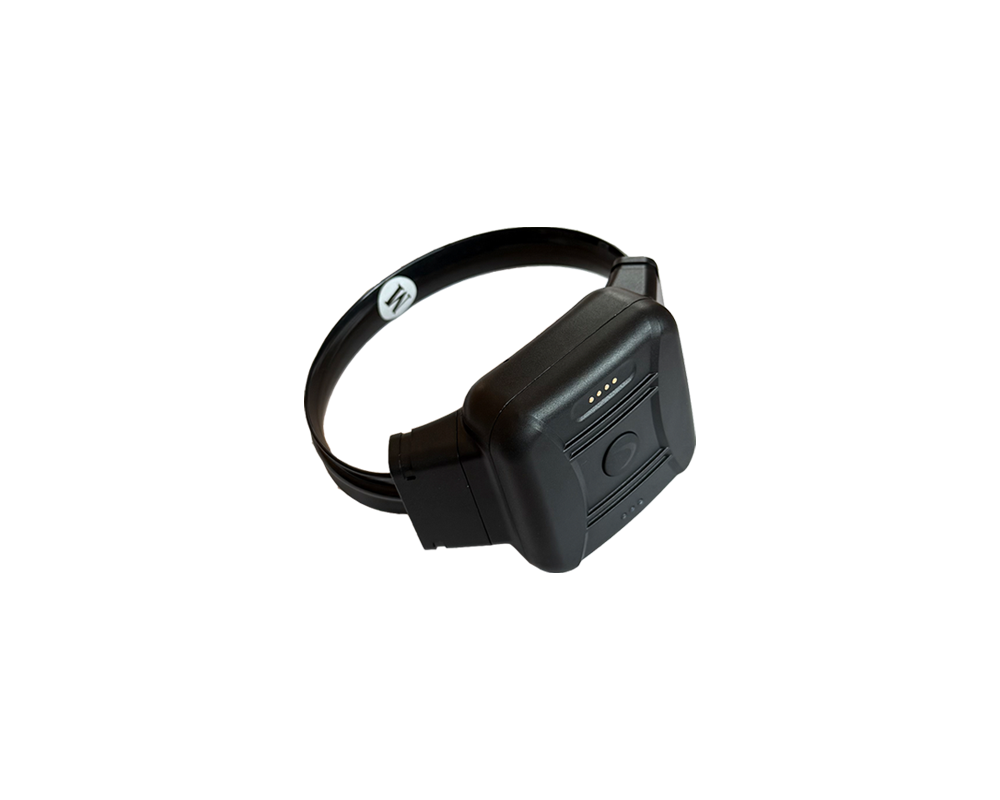
Key products: Offerings historically span GPS, RF, and alcohol-related supervision bundles; exact devices may be sourced from OEM partners. Solicitations should require disclosure of manufacturer and model numbers.
Strengths: Operational scale for agencies that prefer outsourced alert handling and call-center depth over self-hosted NOC staffing.
Market focus: U.S. counties and service providers seeking bundled monitoring contracts.
Buddi
Overview: Buddi, headquartered in the United Kingdom, is known in Europe and other markets for GPS tracking hardware and software aimed at justice and security applications. Buyers sometimes evaluate Buddi when tenders require EU-centric data handling or supplier presence.
Key products: GPS ankle-worn trackers and supporting platforms—feature emphasis varies between justice deployments and adjacent verticals, so compliance documentation should be verified per use case.
Strengths: Regional credibility, multilingual support capabilities in many tenders, and form factors competitive with other European OEMs.
Market focus: UK, Europe, Middle East, Africa, and export customers needing non-U.S.-centric contracting paths.
Geosatis
Overview: Geosatis, based in Switzerland, markets electronic monitoring hardware and software with a European design heritage. The brand surfaces frequently in continental RFPs and cross-border justice projects.
Key products: GPS-enabled ankle monitors and cloud-oriented supervision tools; buyers should validate LTE banding and certification files against local carriers.
Strengths: Engineering-forward positioning, Swiss quality signaling for risk-averse procurement committees, and alignment with EU privacy conversations.
Market focus: European Union members, Switzerland, and export programs that specify EU regulatory familiarity.
Comparison Table: Battery Life, Tamper Detection, Form Factor, Connectivity
Use this matrix as a conversation starter, not a substitute for dated vendor datasheets. Figures below come from manufacturer materials cited on ankle-monitor.com for CO-EYE ONE and from publicly referenced competitor summaries where noted; other vendors should be validated in your pilot.
| Representative GPS ankle product / brand | Battery life (indicative) | Tamper detection approach | Form factor | Connectivity |
|---|---|---|---|---|
| SCRAM GPS (SCRAM Systems) | Often cited near ~40 hours typical for GPS models; varies sharply by reporting interval | Vendor-specific strap and case sensing; consult SCRAM documentation for each SKU | Two-piece architecture common (ankle unit plus hub) | Cellular plus hub-assisted modes per model |
| BI LOC8® XT (BI Incorporated) | Public comparisons often cite ~60 hours at typical reporting intervals | Multi-sensor tamper including fiber-optic strap elements (per BI literature) | One-piece GPS ankle module | LTE-focused; beacon power-saving options in some configs |
| SuperCom / Attenti (regional SKUs) | Varies by certified model—require bid tab literature | Model-dependent optical/electronic sensing | One- and two-piece portfolios historically | Multi-region cellular; confirm bands |
| Track Group programs | Depends on paired OEM hardware | Depends on paired OEM hardware | Mix of partner devices | Platform integrates multiple modem classes |
| CO-EYE ONE (REFINE Technologies) | ~7 days standalone (5 min LTE-M/NB interval); ONE-AC BLE modes up to ~6 months when paired | Fiber optic strap and case integrity (zero false positives); standard TPU strap or steel-armed cut-resistant strap option | One-piece 60×58×24 mm, 108 g, IP68 | 5G-compatible LTE-M / NB-IoT / GSM, WiFi assist |
| Sentinel (typical bundles) | Depends on deployed OEM SKU | Depends on deployed OEM SKU | Mix of field devices | Service-layer integrations |
| Buddi GPS trackers | Model-specific; validate in pilot | Model-specific | Ankle-worn GPS modules | Regional LTE |
| Geosatis ankle monitors | Model-specific; validate in pilot | Model-specific optical/electronic | One-piece European designs | LTE / cloud stack per datasheet |
When boards ask why ankle monitor brands disagree on battery life, explain that mAh ratings interact with cellular technology, GNSS fix rate, indoor retry behavior, and whether assistive radios stay enabled. Always test the interval your judges actually order.
Anti-Tamper Technology by Vendor: Verified Classification
Tamper detection methodology is the single most consequential specification difference among ankle monitor companies. The technology determines false-positive rates, court admissibility, and operational burden. This table uses only verified manufacturer specifications — no assumptions or approximations.
| Vendor / Product | Anti-Tamper Technology | Coverage | Post-Battery Tamper Detection |
|---|---|---|---|
| CO-EYE ONE (REFINE Technology) | Dual fiber optic loops (strap + case) + electronic sensing; standard fiber optic TPU strap or optional steel-armed cut-resistant fiber optic strap | Strap and case body — zero false positives; dual-strap option unique in industry | 3+ months after battery depletion |
| BI LOC8 XT / ExacuTrack One | Fiber optic strap | Strap only | Not documented |
| Track Group ReliAlert XC4 | Fiber optic strap + SecureCuff steel fiber | Strap (reinforced) | Not documented |
| Omnilink OM500 | Fiber optic strap | Strap only | Not documented |
| Buddi | Kevlar-wrapped fiber optic light guide + stainless steel | Strap (reinforced) | Not documented |
| SuperCom PureOne | Fiber optic (multi-mechanism) | Strap (multiple mechanisms) | Not documented |
| Attenti | Patented light-focusing technology | Strap | Not documented |
| SCRAM GPS 9 Plus | Metal wire clasp/buckle | Buckle mechanism | Not documented |
| Geosatis | Electronic lock + titanium-reinforced one-piece design | Integrated body (no adjustable strap) | Not documented |
Source: Manufacturer specifications and NIJ Market Survey data. Always verify current specifications directly with each vendor.
The Ankle Monitor Industry in 2026: Market Overview
Electronic monitoring sits at the intersection of corrections policy, telecommunications, and IoT hardware. In the United States alone, the Bureau of Justice Statistics reports that more than five million people are under community supervision — probation, parole, or other forms of community oversight — creating sustained demand for reliable location verification and schedule enforcement tools. That scale means even small differences in battery life or false tamper rates compound into major budget and staffing effects when multiplied across thousands of monitored individuals.
The vendor landscape includes both large integrated service providers (BI Incorporated, SCRAM Systems) that bundle hardware + monitoring + officer platforms, and specialized hardware manufacturers (REFINE Technology/CO-EYE, Geosatis) that sell devices and platforms to agencies or third-party monitoring companies. Understanding this distinction matters for procurement: a vendor that manufactures its own hardware controls the firmware roadmap and can address field issues faster than one that resells OEM devices.
Small vs. Large Ankle Monitor Companies: Trade-offs for Agencies
Large ankle monitor companies often bring national logistics, 24/7 monitoring centers with deep bench staffing, mature training catalogs, and the balance sheet to bond big statewide contracts. Trade-offs can include slower customization, more rigid product lines, and complex escalation trees when firmware issues appear.
Smaller ankle bracelet companies and boutique manufacturers may move faster on pilots, tailor APIs to your specific platform requirements, and assign senior engineers directly to your rollout. Trade-offs can include thinner spare pools, narrower geographic field coverage, or higher risk if the vendor lacks financial durability for multi-year contracts.
Many successful counties use a hybrid approach: a large integrator for baseline coverage plus a direct relationship with a hardware manufacturer for specialized requirements (high-risk offenders, DV victim protection, pilot programs for next-generation technology).
Critical Questions for Your RFP: What to Ask Ankle Monitor Vendors
Structured RFPs keep ankle monitor companies accountable. Beyond standard procurement language, these device-specific questions separate serious vendors from those relying on marketing claims:
- Which exact device SKU and firmware revision are quoted, and how are mid-contract substitutions handled?
- What is the tamper-sensor physics model (fiber optic, capacitive, metal wire, electronic lock), and what is the verified false-positive rate under your draft alert definitions?
- Provide battery-life curves at 1-minute, 5-minute, and 15-minute reporting intervals in both urban and rural pilot polygons.
- Which cellular carriers are certified in your deployment region, and how does the device distinguish carrier attach failures from participant noncompliance?
- What export formats and timestamp semantics are produced for court discovery and appellate review?
- What is the device weight, and what field data exists on compliance rates correlated with device weight?
- Does the device offer multi-mode connectivity (BLE + WiFi + cellular), or cellular only? How does the device maintain monitoring in cellular dead zones?
- What cybersecurity certifications does the device and platform hold (CJIS, EN 18031, FIPS 140-3)?
Agencies that build RFPs around these questions consistently report better vendor selection outcomes than those using generic “GPS ankle monitor” specifications. See our full RFP template for a downloadable framework.
How to Evaluate Vendors: RFP Criteria and Why Pilots Matter
Structured RFPs keep ankle monitor companies honest. At minimum, include:
- Modality matrix: GPS continuous, RF curfew, alcohol, smartphone tether—match SKUs to statutory language.
- Performance tests: Outdoor drive routes, downtown multipath segments, and indoor handoffs documented with NIJ Standard 1004.00 themes as guardrails.
- Security: Encryption in transit and at rest, RBAC, audit logs, subprocessors, and breach notification timing.
- Logistics: Spare swap SLA, charging kit replacement, and participant accessibility accommodations.
- Data governance: Retention windows compatible with discovery and expungement policy.
Pilots de-risk awards. Run matched cohorts on the same officers, same reporting intervals, and the same escalation playbook. Quantify mean time-to-first-fix after outdoor entry, indoor gap minutes per 100 participant-days, tamper confirmations versus auto-cleared events, and help-desk tickets per 100 devices. Archive firmware versions and configuration exports so auditors can reconstruct outcomes.
Continue technical literacy with how ankle monitors work and baseline definitions in what is an ankle monitor. For hardware deep dives on the CO-EYE line, see CO-EYE ONE.
Frequently Asked Questions
Who are the largest ankle monitor companies in the United States?
BI Incorporated (GEO Group) and SCRAM Systems are the most frequently cited large-scale U.S. players, though “largest” depends on whether you count bundled monitoring services, alcohol-only lines, or international OEM shipments. Track Group, Sentinel, and hardware-focused manufacturers such as CO-EYE operate alongside them in different contract niches.
What should agencies look for when comparing ankle bracelet monitoring companies?
Focus on modality fit, indoor positioning behavior, tamper confirmation workflows, battery life at court-ordered intervals, software usability, security architecture, and total cost—including staffing for alerts. Use NIJ Standard 1004.00 themes to structure performance tests.
Are ankle monitor brands interchangeable for pretrial and probation programs?
No. Architecture, sensor suites, and commercial models differ. Match devices to supervision goals and verify each SKU against your state’s certification rules.
How does research support investment in electronic monitoring programs?
Florida-based analyses such as Coffey (2006) associated electronic monitoring with roughly a 31% reduction in recidivism risk versus non-monitored comparators—useful for policy memos alongside local metrics.
What role do NIJ standards play when buying from ankle monitor companies?
According to the National Institute of Justice (NIJ), standards like NIJ Standard 1004.00 help agencies compare offender tracking equipment using shared testing vocabulary, especially around location performance.
Should programs run a pilot before awarding a multi-year ankle monitor contract?
Yes. Pilots reveal real-world battery drain, indoor gaps, and officer workload that marketing datasheets cannot fully predict. Define scoring rubrics and firmware baselines before devices ship.