Choosing among ankle monitor companies is one of the highest-stakes procurement decisions a pretrial, probation, parole, or private supervision program can make. The right partner reduces officer workload, keeps participants compliant without needless false tamper storms, and produces exports that survive court scrutiny. The wrong choice quietly taxes your budget through truck rolls, after-hours call volume, and chronic ambiguity on the map. This 2026 guide maps the global landscape of GPS ankle monitor manufacturers, major electronic monitoring companies, and service-heavy ankle monitor providers—then gives you a practical framework to compare them on technology, reliability, cost, support, coverage, and compliance.
If you are comparing hardware-first OEMs with turnkey monitoring vendors, start with one distinction: some firms primarily sell devices and platform licenses; others sell supervised outcomes as a service. Both models appear among leading ankle monitoring companies, and many counties use a mix—purchasing bracelets from a GPS ankle monitor manufacturer while contracting a separate monitoring center. Buyers comparing ankle monitor companies should request the same evidence pack from each respondent—battery curves, tamper methodology, and sample exports—regardless of whether the vendor is an OEM or a full-service provider. Throughout this article, publicly described competitor characteristics reflect vendor-facing materials and widely cited industry summaries; CO-EYE specifications come from REFINE manufacturer documentation. Your pilot data should override every third-party statement.
For a deeper procurement workbook, see our GPS ankle monitor buyer's guide; for flagship hardware detail, see CO-EYE ONE. Head-to-head reads include SCRAM vs CO-EYE GPS comparison (2026) and OmniLink ankle monitor review and alternatives. When you are ready to route pretrial stakeholders to industry context (without hardware CTAs), RefineID.com offers complementary bail-industry education. Serious equipment buyers should use Contact Sales or Request Quote—we do not offer demos or free trials.
Overview of the Ankle Monitor Industry
Electronic monitoring sits at the intersection of corrections policy, telecommunications, and IoT hardware. In the United States alone, the Bureau of Justice Statistics has reported that more than five million people are under community supervision—probation, parole, or other forms of community oversight—creating sustained demand for reliable location verification and schedule enforcement tools. That scale means even small differences in battery life or false tamper rates compound into major budget and staffing effects when multiplied across thousands of device-days.
Industry participants generally fall into four buckets: (1) ankle bracelet companies and OEMs that engineer wearables and firmware; (2) software platforms that ingest telemetry and drive officer workflows; (3) monitoring centers that staff alerts 24/7; and (4) integrators that bundle multiple brands under statewide or national contracts. Large ankle monitor companies often span more than one bucket, which simplifies procurement but can reduce flexibility. Specialized GPS ankle monitor manufacturers may offer more hardware choice to agencies that operate their own supervision desks.
Growth drivers through 2026 include cellular sunsetting (retirement of 2G/3G in many markets), demand for lower-power wide-area IoT modules (LTE-M and NB-IoT), court expectations for more defensible location narratives, and cybersecurity scrutiny of wearable firmware and cloud dashboards. According to the National Institute of Justice (NIJ), standardized frameworks such as NIJ Standard 1004.00 help agencies discuss accuracy, testing, and reporting using shared vocabulary—valuable when scoring proposals from competing electronic monitoring companies and when normalizing bids from different ankle monitor companies in the same RFP.
Research frequently cited in policy debates includes Florida-oriented work summarized by NIJ in which electronic monitoring was associated with approximately a 31% reduction in recidivism risk for certain cohorts relative to comparison groups—useful for grant narratives, though not a guarantee of identical outcomes elsewhere. When you evaluate ankle monitor companies, translate research into operational KPIs your vendor must hit: median time-to-first-fix after motion, percentage of alerts closed as verified false within fifteen minutes, and average monthly truck rolls per thousand participants.
Leading Vendors in the Ankle Monitor Industry (2026)
The profiles below are not a popularity contest; they reflect where procurement committees most often encounter recognizable brands in North America and Europe, plus a hardware anchor manufacturer. No single list captures every regional subcontractor or niche OEM, but these are the ankle monitor companies and brands most frequently named in statewide EM conversations. Always confirm product SKUs, service territories, and software compatibility with your monitoring rules before award.
1. REFINE Technology / CO-EYE (GPS ankle monitor manufacturer)
Among hardware-centric ankle monitor companies, REFINE Technology is the manufacturer behind the CO-EYE product family—positioned for agencies and monitoring firms that want modern one-piece GPS hardware, efficient IoT cellular layers, and fiber-based tamper evidence. Founded in 2004, REFINE reports more than 200,000 devices deployed across more than 30 countries, supplying both end-user programs and partner monitoring organizations that white-label hardware.
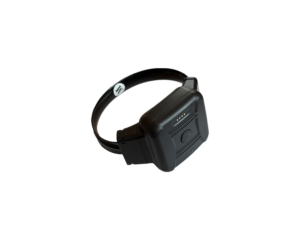
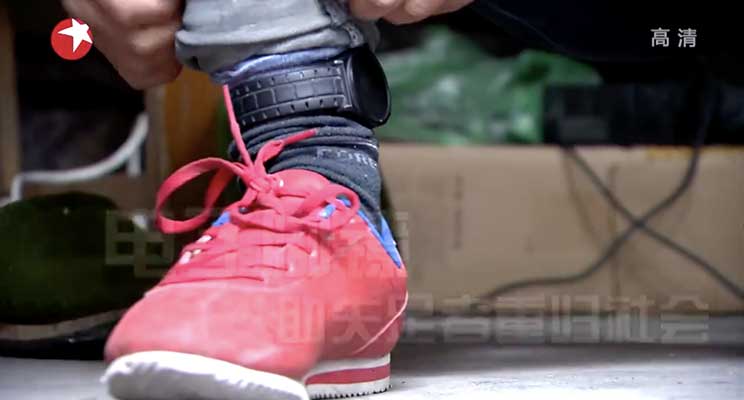
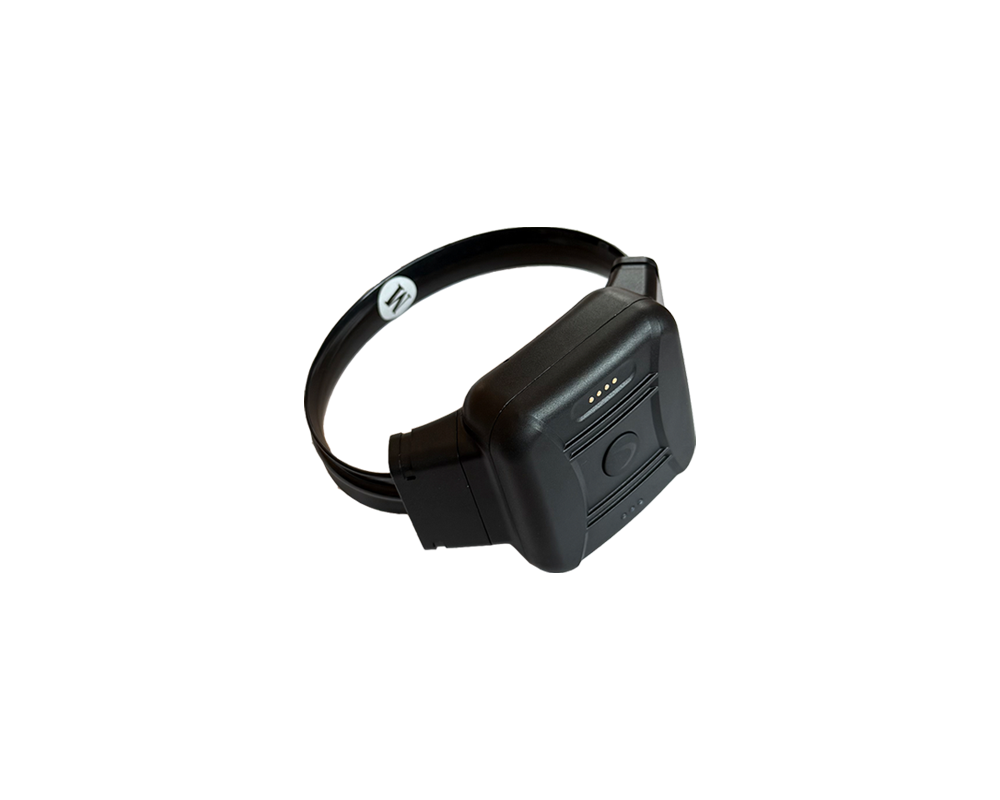
The flagship CO-EYE ONE one-piece GPS ankle monitor is specified at 108 g, dimensions 60×58×24 mm, with multi-constellation GNSS (GPS, BeiDou, GLONASS, Galileo) plus WiFi and LBS assistance for under 2 m CEP horizontal accuracy under favorable conditions. Cellular is described as 5G-compatible LTE-M / NB-IoT / GSM. Battery life is documented at up to about seven days standalone at a five-minute reporting interval with a 1700 mAh cell (roughly 2.5 hours to recharge). Anti-tamper uses fiber optic strap and case monitoring; REFINE documents this approach as zero false-positive for true integrity breaches—map that claim to your alert SOPs during piloting. The enclosure is rated IP68; installation is advertised as under three seconds, tool-free snap-on. Security features include HTTPS/SSL transport and AES128/256, with CyberSecurity EN 18031 cited among declarations.
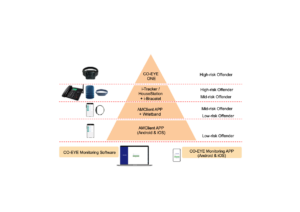
Beyond ONE, the line includes CO-EYE ONE-AC (eSIM-oriented variant with extended BLE-connected endurance up to roughly six months in documented BLE mode profiles), DUO for enhanced tamper continuity, BLE and RF i-Bracelet tags, i-Tracker and HouseStation hub-style products for RF-range home and facility models, and the AMClient smartphone application for complementary supervision workflows. CO-EYE Monitoring Software is organized into 13 functional modules as a unified platform narrative—confirm module availability for your deployment region. Detail page: CO-EYE ONE technical overview.
2. Alcohol Monitoring Systems (SCRAM) — AMS / Attenti / SuperCom
SCRAM Systems (often discussed under Alcohol Monitoring Systems) is a dominant name in continuous alcohol monitoring and a major voice in U.S. GPS supervision. Public collateral emphasizes one-piece GPS generations (for example, SCRAM GPS lines) with LTE-class backhaul and analytics tooling for movement review. In global holding-company structures, SCRAM-related capabilities are sometimes discussed alongside Attenti and SuperCom brands depending on region and channel—procurement teams should trace the contracting entity, support desk geography, and firmware lineage for their state. For a structured device comparison, read SCRAM vs CO-EYE GPS ankle monitor comparison (2026).
3. BI Incorporated (GEO Group) — OmniLink
BI Incorporated, a GEO Group company, is widely described as one of the largest U.S. electronic monitoring footprints when hardware, software, and services are counted together. Its OmniLink portfolio appears in federal pretrial services contexts and numerous state supervision programs. Buyers evaluating OmniLink against newer LTE-M hardware should scrutinize battery and tamper behavior under your fix schedule and compare exports side by side with alternatives. See OmniLink ankle monitor review, features, and alternatives.
4. Track Group (SecureAlert)
Track Group markets electronic monitoring solutions under brands such as SecureAlert in many RFPs, combining hardware, software, and monitoring services for agencies that prefer bundled operations. Track Group frequently competes for statewide contracts; ask for references in counties with similar urban/rural mix and confirm API and data-export paths if you operate hybrid monitoring.
5. Sentinel Offender Services (Attenti-related corporate family)
Sentinel Offender Services has long been visible in U.S. community corrections as a monitoring services provider. Corporate structures in electronic monitoring have shifted through acquisitions and regional partnerships; some industry reporting discusses Sentinel alongside Attenti and broader international EM groups. Your counsel and procurement office should verify the current contracting entity, data-processing terms, and escrow paths for participant data before renewal.
6. Buddi Ltd (United Kingdom)
Buddi is a European-headquartered name that appears in GPS and RF supervision discussions outside the United States as well as in select cross-border programs. Buyers typically evaluate Buddi when they need CE-oriented documentation, multi-country logistics, or vendor diversity beyond dominant U.S. incumbents. Confirm cellular band support and cloud hosting region against your state data rules.
7. Corrisoft (United States)
Corrisoft is frequently referenced in U.S. supervision technology conversations where software workflows, smartphone applications, and alternative compliance modalities matter alongside traditional ankle bracelets. If your program blends GPS bracelets with mobile check-ins, compare Corrisoft's integration story with your case-management systems and prosecutor export requirements.
8. Geosatis (Switzerland)
Geosatis, based in Switzerland, markets electronic monitoring platforms used in European justice contexts and appears in international benchmark discussions. Agencies in North America sometimes encounter Geosatis through pilots, academic references, or multinational vendors. Evaluate language support, warranty logistics, and spare-pool lead times for your continent.
9. G4S / Allied Universal (monitoring services and integration)
G4S has historically supplied security and electronic monitoring services in multiple regions; following industry consolidation, many contracts now appear under Allied Universal branding in North America. These organizations often behave as ankle monitor providers first—procuring devices from OEMs, operating monitoring desks, and wrapping field services—rather than advertising a single proprietary bracelet SKU. If you issue an RFP to such integrators, insist on explicit device manufacturer disclosure, firmware versions, and whether substitutions are permitted mid-contract.
How to Compare Vendors, OEMs, and Service Providers
Use the same scoring sheet for every respondent among ankle bracelet companies and electronic monitoring companies—hardware OEMs and full-service ankle monitor providers alike. When you run a competitive procurement, ask each finalist from your short list of ankle monitor companies to answer identical technical workbooks so evaluators are not comparing narrative PDFs at different depths.
- Technology: one-piece vs two-piece, GNSS constellations, assisted positioning modes, LTE-M/NB-IoT vs legacy RATs, optional alcohol sensing, RF home detention, smartphone tethering.
- Reliability: fix success rate by neighborhood archetype, strap tamper confirmation workflow, behavior during tower handoffs, device health telemetry.
- Cost: fully loaded TCO—hardware lease, airtime, monitoring fees, spares, training, false-alert mileage, and officer labor.
- Support: help-desk hours, languages, RMA turnaround, field engineering coverage, major-incident communications.
- Coverage: carrier certifications, rural performance, cross-border roaming if applicable.
- Compliance: NIJ-oriented test mapping, cybersecurity attestations, battery safety documentation (for example IEC 62133 where cited), audit logs and export formats for discovery.
Readers comparing modalities should also visit where to buy GPS ankle monitors for agencies and programs for channel context.
Ankle Monitor Company Comparison Table
Use this matrix as a first-pass screen; cells summarize common market positioning rather than model-specific datasheets.
| Company / brand | Primary role | Representative hardware themes | Buyer notes |
|---|---|---|---|
| REFINE / CO-EYE | GPS ankle monitor manufacturer | ONE one-piece LTE-M/NB-IoT; fiber tamper; IP68; 7-day class battery at 5-min interval (spec) | Strong OEM fit for programs building their own monitoring stack or modernizing device refresh |
| SCRAM / AMS | Manufacturer + U.S. programs | GPS + alcohol portfolios; domestic LTE emphasis | Evaluate analytics and modality fit vs long-battery IoT designs |
| BI / OmniLink | Large integrated provider | OmniLink GPS lines + broad EM ecosystem | Map contract SKU, exports, and migration risk |
| Track Group | Services + hardware brands | SecureAlert-class bundles | Confirm device OEM transparency in RFP |
| Sentinel | Monitoring services (U.S.) | Multi-vendor reality common | Verify current corporate entity and data terms |
| Buddi | International vendor | EU-facing documentation | Check U.S. banding if deployed stateside |
| Corrisoft | Software-centric supervision | Mobile + compliance tooling | Map bracelet vs app modality mix |
| Geosatis | European EM platforms | International program references | Logistics and support time zones |
| G4S / Allied Universal | Security + monitoring integration | Often multi-OEM under service wrap | Require disclosure of device manufacturers |
Questions to Ask When Evaluating Vendors (RFP Style)
- Which exact device SKU and firmware revision are quoted, and how are mid-contract substitutions handled?
- What is the tamper-sensor physics model, and what is the verified false-positive rate under our draft alert definitions?
- Provide battery-life curves at 1-, 5-, and 15-minute reporting intervals in our urban and rural pilot polygons.
- Which carriers are certified, and how does the device log attach failures versus participant noncompliance?
- What export formats and timestamp semantics are produced for discovery and appeals?
- How are encryption keys managed for OTA updates, and what penetration testing has been performed?
- What is the spare-pool recommendation per thousand devices, and what is the RMA SLA?
- Which modules of your software are included, and what APIs or webhooks exist for case-management integration?
- Provide three references from jurisdictions with similar caseload and geography.
- What training hours are included, and how are rollouts supported for judges, prosecutors, defenders, and participants?
Small vs Large EM Vendors: Pros and Cons
Large ankle monitor companies often bring national logistics, 24/7 monitoring centers with deep bench staffing, mature training catalogs, and the balance sheet to bond big statewide contracts. Trade-offs can include slower customization, more rigid SKUs, and complex escalation trees when firmware issues appear.
Smaller ankle bracelet companies and boutique ankle monitoring companies may move faster on pilots, tailor APIs, and assign senior engineers directly to your rollout. Trade-offs can include thinner spare pools, narrower geographic field coverage, or higher risk if the vendor lacks financial durability.
Many successful counties use a hybrid: large integrator for baseline coverage plus a direct relationship with a GPS ankle monitor manufacturer such as REFINE for refresh cycles, spare strategy, and firmware roadmaps. The best structure is the one your clerks, officers, and IT security team can operate without heroics.
FAQ
What defines a credible GPS ankle monitor manufacturer?
Look for published specifications tied to test methods, carrier certifications, battery safety documentation, cybersecurity posture, and references you can call. Credible ankle monitor companies welcome side-by-side pilots rather than resisting them.
Do ankle monitor providers always manufacture their own bracelets?
No. Many electronic monitoring companies integrate third-party OEM hardware under their own service bundles. Always ask which factory produces the bracelet on your wrist.
How do NIJ standards fit vendor selection?
According to NIJ, standards such as NIJ Standard 1004.00 help agencies compare offender tracking systems with consistent performance language—especially around location accuracy and testing—without replacing local legal requirements.
Why does tamper false-positive rate matter for budgeting?
Every ambiguous strap event can trigger dispatcher time, supervisor review, and sometimes sworn officer field checks. Over hundreds of devices, noise dominates TCO more than small differences in lease price.
Should we prioritize domestic vendors for U.S. programs?
Domestic support and carrier certification often matter, but international GPS ankle monitor manufacturers with strong documentation can still win when data residency, spare logistics, and warranty paths are clearly solved.
Where can procurement teams continue reading?
Use our GPS ankle monitor buyer's guide, the CO-EYE ONE product page, and the comparison articles linked above. For pretrial industry education, see RefineID.com.
How do we contact REFINE about CO-EYE hardware?
Use Contact Sales or Request Quote on ankle-monitor.com for pricing and deployment planning.
Closing Thoughts
The universe of ankle monitor companies will keep consolidating through 2026 as carriers retire legacy networks and agencies demand clearer cybersecurity evidence. Whether you lean toward a turnkey ankle monitor provider or a direct partnership with a focused GPS ankle monitor manufacturer, insist on measurable pilots, explicit firmware controls, and TCO math that includes officer time. Strong programs treat vendor choice as infrastructure—not a commodity rental—and revisit scoring whenever court orders or carrier landscapes shift.