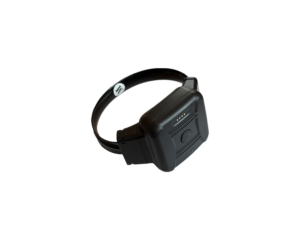

When Marshall Rayburn — a 34-year-old man accused of strangling his ex-girlfriend Peggy Beasley to death — was found to have been monitored by an electronic monitoring vendor that lost track of him for days before the murder, Louisiana legislators realized the state’s oversight of ankle monitor providers was essentially nonexistent.
The result: Act 858, signed into law in June 2023, making Louisiana one of the first U.S. states to impose mandatory licensing, performance standards, and accountability mechanisms on private electronic monitoring vendors. For agencies evaluating EM equipment and partners, Louisiana’s experience offers a critical case study in what goes wrong when vendor oversight fails — and what procurement teams should demand going forward.
What Happened in Louisiana: The Failures That Forced Legislative Action
The chain of events that led to Act 858 began with Community Trustee Services (CTS), a private EM vendor operating in Louisiana’s 19th Judicial District (East Baton Rouge Parish). A WAFB I-TEAM investigation revealed that CTS had failed to properly monitor GPS ankle bracelet signals, missed critical alerts, and — in at least one documented case — failed to notify law enforcement when a high-risk defendant’s device went offline for an extended period.
Marshall Rayburn had been released on bond with conditions including GPS ankle bracelet monitoring. Court records show his device lost connectivity multiple times — each instance a potential indicator that he had tampered with or removed the device. CTS, the vendor responsible for monitoring his signal, did not escalate these disconnections to law enforcement with the urgency the situation required. On October 1, 2022, Rayburn allegedly murdered Beasley at her Baton Rouge home.

The WAFB investigation also uncovered broader systemic problems: CTS monitoring staff lacked formal training protocols, alert escalation procedures were inconsistent, and the company’s contractual obligations to the court were vaguely defined — with no performance metrics, no audit requirements, and no consequences for missed alerts.
What Does Louisiana Act 858 Require?
Act 858 (originally filed as HB 556) establishes the first comprehensive regulatory framework for private electronic monitoring providers in Louisiana. The law creates mandatory requirements across four key areas that every electronic monitoring company must now meet:
1. Mandatory Vendor Licensing and Background Checks
All private companies providing electronic monitoring services in Louisiana must obtain a state license. Officers, directors, and employees with access to defendant location data must pass criminal background checks. Companies that previously operated with nothing more than a county contract now face real regulatory scrutiny before they can monitor a single device.
2. Minimum Staff Training Standards
Monitoring center operators must complete documented training covering: GPS device operation, alert triage protocols, law enforcement notification procedures, and chain-of-custody requirements for location data. The CTS failures showed that untrained staff watching a dashboard of blinking dots is not electronic monitoring — it is the illusion of supervision.
3. Performance and Reporting Requirements
Vendors must maintain documented alert response protocols with defined escalation timelines. Device connectivity losses, tamper alerts, and zone violations must be reported to supervising courts or agencies within specified windows. Quarterly performance reports — including device uptime, alert volume, response times, and false alarm rates — are now required.
4. Accountability and Contract Termination Provisions
Courts and agencies now have explicit authority to terminate vendor contracts for performance failures. The law creates a formal complaint process and empowers the state to revoke licenses for repeated violations. The companion legislation, RS 15:835, further requires all EM service providers to register with the court and sheriff of each parish where they operate. Before Act 858, a court that discovered its EM vendor was negligent had limited recourse beyond switching to another equally unregulated provider.
Why Louisiana’s Reform Matters Beyond Louisiana
Louisiana is not alone in recognizing that electronic monitoring vendor oversight has been dangerously inadequate. Several other states have moved toward similar regulatory frameworks:
- Illinois passed the Pretrial Fairness Act (2023), which includes provisions requiring EM vendors to meet minimum technological standards and report device performance data to courts.
- New Jersey, one of the most extensive users of pretrial GPS monitoring following its 2017 bail reform, has developed vendor procurement standards through its Administrative Office of the Courts that serve as a de facto regulatory framework.
- Texas (SB 1585, 2023) expanded requirements for EM providers serving domestic violence protective orders, mandating specific GPS accuracy thresholds and victim notification capabilities.
- Colorado now requires EM vendors to demonstrate CJIS Security Policy compliance for all systems handling defendant location data.
These moves reflect a growing consensus: the era of unregulated, lowest-bidder electronic monitoring is ending. Agencies that fail to incorporate vendor accountability requirements into their procurement processes risk repeating the failures that Louisiana experienced.
What Equipment Standards Should Agencies Demand?
Act 858 sets a floor, not a ceiling. For agencies using the Louisiana reforms as a model for their own vendor evaluations, the following technical and operational standards should be non-negotiable in any electronic monitoring procurement:

Continuous Connectivity Verification
The CTS failure was fundamentally a connectivity failure — the device lost signal, and nobody noticed. Modern GPS ankle monitors should operate on architectures that maintain contact across multiple communication pathways. Devices relying solely on cellular LTE connectivity will always be vulnerable to dead zones — basements, rural areas, concrete buildings. Multi-mode connectivity engines that automatically switch between BLE, WiFi, and LTE ensure that the device maintains contact even when one pathway fails. A $10 WiFi repeater in a defendant’s basement apartment eliminates the exact type of connectivity gap that CTS failed to detect.
Tamper Detection with Zero False Alarms
Alert fatigue is the operational enemy of effective monitoring. When a monitoring center receives 50-100 false tamper alerts per day, real threats get buried in noise. Fiber optic tamper detection — where the optical signal is either intact or severed, producing a definitive binary result — eliminates the false positive problem entirely. Dual fiber optic coverage (both strap and device case), combined with post-battery tamper protection that continues detecting removal attempts for months after the battery depletes, represents the current state of the art in anti-tamper technology.
Battery Life That Eliminates Operational Gaps
Daily charging requirements create daily opportunities for monitoring gaps. When a defendant’s device goes to low battery, the monitoring center receives an alert — but cannot distinguish between “forgot to charge” and “deliberately disabled.” Devices with multi-mode battery architectures — achieving 7 days in standalone LTE mode, 3 weeks in WiFi-directed mode, or 6 months in BLE-connected mode — reduce the low-battery alert volume by 85% or more, allowing monitoring staff to focus on real compliance issues rather than battery management.
Court-Admissible Data Integrity
Location data that cannot withstand legal challenge is operationally useless. EM devices should implement hardware-level digital signatures (ECDSA) on every location event, creating tamper-evident audit chains that meet Daubert admissibility standards. When a defense attorney challenges GPS evidence, the prosecution should be able to demonstrate that every data point was cryptographically signed at the device level and stored in write-once immutable storage — making post-collection manipulation mathematically impossible to achieve without detection.
Procurement Checklist: Lessons from Louisiana for EM Vendor Evaluation
Based on the failures exposed in Louisiana and the requirements established by Act 858, agencies should incorporate the following into their RFP and vendor evaluation processes:
- Licensing & Compliance: Does the vendor hold current state/federal licenses? Are all staff background-checked?
- Alert Response SLA: What are the contractual response times for tamper alerts, connectivity loss, and zone violations?
- Connectivity Architecture: Does the device rely on single-pathway cellular, or does it offer multi-mode redundancy (BLE/WiFi/LTE)?
- False Alarm Rate: What is the documented tamper alert false positive rate? Can the vendor provide 90-day performance data?
- Battery Management Burden: How many daily charging-related alerts does a typical 500-defendant deployment generate?
- Data Integrity: Are location events digitally signed at the device level? Does the system meet CJIS Security Policy requirements?
- Audit Trail: Can the vendor produce complete, tamper-evident audit logs for any defendant on demand?
- Performance Reporting: Does the contract require quarterly performance reports (uptime, alert volume, response times)?
- Contract Termination: Are there explicit performance-based termination clauses with defined failure thresholds?
Agencies that adopt this framework are not just meeting the Act 858 standard — they are establishing the procurement discipline that prevents the next Peggy Beasley tragedy.
The Industry Trajectory: From Price-Driven to Performance-Driven Procurement
Louisiana’s legislative response reflects a broader shift in the electronic monitoring industry. For two decades, EM vendor selection was overwhelmingly driven by daily monitoring rates — whoever offered the lowest per-day price won the contract. Act 858 and similar laws in other states are forcing a recalculation: the cheapest monitoring service is the most expensive when it fails to detect a murder suspect cutting off his ankle bracelet.
The industry is moving toward performance-based contracting, where vendors are evaluated — and compensated — based on measurable outcomes: device uptime percentages, alert response times, false alarm rates, and successful supervision completion rates. This shift rewards vendors who invest in superior technology (multi-mode connectivity, fiber optic tamper detection, extended battery life) over those who compete purely on price with legacy equipment.
For agencies navigating this transition, the question is no longer “which vendor is cheapest?” but “which vendor can demonstrate, with data, that their technology and operations meet the accountability standards that Act 858 establishes?”
About REFINE Technology (CO-EYE)
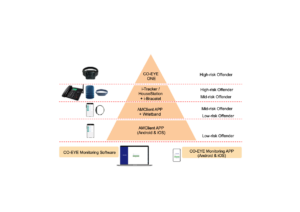
REFINE Technology is the leading electronic monitoring solutions provider in China with over 16 years of experience in the criminal justice industry. As the exclusive supplier for top security agencies, REFINE Technology has deployed 200,000+ devices across 30+ countries, monitoring 130,000+ individuals. The CO-EYE product line — featuring the next-generation all-in-one GPS ankle monitor, BLE wristbands, RF home beacons, and a unified monitoring platform — delivers high-security, low-stigma supervision for high-risk, mid-risk, and low-risk offender monitoring and victim protection. All CO-EYE devices carry full European NB CE directives (RED/Cybersecurity/LVD/SAR) and FCC certifications, with IP68 waterproof and REACH/RoHS/WEEE compliance. CO-EYE solutions are trusted in the USA, Europe, Africa, Bhutan, Papua New Guinea, Dominican Republic, Armenia, and expanding globally.
For more information, visit www.ankle-monitor.com or contact marketing@rfidcn.com.