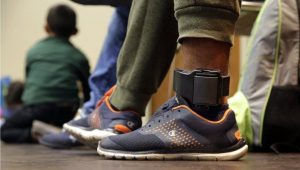

In the first week of September 2026, three unrelated cases across Alabama, Texas, and federal immigration courts exposed the same systemic vulnerability in house arrest ankle monitor programs: monitoring devices that fail exactly when courts need them most.
In Jefferson County, Alabama, Circuit Judge Thomas Thrash Sr. revoked a murder suspect’s bond after her Sentinel GPS ankle monitor went dead for 27 hours. In McLennan County, Texas, a woman who cut off her court-ordered ankle monitor in June walked free for three months before deputies discovered the violation during a routine traffic stop. Meanwhile, ICE’s blanket GPS monitoring directive has now shackled nearly 54,000 immigrants with ankle monitors — nearly tripling the number in just 18 months — prompting a federal class-action lawsuit alleging “physical, psychological, and economic harms.”
These cases are not isolated anomalies. They reveal fundamental questions about how house arrest ankle monitors work in practice, whether the technology currently deployed is adequate, and what agencies should demand from their next GPS ankle bracelet procurement.
What Happened in Alabama: A Dead Monitor, a Revoked Bond, and Equipment That Allegedly Malfunctioned
Sarah Rose Tisdale faces two counts of reckless murder for a 2023 Halloween morning crash on John Hawkins Parkway in Hoover, Alabama, that killed George Roberts, 67, and Teresa Roberts, 64. She was released on bond with electronic monitoring and home-confinement conditions.
On August 14, 2026, Sentinel Offender Services reported that Tisdale’s GPS ankle monitor had been dead for 27 hours straight. Her whereabouts were unknown. Sentinel could not reach her or her emergency contact. The Jefferson County District Attorney’s Office immediately moved to revoke her bond, citing “repeated noncompliance” (ABC 33/40, September 1, 2026).

What makes Tisdale’s case instructive is what happened next. At the September 3 hearing, a Sentinel Alarm representative testified that the charging cradle had malfunctioned due to dirt inside its components. The device was not defective by design — the charging dock had accumulated debris that prevented proper contact. Tisdale’s attorney raised mental health as a factor in her noncompliance, noting she had previously left her home for walks without permission and refused to answer Sentinel’s alert calls.
Judge Thrash reinstated her bond but under significantly stricter conditions: Tisdale is now on “electronic monitoring lockdown” — confined to her home except for medical emergencies, court appearances, doctor’s appointments, and attorney visits. She must keep her monitor charged and answer all calls from Sentinel. Any further noncompliance means permanent bond revocation (ABC 33/40, September 3, 2026).
What Does the Alabama Case Reveal About House Arrest Ankle Monitor Reliability?
The Tisdale case exposes two distinct failure modes that every agency running a house arrest ankle monitor program should audit immediately:
Failure Mode 1: Charging infrastructure is a single point of failure. Traditional GPS ankle monitors require daily or every-other-day charging because they run continuous GNSS and LTE radios 24 hours a day, consuming roughly 200-400 mAh every 24 hours. When the charging cradle fails — through dirt, damage, or simple wear — the device dies within 24-72 hours regardless of the wearer’s compliance intent. The Vera Institute of Justice documented in their 2024 report that charging-related violations accounted for a disproportionate share of technical violations in electronic monitoring programs nationwide.
Failure Mode 2: 27-hour communication blackout before agency response. Sentinel reported the device dead for 27 continuous hours before the court acted. For a murder suspect on house arrest, that gap represents a serious public safety risk. The question agencies must ask: if the ankle monitor dies at 2 AM on a Saturday, how quickly does the monitoring center detect it, escalate it, and trigger a response?
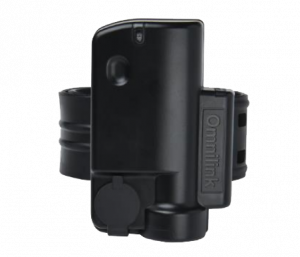
Next-generation GPS ankle monitors address both failure modes through architecture rather than procedure. One-piece designs with adaptive multi-mode connectivity — switching between BLE, WiFi, and LTE based on the environment — extend battery life from 24-72 hours to 7 days or more in LTE-only mode, and up to 180 days in BLE-connected mode. The CO-EYE ONE, at 108 grams, achieves this by offloading high-power GNSS/LTE processing to a companion smartphone or home beacon when the wearer is at a fixed location, reserving full-power tracking for outdoor movement.
Texas: A Woman Cut Off Her Ankle Monitor in June and Walked Free Until September
On September 1, 2026, McLennan County deputies conducted a routine traffic stop in Elm Mott, Texas, for an expired registration. The driver, Jordyn Van Blarcum, 33, was on bond with a condition requiring a GPS ankle monitor. She was not wearing one.
When questioned, Van Blarcum admitted she had cut off the device on June 26 — more than two months earlier — and told deputies she was “surprised she had not yet been arrested” (KWTX, September 3, 2026). She was subsequently charged with tampering with an electronic monitoring device, possession of a controlled substance, and tampering with physical evidence.

1. Battery life that eliminates charging violations. A 7-day minimum battery in full GPS/LTE mode eliminates daily charging as a compliance barrier. Devices with multi-mode connectivity — like BLE-assisted tracking that extends battery to weeks or months when the wearer is at a fixed location — fundamentally change the equation. If the Tisdale case had involved a 7-day battery, the 27-hour charging gap would never have occurred.
2. Fiber-optic tamper detection with zero false alarm rate. The Texas case demonstrates what happens when tamper alerts are ignored or lost. Fiber-optic detection ensures that every alert is real. When an officer receives a fiber-optic tamper notification, there is zero ambiguity: the strap has been compromised.
3. Multi-layer connectivity that prevents communication blackouts. A device that can transmit over BLE to a smartphone, WiFi to a home repeater, and LTE to the cellular network has three independent paths to reach the monitoring center. If LTE coverage fails in a rural area, WiFi provides backup. If the wearer’s phone is nearby, BLE handles communication at near-zero power consumption.
4. Sub-3-second installation to reduce booking overhead. When Judge Thrash ordered Tisdale refitted with an ankle monitor before release, Sentinel had to schedule an installation appointment. Tool-free, snap-on devices that install in under 3 seconds eliminate this delay and reduce the window between court order and active monitoring.
5. Post-battery tamper protection. If a defendant lets a device die — whether through negligence or intent — the anti-tamper system should continue functioning for weeks or months on residual power. A dead battery should not mean a free pass to remove the strap undetected.
Where Do House Arrest Ankle Monitor Programs Go from Here?
The convergence of the Alabama equipment failure, the Texas tamper evasion, and the ICE mass-monitoring expansion points to a single conclusion: house arrest ankle monitor technology deployed by most agencies today was designed for a world where caseloads were smaller and expectations were lower.
When ICE triples its ankle monitor population from 17,000 to 54,000 in 18 months, the infrastructure must keep pace. When a murder suspect’s bond depends on a charging cradle that fails because of accumulated dirt, the technology has not met its burden. When a defendant walks free for 67 days after cutting off a monitoring device, the system has failed at its most basic function.
The next generation of house arrest ankle monitors — lighter, longer-lasting, and architecturally resistant to the failure modes documented in September 2026 — exists today. The question is whether agencies will update their procurement standards to demand it.
📌 Related: GPS ankle bracelet monitoring accountability — How a Louisiana monitoring company’s failure to report GPS violations led to murder, and the landmark laws now reshaping EM provider accountability nationwide.