Bottom line first: If you are budgeting for pretrial, probation, parole, or house arrest, ankle monitor cost is never a single number. You are buying hardware, cellular connectivity, software seats, monitoring center labor, officer response capacity, and—critically—the quality of alerts your team must chase at 2 a.m. This guide breaks down ankle monitor pricing from every practical angle: device purchase bands, typical daily monitoring fees, total cost of ownership (TCO), and how GPS supervision compares to jail on a dollars-per-day basis. For technology context, pair this article with our GPS ankle monitor guide, what is an ankle monitor explainer, and best GPS ankle monitor shortlist—including the one-piece CO-EYE ONE (7-day battery, IP68, 108 g, fiber optic tamper with zero false-positive integrity detection per manufacturer specifications). Need a formal quote? Contact sales.
Ankle Monitor Cost Overview
When stakeholders ask “how much does an ankle monitor cost?”, they usually want one of three answers: hardware price, daily supervision fee, or total program cost. Those are different accounting lines—and conflating them produces bad RFPs and bad headlines.
At a high level, industry discussions commonly cite:
- Device purchase (capital or lease): roughly $150–$500 per unit depending on modality—RF tether devices toward the lower end, professional GPS one-piece hardware toward the upper end.
- Daily monitoring (operational): often cited bands of about $5–$15 per day for GPS programs and roughly $3–$8 per day for RF home-detention style monitoring, before volume discounts and service tiers.
- Incarceration (counterfactual cost): secure detention frequently appears in policy literature at roughly $75–$200+ per day fully loaded, versus community EM cited at single-digit-to-low-tens dollars per day—implying substantial savings when detention is not necessary for public safety.
Washington, D.C. policy materials have contrasted electronic monitoring on the order of $750 per year with incarceration costs exceeding $50,000 per year—a stark illustration of why agencies model alternatives-to-detention budgets at all. Translating that into supervision math: if GPS monitoring runs near $5–$15/day while jail runs $75–$200+/day, the ratio implies on the order of 85–95% lower daily cost for EM versus secure bed days—recognizing that EM is not substitutable for every custody need, and that officer time for alert response must still be funded.
Research on community supervision outcomes also matters for ROI conversations. A Florida-oriented study on electronic monitoring reported roughly a 31% reduction in recidivism for monitored cohorts—useful context when finance committees ask whether monitoring “pays for itself” in downstream jail bed avoidance. (Cite as program-level evidence, not a guarantee in your jurisdiction.)
When you present ankle monitor cost to elected officials, separate cash accounting from risk accounting. Cash accounting counts vendor invoices and payroll. Risk accounting estimates avoided bed-days, reduced transport, and fewer emergency hearings caused by unreliable telemetry. A device that eliminates ambiguous tamper events does not show up as a line item named “overtime avoided,” but your sergeant of the watch will recognize it within weeks of go-live.
National averages for incarceration are deliberately wide because rural jails, urban pre-trial centers, and state prisons load costs differently—medical carve-outs, pension obligations, and capital debt vary. The useful planning approach is to use your sheriff’s marginal cost model and compare it to a fully loaded EM quote that includes internal staff time. If your county only compares vendor per-diem to a misleadingly low “jail bed” number, decisions will skew toward detention even when community supervision is legally available and statistically appropriate.
Throughout this guide, remember: cheap hardware with noisy alerts can be the most expensive option you can buy. The next sections unpack why.
Device Purchase Costs
Hardware pricing depends on radio architecture, environmental sealing, battery chemistry, certifications, and whether you are buying a standalone SKU or a fleet bundle with monitoring.
GPS one-piece ankle monitors
One-piece GPS designs integrate GNSS, cellular modem, battery, and tamper into a single ankle-worn module. Procurement discussions often place professional-grade one-piece hardware around $300–$500 per device before volume discounts—sometimes higher when spare pools, chargers, and onboarding training are capitalized separately.
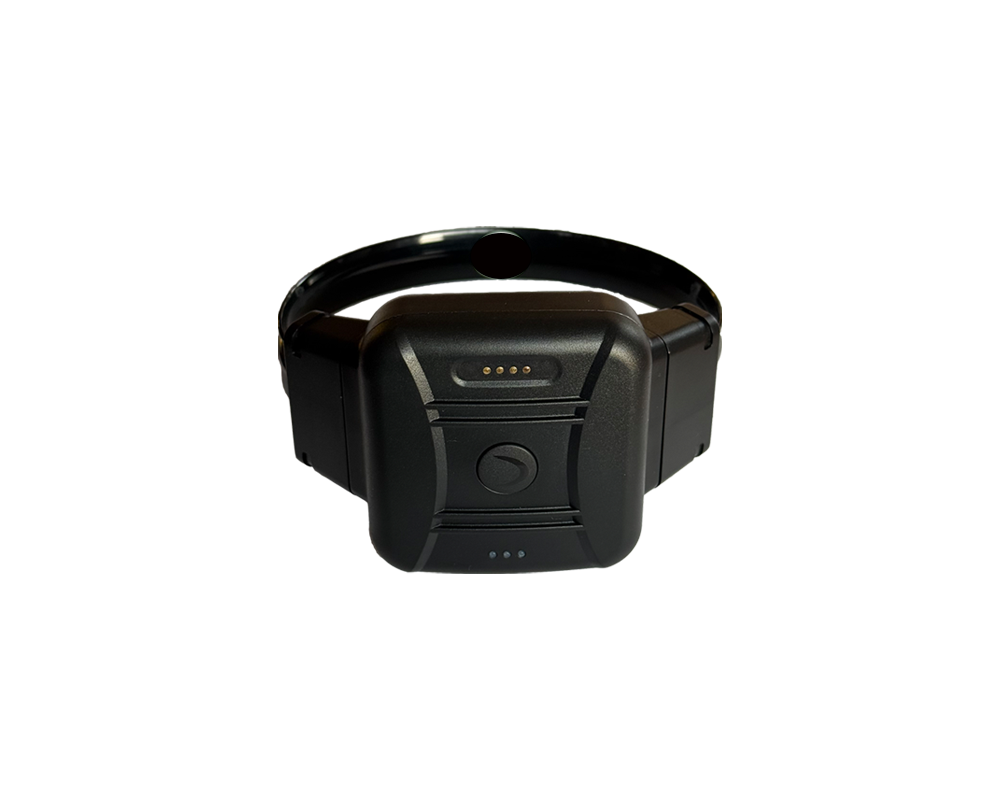
Representative engineering on the CO-EYE ONE includes a 7-day standalone battery profile at a 5-minute LTE-M/NB-IoT reporting interval (manufacturer datasheet values), 108 g weight, IP68 ingress protection, and fiber optic strap and case tamper detection advertised as zero false-positive for true integrity breaks—specifications buyers should map to pilot data in their own RF environments.
GPS two-piece systems
Two-piece architectures separate functions—commonly a bracelet plus a hub/phone relay or secondary radio. Total hardware spend may aggregate around $200–$350 for both components in some vendor stacks, but quotes vary widely based on cellular strategy and whether the “phone” layer is participant-supplied, agency-issued, or embedded.
Two-piece pricing can look attractive until you model replacement pairs, pairing failures, and inventory complexity—lines that belong in TCO, not just the PO.
RF-only presence monitors
RF tether systems that verify proximity to a home base station (rather than full outdoor GNSS tracking) often land around $50–$150 on the bracelet side, with additional fixed receiver hardware for the residence. These can be cost-effective when court orders require curfew and presence—not continuous route accountability.
Alcohol monitoring bracelets
Transdermal alcohol monitoring bracelets (distinct from GPS location bracelets) commonly appear in vendor lists roughly between $100–$300 hardware bands depending on lease models—but pricing is usually bundled with specialized monitoring services and lab/dataset review workflows. Do not compare alcohol bracelet quotes directly to GPS ankle monitor quotes without aligning service scope.
What moves the price needle?
- Technology level: LTE-M/NB-IoT versus legacy broadband LTE; multi-GNSS versus GPS-only; sealed inductive charging versus exposed ports.
- Volume discounts: statewide contracts versus single-county pilots (see Volume Pricing below).
- Bundled vs unbundled monitoring: “Free” hardware with higher per-diem fees versus capital purchase with lower daily service—cashflow and grant reporting implications differ.
Leasing versus purchase also changes how ankle monitor pricing appears in ledgers. Leasing smooths capital spikes but raises lifetime cost; outright purchase front-loads budgets yet pairs well with grant cycles (justice assistance, public safety technology grants). Some states allow master lease vehicles for counties—ask your comptroller before you structure the RFP payment schedule.
Warranty and refresh cycles matter: cellular modules, carrier certifications, and battery chemistry evolve on 3–5 year horizons. A SKU that is inexpensive today but end-of-life tomorrow can force a mid-contract forklift upgrade. Ask vendors for roadmaps on LTE-M/NB-IoT support and regional carrier certifications, especially if you operate near international borders where roaming profiles differ.
For a deeper buyer checklist, see our GPS ankle monitor guide and 2026 equipment shortlist.
Daily Monitoring Costs
Daily fees pay for what participants never see on the strap: monitoring center staffing, cellular data, software licensing, map and rules engines, audit logs, escalation playbooks, and often hardware refurbishment or hot-swap logistics.
Typical published bands
- GPS monitoring: commonly discussed ranges near $5–$15/day depending on reporting interval, geofence complexity, after-hours support, and integration with case management.
- RF monitoring: often lower—roughly $3–$8/day—when programs primarily verify home presence rather than continuous outdoor tracking.
What should be included?
A defensible per-diem quote should specify: alert handling SLAs, dashboard seats, training hours, device RMA turnaround, spare inventory minimums, cellular carrier strategy, and whether software updates are included. If those items are vague, your “low” per-diem can become a change-order waterfall.
Who pays?
Agency-funded programs simplify participant compliance but shift all costs to taxpayers. Participant-pay models attempt cost recovery but can collide with indigency rules and create perverse incentives if fees are set above ability to pay. Many jurisdictions use hybrids—agency pays base monitoring, participant pays co-pays within statutory caps. Your counsel’s office should review fee ordinances before you finalize RFP evaluation criteria.
Daily fees should be read beside service credits: if uptime falls below contract thresholds, do you receive per-diem rebates? If dashboard latency exceeds SLA during business hours, who pays overtime for manual checks? Mature contracts treat monitoring software like any other mission-critical system—with measurable availability targets.
Cellular data is not fungible. A participant who works night shifts in a basement hospital wing will stress RF differently from a rural agricultural worker with clear sky view. Programs that standardize on aggressive fix intervals without modeling dead zones import unnecessary violations. Operational savings often come from right-sizing reporting tiers by risk level, not from blindly maximizing GPS samples.
Electronic monitoring as an alternative to detention only works operationally if monitoring centers answer phones and officers can distinguish true risk from sensor noise—topics we unpack next.
Total Cost of Ownership: The Real Number
TCO is where procurement scores are won or lost. A useful rule of thumb for mature GPS programs:
- Device purchase often represents roughly 30–40% of multi-year costs.
- Operational spend—monitoring center labor, supervisor review, officer response, training, spare devices, shipping, help-desk time, and court documentation—can land around 60–70%.
The hidden cost killer: false alerts
Every bogus high-priority alert taxes the same finite resources as a real emergency: call trees, shift supervisors, field units, and judicial credibility. When tamper sensors cry wolf, participants face unnecessary arrests and agencies burn overtime.
Cook County public reporting has documented scenarios where certain electronic monitoring technologies generated false tamper alerts exceeding 80%—meaning the overwhelming majority of tamper signals were not true strap or case integrity failures. Even if your county’s rate is half that, the budget impact is enormous because each event still triggers human workflow.
This is why tamper technology choice is a finance decision, not only an engineering footnote. Fiber optic tamper detection that signals a definitive integrity break can eliminate entire classes of ambiguous “maybe tamper” events. CO-EYE ONE markets fiber optic strap and case monitoring with zero false-positive detection for true tamper conditions—use your pilot to validate alert distributions against your legacy fleet.
Other TCO line items buyers forget
- Officer response time amortized per alert.
- Device replacement due to water damage, lost chargers, or strap wear.
- Training churn when UI or mobile apps change.
- Evidence preparation for hearings—exporting maps, timestamps, and chain-of-custody logs.
Training costs belong in TCO too. When a vendor ships a redesigned mobile app or dashboard workflow, every field sergeant and pretrial officer needs refresh training. Multiply hours by loaded salary to see why stable UX and predictable release notes matter as much as hardware IP ratings.
According to the National Institute of Justice (NIJ), standardized narratives around offender tracking systems help agencies compare devices on shared rubrics rather than marketing language alone. Align your internal TCO worksheet to the same discipline: require vendors to disclose alert disposition codes, median operator handle time, and pilot false-alert rates measured against ground truth—not anecdotes.
When finance asks for the “real” ankle monitor cost, show them TCO—not a glossy per-unit brochure.
GPS Monitoring vs Incarceration: Cost Comparison
Policy makers increasingly require cost-benefit clarity when choosing between detention and supervised release. While no two counties use identical accounting, recurring themes appear in public sources:
- Community electronic monitoring annualized costs in the hundreds of dollars per participant in some jurisdictions’ materials.
- Incarceration annualized costs in the tens of thousands of dollars per bed when fully loaded staffing, medical, food, capital debt service, and programming are included.
The Washington, D.C. comparison—on the order of $750/year for EM versus $50,000+/year for incarceration—anchors order-of-magnitude thinking. National averages shift by state, security level, and whether jails bill education and healthcare separately, but the directional gap remains: secure beds are radically more expensive per day than GPS supervision.
Per-day calculator framework for agencies
- Compute fully loaded jail marginal cost per bed-day (not just marginal food; include prorated staffing).
- Compute EM per-day as vendor per-diem + internal labor for alert handling + court overhead.
- Apply eligible population filter—EM substitutes only for detainees who can be safely supervised in the community.
- Discount for failure modes—FTA, new arrests, and technical violations still occur; monitoring is not free risk reduction.
Even with conservative assumptions, the spread between $5–$15/day monitoring and $75–$200+/day incarceration explains why pretrial services expansion depends on equipment reliability: a monitoring program that generates excessive false tamper events effectively re-imports jail-like workload into community supervision.
For pretrial-specific framing, read our site’s pretrial resources linked from what is an ankle monitor and the technology primer on CO-EYE ONE.
One-Piece vs Two-Piece: TCO Impact
Sticker price favors some two-piece kits at bid time. Three-year TCO often tells a different story.
Why one-piece can win on TCO
- Fewer replacement devices: one module to lose, not two.
- No Bluetooth pairing drift between bracelet and relay phone/hub—support tickets drop when participants are not IT help desks.
- Longer battery life reduces dead-battery incidents and after-hours “please charge now” escalations. CO-EYE ONE’s 7-day standalone profile (manufacturer spec at 5-minute reporting) is a benchmark buyers can stress-test against their mandated fix schedules.
- Fiber optic tamper reduces false tamper storms compared with technologies that confound strap motion with integrity loss—directly cutting officer overtime tied to bogus alerts.
Rule-of-thumb TCO spread
When agencies model hot-swap inventory, help-desk time, pairing failures, and alert handling, 3-year TCO for one-piece GPS often lands 20–40% lower than two-piece stacks that looked cheaper on the first page of the bid—exact percentages depend on caseload, urban RF noise, and whether your vendor funds spare pools.
Use our best GPS ankle monitor 2026 page to compare form factors before you lock multiyear contracts.
Volume Pricing & Procurement
Government buyers rarely pay retail. Expect pricing tiers keyed to active installs and contract length.
Illustrative volume bands (not quotes)
- 50–200 units: county-scale pilots; moderate per-device discounts; often annual renewals.
- 200–1,000 units: regional consortia; stronger per-diem reductions; shared monitoring center seats.
- 1,000+ units: statewide or multi-state agreements; custom SLAs, dedicated spares, API integrations.
RFP considerations
- Require false alert rate reporting methodology—not marketing adjectives.
- Bind cellular sunset plans (2G/3G decommission timelines).
- Specify reporting intervals and battery life at those intervals.
- Demand training and transition from legacy vendors (data migration, participant swap schedules).
Anchor technical evaluation to NIJ-oriented narratives for offender tracking systems and your state standards; link technical diligence back to the buyer frameworks in our GPS ankle monitor guide.
How to Reduce Your GPS Monitoring Costs
Five practical strategies procurement and operations teams can implement without sacrificing public safety:
- Choose longest practical battery life for your mandated fix schedule to shrink charging-related alerts and after-hours noncompliance calls. Dead-battery events are expensive even when they are not “violations of intent.”
- Prioritize zero false-positive tamper architectures where integrity breaks are physically definitive—fiber optic sensing is the CO-EYE design story—so supervisors spend time on real incidents, not chasing ghosts.
- Prefer one-piece designs when pairing failures and dual-component loss drive your help-desk metrics. Eliminating the pairing layer removes an entire failure domain.
- Negotiate monitoring fees on volume and commit to spare-pool standards so RMA logistics do not erode your discount.
- Evaluate TCO with a three-year horizon: hardware + per-diem + internal labor + estimated alerts per device-year. Unit price is a line item; TCO is the truth.
When you are ready to model costs against a modern one-piece reference platform, review CO-EYE ONE specifications and contact our sales team for structured pricing.
Finally, revisit this guide each budget cycle: carrier tariffs, minimum wage for monitoring staff, and judicial expectations on map evidence all drift. A cost model that was accurate in 2023 may mis-rank vendors in 2026 if alert volumes changed after a firmware update. Treat ankle monitor cost as a living dataset—not a one-time spreadsheet cell.
FAQ
How much does a GPS ankle monitor cost?
Professional one-piece GPS hardware often falls roughly in the $300–$500 range before volume discounts; two-piece kits may split total hardware near $200–$350. Always add monitoring service, cellular, and lifecycle support—those dominate multi-year spend.
Who pays for ankle monitoring?
Models split between agency-funded, participant-pay, and hybrid approaches. Indigency rules and local statutes matter; constitutional litigation history around fees means your legal advisers should review schedules.
How much does daily GPS monitoring cost?
Industry discussions commonly cite about $5–$15/day for GPS supervision depending on service tier, while RF programs may run nearer $3–$8/day.
Why are one-piece monitors more expensive upfront?
Integrating GNSS, cellular, battery, sealing, and tamper into one certified module costs more than simpler split designs—but often reduces long-run operational spend.
What is the hidden cost of false alerts?
False alerts consume monitoring center and officer time, generate overtime, and erode court trust. Cook County documentation of 80%+ false tamper alerts for some technologies shows how alert quality becomes a budget line.
How does ankle monitoring compare to jail costs?
Policy comparisons such as Washington, D.C.’s ~$750/year EM versus $50,000+/year incarceration illustrate the order-of-magnitude gap versus secure beds. Per-day jail estimates of $75–$200+ contrast with EM near $5–$15/day in many program models.
Can defendants afford ankle monitoring?
Affordability varies; many jurisdictions offer waivers or sliding scales. Excessive fees can produce technical noncompliance unrelated to risk, so policymakers balance cost recovery with compliance.
Do prices vary by state?
Yes—statutes, payer rules, vendor competition, and contract vehicles differ. Compare bids on equivalent SLAs and reporting intervals, not headline prices alone.