Introduction: Why This Comparison Matters
Context: Supervision agencies, pretrial services departments, and electronic monitoring providers refresh hardware on multi-year cycles. When teams search for a SCRAM GPS alternative or simply want a documented side-by-side before renewing a legacy fleet, a disciplined comparison beats marketing slides. This article places SCRAM GPS 9 Plus—a widely deployed name in U.S. community corrections—next to CO-EYE ONE, REFINE Technologies’ flagship one-piece GPS ankle monitor. The goal is factual contrast on specifications and operational consequences, not rhetoric. Always validate competitive figures against each vendor’s current datasheet and your pilot data.
Electronic monitoring is no longer a niche alternative to jail; it is a default layer in pretrial, probation, parole, and specialty dockets. When a fleet ages out, agencies rarely choose hardware in a vacuum—they compare against what officers already know, what prosecutors trust in evidentiary exports, and what participants can realistically charge between shifts. That is why head-to-head articles attract traffic from serious buyers, not curiosity clicks.
Switching costs span technical and political dimensions. Technically, you must integrate device provisioning APIs or file workflows, retrain installers, refresh spare chargers and straps, and regression-test geofence templates. Politically, judges may ask why maps look subtly different, defense counsel may challenge historical continuity of location logs, and county councils may scrutinize new per-diem pricing. A transparent comparison helps you anticipate those questions with data instead of adjectives.
Evaluation criteria should be weighted, not lumped. A sheriff’s office running high-intensity GPS caseloads may rank battery and tamper integrity above marginal analytics features. A statewide vendor managing blended alcohol and GPS portfolios may rank software ecosystem integration highest—even when a standalone GPS module is heavier. There is no universal winner; there is a best fit per mission. The framework in the final section makes that explicit.
Readers evaluating a SCRAM GPS alternative are often motivated by operational pain: frequent low-battery escalations, tamper alerts that collapse under review, or hardware mass that drives participant complaints and strap wear issues. Those pain points are legitimate inputs to an RFP—even when the incumbent brand remains respectable. The question is whether another engineering generation solves your specific bottleneck without creating a new one.
Throughout, we link out to our evergreen resources so you can deepen context: the GPS ankle monitor guide for procurement architecture, what is an ankle monitor for participant-facing explanations you can adapt into handouts, and CO-EYE ONE for full manufacturer specifications on the device featured on this site.
Agency readers should treat this article as a structured checklist companion to RFP scoring sheets. Where we cite numbers for SCRAM GPS 9 Plus, they reflect commonly referenced manufacturer and reseller specifications as of 2026—confirm before you bind procurement language. Where we cite CO-EYE ONE, figures follow REFINE Technologies’ published specification tables (also summarized across our product documentation for consistency).
Fairness in supervision technology writing matters because participants ultimately wear the consequences of false alerts and dead batteries. A monitor that is operationally noisy can increase technical violations, hearings, and jail holds without improving public safety. A monitor that is stable and long-running reduces friction for compliant participants and frees officers to focus on high-risk cases. The comparison below is written with both procurement officers and line supervisors in mind.
Device Overview
SCRAM GPS 9 Plus sits in the portfolio of SCRAM Systems / Alcohol Monitoring Systems—one of the most recognized brands in U.S. electronic monitoring. The GPS 9 Plus line is marketed as a modern one-piece GPS tracker with LTE connectivity, rapid deployment workflows, and integration into SCRAM’s software stack for location supervision. Public-facing collateral emphasizes durability, participant ergonomics relative to earlier generations, and connectivity options that include 4G LTE with FirstNet suitability for agencies that prioritize public-safety cellular priority in the United States. Companion offerings such as GPS Analytics and Pattern of Life style visualizations aim to help officers interpret dense location histories without drowning in raw breadcrumbs.
From a procurement standpoint, SCRAM’s strength is ecosystem familiarity: many monitoring centers already run SCRAM dashboards, training curricula mention SCRAM workflows, and prosecutors may have seen SCRAM exports in prior cases. Those intangibles matter even when another device posts better standalone battery numbers.
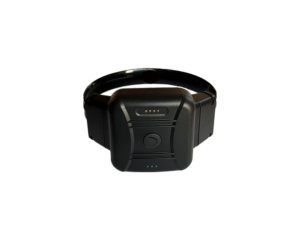
CO-EYE ONE is REFINE Technologies’ next-generation one-piece GPS ankle monitor engineered for global community supervision programs. It packages multi-constellation GNSS (GPS, BeiDou, GLONASS, Galileo) with WiFi and LBS assistance, a low-power cellular stack described as 5G-compatible LTE-M / NB-IoT / GSM, and a fiber optic strap and case tamper architecture characterized by the manufacturer as zero false-positive for true physical integrity breaks. Standalone battery life is specified at seven days with a five-minute reporting interval on LTE-M/NB-IoT, supported by a 1700 mAh cell and roughly 2.5-hour magnetic recharge. Installation is advertised as under three seconds with a tool-free snap design, with mass held to 108 grams in a 60×58×24 mm footprint and IP68 ingress protection.
CO-EYE ONE also carries European NB CE directive coverage (RED, EMC, SAR, LVD, RoHS, REACH, WEEE) and EN 18031 cybersecurity alignment alongside AES-class encryption and TLS-style transport—documentation buyers often request for IT security review. The unified supervision stack is marketed as AMManager, described as a multi-module monitoring platform (13 functional modules in manufacturer materials) covering device management, alerts, mapping, and operational workflows.
Both devices target the same fundamental mission: continuous community location accountability with tamper awareness and court-defensible logs. The engineering tradeoffs diverge on power architecture (broadband LTE versus LTE-M/NB-IoT IoT classes), ecosystem depth (long-established U.S. analytics suite versus modular global platform), and tamper sensing philosophy (SCRAM’s marketed “revolutionary tamper technology” versus CO-EYE’s fiber optic continuity approach).
Specifications Comparison Table
Use this table as a conversation starter in vendor calls—not as a substitute for written certifications. Empty cells mean “confirm with vendor” rather than “unknown capability.”
| Attribute | SCRAM GPS 9 Plus (typical published specs) | CO-EYE ONE (manufacturer specs) |
|---|---|---|
| Design | One-piece integrated GPS ankle module | One-piece integrated GPS ankle module |
| Weight | Approximately 170 g (confirm current datasheet) | 108 g |
| Battery (standalone) | Approximately 40 hours active GPS (confirm reporting assumptions) | Up to 7 days (168 h) at 5 min LTE-M/NB-IoT interval |
| GPS / GNSS | GPS + A-GPS + GLONASS (as commonly listed) | GPS + BeiDou + GLONASS + Galileo + WiFi + LBS |
| Cellular | 4G LTE + FirstNet options (public safety LTE priority) | 5G-compatible LTE-M / NB-IoT / GSM (global IoT-oriented) |
| Anti-tamper | Marketed “revolutionary tamper technology” (vendor-specific sensors) | Fiber optic strap + case; zero false-positive stated for true breaks |
| Installation | Tool-free install cited around 30 seconds in marketing | < 3 seconds snap-on, no tools |
| Water / shock | Waterproof / shock-resistant claims in product collateral | IP68 certified waterproof |
| Certifications (examples) | Confirm FCC/operator certifications with SCRAM for your SKU | European NB CE suite; EN 18031; IEC62133/62321/UN38.3 battery safety |
| GPS accuracy | Refer to SCRAM test narratives for your procurement | < 2 m CEP under favorable multi-GNSS conditions |
Two rows deserve extra commentary before you move on. First, weight: roughly 170 g versus 108 g is not vanity metrics—heavier modules increase strap wear, gait complaints, and skin irritation incidents over multi-month supervision horizons, especially on smaller participants. Second, battery: the jump from roughly two days to seven days at comparable active reporting assumptions changes how charging is written into participant handbooks and how often low-battery alarms hit your watch floor.
For buyers who need a standards vocabulary alongside vendor sheets, align internal test plans with NIJ discussions of offender tracking performance—our guides reference those themes repeatedly because they help attorneys and IT auditors speak a common language.
Battery Life: The Operational Game-Changer
Battery spec sheets rarely excite elected officials, but they dominate day-to-day supervision quality. When a device expects recharge every day or two, three operational stresses appear immediately: participants forget or cannot access outlets during work, low-battery alarms spike on Friday nights, and officers burn time calling compliant people who simply ran out of electrons—not intent.
Approximate 40-hour endurance (as commonly cited for SCRAM GPS 9 Plus-class active GPS) implies a near-daily charging ritual for many caseloads unless reporting intervals are throttled aggressively. That can be workable when vendors supply robust charging kits, participants have stable housing, and programs tolerate intermittent “charging gaps” in location continuity. It breaks down faster for transient housing, shift workers sleeping in vehicles, or rural participants with long commutes—contexts where charging friction becomes a justice equity issue.
Seven-day standalone endurance on CO-EYE ONE at five-minute LTE-M/NB-IoT reporting reframes the same problem: charging becomes a weekly habit rather than a daily crisis. Fewer low-battery hits mean fewer ambiguous “failure to report” narratives, fewer after-hours dispatcher calls, and less noise masking genuine tamper or abscond events. Supervision is partly signal processing; when the noise floor drops, supervisors catch real risk faster.
Officer workload math is blunt. Multiply even ten extra battery-related touches per week by hundreds of participants and you have purchased an entire FTE in phone tag. Battery is therefore not a technical footnote—it is a labor line item. Agencies that model TCO without battery-driven call volume are underestimating spend.
Compliance risk also shifts. Courts dislike technical violations that look like poverty or scheduling rather than criminal intent. A device that stays powered longer reduces preventable hearings and jail sanctions tied to charger access rather than behavior. Defense counsel know the difference; judges increasingly do too.
None of this argues that short-endurance devices are “bad”—only that your policies must honestly reflect their constraints. If you choose a shorter-cycle device, invest in charging equity: spare cables, workplace charging letters, and help-desk hours that match participant shifts. If you choose week-scale endurance, validate that your mandated reporting interval matches the vendor test assumptions so you are not comparing apples to oranges.
For deeper procurement framing on architecture and reporting cadence, return to the GPS ankle monitor guide; for participant-friendly explanations of charging expectations, share language from what is an ankle monitor.
Anti-Tamper Technology Compared
Tamper alerts are the highest-stakes signal a GPS ankle monitor produces. When they are right, officers intercept integrity loss before flight risk materializes. When they are wrong, agencies dispatch field teams to compliant participants, erode judicial trust, and teach wearers that alarms are ignorable noise. That is why sensor philosophy matters as much as map dots.
SCRAM markets revolutionary tamper technology around its GPS hardware—language that signals multi-sensor fusion and strap intelligence without always exposing proprietary trade secrets in public PDFs. Buyers should request written definitions of tamper codes, false-positive history from reference sites, and whether certain events require human confirmation before warrant escalation. Established brands sometimes carry legacy alert semantics that courts already understand—an advantage during transition.
CO-EYE ONE’s approach is materially different: fiber optic continuity monitoring on the strap and case. When the optical path is severed by cutting or aggressive forcing, the system registers a structural break rather than inferring tamper from indirect cues. Manufacturer documentation states zero false-positive detection for true integrity breaks—language that reflects physical certainty rather than probabilistic inference. Programs that have suffered strap-crack false storms on older technologies may find that pitch compelling—but only pilot data in your climate and caseload should decide.
False alert costs stack quickly: dispatcher time, officer mileage, prosecutor updates, defense motions, and participant trauma when armed encounters are mistakenly prioritized. Even “cheap” false alerts are expensive at scale. A tamper architecture that reduces ambiguous strap events can pay back hardware premiums within a single budget year if your county’s alert volume is high.
Best practice is to require vendors to map each tamper code to recommended response tiers (call participant, field verify, immediate dispatch) and to provide anonymized histograms from comparable deployments. Tamper is too important for hand-waving.
Technical readers may crosswalk tamper discussions with NIJ-oriented narratives on offender tracking reliability—our guides emphasize that standardized test language helps attorneys compare exports fairly across vendors.
Cellular & Positioning Technology
Cellular strategy determines where uploads succeed, how firmware updates arrive, and how future-proof your fleet is when carriers sunset 2G/3G assets. Positioning strategy determines how often you get usable fixes downtown, near stadiums, or inside ground-floor apartments.
SCRAM GPS 9 Plus’s emphasis on 4G LTE and FirstNet targets U.S. agencies that want public-safety-priority connectivity when networks congest—think disaster response counties, capital cities, and departments that already standardized on FirstNet phones. That alignment can simplify security conversations when IT teams already approve FirstNet-class devices elsewhere.
CO-EYE ONE leans into LTE-M and NB-IoT—cellular classes engineered for IoT power budgets—while retaining GSM as a fallback compatibility layer in manufacturer materials. The pitch is global operability and superior building penetration per watt, trading peak headline speeds for supervision-appropriate throughput. The 5G-compatible framing reflects radio module roadmaps that remain valid as carriers evolve LTE-M/NB-IoT cores—again, confirm exact SKUs and SIM profiles for your country.
On the positioning side, SCRAM’s commonly listed GPS + A-GPS + GLONASS stack is a proven baseline. CO-EYE ONE adds BeiDou and Galileo openly, plus WiFi and LBS assistance—useful when sky view is partial and you need assisted fixes without pretending indoor GNSS is magic. Either way, procurement teams should demand side-by-side captures in your downtown canyon and your typical suburban residential lots.
No article can declare a universal radio winner because carrier coverage is hyperlocal. Build a RF walk grid around your courthouse, major employers, transit hubs, and high-crime micro zones. Log fix success, time-to-first-fix, and upload latency. That empirical map beats any datasheet paragraph.
If you need a refresher on how GNSS, WiFi, and LBS cooperate inside modern bracelets, start from what is an ankle monitor before you score vendor demos.
Software & Analytics
Hardware without credible software is a wrist-mounted paperweight. Supervision happens in review queues, geofence editors, export packages for discovery, and supervisor dashboards that turn point clouds into decisions.
SCRAM’s ecosystem includes GPS Analytics and related tooling that highlight location patterns—marketing materials describe capabilities in the family of Pattern of Life analytics that help officers see routines, anomalies, and high-risk time windows without manually scrolling every track. For agencies already standardized on SCRAM workflows, incremental analytics upgrades can be low-friction wins that justify staying inside the brand.
CO-EYE counters with AMManager, positioned as a unified monitoring platform with 13 functional modules covering the operational stack end-to-end—device provisioning, alert handling, mapping, user administration, and reporting in manufacturer descriptions. Buyers evaluating a move should request API documentation, SAML or SSO compatibility, audit log formats, and whether exports match what your district attorney’s office already accepts.
Integration diligence checklist: (1) bulk device onboarding, (2) role-based access controls, (3) immutable audit trails, (4) CSV/PDF export schemas, (5) webhook or REST event feeds for CAD adjuncts, (6) training mode sandboxes, and (7) disaster-recovery uptime commitments. Score SCRAM and CO-EYE solutions against the same rows—no partial credit for familiarity unless familiarity is itself a weighted criterion.
When software parity is unclear, pilot both dashboards with anonymized historical tracks from your legacy system if vendors allow sanitized replays. Usability differences show up fast under real supervisor keystrokes.
Total Cost of Ownership
List price is the smallest honest number in electronic monitoring. TCO folds in charging accessories, strap inventories, RMA shipping, monitoring-center seats, alert triage labor, field verification mileage, training refreshers, and opportunity cost when bad alerts pull officers off higher-value work.
Device acquisition typically lands in industry-wide bands often discussed between roughly $150 and $500 per unit depending on generation, volume, and accessories—always request formal quotes. The more interesting comparison is operating spend: shorter battery cycles increase help-desk load; heavier modules may increase strap replacement frequency; noisier tamper stacks increase field deployments.
Using the battery contrast illustratively, suppose a program saves ten supervisor touches per participant per month by reducing low-battery and false-tamper noise. At conservative fully loaded labor rates, that is hundreds of dollars yearly per participant—far above the spread between many hardware SKUs. TCO-sensitive buyers should model those scenarios explicitly instead of trusting cap-ex tables alone.
Also model spares: fleets need hot-swap inventory, especially in rural counties with shipping delays. Lighter, longer-running devices can shrink spare counts if reliability holds in pilots—another line item.
Finally, consider contract flexibility. Some purchasers prefer shorter initial terms when testing a new vendor; others leverage multi-year pricing for predictability. Neither choice is universal, but both belong in the TCO spreadsheet—not in verbal side deals.
When you are ready for numbers specific to your county and caseload, contact our sales team for structured pricing and pilot planning. We do not offer theatrical demos; we focus on engineering-backed supervision hardware and integration clarity.
Which Monitor Is Right for Your Agency?
Choose SCRAM GPS 9 Plus when FirstNet-class LTE priority, entrenched SCRAM analytics workflows, and incumbent training paths outweigh your appetite for hardware migration—especially if your caseload already tolerates frequent charging rhythms and your tamper alert noise is manageable.
Choose CO-EYE ONE when multi-day standalone battery at active reporting intervals, lighter mass, sub-three-second installs, multi-constellation GNSS with WiFi/LBS assistance, fiber optic tamper certainty, and EN 18031-flavored cybersecurity documentation rank highest on your weighted scorecard—particularly for global deployments or agencies fighting alert fatigue.
Hybrid strategy: some states run multiple approved devices by risk tier. High-risk cohorts get the hardware with the longest reliable reporting window; lower-risk cohorts step down to lighter supervision modes. The decision framework is not “brand loyalty” but risk alignment.
Whatever you select, document the pilot protocol before devices ship: sample size, duration, reporting intervals, tamper test cases, RF walk routes, and success metrics. Good procurement is reproducible, not anecdotal.
Continue research on the CO-EYE ONE page, deepen architecture context via the GPS ankle monitor guide, and share participant education material built from what is an ankle monitor. For commercial next steps, contact us.
FAQ
How does SCRAM GPS 9 Plus battery life compare to CO-EYE ONE?
SCRAM GPS 9 Plus is commonly listed around 40 hours of active GPS operation between charges—confirm assumptions with the latest datasheet. CO-EYE ONE specifies up to seven days standalone at five-minute LTE-M/NB-IoT reporting. The operational impact is fewer charging events and lower low-battery alert volume on longer-endurance hardware.
What is FirstNet and why would our agency care?
FirstNet provides public-safety-priority LTE in the United States. SCRAM markets FirstNet-capable connectivity for certain GPS products, which may matter if your IT standards require that priority class. CO-EYE ONE emphasizes LTE-M/NB-IoT/GSM for global IoT-style coverage—map either choice to your carrier reality.
What does fiber optic tamper detection on CO-EYE ONE accomplish?
It monitors physical integrity of strap and case using optical continuity. Severing or forcing the strap breaks the path and registers tamper with manufacturer-stated zero false positives for true structural breaks—reducing ambiguous strap events compared with some inferred-sensor designs.
Are both devices one-piece GPS ankle monitors?
Yes. Both integrate GNSS, cellular modem, power, and tamper subsystems in a single ankle-worn module for core GPS tracking workflows without a separate hub carried by the participant.
How should we benchmark GPS accuracy fairly?
Run side-by-side captures in your county’s toughest RF environments, log fix intervals, and compare exports prosecutors can defend. CO-EYE ONE claims under 2 m CEP under favorable multi-GNSS conditions; real urban performance always varies.
Where can we request CO-EYE ONE pricing or a pilot plan?
Use the Contact Us page to reach REFINE Technologies sales for RFQs, technical workshops, and structured pilots—no demo theater, straight engineering and logistics dialogue.