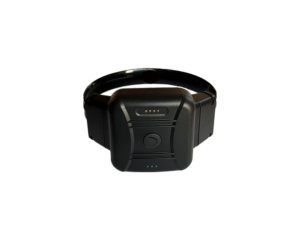

An ankle bracelet monitor is one of the most visible tools in modern community corrections—but public understanding often stops at the blinking strap. This article explains, in plain language, how ankle bracelet monitoring works, which technologies agencies actually deploy, and why electronic ankle bracelet programs matter for budgets and public safety. It is written for supervision staff, policymakers, journalists, and families who need accurate context without vendor hype.
Ankle Bracelet Monitor Explained: How Electronic Monitoring Bracelets Protect Communities
When courts and agencies order supervision outside a jail or prison wall, they need verifiable answers to recurring questions: Is the person honoring geographic restrictions and schedules? Is the electronic ankle bracelet still physically intact? Can staff explain alerts clearly enough to hold up in court? Hardware and software combine to produce those answers; the sections below map each layer from satellite signals to officer dashboards.
For a technical deep dive into architectures, see our companion piece How Ankle Monitors Work: Technology Guide. If you are comparing vendors and market landscape, read Top Ankle Monitor Companies in 2026. For flagship one-piece GPS specifications used as a reference example below, see CO-EYE ONE.
What Is an Ankle Bracelet Monitor?
In everyday speech, people say “ankle monitor,” “GPS bracelet,” or “house arrest bracelet.” In procurement and court orders, the same class of device is usually called an electronic ankle bracelet or simply a ankle bracelet monitor when the emphasis is on continuous supervision rather than a one-time sanction.
At minimum, a monitor is a tamper-aware wearable secured to the lower leg. It generates time-stamped events—location fixes, proximity confirmations, motion or strap-integrity signals—and transmits them to a vendor or agency platform. Supervision software turns raw events into maps, curfew compliance views, exclusion zones, and prioritized alert queues for officers.
Ankle bracelet monitoring is not a single technology. Programs mix GPS-class community tracking, radio-frequency home detention checks, smartphone-tethered modes, and specialty sensors (for example continuous alcohol monitoring) depending on statute, risk level, and budget. Confusing these modalities produces unrealistic court expectations and poorly scoped requests for proposals.
How Ankle Bracelet Monitoring Works: From Fix to Alert
Most community GPS ankle bracelet workflows follow the same skeleton. On-device firmware schedules positioning attempts, applies motion-aware power policies, packages tamper state, and opens encrypted cellular sessions to an ingest endpoint. Cloud services correlate timestamps with inclusion polygons, exclusion buffers, curfew templates, and victim-safety perimeters, then grade alerts for human review.
Positioning
Outdoors, receivers use satellite navigation—often multi-constellation GPS blended with BeiDou, GLONASS, and Galileo—to compute latitude, longitude, speed, and uncertainty. Indoors and downtown, pure GNSS degrades; credible platforms add WiFi-assisted fixes and cellular network-assisted location where policy allows.
Communications and security
Coordinates only matter after they reach the monitoring center. LTE-M and NB-IoT modems are common in current-generation hardware because they trade bandwidth for battery life compared with smartphone-style LTE; GSM compatibility often remains for transitional carrier coverage. Expect TLS-protected transport, authenticated devices, and role-based dashboards suitable for discovery and audit—not consumer-grade fitness sync.
As a concrete datasheet reference (not a universal guarantee for every neighborhood), the CO-EYE ONE one-piece device publicly lists multi-constellation GNSS plus WiFi and LBS assistance, LTE-M/NB-IoT/GSM connectivity described as 5G-compatible at the modem layer, and sub-two-meter GPS accuracy expressed as CEP under favorable sky view. Agencies should still run local pilots that mirror courthouses, transit stations, and job sites.
Types of Ankle Bracelet Monitors
Buyers should classify equipment by the supervision question being asked—not by the word “GPS” alone.
One-piece GPS ankle bracelet monitors
A single housing carries GNSS, cellular modem, battery, charging interface, and tamper sensing. One-piece designs reduce Bluetooth pairing drift and lost-hub help-desk volume. They are common when courts require continuous community traces for higher-risk caseloads.
Two-piece GPS systems
A lightweight ankle transmitter talks to a pocket or home hub that performs cellular reporting. This can improve comfort for some participants but adds logistics: hub charging, pairing stability, and clear swap procedures when devices are replaced.
RF proximity monitoring
Radio-frequency systems verify that an ankle transmitter remains within range of a fixed base station during scheduled windows. They answer a narrower question than full GPS traces—essentially “home during curfew”—and can be cost-effective when continuous movement mapping is unnecessary.
BLE-assisted modes
Bluetooth Low Energy appears in leash functions between a bracelet and an approved phone or hub, and in hub-assisted reporting tiers that can extend battery life when policy permits the hub to shoulder cellular uploads. These modes must be documented plainly in court orders so participants understand when location reporting shifts between devices.
Who Wears an Ankle Bracelet Monitor?
Eligibility and hardware modality depend on state law, local program rules, and judicial orders. Common cohorts include:
- Pretrial release: Geographic restrictions, association exclusions, and appearance incentives dominate; continuous GPS visibility is frequent when prosecutors need daytime movement accountability.
- Probation and parole: Supervision blends employment corridors, treatment appointments, and curfews. Software must separate approved deviations from true risk.
- House arrest and home detention: Curfew-centric RF models may suffice when courts require nightly presence; mixed GPS spot checks appear when employment travel is authorized.
- Domestic violence and protected-person programs: Dynamic exclusion buffers around protected persons stress geofence latency and victim opt-in workflows as much as raw GNSS accuracy.
- Sex offender registration contexts: Where statute permits electronic monitoring, exclusion perimeters around schools and parks test polygon update speed and officer-facing map clarity.
Across cohorts, align device class to the legal order, translate vendor reporting intervals into language defendants can follow, and document escalation playbooks before alerts flood night-shift queues.
Technology Inside Modern Electronic Ankle Bracelets
GPS and assisted positioning
Professional bracelets are closer to rugged IoT endpoints than to consumer wearables. Multi-constellation GNSS improves fix availability; assisted modes reduce “unknown location” gaps that waste sworn time or invite courtroom arguments about evasion versus radio physics.
Cellular backhaul
Modem choice affects total cost of ownership and battery endurance. Programs migrating off legacy 2G/3G hubs should scrutinize vendor roadmaps because carrier sunsets strand hardware fleets faster than many contract cycles anticipate.
Anti-tamper design
Mechanical strap attacks—cutting, spreading, forcing clips—must surface as prioritized alarms. Fiber-optic integrity loops monitor continuity through strap and housing so a breach breaks an optical path and generates a structural event rather than inferring removal from motion noise alone. Manufacturer documentation for CO-EYE ONE describes fiber-based strap and case monitoring aligned with high-confidence tamper signaling for agencies that prioritize low-ambiguity alerts.
Battery and charging
Endurance scales with fix rate, cellular technology, and RF environment. Representative one-piece designs such as CO-EYE ONE specify about seven days in standalone mode at a five-minute LTE-M/NB-IoT reporting interval with a 1700 mAh pack, plus roughly 2.5-hour recharge times; eSIM variants with BLE-connected modes can extend runtime when paired hubs or approved apps shoulder reporting. Always map vendor intervals to your court orders and verify with pilot data.
Benefits for Agencies and Communities
Cost and bed space
Policy discussions frequently contrast incarceration expense with supervision in the community. While exact figures vary by state, analysts and program budgets often cite annual incarceration costs on the order of roughly $35,000 per year per person as a planning anchor, compared with electronic monitoring program or participant-fee structures commonly discussed in a roughly $5–$25 per day range depending on services bundled (device lease, monitoring center staffing, drug testing, etc.). EM is not appropriate for every case, but the orders-of-magnitude gap helps explain why legislatures fund alternatives to jail expansion.
Research on recidivism
Evidence should be cited carefully. Peer-reviewed analysis of Florida offenders found electronic monitoring associated with approximately a 31% reduction in the risk of recidivism relative to non-monitored comparison groups (Coffey, 2006)—a statistic often quoted in grant narratives. It does not promise identical outcomes in every jurisdiction; local outcome dashboards remain essential.
Standards and testing language
According to the National Institute of Justice (NIJ), standards and research on offender tracking systems—including themes in NIJ Standard 1004.00—help agencies compare devices using shared performance vocabulary, especially around location accuracy and test protocols, rather than marketing headlines alone.
Public safety and transparency
When alert policies, map uncertainty, and tamper confirmation workflows are well trained, communities gain supervision that is explainable in court. Poor training and overstated precision erode trust as fast as any hardware defect.
How to Choose the Right Ankle Bracelet Monitor System
Use a requirements matrix tied to court orders, not to vendor brochures.
- Modality fit: Match one-piece GPS, two-piece GPS, RF home detention, or BLE-assisted tiers to statutory language.
- Positioning: Demand pilot routes through courthouses, employment sites, rural fringe, and transit hubs; score indoor gap rates honestly.
- Tamper: Specify strap and housing integrity technologies, alert latency, and how officers confirm true positives versus charging issues.
- Battery: Tie reporting cadence to endurance claims; archive firmware versions used during acceptance tests.
- Software: Evaluate officer workflows, role-based access, exports for discovery, and victim-safety tools where applicable.
- Lifecycle: Plan spare pools, install/removal labor, OTA policies, and responsible return logistics.
Vendor-neutral orientation on the competitive landscape appears in Top Ankle Monitor Companies in 2026; technical architecture context appears in How Ankle Monitors Work.
The Future of Ankle Bracelet Monitoring
Three trends are reshaping procurement conversations.
One-piece industrial design
Consolidating GNSS, modem, and tamper subsystems reduces failure modes and participant confusion. Quick-install mechanisms matter when agencies process thousands of fittings annually—tool-free procedures under a few seconds are now marketed on flagship devices such as CO-EYE ONE as operational differentiators worth scoring in pilots.
5G-era modems and LPWAN
“5G compatible” often refers to modern LTE-M/NB-IoT modules operating within evolved carrier cores while retaining GSM fallbacks where required. Buyers should ask for band support tables and sunset roadmaps, not slogan-level checkboxes.
Analytics and responsible automation
Machine learning can prioritize alert queues and detect anomaly patterns, but courts still expect human review for consequential decisions. The winning implementations combine cleaner sensor physics (for example fiber tamper channels) with transparent software rules—not black-box scores alone.
Readers evaluating hardware specifications for a one-piece reference platform can continue to CO-EYE ONE for line-item datasheets and certification summaries.
Frequently Asked Questions About Ankle Bracelet Monitors
What is an ankle bracelet monitor?
It is a supervised wearable that enforces court or agency rules by reporting location or home presence and by detecting strap or housing tamper, with data reviewed on a monitoring platform.
How does ankle bracelet monitoring work in practice?
Devices capture scheduled location or proximity events, encrypt telemetry, transmit via cellular or hub links, and apply software rules for geofences, curfews, and tamper escalation.
What is the difference between a one-piece and two-piece GPS ankle bracelet monitor?
One-piece units integrate all subsystems on the ankle; two-piece designs use an ankle transmitter plus a separate reporting hub, trading weight for pairing and logistics complexity.
Are electronic ankle bracelets accurate indoors?
Pure satellite fixes fade indoors; professional stacks add assisted positioning and policy grace periods, validated through local pilots.
How much does electronic monitoring cost compared to incarceration?
Budget narratives often contrast annual incarceration costs around tens of thousands of dollars per person with EM fees or program costs frequently cited near five to twenty-five dollars per day depending on jurisdiction and services—recognizing EM does not replace every custody need.
What does NIJ publish that helps buyers?
NIJ standards and research—including NIJ Standard 1004.00 themes—provide shared testing vocabulary for location performance and equipment comparison.
What does research say about recidivism?
Florida-focused peer-reviewed work reported roughly a 31% reduction in recidivism risk for monitored cohorts versus non-monitored comparators (Coffey, 2006); treat it as evidence for planning, not a guarantee.