Electronic tagging—often called e-tagging or simply an electronic tag—is one of the most visible tools in modern criminal justice supervision. Whether you are a court administrator, a county program manager, or a monitoring service evaluating hardware, the same questions recur: what exactly is a tag, how does data move from ankle to officer, and why are agencies upgrading legacy stacks in 2026?
This guide defines electronic tagging in plain language, walks through RF and GPS architectures, maps common justice-system use cases, compares device classes, outlines what a complete equipment footprint looks like, summarizes global adoption patterns, and weighs benefits against operational challenges. For deeper technology context, pair this article with our electronic monitoring technology guide and GPS ankle bracelet overview. Independent industry reporting on standards and policy appears at Ankle Monitor Industry Report; pretrial-focused education for service providers is available at REFINE ID.
What Is Electronic Tagging?
Electronic tagging is the use of a supervised wearable transmitter—most often an ankle tag—together with rules, software, and human review to verify that a person complies with court orders or agency conditions while living in the community. The tag is only one component; the full electronic monitoring value chain includes installation standards, charging or battery maintenance, encrypted communications, alert workflows, and evidence-grade logs.
Modern usage blends vocabulary: press coverage may say “tag,” procurement documents say “EM device,” and statutes may reference “electronic tracking” or “GPS monitoring.” In practice, buyers should specify the supervision question first—continuous location, home presence, curfew windows, victim proximity buffers, or lower-risk check-ins—then choose RF, GPS, hybrid, or smartphone-based modalities.
History: From 1980s Pilots to Global Programs
Programmatic electronic monitoring traces back to 1980s experiments in the United States and the United Kingdom, when early RF systems tested whether home curfew enforcement could substitute for jail nights without sacrificing public safety. Cellular infrastructure, miniaturized GNSS receivers, and cloud-scale monitoring platforms transformed the field: today’s e tagging programs routinely combine satellite positioning, Wi-Fi and cellular assists, and software analytics that did not exist when the first ankle transmitters were trialed.
Global Adoption
Electronic tagging is now embedded in pretrial, sentenced, and administrative supervision frameworks across North America, Europe, Oceania, and many other regions. Adoption is uneven—some jurisdictions emphasize RF home detention, others default to GPS for higher-risk cohorts—but the underlying trend is consistent: agencies want verified compliance data with audit trails suitable for hearings, violations, and program reporting.
How Electronic Tagging Works
Every tagging architecture answers two questions: what to measure (presence versus position versus check-ins) and how to move measurements securely from the field to a decision-maker.
RF Tags and Home Presence
Radio-frequency systems pair an ankle transmitter with a base station at a supervised location. The system’s core output is typically binary within design range: the tag is proximate to the receiver or it is not. That makes RF strong for curfew, home detention, and scheduled presence verification where continuous outdoor tracking is unnecessary.
GPS Tags and Continuous Location
GPS-class tags use satellite navigation (often augmented with additional constellations and indoor assists) to estimate position. Location fixes and tamper status usually reach a monitoring center through cellular or dual-path communications, where software applies geofences, schedules, and escalation policies. According to the National Institute of Justice (NIJ), performance expectations for GPS monitoring equipment are often discussed using operational benchmarks that agencies should align to local environments and court standards—not laboratory ideals alone.
Cellular Communication and Cybersecurity
Field devices typically rely on modern cellular categories suited to IoT-style telemetry, with encrypted transport and authenticated servers. Agencies should evaluate how vendors handle key rotation, firmware signing, tamper signaling integrity, and long-term platform availability—especially when contracts span multiple years.
Monitoring Centers and Officer Workflows
The monitoring center is where raw signals become operational truth: maps, timelines, exception reports, and prioritized alerts. Well-run programs invest in staffing models, alert tuning, and integration with case management so officers spend time on verified risk—not chasing sensor noise.
Evidence Handling and Audit Trails
Courts increasingly expect exportable histories: who acknowledged an alert, when firmware changed, and how geofence edits were authorized. Electronic tagging systems should therefore separate sensor truth (device-reported events) from human conclusions (officer notes, violations filed). When procurement teams demo platforms, ask for sample exports in common formats and test whether timestamps are traceable to authoritative server time—not only handset clocks.
Participant Experience and Compliance Levers
Tags fail in the field when charging cadences, strap fit, and help-desk responsiveness are unrealistic. Programs that publish plain-language participant guides—covering travel approvals, low-battery escalation, and tamper-event procedures—typically see fewer technical violations that are actually misunderstandings. Treating e-tagging as a shared operations problem, not only a hardware purchase, is part of why mature agencies upgrade to platforms with better device health telemetry in 2026.
Electronic Tagging in the Criminal Justice System
Tags do not replace legal authority; they instrument it. The same hardware may support different legal frameworks depending on orders, risk tiers, and victim-safety requirements.
Pretrial: Defendants Awaiting Trial
Pretrial programs often use GPS or combined strategies to reduce detention days while managing flight risk and public safety. Courts need clear conditions—exclusion zones, permitted movement windows, and charging expectations—so defendants understand compliance and vendors can configure rules accurately. Our pretrial electronic monitoring guide expands implementation considerations for courts and service providers.
Probation and Parole: Community Supervision
Probation and parole officers use tagging data to corroborate employment, treatment attendance, and curfew compliance. GPS adds context for dynamic risk; RF can be appropriate when the supervision question is fundamentally residential. Program design should match officer caseloads and alert volumes to avoid burnout-driven alert fatigue.
House Arrest and Home Detention
House arrest historically favored RF base-station models; many agencies now add GPS overlays for exceptions such as approved travel corridors. Clear policies for power loss, legitimate basement or garage attenuation, and rapid officer contact reduce disputes. See our house arrest monitoring guide for a fuller operational picture.
Sex Offender Registry Monitoring
Sex offender programs frequently demand continuous location visibility, exclusion buffers around sensitive locations, and long retention of evidentiary records. Hardware durability, tamper signaling quality, and charging logistics matter because cohorts may wear devices for extended periods.
Immigration Enforcement
Immigration alternatives to detention programs use tagging and reporting apps to verify compliance while cases proceed. Legal frameworks and vendor requirements differ materially from county probation markets; procurement teams should treat immigration deployments as a distinct requirements set. Our immigration electronic monitoring guide outlines technology and policy themes.
Domestic Violence and Protected-Person Geometries
Some jurisdictions pair GPS supervision with protected-person buffer zones, speed-of-approach logic, or coordinated victim-notification services—each of which stresses platform latency and geofence accuracy more than simple curfew checks. When tagging supports victim safety, RFPs should specify end-to-end test scenarios (approach from multiple directions, parking-lot adjacency, dense urban multipath) rather than generic “GPS required” language.
Juvenile and Specialized Populations
Juvenile electronic tagging raises additional consent, education, and strap-sizing considerations; hardware that is tolerable for adults may be inappropriate for adolescents. Medical exceptions, school privacy, and sports participation also require policy overlays. Agencies should confirm vendor strap inventories, dermatological guidance, and minimum age recommendations aligned with local statute before piloting.
Types of Electronic Tags
RF (Radio Frequency) Ankle Tags
RF ankle tags emphasize presence/absence within RF range of a programmed receiver. They are typically strong on battery simplicity for the transmitter and can reduce continuous cellular costs, but they do not provide full outdoor track history unless paired with another modality.
GPS Ankle Tags: Real-Time Location
GPS ankle tags answer the where question across communities. They are appropriate when courts or agencies need corridor enforcement, victim proximity logic, or investigative-quality location timelines. Buyers should scrutinize reporting intervals, indoor behavior, and tamper evidence.
Hybrid GPS + RF
Hybrid programs combine GPS visibility with RF-style home anchoring or secondary receivers. Hybrids can reduce ambiguous “indoor drift” complaints when configured well, but integration complexity and total cost of ownership rise—warranting disciplined RFP scoring.
Smartphone-Based Monitoring
App-centric supervision suits selected low-risk cohorts with reliable device custody and charging. Smartphone programs are not interchangeable with tamper-hardened ankle hardware for high-risk orders; many agencies use them as a step-down or parallel check-in channel rather than a full substitute for GPS tags.
Electronic Tagging Equipment: What Agencies Need
Procurement should cover devices, infrastructure where RF applies, software, and mobile officer/participant interfaces. For a structured evaluation methodology, use the GPS ankle monitor buyer’s guide.
GPS Ankle Monitor: CO-EYE ONE
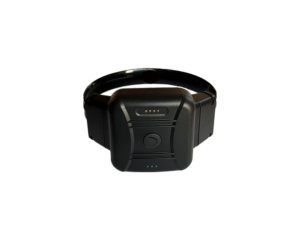
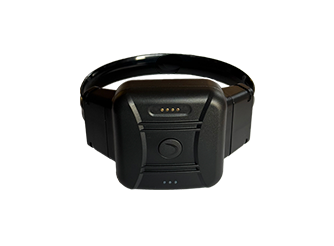
For agencies standardizing on a one-piece GNSS ankle tag, the CO-EYE ONE is a compact reference design: 108 g, 60×58×24 mm, IP68 waterproofing, standalone battery life of 7 days at a 5-minute LTE-M/NB-IoT reporting context, < 2 m GPS CEP-class accuracy, and fiber optic anti-tamper on strap and case. Installation is tool-free with a < 3 second snap-on workflow—reducing field time and inconsistent strap torque that can plague legacy two-piece programs.
RF Bracelet and Base Station: CO-EYE RF i-Bracelet + HouseStation
For residential supervision models, the CO-EYE RF i-Bracelet (65×22×10 mm, 18 g, 433 MHz, IP68, fiber optic anti-tamper, up to roughly 1 year battery life in normal operation with multi-year storage ratings) pairs with the CO-EYE HouseStation receiver (750 g unit with enhanced 433 MHz range—up to roughly 50 m indoor and 200 m outdoor depending on environment). HouseStation adds cellular/Wi-Fi backhaul, GNSS assists where applicable, and features suited to persistent home environments.
Monitoring Software: CO-EYE Unified Platform
Field hardware without actionable software becomes shelfware. The CO-EYE monitoring platform provides 13 functional modules in a unified architecture—supporting alert handling, reporting, role-based access, and operational scale appropriate to multi-officer programs.
Mobile App: CO-EYE AMClient
The CO-EYE AMClient app on iOS and Android supports supervised smartphone workflows such as continuous tethering modes, SOS signaling, and compliance features aligned to vendor program design—useful where courts permit smartphone augmentation alongside ankle hardware.
Spares, Logistics, and Lifecycle
Equipment planning is more than initial kit counts. Agencies need hot-swap inventory for strap failures, charging accessories suited to field officers, and a defined end-of-life path for batteries and sealed units. Two-piece ecosystems can strand participants if the paired hub is misplaced; one-piece cellular tags shift logistics toward SIM provisioning, carrier coverage maps, and OTA firmware governance. Score vendors on mean-time-to-replace and whether replacements preserve historical chain-of-custody in the platform.
Training and Policy Alignment
Upgrades fail when cad policy lags firmware. Run tabletop exercises that walk from device alarm to prosecutor notification, including defense discovery obligations where applicable. Training should cover lawful search of monitoring data, minimization principles, and cross-border data flows if your vendor hosts outside your jurisdiction.
Electronic Tagging Around the World
Cross-country comparisons are tricky because definitions, legal triggers, and published statistics differ. Still, several patterns hold:
- United States: Electronic tagging sits inside massive community supervision populations; counties combine vendor-run and government-run monitoring centers with widely varying contract terms. NIJ-oriented research remains a primary reference for performance and outcomes discussions.
- United Kingdom: The UK operates one of the longest-standing national tagging ecosystems, historically centered on RF curfew enforcement with ongoing expansion of GPS-style capabilities for eligible cohorts—often debated in Parliament and covered in Ministry of Justice releases.
- France and the Netherlands: Continental European programs illustrate mixed models: judicial authorities specify supervision modalities, while vendors must meet data protection and interoperability expectations that differ from US county procurement.
- Australia: State-level justice agencies deploy EM across bail, sentenced, and post-release pathways with procurement fragmented across jurisdictions—similar to US states.
If your program requires citation-ready statistics for grant writing, anchor claims to named government releases or peer-reviewed studies rather than marketing summaries.
Why Cross-Border Comparisons Resist Simple Rankings
Some European deployments emphasize administrative supervision and data minimization; US county markets often emphasize vendor-managed operations and rapid geofence edits. Australia’s state-led purchasing mirrors US fragmentation. Buyers should therefore import operational ideas—alert triage playbooks, independent audits, participant helplines—rather than copying caseload ratios from jurisdictions with different legal baselines.
Benefits and Challenges of Electronic Tagging
Benefits
- Cost and bed-day savings: Supervision fees often fall in the roughly $5–$15 per day range for active monitoring tiers in public discussions—far below $200+ per day jail cost narratives used in budget debates when full facility costs are counted. Exact figures vary by contract scope and what costs are included.
- Recidivism research: Summaries aligned with NIJ-cited literature associate electronic monitoring with about a 31% reduction in recidivism in a Florida study context—useful as a directional evidence point, not a universal guarantee.
- Family stability and services access: Community-based supervision can preserve employment, treatment continuity, and childcare realities that abrupt detention disrupts—when programs pair technology with support rather than alert volume alone.
Challenges
- Privacy and proportionality: Continuous location data is sensitive; agencies need retention policies, access controls, and legal clarity on data sharing.
- False alerts: Legacy tamper technologies generated operational noise; modern fiber optic anti-tamper approaches aim at zero false-positive strap integrity signaling when properly installed—reducing officer desensitization.
- Stigma and compliance psychology: Visible ankle tags affect participants; clear communication and proportional escalation policies matter.
- Coverage gaps: Indoor positioning, RF shadows, and rural cellular dead zones still require vendor truth-telling and local pilot data—not datasheet promises alone.
The Future of Electronic Tagging
Agency upgrades in 2026 cluster around four themes:
- Analytics and risk scoring: Platforms increasingly prioritize ranked alerts, pattern detection, and officer dashboards that explain why an event matters—rather than raw coordinate firehoses.
- Biometric adjacency: Voice or smartphone facial check-ins appear in some programs; high-risk ankle programs remain distinct from consumer biometrics and require separate security review.
- Lighter, more efficient hardware: One-piece GNSS designs like CO-EYE ONE illustrate pressure to reduce mass and charging burden without sacrificing tamper evidence.
- Interoperability: Prosecutors, defenders, and auditors want exportable evidence; open APIs and standards-adjacent reporting reduce vendor lock-in risk.
Key Takeaways for Procurement Teams
Electronic tagging is not a single product—it is a supervised measurement stack. Start from legal conditions and risk tiers, specify RF versus GPS versus hybrid requirements honestly, demand tamper and false-alert evidence from pilots in your built environment, and score total cost of ownership including officer time. For product-level GNSS specifications and installation workflow, review the CO-EYE ONE page alongside the buyer’s guide.
Frequently Asked Questions
What is electronic tagging?
Electronic tagging is supervised wearable tracking—usually an ankle transmitter—combined with software and monitoring staff to enforce court or agency conditions in the community.
Is “e tagging” different from GPS monitoring?
“E tagging” is informal language; the tag may be GPS-based, RF-based, or hybrid. GPS monitoring is a subset focused on geographic location tracking.
Can electronic tags work indoors?
GPS signals attenuate indoors; modern devices often blend GNSS with assists such as Wi-Fi or cellular references. RF home systems measure proximity to a base unit and can be more definitive for pure home presence if that is the legal question.
How accurate is electronic tagging?
Accuracy depends on modality and environment. High-quality GPS ankle hardware such as CO-EYE ONE is specified at < 2 m CEP-class performance under favorable GNSS conditions; real-world urban canyons and interior spaces require pilot validation.
What reduces false tamper alerts?
Mechanically ambiguous straps and capacitive-only schemes historically drove noise; fiber optic anti-tamper strap and case monitoring provides deterministic cut-or-remove evidence when implemented correctly.
Where can I read independent industry analysis?
Visit ankle-monitor.org for third-party EM industry reporting and deep dives; for pretrial industry education aimed at service providers, see refineid.com.