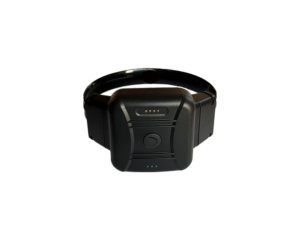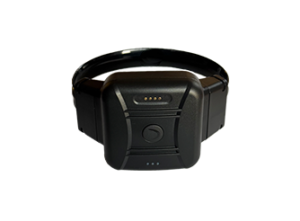

House arrest—also called home confinement or home detention—is a supervision option that keeps someone in the community under strict location rules instead of holding them in a jail cell around the clock. The most visible part of that arrangement is often the house arrest ankle monitor (sometimes called a house arrest bracelet, leg monitor for house arrest, or home confinement bracelet).
This guide explains, in plain language, how house arrest monitoring works, what rules commonly look like, what happens when alerts fire, and how costs compare to incarceration. It also includes a practical equipment overview for agencies comparing GPS one-piece devices, RF home systems, and smartphone-based supervision. For a broader primer on electronic monitoring categories, see our companion piece on electronic monitoring technology in 2026 and our house arrest solutions overview. Independent industry context is available from Ankle Monitor Industry Report; pretrial-focused background is summarized at Refine ID.
What Is a House Arrest Ankle Monitor?
A house arrest ankle monitor is a supervised wearable assigned by a court, probation department, pretrial services office, or other correctional authority. Its job is not “tracking for tracking’s sake”—it is to prove compliance with an order that typically requires you to remain at an approved address except during specifically permitted activities.
House arrest sits inside the larger world of electronic monitoring (EM), which can also include GPS supervision for people who are not strictly confined to a home, continuous alcohol-sensing bracelets, and phone-based check-in programs. What makes home arrest different is the dominance of the residence as the primary approved location and the way software encodes curfews, inclusion zones, and exceptions.
Two common technology families show up in house-arrest-style programs:
- GPS ankle bracelets that compute location using satellite navigation (often assisted by Wi‑Fi or cellular references) and upload encrypted events to a monitoring center.
- RF ankle transmitters paired with a base station at the residence, proving proximity (“is the person near the approved home unit?”) rather than plotting coordinates on a map.
Programs may combine modalities over time—for example, GPS while travel is permitted and stricter home rules during certain hours—so the written order and the monitoring agency’s configuration sheet are the real source of truth.
How House Arrest Monitoring Works
Modern house arrest monitoring is a three-part system: the device on the body, the communication path (cellular, Wi‑Fi, and/or RF), and the software platform where officers define rules and review alerts.
GPS zones, schedules, and geofences
For GPS-class supervision, the platform stores an inclusion zone around the approved residence (a “home fence”) and may add exclusion zones (for example, parks or addresses an order prohibits). Officers can also define allowed departure windows tied to employment or treatment. When the device’s reported location violates a rule—leaving home outside an approved window, entering an exclusion zone, or failing to return on time—the platform generates an exception for staff triage.
Many domestic-violence and protective-order contexts add victim stay-away logic: the same GPS backbone can be configured so that approach to prohibited addresses or overlapping movement patterns raises priority alerts. That is one reason GPS remains common even when the public label is simply “house arrest”—the same hardware often supports both home-centric and movement-with-constraints models.
Curfew enforcement
Curfew rules are schedule rules: you must be inside the approved boundary between set times. GPS makes curfew enforcement observable even when nobody drives by your house; the system compares timestamps and positions against the schedule your officer published.
Hybrid schedules are routine: for example, nights and weekends locked to the residence while weekday work windows stay open. If your order reads that way, confirm the exact clock times and time zone handling with your officer—software uses server clocks, not your personal reminder app.
Real-time alerts to officers
Serious programs treat alerts as operational workflows, not inbox noise. Depending on risk level and local policy, a zone breach might trigger a call to the participant, a field visit, or immediate law enforcement notification. That is why charging habits, honest reporting of schedule changes, and fast response to officer messages matter: they reduce false emergencies and keep trust intact.
Good monitoring vendors document alert latency expectations (how quickly a violation reaches the dashboard after a fix) and tamper class codes so agencies can train staff consistently. Participants benefit indirectly: fewer ambiguous alerts mean fewer stressful accusations.
For procurement teams evaluating how alerts should behave for your county, our GPS ankle monitor buyer’s guide walks through specification topics that belong in RFPs and court-contract language.
Types of House Arrest Monitors
When people search for a leg monitor for house arrest or ankle bracelet house arrest, they usually picture one device—but agencies actually choose among several architectures. The table below summarizes how each type answers the supervision question.
| Type | Primary question | Typical trade-off |
|---|---|---|
| One-piece GPS ankle unit | Where is the person now, and did they obey zones? | Strong location evidence; charging and cellular costs |
| RF ankle + home base | Is the person near the approved residence? | Efficient home proof; not full route mapping |
| Transdermal alcohol bracelet | Did drinking occur on a pattern the court cares about? | Different sensor stack; not a substitute for GPS unless ordered |
| Smartphone / app program | Did the person complete required digital check-ins? | Lower hardware burden; different tamper model |
GPS ankle bracelet (one-piece)
One-piece GPS ankle monitors combine GNSS positioning, tamper sensors, battery, and cellular modem in a single strap-mounted unit. They are common when agencies want continuous location visibility, route accountability, and rich exception reporting.
RF ankle bracelet plus base station
RF systems use a lightweight ankle transmitter that “checks in” with a powered base unit installed at the residence. They are a strong fit when the primary supervision question is home presence and when agencies want to reduce cellular data costs for lower-risk cohorts—while understanding that RF answers a different question than full-time GPS mapping.
Alcohol-detecting ankle monitor
Some orders require continuous alcohol monitoring using transdermal technology. That is a separate device class from standard GPS house arrest: it senses alcohol consumption patterns through the skin rather than proving you stayed home. Your paperwork will specify alcohol terms explicitly if they apply.
Smartphone app monitoring
Smartphone supervision can include scheduled check-ins, photo verification, and—in some architectures—Bluetooth tethering to a wearable. Apps can be appropriate for lower-risk tracks but are not interchangeable with high-security ankle hardware for every caseload. Agencies should document modality limits in policy and in participant agreements.
House Arrest Rules and Conditions
Exact conditions vary by state, court, and agency, but participants usually see a consistent pattern:
- Stay-at-home zones: Remain inside the programmed home boundary unless an exception is active.
- Approved departure times: Work, medical care, legal appointments, religious services, or treatment may be pre-approved as recurring or one-time windows.
- Work and school exceptions: Often require employer or school verification and an officer-updated schedule; “I had to go” is not enough without prior approval.
- Alcohol and substance rules: Even without a transdermal bracelet, orders may prohibit alcohol or require testing—violations can be treated as seriously as a zone breach.
- Charging and wear requirements: Tamper bands must remain intact; devices must be charged per protocol so the agency does not lose visibility.
- Truthful reporting: Address changes, roommate moves, power outages, and employment changes should be reported promptly so officers can adjust geofences.
Charging discipline is a common pain point: GPS ankle bracelets upload events over cellular links. If you routinely let the battery die, the monitoring center may see a communication gap and treat it like a risk event. Build a routine—same outlet, same overnight window—and keep the charger kit in a predictable place. If your device vibrates or beeps for low battery, treat that as an order-level obligation, not a suggestion.
Travel to religious services, parenting time, or court-ordered classes frequently requires a documented schedule in the software, not only verbal OK from a single staff member. Bring written proof of recurring appointments when you check in so geofences match reality.
If you are unsure whether an outing is permitted, contact your officer before you leave. GPS logs are timestamped; “retroactive permission” does not erase a technical violation.
What Happens If You Violate House Arrest?
Violations are not all handled the same way; agencies use graduated responses tied to risk and history. A common sequence looks like this:
- Immediate alert: The monitoring platform flags a zone, schedule, communication, or tamper event.
- Triage: Staff determine whether the alert is explained (power outage, GPS shadow in a parking garage) or a true breach.
- Sanctions short of revocation: Stricter curfew, additional check-ins, or program fees may be applied.
- Court hearing: Serious or repeated violations can be brought back to a judge or hearing officer.
- Revocation and jail: The supervising authority may remove you from home confinement and order custody if the violation warrants it.
Because outcomes can escalate quickly, treat every alert as a legal-risk event—even when you believe you were compliant.
House Arrest Ankle Monitor Equipment Guide (for Agencies)
Choosing hardware for house arrest ankle monitor programs means matching supervision goals to device capabilities, then validating tamper integrity, battery life at your reporting interval, and total cost of ownership (including officer triage time). Below is a concise, specification-oriented snapshot of CO-EYE options referenced throughout our product documentation.
One-piece GPS: CO-EYE ONE
The CO-EYE ONE is a compact one-piece GPS ankle bracelet built for continuous community supervision. Key characteristics relevant to house-arrest-style GPS tracks include roughly seven days of standalone battery life at a typical LTE-M/NB-IoT reporting cadence (5-minute interval class), multi-constellation GNSS with assisted indoor references, and fiber optic strap and case tamper detection engineered for zero false positives on cut/strap tamper events. Installation is designed for rapid field placement without tools.
Two-piece RF system: CO-EYE RF i-Bracelet + HouseStation
For residence-centric supervision, the CO-EYE RF i-Bracelet pairs with the CO-EYE HouseStation base receiver. The HouseStation’s enhanced antenna architecture is designed for difficult building environments—public materials describe reliable RF reach on the order of 50 meters indoors and 200 meters outdoors, with high penetration through multiple concrete walls—so agencies can place the base unit pragmatically while preserving confidence in home-presence signaling.
Smartphone pathway: CO-EYE AMClient
For lower-risk cohorts where policy allows phone-mediated supervision, CO-EYE AMClient supports continuous supervision features on iOS and Android, including SOS workflows and Bluetooth tethering concepts where configured. This does not replace secure ankle hardware for high-risk orders, but it can reduce friction for compatible caseloads when explicitly approved.
Deep comparisons of architectures belong in procurement workshops; start with the buyer’s guide linked above if you are drafting specifications.
Cost of House Arrest vs Jail
Public conversations about justice costs usually contrast per-day participant fees with full incarceration economics. Participant-paid monitoring is often discussed in a band of roughly $5–$15 per day for active GPS service tiers, depending on vendor, insurance, and what is included (device, cellular, officer dashboards, field service).
Total cost of ownership for agencies includes more than the vendor invoice: officer time spent clearing alerts, field visits to verify tamper events, IT integrations with case management, and replacement straps. A cheaper per-diems contract that floods staff with low-quality alerts can cost more than a disciplined platform with fiber-based tamper integrity and predictable exception codes.
Incarceration, by contrast, is expensive when you count staffing, medical care, facility capital, and programming. It is common to see $75,000+ per year (or more) cited as all-in annual jail costs per person in US public-finance discussions, understanding that exact figures swing by jurisdiction and accounting method.
Some municipalities publish fee schedules that translate into modest annual totals for certain monitoring programs. For example, Washington, D.C. has appeared in public materials discussing participant-side monitoring costs on the order of about $750 per year in specific program contexts—treat any number as a snapshot that can change with ordinance updates.
Cost is not only dollars: home confinement can preserve employment and family stability when supervision is fair and alerts are well managed—while jail removes those supports overnight. Agencies should publish transparent fee policies so participants understand obligations up front.
House Arrest Statistics and Effectiveness
National counts of people on electronic monitoring are hard to pin down because programs are fragmented across counties, vendors, and funding streams. Advocacy and research organizations—including analyses in the spirit of the Vera Institute of Justice’s work on electronic monitoring—have estimated that well over 100,000 people may be on EM nationally at a given time, with some reporting contexts referencing figures on the order of 125,000+ under monitoring in the United States. Treat any headline number as an estimate; the actionable point is scale: millions of alert events flow through platforms yearly.
Scale matters for policymakers: when tens of thousands of participants generate exceptions, small improvements in false alert rates and officer triage time translate into huge labor savings. That is one reason agencies increasingly scrutinize tamper-sensor design and fiber-based cut detection instead of accepting legacy strap designs that cry wolf.
On effectiveness, summaries aligned with National Institute of Justice–oriented discussions have associated electronic monitoring with about a 31% reduction in recidivism in a Florida study context. Technology is not a magic wand—outcomes depend on risk assessment, services, proportional sanctions, and whether agencies invest in alert workflows instead of alert volume.
Frequently Asked Questions
These answers are general education only; your court order and agency rules control.
What is a house arrest ankle monitor?
A court- or agency-ordered wearable used to verify that someone stays at an approved residence or follows an approved schedule. GPS models report real-time location; RF systems verify proximity between an ankle transmitter and a home base unit. The exact device and rules depend on your jurisdiction.
Can I leave my house for work or medical appointments on house arrest?
Many programs allow scheduled exceptions if they are pre-approved in writing and programmed into the monitoring software. Never assume an exception is valid until your officer confirms it in the system.
How does GPS house arrest monitoring differ from a simple curfew check?
GPS supervision compares your position to geofences, schedules, and exclusion zones, and can alert staff if you leave an approved zone or enter a prohibited area. Curfew programs emphasize being home during set hours; GPS can enforce both curfew and movement rules together.
Do I have to charge my ankle monitor every day?
Requirements depend on the device and reporting interval. One-piece GPS units typically need regular charging; program rules may require you to keep the device powered. Letting a GPS unit die can trigger a communication or tamper-related review.
What happens if my house arrest bracelet alerts?
Monitoring centers and officers receive exception alerts. Responses vary from phone calls and home visits to court hearings. Serious or repeated violations can lead to revocation and jail.
Is a smartphone app the same as an ankle bracelet?
No. Smartphone supervision apps support a different modality—check-ins, schedules, and sometimes Bluetooth tethering to a wearable—but they are not interchangeable with secure ankle hardware for every risk level unless your order explicitly allows that track.
How much does house arrest monitoring cost compared to jail?
Public reporting often cites roughly $5–$15 per day for active GPS monitoring service tiers, while full annual jail costs frequently exceed $75,000 per year in many US jurisdictions when all facility costs are counted. Some jurisdictions publish lower annual participant totals; for example, Washington, D.C. has been discussed at roughly $750 per year in certain program contexts—verify locally.
Does electronic monitoring reduce repeat offenses?
National Institute of Justice–oriented summaries have cited about a 31% reduction in recidivism in a Florida study context. Local outcomes still depend on services, sanctions, and alert management.