

Community corrections is the backbone of how the United States supervises millions of people outside jail and prison walls: legal conditions, treatment mandates, employment expectations, victim safety planning, and—increasingly—digital tools and electronic monitoring platforms that turn location, schedule, and sobriety signals into actionable workflows. If you are a policymaker, vendor, or practitioner, this 2026 pillar explains what community corrections programs are, how they differ from custody, where GPS monitoring fits, and how to procure systems that protect public safety without drowning officers in noise.
National criminal justice statistics commonly describe on the order of 4.5 million people under community supervision in the United States—probation and parole alone account for the largest share, with pretrial, diversion, and specialty courts adding further volume depending on definitions and data year. Exact counts move with legislation and reporting methodology; use official Bureau of Justice Statistics releases when you need citation-grade figures for budgets and council briefings.
Stakeholders often bundle pretrial services, diversion, and specialty dockets into the same strategic conversations as sentenced probation and parole. That breadth matters for technology strategy: a single vendor stack rarely covers every legal niche, yet dashboards, data retention, and audit expectations should still feel coherent to judges and county commissioners who fund community corrections as one public-safety line item.
For adjacent deep dives, read our electronic monitoring guide (how it works, types, technology) and probation ankle monitor rules and technology. County program designers should bookmark county electronic monitoring programs and probation GPS monitoring guide. Equipment specifications for one-piece GPS hardware appear on CO-EYE ONE. Independent pretrial context is summarized at Refine ID. Research summaries from the National Institute of Justice (NIJ) help anchor technology claims in published justice literature.
What Is Community Corrections?
At its simplest, community corrections means court- or agency-ordered supervision in the community instead of continuous confinement. The field spans community-based corrections agencies—probation departments, parole authorities, pretrial services, specialty courts, and contracted monitoring providers—that share a common tension: maintain accountability and victim safety while supporting compliance, employment, treatment, and family stability.
Definition and scope
Definitions vary by statute, but operational scope usually includes conditions of release (where someone may live, work, or travel), reporting requirements, drug and alcohol testing, electronic monitoring where ordered, and responses to violations from graduated sanctions through revocation hearings. Community supervision is often used as an umbrella term for probation and parole caseloads; community corrections language appears frequently in policy documents when legislatures fund blended systems that include EM vendors, day reporting, and treatment partnerships.
Brief historical context
Modern probation and parole emerged from nineteenth- and twentieth-century reforms that sought alternatives to indeterminate incarceration, emphasizing rehabilitation and community reintegration. Late twentieth-century shifts toward risk management and accountability metrics expanded surveillance tools—first radio-frequency home tethering, then cellular GPS, smartphone applications, and integrated software platforms. Today, supervision technology is inseparable from staffing models: the same GPS breadcrumb is useless without trained community corrections officers who know how to triage alerts, document decisions, and coordinate with law enforcement.
Readers evaluating procurement language should insist that RFPs distinguish modalities (what sensor answers what legal question) from services (who reviews alerts at 2 a.m.). That discipline keeps community corrections programs legally defensible and operationally sustainable.
Pretrial services units—where they exist—often sit administratively adjacent to probation yet follow different statutory timelines and risk rules. When agencies merge IT systems across pretrial and post-conviction tracks, data-sharing agreements must respect confidentiality boundaries while still giving judges timely status reports. The lesson for community corrections leadership is architectural: design integrations around legal roles, not around vendor product silos.
Types of Community Corrections Programs
Most Americans encounter the field through one of the program archetypes below. Agencies frequently combine them—pretrial GPS with treatment court requirements, or parole with intensive supervision and employment mandates.
Probation
Probation suspends or substitutes carceral time with conditions enforced by a probation agency. Risk assessment, office reporting, drug testing, and electronic monitoring may all appear on the same case plan. Our probation GPS monitoring guide walks through how GPS rules map to standard probation orders.
Parole
Parole supervision follows a period of incarceration; conditions emphasize reentry stability—housing, employment, treatment—and rapid response to non-compliance. GPS and RF tools are common when maps, curfews, or victim stay-away buffers are court- or board-imposed.
House arrest and home confinement
Residential-focused orders prioritize approved addresses and schedules. GPS proves movement in the community; RF tethering can verify proximity to a home base unit during curfew windows. Many agencies blend both modalities across risk tiers.
Work release and day reporting
Work release allows approved employment or training outside a facility while retaining custody or close supervision status; day reporting centers concentrate check-ins, services, and drug testing. Technology may include biometric kiosks, scheduled app check-ins, or GPS during approved movement corridors.
Electronic monitoring (EM)
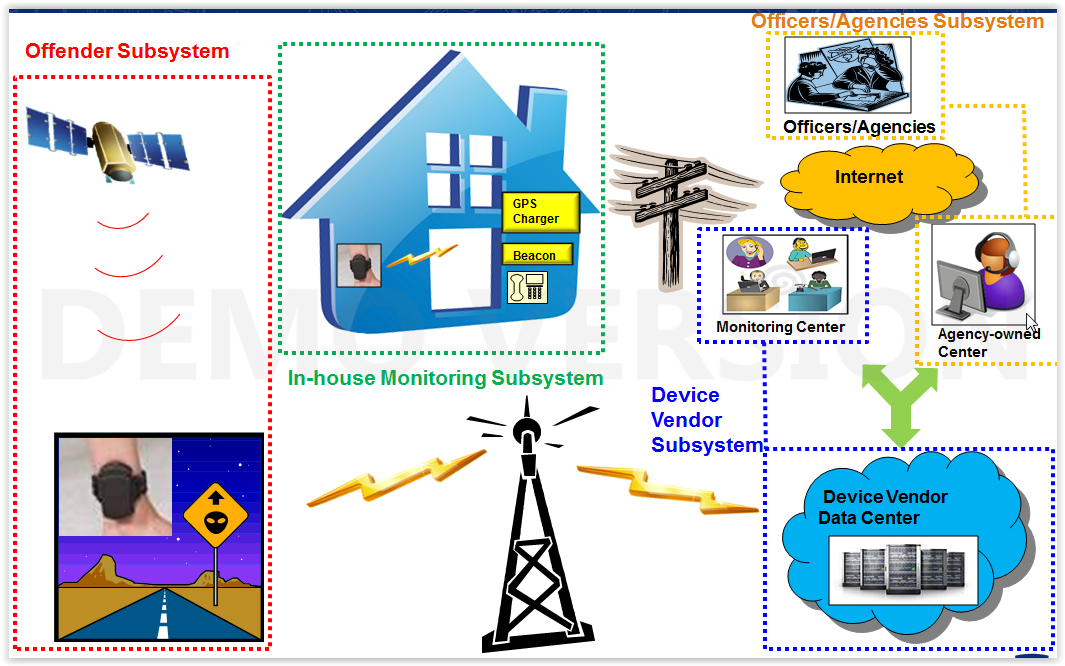
EM is not a single device—it is a program layer. GPS ankle monitors answer continuous location questions; RF systems answer “home now?” questions; alcohol bracelets answer abstinence chemistry questions on a different evidence path. The electronic monitoring technology guide unpacks modalities without conflating sensors.
Drug courts and specialty dockets
Drug courts and related specialty courts pair judicial oversight with treatment incentives and graduated sanctions. Location monitoring may protect victims or enforce geographic exclusions while treatment providers manage sobriety metrics through testing and counseling—not through GPS chemistry fantasies.
Across these models, successful community-based corrections share a pattern: written conditions match the software rules actually loaded in vendor platforms, and participants receive plain-language explanations that mirror officer dashboards.
Performance metrics that matter
Legitimate program evaluation goes deeper than device uptime. Useful dashboards track time-to-first-human review after high-priority alerts, revocation rates disaggregated by offense class, employment and treatment engagement where applicable, and participant-reported barriers such as charger access or shift-work conflicts. When elected officials ask whether community corrections “works,” translate the question into those operational measures—not into raw ping counts.
The Role of Technology in Community Corrections
Supervision technology should reduce uncertainty, not generate busywork. The sections below map tools to supervision questions—so your architecture matches court orders and your teams know which alerts deserve midnight escalation.
GPS monitoring
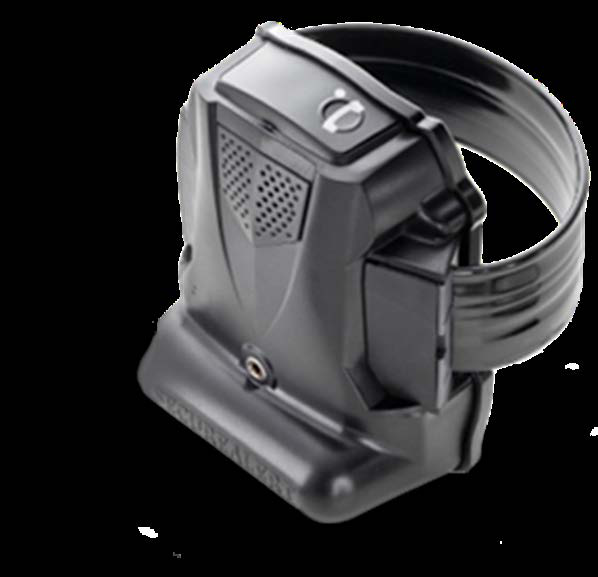
GPS-class ankle monitors receive satellite navigation signals, estimate position, encrypt payloads, and transmit location and tamper status over cellular networks to a monitoring platform. Platforms apply geofences, schedules, and exception taxonomies. GPS is strongest when the legal question is continuous community movement relative to inclusion, exclusion, and corridor rules.
RF monitoring
Radio-frequency systems verify proximity between an ankle transmitter and a base station—classically at home. RF can be cost-effective for overnight curfew proofing but does not provide full outdoor route mapping unless paired with mobile tracking components.
Smartphone applications
Apps can deliver reminders, photo or biometric check-ins, and participant education. Some architectures tether Bluetooth to wearables for additional continuity. Policy must state whether app-only tracks meet the same evidentiary bar as strap-integrated tamper classes for higher-risk cohorts.
Alcohol monitoring
Transdermal bracelets, breath testing schedules, and ignition interlock programs answer sobriety compliance—distinct from GPS location. Many cases require both location and sobriety modalities specified explicitly; one bracelet cannot silently assume the other court question.
Biometrics and identity assurance
Voice, photo, and fingerprint verification reduce “wrong person answered the phone” risks in lighter-touch tracks. Biometrics complement—but do not replace—hardware tamper integrity when orders demand continuous body-worn accountability.
Data integration and court reporting
Monitoring centers generate enormous event streams; prosecutors and defenders still need human-readable narratives. Modern supervision software stacks should expose APIs or scheduled exports that map cleanly to case management systems, with immutable timestamps and user attribution for configuration changes. When technology leaders pitch “AI,” start by asking whether baseline CSV and PDF exports are accurate—judges notice contradictions before they notice neural networks.
For county governance context on vendor models and procurement pitfalls, see county electronic monitoring programs.
GPS Ankle Monitors in Community Corrections
GPS ankle monitors are now standard in many supervision programs for medium- and higher-risk cohorts where maps, exclusion zones, and rapid exception visibility matter. Agencies use them across pretrial, sentenced probation, parole, domestic violence dockets, and specialty courts—anywhere the order encodes geography as law.
How agencies deploy GPS in practice
Typical workflows include enrollment (fitting and activation), baseline mapping of home and work, exclusion buffers around protected persons or addresses, approved travel windows, and escalation policies that distinguish signal loss from tamper. Training emphasizes that GPS is probabilistic geometry under sky view constraints; evidentiary exports should document fix methodology and timestamps transparently for defense review.
Operational benefits
When platforms are tuned well, GPS reduces officer guesswork: structured alerts replace anecdotal reporting, and compliance narratives become auditable. Multi-day battery life and low-noise tamper sensing materially reduce technical violations driven by charging logistics or ambiguous strap events—important equity considerations in community supervision.
Equity, access, and charging logistics
GPS supervision assumes participants can charge devices, maintain shelter stability, and sometimes afford ancillary fees where statutes allow participant contributions. Agencies committed to equitable outcomes publish charging support protocols—loaner cables, weekend help-desk hours, and documented grace periods for benign low-battery events—so poverty does not masquerade as non-compliance on the map.
Illustrative manufacturer reference: CO-EYE ONE
Procurement teams comparing hardware should validate every figure in current datasheets and pilot data. As a concrete reference architecture, CO-EYE ONE is a one-piece GPS ankle monitor specified by the manufacturer at approximately 108 g; up to about seven days standalone battery life at a representative five-minute LTE-M/NB-IoT reporting interval; under two-meter GPS accuracy under favorable multi-GNSS conditions; IP68 ingress protection; tool-free install in under three seconds; and fiber optic anti-tamper on strap and case with a zero false-positive design claim for genuine fiber-path breaks. REFINE cites more than 200,000 devices deployed across more than thirty countries as fleet-scale context.
Use these specifications as interview questions for any vendor: ask how strap integrity is sensed, how battery scales with your mandated interval, and how exports read in hearings—not only what marketing PDFs assert.
Community Corrections Officer: Roles and Challenges
The community corrections officer—title variants include probation officer, parole officer, pretrial officer, or supervision officer—is the human bridge between court orders and daily compliance. Technology amplifies both their reach and their inbox.
Core responsibilities
Officers assess risk, enforce conditions, refer to treatment and services, document contacts, respond to violations, coordinate with victims where statutes require, and testify accurately about monitoring data. In EM-heavy caseloads, they also interpret geospatial narratives and decide when to dispatch field teams.
Caseload management under digital supervision
High caseloads plus always-on device feeds can create alert fatigue. Effective agencies tier risk, throttle low-value notifications, and invest in supervisors who audit whether software defaults match legal standards. Training should include GNSS limitations, indoor fade, and the difference between device lag and participant misconduct.
Technology tools and training
Modern platforms combine dashboards, mobile officer views, and export packages for prosecutors and defenders. Officers need scenario drills: tamper tests, exclusion approaches, charging failures, and loss-of-signal in urban canyons. Pair tool training with policy training so software reinforces officer discretion rather than replacing it.
For participant-facing explanations of rules and duration expectations, agencies often share educational articles such as our probation ankle monitor guide alongside local handbooks.
Community Corrections vs Incarceration: Cost and Outcomes
Legislatures and county boards increasingly ask whether community-based corrections deliver safety and savings relative to jail expansion. Answers should be local—marginal bed-day costs differ—but several framing points recur nationally.
Cost comparisons
Annual incarceration costs often exceed $30,000 per bed-year in many US jurisdictions when staffing, medical care, programming, and capital are fully loaded, though precise figures vary widely. Active electronic monitoring program fees are frequently discussed in a band of roughly $5–$15 per day per participant for service-heavy GPS tiers before volume discounts—always request itemized quotes separating hardware, cellular, monitoring center staffing, and field service.
The policy question is not merely per-diem arithmetic but total system cost: revocation hearings, jail transports, victim services, and officer overtime when false alerts explode. Sometimes a slightly higher vendor rate saves money if alert quality improves.
Capital planning should treat community corrections technology as recurring infrastructure, not a one-time gadget purchase: firmware lifecycles, carrier sunsets, spare-pool depreciation, and cybersecurity assessments belong in the same multiyear forecast as staff salaries—otherwise replacement shocks arrive mid-grant with no elegant migration path.
Outcomes and evidence
Outcome claims require humility: technology is not a magic talisman. Nonetheless, summaries consistent with NIJ-oriented communications have highlighted Florida research context associating GPS monitoring with about a 31% reduction in reoffending—valuable for grant narratives when paired with descriptions of local supervision quality, treatment access, and sanctioning consistency. See NIJ resources at nij.ojp.gov for the underlying research landscape.
Outcomes across probation, parole, and pretrial tracks also hinge on employment, housing, behavioral health, and procedural fairness—GPS dots on a map cannot substitute for services when criminogenic needs remain unaddressed.
Selecting Technology for Community Corrections Programs
Vendor selection for community corrections programs should be boringly structured: scorecards, pilots, and written alert dictionaries. Use the checklist below in RFP attachments and evaluation committees.
Require vendors to demonstrate exception handling under your real cellular carriers, not only in lab demos. Ask for references from jurisdictions with similar urban density and weather exposure. Document how firmware updates roll out and whether participants must visit offices for swaps—logistics often dominate satisfaction scores more than raw spec sheets.
- Legal fit: Map each court order bullet to a sensor or service row—location, home presence, sobriety, check-ins.
- Tamper integrity: Request false-positive rates for strap events under controlled tests; understand fiber, optical, and mechanical sensor classes.
- Battery vs. reporting interval: Model endurance at the cadence your judges expect; publish charging responsibilities in participant agreements.
- Urban RF performance: Pilot in your downtown, transit hubs, and representative suburbs; compare fix rates and time-to-alert.
- Cybersecurity and audit logs: Require encryption narratives, access controls, and exportable chain-of-custody friendly logs.
- Officer UX: If a dashboard needs six clicks to clear a benign event, your community supervision team will hate it—and ignore it.
- Total cost of ownership: Include spares, training refreshers, vendor swap logistics, and prosecutor/defender education.
Compare one-piece GPS architectures like CO-EYE ONE against alternative market offerings using the same columns; do not let slide decks skip comparability. Cross-link technical literacy with electronic monitoring: types and technology for new committee members.
The Future of Community Corrections
Looking ahead, the field will continue blending human judgment with automation—but the ethical line is supervision assistance, not punishment by algorithm alone.
AI and predictive analytics
Risk scores and early-warning analytics can help prioritize officer visits if validated locally and audited for bias. Agencies should publish model limitations and appeal pathways; black-box scores make poor companions to due process.
Risk assessment integration
Static and dynamic risk tools already inform caseload stratification. The opportunity is tighter feedback loops between assessment, EM modality selection, and service referrals—so high-risk participants receive monitoring and meaningful support.
Graduated sanctions and incentives
Graduated responses—warnings, curfew tightening, increased testing, short jail stays as last resort—reduce revocation churn when paired with clear matrices. Technology should make sanctions swift and proportionate, not noisy and arbitrary.
Independent industry context on pretrial framing continues to evolve; see Refine ID for resources that complement agency policy work. NIJ publications remain a primary anchor for evidence summaries as new studies appear.
Throughout, supervision technology must stay accountable to the officers and participants who live with its alerts. The best 2030 stack will be the one your officer teams trust enough to use consistently—and your courts trust enough to cite fairly.
Frequently Asked Questions
What is community corrections in simple terms?
In plain language, it means supervising people under court or agency authority while they live in the community—through conditions, treatment, reporting, and sometimes electronic monitoring—rather than holding them full-time in jail or prison. The formal label community corrections captures that entire supervised-liberty ecosystem.
How many people are on community supervision in the US?
Published national statistics commonly cite on the order of roughly 4.5 million people under probation, parole, or related community supervision depending on year and definition. Verify the exact figure for your briefing using current Bureau of Justice Statistics releases.
What is the difference between supervision programs and jail?
Jail and prison emphasize custody; community corrections programs emphasize supervised liberty with conditions. Electronic monitoring and reporting requirements add structure without the full marginal cost of bed-days—though revocation remains available when rules break seriously.
Do GPS ankle monitors fit every supervision case?
No. GPS answers location and schedule questions; it does not replace transdermal alcohol monitoring when abstinence chemistry is the core court requirement. Match modality to order, and document pairing when both are needed.
What should agencies budget beyond per-diem monitoring fees?
Budget for officer training, field responses, spare devices, data plans, software seats, export support for hearings, and participant charging support when battery logistics drive technical violations.
Where can I read NIJ-oriented research on electronic monitoring outcomes?
Start with the National Institute of Justice portal for summaries and linked studies. Florida-context findings citing roughly 31% recidivism reduction associated with GPS monitoring frequently appear in NIJ-aligned communications—use them carefully with local implementation context.
How does community-based corrections support victims?
With clear exclusion zones, rapid alerts on prohibited approaches, documented officer responses, and parallel victim services—not with dashboard theater. Technology must be paired with protocols victims can understand.
Last updated: March 2026. Product specifications referenced for CO-EYE ONE are per manufacturer documentation—confirm current datasheets and pilot results before award. For quotes and integration questions, use CO-EYE ONE and contact sales through the site.