

When a court orders home confinement or home detention, the public usually notices one object first: the house arrest bracelet on the ankle. That single strap represents an entire supervision stack—sensors, radios, encrypted reporting, geofences, curfew schedules, and officer workflows that decide what counts as compliance versus a violation.
This 2026 guide explains what a house arrest bracelet is, how GPS, RF, and cellular pieces fit together, which device architectures agencies actually buy, who typically wears them, what rules look like in practice, how costs compare to jail, and how procurement teams score hardware. For program design context, read our house arrest and home detention monitoring guide; for equipment categories and agency operations, see house arrest monitoring: equipment, technology, and rules (2026); for participant-focused rules and fees, see house arrest ankle monitor: how it works, rules, and costs (2026). Product specifications for our one-piece GPS line are on CO-EYE ONE.
What Is a House Arrest Bracelet?
A house arrest bracelet is a supervised wearable assigned by a court, pretrial services office, probation or parole department, or juvenile authority. Colloquially people say “ankle bracelet,” but justice contracts often use terms like electronic monitoring device or EM transmitter. The bracelet’s job is to generate evidence-grade signals—location, proximity to a home unit, tamper status, and communication health—that software compares to the written order.
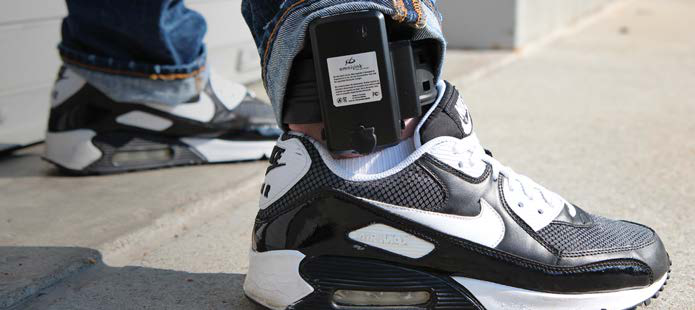
Many searchers also type home arrest bracelet or home confinement bracelet; those phrases usually describe the same supervised hardware family. The difference between labels is language, not technology: the same GPS house arrest bracelet might be configured for strict residence-only supervision one month and broader community GPS the next, depending on how officers set zones and schedules.
Unlike consumer wearables, an electronic house arrest bracelet is provisioned with supervised firmware, tamper classes officers are trained to interpret, and contractual data retention rules. Participants should treat the device as part of the court order—charging habits, strap integrity, and honest schedule updates are not optional “tech support” topics; they are compliance obligations.
How House Arrest Bracelets Work
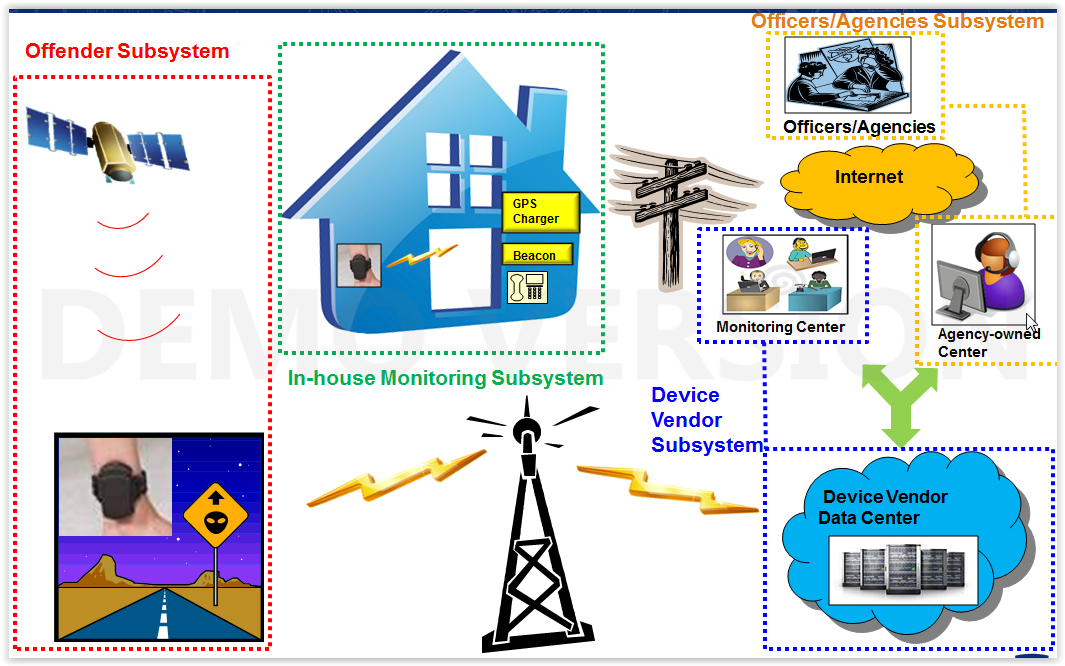
Modern programs rarely rely on a single sensor reading. Instead, a house arrest bracelet sits inside a system: the wearable, the communication path, and the monitoring platform where staff define rules and triage alerts.
GPS tracking and geofences
A GPS house arrest bracelet uses satellite navigation—often GPS plus additional constellations—to estimate position, then transmits encrypted fixes over cellular networks (sometimes with Wi‑Fi or cellular positioning assistance indoors). Supervision software stores an inclusion zone around the approved address, optional exclusion zones, and time windows when travel to work, treatment, or court is permitted. When reported position violates those rules, the platform creates an exception for staff review.
Urban canyons, metal roofs, and dense apartments can challenge fixes; agencies should pilot locally rather than assuming brochure-grade accuracy in every room. That is one reason vendor claims and officer training materials must align—participants should not be sanctioned for physics the dashboard fails to explain.
RF curfew monitoring
Radio-frequency systems answer a narrower question: Is the person within range of the approved home receiver? A lightweight ankle transmitter exchanges signals with a base unit installed at the residence. RF-centric supervision is strong for overnight curfews and residence-dominant orders where continuous outdoor route mapping is secondary. Some programs blend RF home proofing with GPS during approved away windows.
Cellular reporting and latency
Whether the wearable is one-piece GPS or a hybrid design, cellular backhaul carries scheduled reports, tamper codes, and battery status. Reporting intervals trade battery endurance against supervision granularity. Agencies should document expected latency from a rule breach to dashboard visibility; officers care more about that operational number than abstract chipset specs. For buyer checklists beyond bracelets alone, our house arrest monitoring guide ties supervision goals to procurement language.
Types of House Arrest Bracelets
When agencies issue an RFP for a house arrest bracelet, they are really choosing an architecture. The table below summarizes the main categories vendors offer for home-centric supervision in 2026.
| Type | What it proves | Typical use case |
|---|---|---|
| One-piece GPS ankle unit | Continuous location vs. zones & schedules | Medium/high risk; exclusion zones; route accountability |
| GPS two-piece with base station | Home RF tether + optional mobile GPS unit | Strong home presence + escorted or scheduled travel models |
| RF with home unit | Proximity to residence receiver | Curfew-first, lower cellular burden for suitable cohorts |
| Alcohol monitoring bracelet | Transdermal alcohol sensing patterns | DUI and alcohol-conditional orders—not a GPS substitute unless combined |
One-piece GPS
One-piece designs integrate GNSS, battery, tamper sensing, and modem in a single strap-mounted enclosure. They are the default when agencies need map-grade accountability and rich exception taxonomies. The CO-EYE ONE is representative of this class: approximately 108 g, 60 × 58 × 24 mm, with about seven-day battery life in typical LTE-M/NB-IoT independent reporting configurations, fiber optic anti-tamper on strap and case engineered for zero false-positive fiber tamper events, < 2 m GPS accuracy under favorable conditions per manufacturer specifications, IP68 ingress protection, cellular coverage via LTE-M / NB-IoT / GSM, and tool-free install in under three seconds. Field fleets exceeding 200,000 devices across 30+ countries underscore how mature one-piece GPS has become for community supervision.
Two-piece GPS / RF with base station
Two-piece ecosystems pair an ankle transmitter with a powered home receiver for strong in-home signaling, sometimes alongside a separate mobile GPS unit for approved travel. The CO-EYE HouseStation base is approximately 225 × 173 × 55 mm and 750 g, with an enhanced antenna design intended to penetrate up to four concrete walls; 433 MHz RF range is on the order of 50 m indoors and 200 m outdoors per manufacturer materials, with dual SIM telephone capability for voice workflows.
Alcohol-sensing bracelets
Transdermal alcohol monitors answer a different supervision question than location. If your order includes alcohol monitoring, the paperwork will say so explicitly; do not assume a standard house arrest ankle bracelet includes alcohol sensing unless the agency issued that device class.
Who Wears a House Arrest Bracelet?
Assignments depend on statute, risk assessment, and judicial discretion, but several cohorts appear repeatedly:
- DUI and alcohol-conditional sentences: May combine location supervision with alcohol-sensing hardware when courts require both accountability and sobriety verification.
- Pretrial defendants: Release conditions can require a house arrest ankle bracelet or GPS supervision to reduce jail days while preserving court-date compliance—always read the specific zone and curfew language in the bond or release order.
- Probation and parole: Supervised home confinement phases often use GPS or RF modalities, sometimes stepping down to lighter check-ins after sustained compliance.
- Juvenile supervision: Some juvenile programs use EM hardware with modified protocols and privacy safeguards appropriate to youth cases.
Across cohorts, the critical point is alignment: the device modality must match the order’s intent. A participant wearing only an RF home unit cannot deliver full community route mapping unless the program adds GPS or another approved layer.
House Arrest Bracelet Rules and Conditions
Exact conditions vary by jurisdiction, but participants and families usually see a consistent pattern:
- Zones: Stay inside the programmed home boundary unless an approved exception window is active. Exclusion zones—common in domestic-violence-related orders—may prohibit approaching specific addresses.
- Curfew: Schedule rules require you to be inside the approved boundary during set hours; GPS makes curfew breaches timestamped and reviewable.
- Charging: Letting a GPS house arrest bracelet die can create communication gaps that staff must investigate. Build a predictable charging routine and treat low-battery alerts as order-level obligations.
- Shower and water exposure: Many supervised devices carry ingress ratings such as IP68; still follow program-specific guidance. Swimming, hot tubs, or submerging hardware may be restricted even when a device is water-resistant.
- Tampering consequences: Cutting straps, interfering with housings, or attempting shielding can trigger tamper codes. Agencies escalate per policy; serious tampering can mean revocation and additional charges.
If you are unsure whether an outing is permitted, contact your officer before you leave. Retroactive permission rarely erases a logged zone breach.
House Arrest Bracelet Technology Comparison 2026
The following comparison summarizes how agencies brief committees when choosing a house arrest bracelet platform. CO-EYE rows reflect manufacturer-stated specifications; competitor rows describe common market categories—validate every figure in current datasheets and pilot data.
| System / class | Modality | Indicative battery / power | Tamper / install highlights | Notes for home confinement |
|---|---|---|---|---|
| CO-EYE ONE | One-piece GPS + LTE-M/NB-IoT/GSM | ~7 days (mfr., typical reporting) | Fiber strap/case; zero false-positive fiber tamper; <3 s snap-on | <2 m GPS (mfr.); IP68; strong for zone + schedule programs |
| CO-EYE HouseStation + RF / mobile | 433 MHz home base + optional GPS mobile unit | Powered base; mobile per unit spec | Deep indoor RF reach (mfr.: 4 concrete walls) | 50 m indoor / 200 m outdoor RF (mfr.); dual SIM voice on base |
| SCRAM GPS (competitor class) | GPS ankle + vendor platform | Per manufacturer datasheet | Compare charging SOPs & alert definitions | Widely deployed; evaluate officer UX in pilot |
| BI Incorporated BLUtag-style (competitor class) | GPS one-piece common | Per manufacturer datasheet | Review tamper taxonomy & field swap time | Suitable for continuous location tracks |
| Smartphone / app program | Check-ins ± Bluetooth tether | Phone charging discipline | Different tamper model than strap-integrated GPS | May fit lower-risk cohorts when policy allows |
Use this table in staff workshops—not as a substitute for scored RFP matrices. Tie outcomes back to CO-EYE ONE datasheets and your local coverage maps.
Cost of House Arrest Bracelets
Budget conversations usually contrast per-day participant fees with full incarceration economics. Public reporting often cites GPS monitoring service tiers on the order of roughly $5–$15 per day, understanding that contracts differ by cellular data, monitoring-center staffing, device swaps, and whether fees are participant-paid or subsidized.
Agency-side math should include spare inventory, training, dashboard seats, integration with case-management systems, and the labor cost of false alerts. A slightly higher per-diem vendor rate that cuts bogus tamper storms can save money overall—especially when fiber-based strap integrity reduces fiber-related false positives on supported hardware.
Jail costs, when staffing, medical care, and capital are fully loaded, frequently exceed $75,000 per year per person in US public-finance discussions (exact figures swing by jurisdiction). Some municipalities publish participant fee schedules totaling a few hundred dollars annually in specific program designs—always verify current local rules.
How Agencies Select House Arrest Bracelets
Procurement teams should score hardware against supervision outcomes, not brochure aesthetics:
- Battery vs. reporting interval: Multi-day endurance on one-piece GPS reduces charging failures that masquerade as non-compliance. Align cadence with risk tier and document charging expectations in participant agreements.
- Accuracy in your built environment: Test GPS performance in downtown corridors, garden apartments, and single-family homes. Ask vendors for assistive indoor behavior (Wi‑Fi/cellular references) and expected fix latency.
- Comfort and enrollment speed: Court calendars do not wait for slow fittings. Rapid snap-on designs reduce bench time and officer exposure during intake.
- Tamper detection: Demand written tamper class definitions and sample alert payloads. Fiber-based strap monitoring marketed with zero false positives on cut/strap events can materially reduce officer fatigue compared with legacy designs that cry wolf.
- Total cost of ownership: Include spares, field service, training refreshers, and data export for hearings.
Programs that articulate these criteria up front see fewer mid-contract surprises—and fewer contested violations rooted in ambiguous alert interpretation.
Research Context: Does Electronic Monitoring Help?
Technology is not a substitute for services and proportional sanctions, but research summaries aligned with National Institute of Justice (NIJ) discussions have associated electronic monitoring with about a 31% reduction in recidivism in a Florida study context. Use such figures responsibly in grant narratives: local implementation quality, officer triage discipline, and participant support resources still drive real-world results.
For a broader view of how bracelets fit into county programs, revisit house arrest monitoring equipment and rules (2026) after reading this bracelet-focused overview.
Frequently Asked Questions
General information only—your court order and agency handbook control.
Is a home arrest bracelet different from a house arrest ankle bracelet?
Usually no. People search both phrases; courts may call the device an EM transmitter or GPS bracelet. Functionally, the same hardware can be configured for strict home confinement or broader community GPS depending on software rules.
Can I shower with a house arrest bracelet?
Many supervised devices are built for water resistance (for example, IP68-rated models per manufacturer documentation). Still follow your program’s written rules—some agencies restrict prolonged submersion or hot tubs even when the device is rated for immersion.
Do I have to charge my electronic house arrest bracelet every night?
Charging frequency depends on battery capacity and reporting interval. GPS-heavy programs often expect a routine that keeps the device above minimum charge thresholds at all times. Ask your officer for the exact threshold and recommended charging window.
What is the difference between a GPS house arrest bracelet and an RF home confinement bracelet?
GPS proves where you are on a map against geofences and schedules. RF with a home unit proves you are near the approved receiver—excellent for curfew-centric orders, but not a full substitute for continuous community GPS unless another modality is added.
Can I travel for work while wearing a house arrest bracelet?
Many programs allow pre-approved employment corridors or recurring windows encoded in the monitoring software. Never assume verbal OK replaces an officer-updated schedule—GPS logs are timestamped.
What happens if my house arrest bracelet sends a tamper alert?
Monitoring staff review the event class, may contact you, schedule a field visit, or document the alert for court. Intentional tampering escalates quickly; innocent strap issues should be reported immediately through official channels.
Where can I read more about pretrial and monitoring policy?
Independent pretrial context appears at Refine ID; industry reporting lives at Ankle Monitor Industry Report.
Last updated: March 2026. Specifications for CO-EYE hardware are per manufacturer documentation; competitor rows summarize common market categories—confirm current datasheets before award. For quotes and technical deep-dives, visit CO-EYE ONE or contact sales.