
House arrest monitoring is how courts, pretrial services, probation, and parole agencies enforce home confinement and home detention in the community: hardware on the body, communication to a monitoring center, and software rules that turn location and tamper signals into actionable supervision workflows. The same ecosystem is often labeled electronic home monitoring in contracts and statutes—even when the public simply says “ankle bracelet.”
This guide is written for agency staff, vendor evaluators, and participants who need a single, up-to-date reference for 2026. You will see how electronic home monitoring works across GPS, RF, cellular, and app-based modalities for residential supervision; what equipment categories agencies actually buy; how program designs differ; what procurement teams should scrutinize; how leading architectures compare; what rules and costs typically look like; and answers to frequent questions. For deeper program context, start with our house arrest and home detention monitoring guide and county electronic monitoring programs resources. Participant-oriented detail appears in house arrest ankle monitor: how it works, rules, and costs (2026). Equipment buyers should review the one-piece GPS page for CO-EYE ONE. Independent pretrial and industry background is summarized at Refine ID.
What Is House Arrest Monitoring?
House arrest monitoring is the supervised use of electronic tools to verify compliance with orders that prioritize an approved residence—usually combined with scheduled exceptions for employment, treatment, court, or other approved activities. Unlike passive “check in when asked” models, modern home detention monitoring typically runs continuous logic: the platform knows where the house arrest GPS bracelet or companion device reports, compares that to geofences and timetables, and raises exceptions when rules break.
Terminology shifts by state and vendor. “Home incarceration,” “electronic detention,” and “electronic home confinement” may appear in statutes; RFPs may say electronic home monitoring or EM. The supervision goal is consistent: reduce unnecessary jail days while maintaining public safety accountability through location evidence, tamper awareness, and documented officer response.
A house arrest ankle monitor is the most visible component, but operationally house arrest monitoring is a system—device firmware, encrypted transport, server-side rules, audit logs, and trained staff—rather than a single gadget. Agencies succeed when those layers align—otherwise even accurate GPS turns into noise or dispute.
How House Arrest Monitoring Works
Most deployments combine at least two of the following mechanisms. Programs may start with one modality and graduate to another as risk changes.
GPS tracking
GPS-class devices use satellite navigation (often multi-constellation) to estimate position, then transmit fixes over cellular networks to a monitoring platform. For home detention monitoring centered on an address, officers commonly define an inclusion zone around the residence, optional exclusion zones, and time windows when travel is permitted. GPS answers the question: Is this person where the order allows, when the order allows it? Urban canyons and indoor geometry can challenge fixes; platforms may apply Wi‑Fi or cellular assistance depending on hardware.
RF monitoring
Radio-frequency tether systems pair a lightweight ankle transmitter with a base station at the home. The supervision question becomes: Is the participant within RF range of the approved residence? RF is strong for curfew-centric home detention monitoring where continuous outdoor route mapping is less important than reliable presence at the address. Many house arrest monitoring pilots pair RF home proofing with GPS for approved travel windows. RF alone is not a substitute for full community GPS mapping unless combined with other modalities.
Cellular check-ins and reporting
Whether one-piece GPS or hybrid designs, cellular backhaul carries encrypted payloads—scheduled reports, tamper codes, and sometimes supplementary sensor data. Reporting intervals trade battery life against supervision granularity. Agencies should document expected latency from violation to dashboard visibility; that metric matters more to officers than raw chipset specifications.
App-based supervision
Smartphone applications can enforce schedules through biometric or photo check-ins, push reminders, and—in some architectures—Bluetooth proximity to a wearable. App-centric electronic home monitoring can reduce hardware logistics for lower-risk cohorts but differs in tamper continuity from strap-integrated designs. Policy should state clearly when an app is acceptable as the primary modality versus a supplement, and how app-only tracks differ from full house arrest monitoring with ankle hardware.
House Arrest Monitoring Equipment
Procurement teams usually evaluate three equipment families for supervised home confinement and house arrest monitoring tracks, sometimes within the same vendor portfolio.
One-piece GPS ankle units
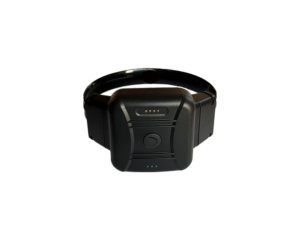
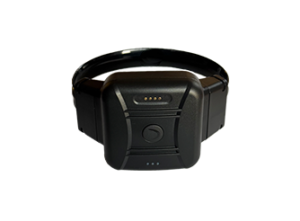
A single strap-mounted unit integrates GNSS, tamper sensing, battery, and cellular modem. This architecture is common when agencies need robust outdoor accountability, exclusion zones, and rich exception taxonomy for medium- and higher-risk caseloads. The CO-EYE ONE illustrates a modern one-piece approach: approximately 108 g mass; about seven-day battery life in representative LTE-M/NB-IoT independent reporting configurations; < 2 m GPS accuracy under favorable conditions per manufacturer specifications; IP68 ingress protection; fiber optic anti-tamper on strap and case with zero false-positive fiber tamper design claims; and under three seconds tool-free install. These figures are drawn from manufacturer documentation—always validate in pilot.
Two-piece systems: ankle transmitter plus base station
Two-piece home detention monitoring pairs an ankle transmitter with a powered home unit. The CO-EYE ecosystem includes HouseStation for enhanced home coverage: approximately 225 × 173 × 55 mm, 750 g, with an enhanced antenna design intended to penetrate multiple concrete walls; 433 MHz RF range on the order of 50 m indoor / 200 m outdoor (manufacturer stated); and dual SIM telephone functionality for voice workflows. The companion CO-EYE i-Tracker mobile unit is approximately 85 × 55 × 22 mm, 105 g, with GPS < 5 m CEP class positioning and 433 MHz range on the order of 20 m indoor / 100 m outdoor per datasheet summaries—useful when programs blend home RF proofing with intermittent or escorted travel requirements.
Smartphone apps and hybrid tethers
Apps can schedule check-ins and deliver participant education; some programs tether Bluetooth to a wearable for additional continuity. Agencies should map app limitations—device sharing, OS updates, charger habits—against court expectations for house arrest ankle monitor-grade accountability.
Across more than 200,000 devices deployed in 30+ countries, field lessons repeat: clarity of tamper classes, charger discipline, and officer training matter as much as raw spec sheets. When comparing vendors, ask for written alert definitions and example dashboards, not only brochures.
Types of House Arrest Monitoring Programs
Software rules—not hardware alone—define program behavior. Common patterns include the following.
Curfew monitoring
Curfew-centric programs require the participant to be inside an approved boundary during set hours (for example, nights and weekends). GPS and RF both support curfew logic; RF can be cost-effective when the primary question is overnight presence.
Zone enforcement
Inclusion fences around the home, allowed corridors to work, and return-time rules are standard GPS capabilities. Officers encode exceptions as recurring or one-time windows; violations generate prioritized alerts.
Domestic violence exclusion and stay-away logic
Many jurisdictions use GPS-backed electronic home monitoring alongside exclusion zones near protected addresses. Approaching a prohibited location—or overlapping movement patterns—may trigger elevated response per local protocol. This is one reason agencies specify GPS-class devices even when colloquial language still says “house arrest.”
Graduated supervision
Graduated programs move participants across modalities or reporting density as compliance proves out: stricter home rules early, later loosening to broader community GPS or reduced check-in frequency. Documentation and participant communication must keep pace with rule changes to avoid accidental violations.
House Arrest Monitoring for Agencies: Key Considerations
When leadership asks whether a house arrest monitoring contract is “working,” translate the question into measurable operations.
- Enrollment speed: How quickly can a device be assigned, fitted, and confirmed online? Court calendars do not wait for shipping delays. Rapid install protocols—such as tool-free fitting in seconds on supported hardware—reduce bench time and jail holds.
- False alarm rates: Strap tamper and “loss of signal” storms erode officer trust. Evaluate tamper sensor technology critically; fiber-based strap integrity approaches are marketed to eliminate fiber-related false positives when properly installed.
- Battery life vs. reporting interval: Multi-day endurance on one-piece GPS reduces charging failures that masquerade as non-compliance. Align reporting cadence with risk; document charging expectations in participant agreements.
- Total cost of ownership: Include spare inventory, field swaps, training, data fees, and reporting. Two-piece RF-centric tracks may reduce cellular data for suitable cohorts; GPS-heavy tracks buy map-grade accountability.
- Interoperability and evidence: Exportable logs, chain-of-custody discipline, and clear timestamps support hearings and audits.
Our county-level overview at county electronic monitoring programs complements this checklist for governance and procurement committees.
Technology Comparison: House Arrest Monitoring Systems [2026]
The table below compares representative architectures agencies evaluate for house arrest monitoring in 2026. Vendor rows summarize common market positioning; confirm all figures in current datasheets and pilots. CO-EYE rows reflect manufacturer-stated specifications for hardware discussed in this article.
| System / vendor class | Modality | Primary supervision question | Battery / power (indicative) | Notes for house arrest |
|---|---|---|---|---|
| CO-EYE ONE (one-piece GPS) | GPS + cellular (LTE-M/NB-IoT class) | Where is the participant; zones & schedules | ~7 days (mfr., typical reporting) | IP68; <2 m GPS (mfr.); fiber tamper; <3 s install |
| CO-EYE HouseStation + RF / i-Tracker | 433 MHz home RF + optional mobile unit | Home presence + blended travel models | Base powered; mobile per unit spec | 50 m / 200 m RF (mfr.); dual SIM voice on base |
| SCRAM GPS (competitor class) | GPS ankle unit + platform | Location + schedule compliance | Per manufacturer datasheet | Widely deployed; compare tamper & charging SOPs |
| BI Incorporated BLUtag-style (competitor class) | GPS one-piece common | Continuous location monitoring | Per manufacturer datasheet | Evaluate alert latency & officer UX in pilot |
| Smartphone / app program | App check-ins ± Bluetooth | Did required digital touchpoints occur? | Phone charging discipline | Lower hardware footprint; different tamper model |
Use the comparison as a briefing sheet—not a substitute for structured RFP scoring. For buyer workflows, pair this table with house arrest and home detention monitoring guide and the CO-EYE ONE product specifications.
Rules and Conditions Under House Arrest Monitoring
While statutes and orders vary, participants under house arrest monitoring or closely related electronic home monitoring orders typically encounter a common pattern:
- Remain at the approved address except during officer-programmed exceptions.
- Charge the device on the schedule the agency provides; low battery can produce communication exceptions.
- Do not tamper with straps, housings, or accessories; intentional damage may constitute a new offense.
- Request schedule changes in advance—employment shifts, medical referrals, or family emergencies need documented approval, not retroactive excuses.
- Honor exclusion zones when orders require stay-away distances from people or addresses.
- Answer officer and monitoring-center contacts promptly when protocols require verification.
Agencies should give participants plain-language summaries that mirror the software rules actually loaded in the platform. Mismatches between verbal instructions and configured geofences are a frequent source of disputes in house arrest monitoring programs.
Cost of House Arrest Monitoring Programs
Budget discussions for house arrest monitoring usually contrast home detention monitoring fees with jail marginal costs. Public sources often cite participant fees on the order of roughly $5–$15 per day for active GPS service tiers, while annual incarceration costs in many US jurisdictions exceed $75,000 per bed-year when staffing and capital are fully loaded—exact comparisons depend on what finance includes (transport, medical, programming).
Agencies should model total costs: devices, spares, cellular, software seats, monitoring-center staffing, court reporting, and revocation workflows. Sometimes a slightly higher per-diem vendor rate saves money if false alerts drop and officer time returns to casework.
Research communication matters too: summaries aligned with the National Institute of Justice (NIJ) have discussed Florida findings associating electronic monitoring with about a 31% reduction in recidivism in that study context—useful for grant language and council briefings, provided local implementation quality is addressed.
FAQ
What is house arrest monitoring in one sentence?
It is court- or agency-supervised house arrest monitoring: electronic equipment—often a house arrest GPS bracelet or RF home system—used to verify that someone follows residence-focused orders and schedules.
Is a house arrest ankle monitor the same as a fitness tracker?
No. Consumer wearables are not designed for evidentiary tamper classes, supervised firmware, or correctional alert workflows. House arrest ankle monitor hardware is purpose-built for justice applications.
Can participants leave for work while on home confinement?
Many orders allow pre-approved employment windows encoded as schedules or corridors. The written order and the monitoring platform must match; participants should never assume informal permission replaces officer updates.
How accurate is GPS for electronic home monitoring?
Accuracy depends on sky view, multipath, and assistive references. Representative one-piece devices may claim sub–2 meter performance under favorable conditions; agencies should pilot in local urban and indoor edge cases rather than relying on best-case marketing numbers alone.
What happens if someone violates monitoring rules?
Platforms generate exceptions; agencies follow escalation policies that may include phone contact, field visits, or court filings. Serious or repeated violations can result in revocation and custody.
Where can agencies learn more about pretrial and monitoring context?
Beyond this site’s guides, Refine ID summarizes industry-facing pretrial resources; NIJ materials at nij.ojp.gov help anchor policy discussions in published research summaries.
Last updated: March 2026. CO-EYE specifications are per manufacturer documentation; competitor rows reflect general market categories—confirm current datasheets before award. For equipment decisions, use CO-EYE ONE to request a quote or contact sales.