
If you supervise community cases or evaluate procurement bids, you need a straight answer to how ankle monitors work before you compare vendors. This guide explains ankle monitor technology end to end: satellite positioning, cellular backhaul, tamper sensing, geofence logic, and what officers see on a dashboard. It also clarifies how a GPS ankle monitor how it works story differs from radio-frequency house arrest, Bluetooth-tethered modes, and alcohol-sensing bracelets—because mixing those categories produces the wrong RFP. For buyer scoring matrices, use our GPS ankle monitor buyer’s guide; for modality definitions and program vocabulary, read electronic monitoring: how it works, types, and technology [2026 guide]; for flagship one-piece specifications, see CO-EYE ONE.
How Do Ankle Monitors Work? GPS Technology, Tracking & Monitoring Explained [2026]
Introduction: How Ankle Monitors Work
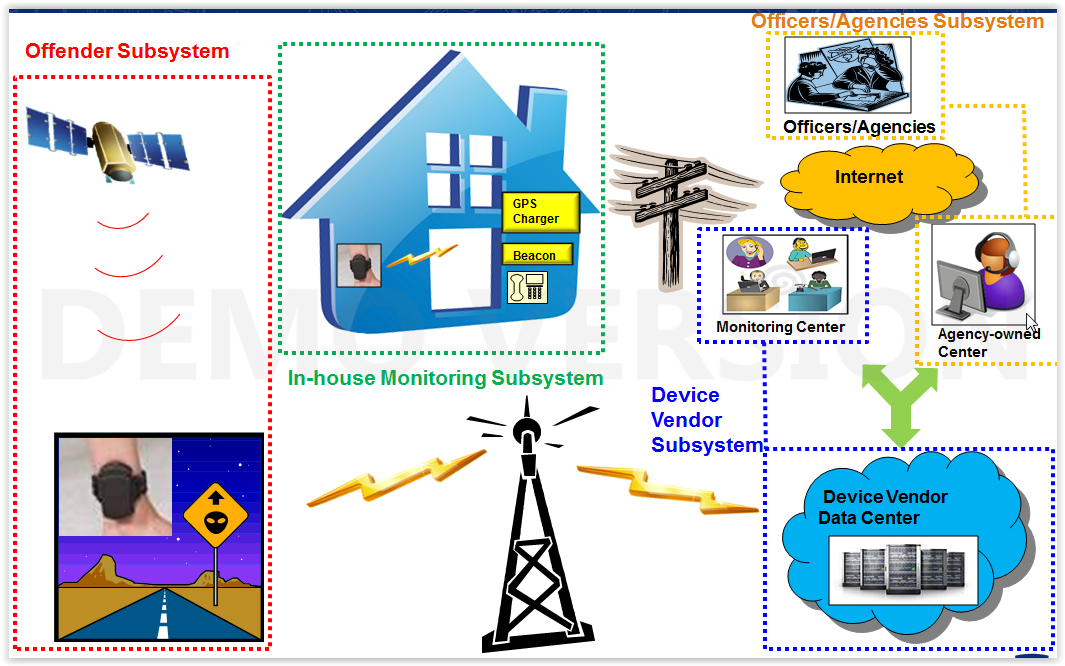
At the highest level, how ankle monitors work is a loop: the wearable measures where it is (and whether its strap or case is intact), encrypts small packets, sends them through a cellular network, and lets server software decide if the pattern matches court-ordered rules. Officers then review prioritized alerts instead of staring at raw coordinates all day. That sentence hides enormous detail—GNSS physics, indoor RF shadows, carrier sunsets, tamper-sensor false economics, and evidence exports for hearings—but it is the correct mental model before you read datasheets.
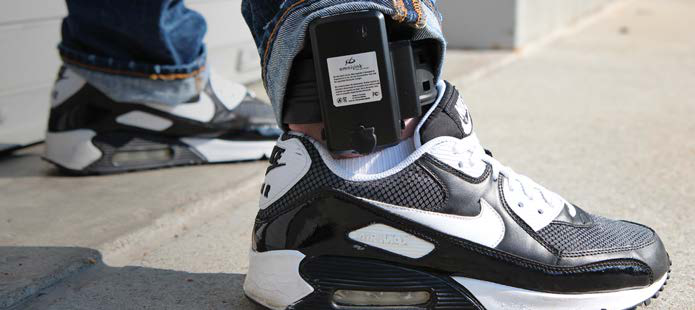
People searching how do ankle monitors work often picture a single “GPS bracelet.” In procurement reality, ankle bracelet technology spans active GPS/GNSS tracking, home-bound RF proximity verification, BLE leash modes, transdermal alcohol monitors, and hybrid stacks. An electronic ankle monitor explained for your jurisdiction must name the modality, the reporting interval, and the supervision question—location trace, nightly presence, sobriety, or a combination.
Evidence-minded agencies pair vendor claims with independent framing. According to the National Institute of Justice (NIJ), standardized language around offender tracking systems—including themes in NIJ Standard 1004.00—helps compare equipment on shared testing narratives rather than marketing headlines alone. Separately, Florida-oriented recidivism research frequently cited in policy memos associates electronic monitoring with roughly a 31% reduction in recidivism risk versus non-monitored comparators in that study context—useful for high-level ROI storytelling, not a guarantee for your county.
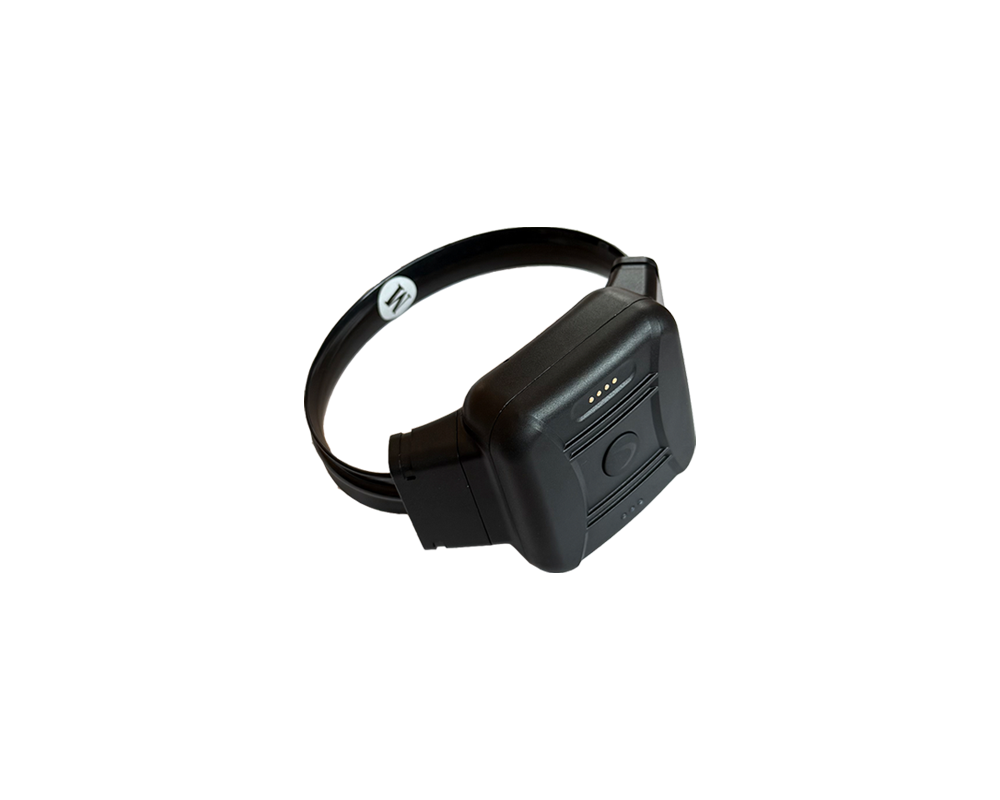
Throughout this article, when we reference modern one-piece engineering benchmarks, we cite the CO-EYE ONE specification set: 108 g, about seven days standalone battery at a five-minute LTE-M/NB-IoT reporting interval, multi-constellation GNSS with WiFi and LBS assists, under 2 m GPS accuracy expressed as CEP under favorable sky view, fiber optic strap and case tamper monitoring with zero false-positive detection for true optical breaks, IP68, LTE-M / NB-IoT / GSM cellular, and tool-free install in under three seconds. Treat these as datasheet anchors for ankle monitor technology conversations, then confirm with your pilot protocol. For procurement workshops, bring the buyer’s guide checklist alongside this architecture primer.
The Technology Inside GPS Ankle Monitors
Understanding how ankle monitors work starts with the hardware stack. Consumer fitness trackers and justice-grade bracelets share some words—“GPS,” “LTE,” “Bluetooth”—but not the same reliability targets, tamper semantics, or evidence trails.
GNSS chipset and positioning
Outdoor fixes come from GNSS receivers that track satellites from multiple constellations (commonly GPS, BeiDou, GLONASS, and Galileo) to improve availability in urban canyons and mid-latitude obstructions. The receiver outputs latitude, longitude, timestamp, speed, and uncertainty estimates that firmware packages for upload. This layer is the core of ankle bracelet technology when courts demand continuous community traces.
Cellular modem
Coordinates are inert until transmitted. Cellular modems move encrypted payloads to vendor or agency ingest points. Modern ankle monitor technology favors LTE-M and NB-IoT for power efficiency versus smartphone-class LTE, while retaining GSM where carriers still support fallback during transitions. The CO-EYE ONE modem roadmap is explicitly 5G-compatible LTE-M / NB-IoT / GSM in public materials.
Battery and power management
Battery capacity and power policy dominate field outcomes. Faster location fixes and shorter reporting intervals improve situational awareness but reduce runtime. Manufacturers publish endurance at explicit intervals; match those intervals to your orders. CO-EYE ONE lists a 1700 mAh battery with about 2.5 hours to recharge and roughly seven days in standalone mode at five-minute LTE-M/NB-IoT cadence—an example of how how do ankle monitors work in practice is also a power-budget story.
Tamper sensors
Integrity channels detect strap cuts, case opening, and forced removal attempts. Technologies differ widely in false-alert rates and officer trust. Fiber-based continuity sensing targets structural breach events rather than inferring removal from noisy motion alone—more on that below.
Processor, firmware, and security
An application processor runs scheduling, peripheral drivers, cryptographic sessions, and over-the-air update policies. Enterprise buyers should ask for TLS-protected transport, strong device identity, and audit logs. CO-EYE ONE materials cite HTTPS/SSL, AES128/256, and EN 18031 cybersecurity alignment—reasonable checklist items when IT compares bracelets to consumer wearables.
Step by Step: How GPS Ankle Monitoring Works
When participants ask how ankle monitors work day to day, walk them through the sequence officers rely on—this reduces panic-driven technical violations.
1. Enrollment and installation
Staff associate the device ID with a case record, capture baseline photos or strap sizing, configure initial rules templates, and verify modem registration. Rapid installs shrink queue time; CO-EYE ONE advertises under three seconds tool-free attachment as an operational benchmark.
2. Satellite acquisition and fix generation
After install, the GNSS receiver acquires satellites, computes a fix, and may blend assisted WiFi or network location when policy permits and sky view degrades. This is the heart of GPS ankle monitor how it works narratives for outdoor movement.
3. Position reporting sessions
Firmware opens encrypted cellular sessions on a schedule, uploads fixes with tamper bits, and retries through transient RF fades. The monitoring center timestamps ingest and stores chain-of-custody metadata for later exports.
4. Zone and curfew checks
Server software tests each fix against inclusion corridors, exclusion buffers around protected addresses, and calendar curfews. Good engines add humane grace periods for brief indoor dropouts so maps reflect physics, not fantasy precision.
5. Alerts and escalation
Violations and high-confidence tamper events surface as graded alerts—some auto-page on-call staff, others queue for business-hour review depending on policy. Alert noise is an operational cost; it is why ankle monitor technology choices matter as much as software UX.
6. Officer dashboard and case actions
Supervision users see live maps, histories, notes, and participant contact tools. Exports must survive discovery: PDF maps, CSV traces, and tamper timelines with clear timezone labeling. The CO-EYE ONE ecosystem pairs hardware with platform modules for enterprise monitoring workflows—evaluate any vendor on export fidelity, not demo screenshots alone.
Types of Ankle Monitor Technology
An electronic ankle monitor explained poorly often collapses distinct modalities. Here is the taxonomy procurement teams actually use.
GPS active tracking (continuous community GNSS)
Full ankle bracelet technology for outdoor traces: geofences, speeds, histories, and rapid integrity signaling. This is the default for higher-risk supervision requiring all-day visibility. The CO-EYE ONE one-piece design embodies this class with multi-GNSS plus WiFi and LBS assists.
RF home monitoring
Radio-frequency proximity systems verify that an ankle transmitter stays within range of a base unit during curfew windows—ideal when the legal question is overnight presence, not minute-by-minute city movement. CO-EYE pairs RF i-Bracelet tags with i-Tracker or HouseStation receivers using 433 MHz links with published range bands (validate in your housing stock).
BLE tethering and hub-assisted modes
Bluetooth Low Energy can enforce short-range leash behavior between a bracelet and an approved smartphone or hub, sometimes extending battery life when cellular reporting shifts to the hub. Distinct from correctional RTLS inmate tags, which share radio physics but different legal and deployment contexts.
Alcohol monitoring
Transdermal alcohol bracelets measure a biological signal unrelated to GNSS traces. They answer sobriety questions, not exclusion zones, unless orders explicitly combine modalities.
Hybrid programs
Mature agencies step participants from intensive GPS phases to lighter RF or app check-ins as compliance stabilizes—provided chain-of-custody and billing records keep pace with equipment swaps.
How Tamper Detection Works
For many officers, trust in how ankle monitors work rises or falls on tamper semantics—not map aesthetics.
Fiber optic integrity
Fiber loops embedded in strap or housing monitor optical continuity. When the path is severed by cutting or forced separation, the event is structural rather than probabilistic motion noise. CO-EYE ONE documents fiber optic strap and case monitoring with zero false-positive integrity detection for true optical breaks—reducing phantom alerts that Cook County–scale studies implied could dominate queues when sensors relied on less specific proxies.
Infrared and strap integrity sensors
Some designs combine infrared pairs, strain gauges, or clip-position sensing to infer strap state. Each approach carries a false-alert profile; procurement should request measured field statistics, not adjectives.
Case intrusion detection
Housing seam sensors flag attempts to pry open electronics compartments. Pair any sensor with a written definition of “confirmed tamper” versus “suspected motion” so prosecutors and defense counsel share expectations in hearings.
Holistic ankle monitor technology reviews treat tamper latency, officer callback SLAs, and charging-loss differentiation as one specification—because a dead battery should not automatically equal an escape attempt in policy if your jurisdiction values proportional responses.
How Ankle Monitors Communicate
Telemetry transport is half of how do ankle monitors work in the field. Without reliable modem behavior, the best GNSS chipset is merely a local logger.
LTE-M and NB-IoT
These IoT-oriented layers trade bandwidth for power and building penetration characteristics suited to small payloads—typical for location and tamper reports on modern one-piece devices.
GSM fallback
Legacy compatibility still matters where carriers have not fully retired 2G/3G assets used by older fleets. CO-EYE ONE keeps GSM in the cellular mix per datasheet; always map carrier sunsets in your contract term.
WiFi-assisted positioning
WiFi fingerprints can stabilize indoor or downtown transitions when GNSS degrades. Policies should disclose assist methods to participants where required and document accuracy implications for court narratives.
BLE
Beyond tethering, BLE appears in OEM inmate-tag architectures for correctional RTLS partnerships—distinct SKUs from community GPS bracelets but relevant when agencies ask about radio coexistence.
Encrypted transport layers (HTTPS/SSL, AES classes per vendor) separate professional stacks from consumer gadgets; confirm certificate rotation and incident response playbooks with your security office. Reference modem details on CO-EYE ONE when benchmarking GPS ankle monitor how it works communications stacks.
GPS Accuracy: How Precise Are Ankle Monitors?
Accuracy questions dominate courtroom cross-examination, so how ankle monitors work must include honest uncertainty language. GNSS horizontal error grows with multipath reflections, foliage, and indoor transitions. NIJ-oriented discussions encourage testable benchmarks instead of single-number marketing.
Modern one-piece designs can target tighter outdoor performance than legacy modules. CO-EYE ONE states under 2 m GPS accuracy as CEP under favorable conditions alongside multi-constellation GNSS. Older or assist-limited devices often sit in a roughly 5–15 m practical band depending on environment—buyers should demand route tests mirroring local courthouses, bus exchanges, and employment sites. For structured evaluation criteria, reuse modules from the GPS ankle monitor buyer’s guide and CO-EYE ONE specification tables.
Train staff to read uncertainty ellipses and timestamp latency: a dot on a map is a model, not a philosophical truth. Clear training improves legitimacy and reduces both false confidence and false accusations.
Battery Life: How Long Do Ankle Monitors Last?
Participants care about charging as much as officers care about alerts—so battery physics belongs in any electronic ankle monitor explained briefing.
Representative industry spans run from about one day on aggressive reporting and legacy modems to about seven days on efficient LTE-M/NB-IoT schedules for current one-piece hardware. CO-EYE ONE explicitly lists about seven days standalone at five-minute LTE-M/NB-IoT intervals with its 1700 mAh pack; the ONE-AC variant extends certain BLE-connected modes far longer when policy permits hub-assisted operation—see manufacturer materials for those stepped modes.
Programs should publish charging expectations, cable-loss procedures, and how partial charges interact with night-shift monitoring. Ankle bracelet technology only works when humans can keep it powered.
How Monitoring Centers Process Data
Hardware is the sensor; the monitoring center is the decision surface. Enterprise software ingests device events, normalizes time zones, applies rules, correlates officer notes, and outputs compliance reports. Dispatcher workflows should separate high-confidence tamper queues from low-priority motion flags so how ankle monitors work operationally does not devolve into alert fatigue.
Integrations matter: case management imports, SAML or equivalent SSO, role-based access, and APIs for data minimization policies. Retention schedules should anticipate hearings months after an event—exports must remain reproducible. For vocabulary alignment between software modules and device modalities, cross-read electronic monitoring: how it works [2026].
Business continuity is non-negotiable: carrier outages, certificate rotations, and firmware deprecations hit bracelets like any IoT fleet. Vendor roadmaps belong in annual risk reviews.
Common Myths About Ankle Monitors
Myths distort how ankle monitors work in public discourse and sometimes in court.
Myth: “The bracelet is always listening.”
Professional location bracelets transmit defined telemetry—fixes, tamper states, power events—not covert audio surveillance. Different legal frameworks govern wiretapping versus electronic monitoring; conflating them damages trust.
Myth: “GPS shocks the wearer.”
Consumer confusion with animal containment collars sometimes surfaces. Justice-grade ankle monitors are not designed to administer shocks; any unrelated wearable claiming punishment features is outside standard EM procurement classes.
Myth: “Removal is easy if you freeze the strap.”
Hollywood shortcuts rarely match fiber-backed integrity sensing, officer response timelines, and criminal penalties for tampering. Participants should hear accurate, plain-language rules during orientation—not rumor.
Grounding stakeholders in accurate ankle monitor technology facts improves compliance and reduces frivolous motions rooted in misconception.
FAQ
How do ankle monitors work without perfect cell signal?
Devices buffer limited events and retry uploads; rules engines may flag communication gaps separately from zone violations. Policies should define how long gaps persist before escalation.
Does WiFi mean someone is browsing the internet on the bracelet?
No—WiFi assists are typically scanning or fingerprint operations to aid positioning, not general-purpose browsing.
Can two people swap bracelets?
Proper enrollment binds device identity to biometric or photographic baselines and case records. Swapping should trigger integrity and identity anomalies—if your vendor cannot explain how, dig deeper.
Are ankle monitors waterproof?
Professional outdoor wear targets high ingress ratings. CO-EYE ONE lists IP68, signaling intent for continuous exposure to sweat and weather—still confirm cleaning agents and strap hygiene guidance.
How should agencies test vendor accuracy claims?
Use NIJ-informed route scripts, log fix quality flags, and compare against ground truth waypoints in representative urban and suburban corridors.
What should a monitoring contract include about sunsets?
Require cellular roadmap disclosures, spare-pool commitments, and firmware OTA policies so carrier transitions do not strand devices mid-sentence.
How ankle monitors work is the union of physics, carrier reality, and policy-coded software—not a single magic sensor. When you document that union clearly for staff, participants, and courts, programs gain legitimacy and vendors face fair, testable benchmarks. Keep the GPS ankle monitor buyer’s guide nearby for scoring templates, revisit electronic monitoring types and technology when modalities multiply, and benchmark hardware against CO-EYE ONE when you need a contemporary one-piece reference architecture.
Informational overview; legal requirements and accreditation standards vary by jurisdiction. Always pair vendor datasheets with local counsel and pilot acceptance testing.