

Procurement teams searching for an OmniLink ankle monitor review are usually balancing three pressures at once: ecosystem familiarity (federal and state references to BI Incorporated), operational load (battery, tamper noise, officer time), and total cost of ownership (daily fees plus hidden mileage). This guide explains what the OmniLink ankle monitor family represents in 2026, how OmniLink GPS supervision fits next to published CO-EYE ONE specifications, and where ankle monitor brands such as SCRAM, Track Group, Sentinel, Buddi, and SuperCom sit on the same scorecard. We cite only vendor-public positioning for BI products; validate every line item on your current datasheet and pilot data.
For methodology, start with our GPS ankle monitor buyer’s guide for agencies, then read SCRAM vs CO-EYE GPS ankle monitor comparison (2026) and ankle monitor for sale: where agencies buy hardware. Product detail for the alternative we know best appears on CO-EYE ONE.
What Is OmniLink?
OmniLink is an electronic monitoring hardware brand sold by BI Incorporated, a subsidiary of GEO Group. In RFP conversations, the same footprint is often shorthand for a BI Inc ankle monitor program: GPS-capable ankle hardware, cellular reporting, and web-accessible supervision workflows used widely across US federal pretrial services and many state department of corrections and community corrections vendors. Public collateral commonly references OmniLink OM400 and OmniLink OM500 series devices—buyers should map those SKUs to exact frequency plans, carrier certifications, and strap options before scoring bids.
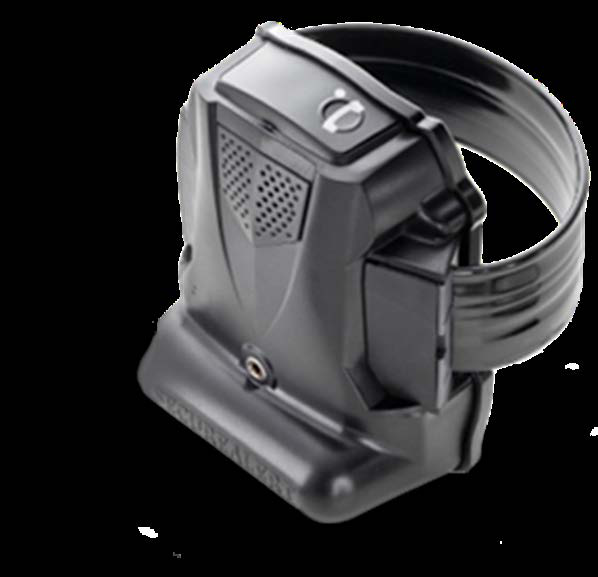
Why the OmniLink ankle monitor keyword matters in search: supervisors and defendants’ counsel alike type brand-plus-hardware phrases when they need explainers, not marketing gloss. Understanding corporate structure helps due diligence—contracting parties, escalation paths, cybersecurity questionnaires, and continuity if parent entities reorganize. None of that replaces technical comparison; it frames risk registers your IT and legal teams already maintain.
When you evaluate OmniLink electronic monitoring, separate three layers: (1) the wearable GNSS/cellular device, (2) the communications and provisioning stack, and (3) the monitoring center software that turns coordinates into officer actions. Weakness in any layer shows up as delayed alerts, ambiguous tamper stories, or export formats prosecutors dislike—even when the map on screen looks fine in a demo.
OmniLink Ankle Monitor Features (Public Positioning)
BI Incorporated publicly describes OmniLink GPS supervision as combining satellite positioning with cellular connectivity for community-based programs. Marketing and specification summaries emphasize continuous location accountability suitable for pretrial, probation, parole, and related caseloads—the same mission statements most ankle monitor brands use. Buyers should request the authoritative PDF for the exact generation they intend to purchase; firmware branches change reporting cadence and tamper dictionaries faster than blog posts refresh.
Multiple frequency / connectivity options: Enterprise EM vendors typically certify devices across regional carrier requirements. For OmniLink-class hardware, your procurement packet should list approved bands, roaming behavior, and whether LTE-M or legacy GSM fallbacks apply in rural counties. If your judiciary expects redundant coverage, bake drive tests into the pilot—not hallway screenshots.
Web-based platform: BI markets browser-accessible supervision through BI TotalAccess-class portals (naming may vary by contract module). That aligns with how modern OmniLink electronic monitoring centers expect to work: secure logins, role-based access, alert queues, and historical track replay. When comparing dashboards, score API availability, bulk export formats, immutable audit logs, and whether geofence templates import cleanly from legacy vendors.
Readers comparing any OmniLink ankle monitor to newer one-piece GNSS designs should ask vendors for side-by-side weight, strap ergonomics, charge intervals, and tamper event definitions. Those four metrics predict real-world officer workload more than brochure photography.
OmniLink vs CO-EYE ONE: Side-by-Side Comparison
Use this matrix in staff workshops and RFP scoring—then replace assumptions with your pilot logs. OmniLink rows summarize publicly stated product positioning; CO-EYE ONE rows use manufacturer-published figures only.
| Attribute | OmniLink (BI Incorporated / OM400–OM500 class, public materials) | CO-EYE ONE (manufacturer specs) |
|---|---|---|
| Vendor lineage | BI Incorporated; subsidiary of GEO Group | REFINE Technologies (CO-EYE) |
| Primary mission | GPS + cellular community supervision; federal/state program footprint | One-piece GPS/GNSS ankle monitor; global IoT cellular (LTE-M/NB/GSM) |
| Form factor | Ankle-mounted GPS module per OmniLink series collateral | 108 g; 60×58×24 mm |
| Battery (standalone) | Confirm per SKU and reporting interval with BI datasheet | Up to 7 days at 5 min LTE-M/NB interval; 1700 mAh; ~2.5 h charge |
| GNSS / positioning | GPS-led tracking with cellular reporting (confirm constellations per SKU) | GPS + BeiDou + GLONASS + Galileo + WiFi + LBS; <2 m CEP stated |
| Tamper detection | Strap/housing integrity monitoring per vendor design—request tamper code dictionary | Fiber optic strap + case; zero false-positive stated for true structural breaks |
| Durability / sealing | Vendor durability claims per product sheet | IP68 |
| Installation | Tool-assisted or tool-free workflows per training materials—verify seconds-to-secure | <3 seconds snap-on, no tools |
| Software ecosystem | Web-based BI TotalAccess-class supervision portals | CO-EYE Monitoring Software (13 modules) + integrations per deployment |
| Fleet scale context | Large US public-sector installed base via BI programs | 200,000+ devices deployed; 30+ countries (manufacturer statement) |
The honest headline for OmniLink vs CO-EYE ONE is not “winner/loser.” It is which constraints bind your county: If you are locked into BI monitoring workflows and training for years, ecosystem inertia is real. If battery touches and GNSS richness drive your overtime budget, hardware physics may outweigh brand continuity.
Technology Deep Dive: GPS Accuracy, Battery, Form Factor, Tamper, Connectivity
GPS accuracy: Any OmniLink ankle monitor inherits the same urban multipath realities as every other GNSS bracelet. Courthouse plazas, bus terminals, and downtown canyons stretch horizontal error budgets. CO-EYE ONE advertises multi-constellation GNSS with WiFi and LBS assistance targeting under two-meter CEP when sky geometry cooperates. For OmniLink GPS modules, request equivalent constellation detail, assisted positioning behavior, and whether exports document fix quality flags so defenders can cross-examine methodology fairly.
Battery and reporting cadence: Shorter charge cycles increase participant-facing failure modes—especially for night-shift workers or housing-unstable pretrial cohorts. CO-EYE ONE’s published seven-day endurance at a five-minute LTE-M/NB reporting interval is a direct input to staffing models: fewer weekend low-battery storms, fewer ambiguous “failure to charge” hearings. For OmniLink hardware, model the same interval apples-to-apples; if firmware cannot match cadence, normalize to a comparable breadcrumb density before you compare runtimes.
Form factor and comfort: At 108 g and compact dimensions, CO-EYE ONE targets reduced strap torque and clothing interference—factors that influence skin integrity complaints and tamper attempts born of discomfort. Compare measured mass and thickness for the BI Inc ankle monitor SKU you field; ergonomics affect compliance as much as geofence logic.
Tamper detection philosophy: Probation officers learn quickly whether alerts mean “real cut” or “rough basketball game.” CO-EYE ONE’s fiber optic strap and case path is documented as zero false-positive for genuine structural breaks. OmniLink systems rely on BI’s strap and housing sensors—excellent when tuned, costly when noisy. Demand blind-sample drill results from every finalist vendor.
Connectivity: OmniLink electronic monitoring depends on stable cellular backhaul; confirm carrier partnerships, SIM lifecycle, and whether FirstNet or other public-safety narratives matter to your board. CO-EYE ONE emphasizes 5G-compatible LTE-M/NB-IoT/GSM positioning for global IoT-style coverage. Rural counties should publish drive-test routes before awarding multi-year deals.
Monitoring Software Comparison
Hardware without credible software is just an expensive doorstop. OmniLink electronic monitoring deployments typically pair OmniLink GPS devices with BI’s web-based supervision stack—think alert routing, user roles, map overlays, and compliance reporting tuned to US programs. The procurement question is not whether a map renders, but whether your exports survive discovery, whether APIs support your data warehouse, and whether supervisor tablets receive push alerts with latency your policy can defend.
CO-EYE ONE ships into REFINE’s CO-EYE Monitoring Software ecosystem with modular feature sets; integrators should compare alert taxonomy, geofence import/export, participant messaging hooks, and cybersecurity documentation. When agencies run mixed ankle monitor brands, middleware or monitoring-center platforms sometimes abstract vendor differences—at a price in feature depth.
Score four software dimensions equally for OmniLink vs alternatives: (1) alert precision and suppression rules, (2) training burden for new hires, (3) prosecutor-facing PDFs and metadata, (4) uptime and incident response SLAs. A flawless OmniLink hardware deployment on weak software still burns sergeant hours; great software cannot fix dead cells in a coverage hole.
Pricing and Total Cost of Ownership
List pricing rarely appears in public for enterprise EM contracts. Counties instead see per-participant daily rates bundling hardware amortization, cellular, software seats, and analyst labor. When modeling an OmniLink ankle monitor program, add charger replacement, strap inventory, RMA shipping, false tamper field visits, and IT security audits—those items dominate variances between ankle monitor brands more than nominal hardware MSRP.
Industry discussions for GPS supervision often float single-digit to low-teens US dollars per day before volume discounts, but your state master agreement may sit far above or below that band. CO-EYE ONE quotes are region- and volume-specific; the business case usually cites operational savings when longer battery life removes dozens of supervisor touches monthly across hundreds of participants.
Document OmniLink GPS transition costs if you migrate away: geofence re-entry, historical data migration, participant handbook reprints, and defender training when map exports change format. Symmetrically, moving onto OmniLink from another vendor incurs the same classes of expense. Finance teams should see both directions before leadership approves a switch.
Which Agencies Use OmniLink?
OmniLink ankle monitor references appear throughout US federal pretrial services procurement narratives and statewide department of corrections electronic monitoring expansions. BI Incorporated’s scale means many probation and parole vendors standardized on OmniLink-class hardware for years—especially where GEO-affiliated service lines already operate community corrections facilities or related services. That scale yields deep bench experience but also means your jurisdiction may inherit peer expectations about reporting formats and alert semantics.
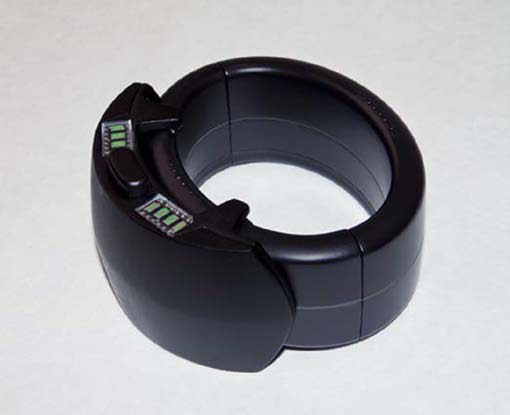
Use agency references responsibly: presence in a contract directory proves vendor selection, not endorsement of every technical claim. Your pilot still needs local RF walks, tamper drills, and export reviews. If neighboring counties run the same BI Inc ankle monitor stack, interoperability meetings can accelerate training—but do not skip independent verification.
For readers comparing ankle monitor brands at the national level, treat federal and state DOC footprints as risk reduction for parts availability and training ecosystems, not as proof that one GNSS implementation fits every desert corridor or mountain jurisdiction.
Alternatives to OmniLink Ankle Monitors
Modern procurement never lacks options. Besides CO-EYE ONE, agencies routinely evaluate:
- SCRAM Systems — strong brand recognition for alcohol-centric monitoring (SCRAM CAM) plus GPS-class hardware where courts bundle modalities; see our SCRAM vs CO-EYE comparison.
- Track Group — software-forward narratives with diversified device partnerships; confirm hardware generation in each quote.
- Sentinel — long-standing US supervision footprint with varied device families; map SKUs to your orders.
- Buddi — international vendor presence referenced in comparative RFPs; validate US carrier and support depth.
- SuperCom — corporate portfolio includes Attenti/SCRAM-line histories in some regions; disentangle branding per bid.
Impartial selection means weighting modality (GPS vs alcohol vs RF tether), software APIs, cybersecurity posture, and measured pilot metrics. The best OmniLink ankle monitor alternative is the one that satisfies court language without inventing hidden operational debt.
Commercial pathways and supplier qualification appear in ankle monitor for sale (agencies & programs); deep specs for our hardware sit on CO-EYE ONE.
How to Switch from OmniLink to a Better Solution
“Better” is defined by your scorecard, not headlines. Some counties switch because OmniLink GPS battery cycles drive indigent hearings; others because export metadata failed a discovery challenge; still others because multi-vendor middleware finally supports CO-EYE ONE. Regardless of motive, migrations share a playbook:
- Baseline the as-is state — catalog geofences, curfew templates, alert codes, and integration feeds for your current OmniLink ankle monitor deployment.
- Run parallel pilots — matched cohorts, identical reporting intervals where firmware allows, blind scoring of tamper and battery alerts.
- Align legal stakeholders — prosecutors and defenders should preview map PDFs and metadata before go-live to avoid mid-trial surprises.
- Train staff before participants — supervisors who understand new alert dictionaries prevent unnecessary arrests.
- Plan spare inventory — mixed fleets often exist for months; color-code straps and chargers to reduce warehouse chaos.
If CO-EYE ONE wins your pilot, use CO-EYE ONE technical materials and the buyer’s guide to formalize requirements. Request sales engineering through official channels for integration timelines—never rely on blog prose for contractual SLAs.
Frequently Asked Questions
What is an OmniLink ankle monitor?
An OmniLink ankle monitor is GPS-capable BI Incorporated hardware—commonly OM400 or OM500 series—used for supervised release and community corrections with cellular reporting and web-based monitoring tools such as BI TotalAccess-class portals.
Is OmniLink owned by GEO Group?
BI Incorporated, the vendor behind OmniLink, is a subsidiary of GEO Group. Corporate structure matters for contracting, support escalation, and vendor risk assessments.
How does OmniLink GPS differ from consumer trackers?
OmniLink GPS devices integrate court-grade tamper sensing, encrypted supervision payloads, and monitoring-center workflows. Consumer GPS watches lack evidentiary controls and programmatic integrations.
What is the main OmniLink vs CO-EYE ONE tradeoff?
OmniLink benefits from long-standing US public-sector adoption and BI software familiarity. CO-EYE ONE emphasizes published seven-day battery at five-minute reporting, multi-constellation GNSS with assistance, lighter 108 g housing, IP68 sealing, fiber optic tamper signaling, and sub-three-second installs—validate each claim in your environment.
Does this article replace vendor legal warranties?
No. It educates buyers comparing ankle monitor brands. Always rely on signed specifications, certifications, and counsel-reviewed contracts.
Where can I read more comparisons?
See the GPS ankle monitor buyer’s guide and linked blog comparisons in the introduction.