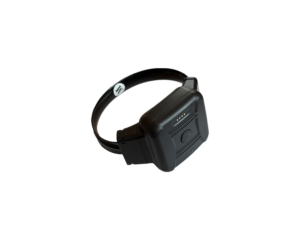

Ankle monitor cost is one of the most searched questions in community corrections—and one of the easiest to misunderstand. A single “daily fee” on a court order rarely equals your agency’s total cost of ownership (TCO), and how much an ankle monitor costs for a defendant in one county can differ sharply from a statewide DOC contract in another. This guide explains what typically drives ankle monitor pricing in 2026, how GPS monitoring cost compares with radio-frequency (RF) home monitoring, and where hidden line items blow up budgets after award.
For a deeper vendor-neutral buying framework, start with our GPS ankle monitor guide; for a parallel fee-focused reference, see the ankle monitor cost guide (pricing & TCO).
Ankle monitor daily fees: the $5–$25/day band (and why it varies)
Public sources and program summaries frequently describe participant or agency fees in a broad range—commonly discussed on the order of about $5 to $25 per day—but the number on paper may bundle different services. One contract’s “$12/day” might include cellular airtime and monitoring-center review, while another’s “$8/day” excludes field installs and charger replacement. When finance teams ask how much does ankle monitoring cost, the defensible answer is: it depends what the per diem includes.
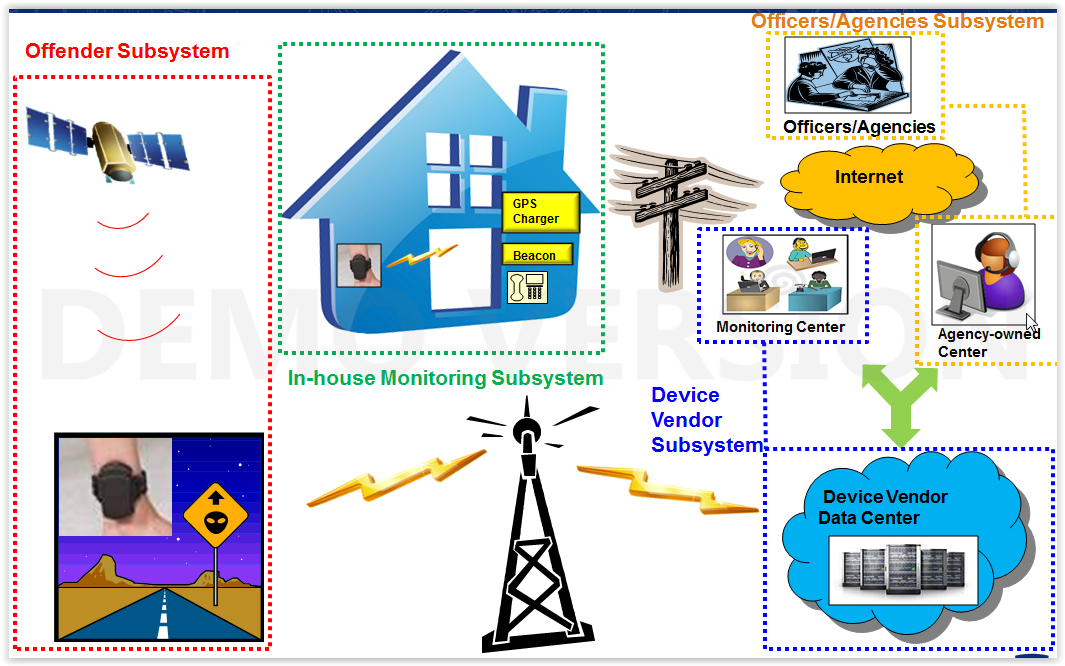
Risk tiering matters: pretrial GPS with multiple exclusion zones and short location intervals generates more data and more analyst touchpoints than a simple curfew check. Specialty dockets (domestic violence protective orders, sex-offense conditions) may add workflow integrations that vendors price separately if your RFP is silent.
Equipment purchase vs lease: what procurement teams actually sign
Most U.S. county and vendor programs economically resemble leased service stacks even when accounting labels show capital purchases: devices cycle out with strap wear, firmware sunset, and cellular network transitions. A procurement mistake is comparing a catalog hardware price to a competitor’s all-inclusive per diem without normalizing monitoring labor, map fees, SMS/voice bundles, and spare-pool requirements.
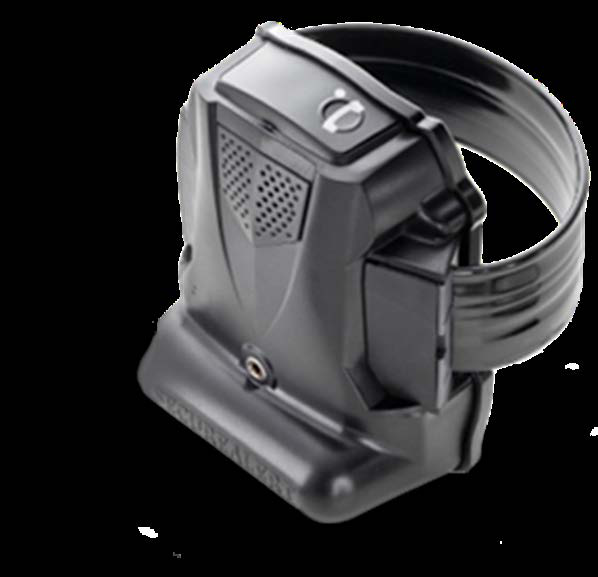
Two-piece architectures (bracelet plus home communicator or phone tether) can multiply accessories and pairing-failure workflows; one-piece GPS designs consolidate GNSS, modem, battery, and tamper sensing in a single ankle-worn module—often simplifying inventory counts and officer training. Our one-piece vs two-piece GPS ankle monitor TCO discussion walks through how architecture choices ripple into field labor.
GPS vs RF ankle monitor cost: different risks, different bills
GPS ankle monitor cost is driven by satellite positioning chipsets, cellular modules, data plans, map geocoding, and continuous track storage. RF electronic monitoring for house arrest traditionally emphasizes presence near a base unit; variable connectivity costs are often lower, but the supervision profile is not interchangeable with roaming-location risk.
Federal practice materials emphasize proportionality—using the least restrictive modality that matches risk. That policy frame is also a budget frame: over-specifying GPS for every low-risk curfew case inflates telemetry and labor without proportional safety gains.
State-by-state ankle monitor fees: Florida, Texas, California, Georgia (illustrative)
There is no national price list. The table below summarizes illustrative themes seen in public fiscal and policy discussions; verify against current statutes, court fee schedules, and your vendor statement of work.
| State | Notes on EM fee dynamics |
|---|---|
| Florida | Large statewide monitoring footprint; fiscal materials have contrasted approximate GPS supervision per-diems on the order of single-digit dollars per day with far higher prison bed-day costs—useful as budget context, not a quote. |
| Texas | County and vendor diversity produces wide participant-fee dispersion; multi-county consortia can compress monitoring-seat costs if SLAs keep alert triage disciplined. |
| California | Urban pretrial EM growth strains capacity planning; budget officers should model per-participant costs alongside appearance and safety metrics rather than fees alone. |
| Georgia | Mix of vendor-operated and agency-operated models; compare whether per-diems include field services and how swaps are billed. |
When legislators compare supervision technology with incarceration, you may see ballpark figures such as roughly $5,000/year class community supervision technology estimates against roughly $35,000/year class incarceration estimates—illustrative magnitudes only. Always reconcile with your state corrections accounting manual; neither number is universal.
Hidden costs: installation, removal, cancellations, chargers
- Install/remove trips: mileage, after-hours premiums, and officer overtime when schedules slip.
- Chargers and cables: consumables in high-turnover caseloads; specify warranty and replacement cadence in contracts.
- Early termination / restocking: some agreements assess fees if cohort counts drop below minimums.
- Discovery exports: DA defense packages may require formatted location histories; absent SLAs, agencies pay rush IT or vendor professional services.
TCO analysis: pair dollars with outcomes (NIJ Florida research)
NIJ-sponsored research on Florida’s electronic monitoring program reported a 31 percent reduction in the risk of supervision failure relative to non-EM supervision in the analyzed population—an outcome statistic finance should sit beside per-diems. Operational studies also highlight alert volume as a cost driver when equipment behavior and monitoring-center practices are misaligned.
When you model TCO, include five years of strap replacement, device refresh, caseload growth sensitivity (±20%), and expected alerts per 100 participants. A slightly higher device line item that cuts false tamper burden can reduce net spend when officer hours and court churn fall.
Where CO-EYE ONE fits for operating economics (not a price quote)
REFINE’s CO-EYE ONE one-piece GPS ankle monitor is engineered around field realities: published standalone battery life is up to about seven days at a five-minute reporting interval on LTE-M/NB-IoT-class operation—reducing charging cycles versus many legacy daily-charge devices. The integrated architecture also avoids separate tag/base pairing points that drive swap tickets in two-piece fleets.
We do not publish a universal retail price because awards are contract-shaped; agencies should request a quote for their reporting profile, spare ratio, and integration needs.
Key takeaways
- Treat ankle monitor cost as TCO: hardware + connectivity + monitoring labor + field services + compliance.
- Expect publicized daily fees near a ~$5–$25 discussion band but verify inclusions.
- GPS monitoring cost usually exceeds RF curfew models because of data and hardware complexity.
- Benchmark incarceration comparisons with official per-diems and outcome data—not memes.
How monitoring centers turn “low per diem” into real labor cost
Even when a vendor quote looks flat, your agency still pays through staffing. Every geofence breach, every ambiguous “strap open” sensor transition, and every loss-of-GPS event in an urban canyon can create a ticket. NIJ’s mixed-methods work in Florida underscored that equipment behavior and monitoring-center workflows jointly determine how many alerts officers see. If your procurement assumes “the vendor handles alerts,” read the SLA: some contracts price baseline review hours, then bill overages when caseload spikes.
Alert triage maturity is therefore a hidden multiplier on ankle monitor pricing. Programs that classify benign signal loss versus probable tamper faster spend less on warrantless field dispatches. Programs that treat every dropped ping like an emergency burn overtime and erode judicial confidence when officers cry wolf.
Procurement line items your RFP should force bidders to separate
- Hardware unit cost and expected replacement rate (strap wear, cracked housings, water damage).
- Cellular/data minimum Mbps, roaming behavior, and whether maps/geocoding are passthrough fees.
- Monitoring center hours of analyst review included per 1,000 participant-days.
- Field services radius, after-hours multiplier, and whether swaps are same-day.
- Software/API exports for discovery, retention windows, and audit logs.
- Training initial and annual refresh, train-the-trainer options.
When those buckets are merged into a single “all-in” per diem, apples-to-apples comparison becomes impossible—and the low bid often reappears later as change orders.
Participant-funded models: why they distort headline “ankle monitor cost”
Civil fines-and-fees research documents wide dispersion in what individuals pay across courts and counties. A low governmental line item can coexist with high participant charges, and nonpayment can generate warrants that refill jail beds—wiping out fiscal savings. Agencies reporting to county boards should present system costs, not only vendor invoices.
Technology choices that change five-year TCO (without naming a “winner”)
Cellular transition is a silent budget item: sunsetting 2G/3G footprints pushed many fleets toward modern LTE-family radios. LTE-M and NB-IoT profiles can improve power budgets versus legacy cellular, changing how often participants must charge—directly influencing compliance and officer call volume.
Tamper-sensor philosophy matters as much as GNSS chip generation. Fiber-based strap integrity approaches aim for decisive tamper signaling; procurement teams should ask vendors for written false-alert guidance and maintenance rules rather than accepting marketing adjectives.
Using NIJ Standard 1004.00 language in cost conversations
When technical staff ask finance for budget, translate NIJ performance framing into operational dollars: outdoor versus indoor-oriented location benchmarks, test methodologies, and reporting intervals all influence how much data you buy and how often officers must validate exceptions. A “cheaper” device with a chaotic alert signature can be the most expensive fleet choice on a fully burdened basis.
International analogues: RF-to-GPS transitions are fiscal events
Government equality assessments published during national transitions from RF to GPS electronic monitoring highlight implementation costs beyond hardware—training, charging logistics, and disparate impacts if rollout is uneven. U.S. readers can borrow the lesson: modality changes are program-change projects with OPEX, not a SKU swap.
County budget officers: how to present ankle monitor cost in board packets
Elected officials rarely want a vendor datasheet—they want a narrative that survives public comment. Start with cohort size and trend, then show fully burdened per-participant cost, then outcomes your jurisdiction already tracks (FTA, violations, jail days avoided where modeled). Cite NIJ’s Florida findings when discussing supervision failure risk reduction, but localize with your pretrial services data when available.
Separate capital refresh from operating monitoring. If a statewide contract subsidizes devices upfront, warn the board when the out-year spike hits as replacements cluster. Nothing erodes trust faster than a “flat fee” story followed by a mid-term amendment.
Supervision software seats: the cost hidden behind the map
GIS licensing, geocoder calls, historical track storage, and user seats for judges, clerks, and treatment partners are real money. Some vendors bundle; others meter. Ask what happens when you add 50 read-only users for a specialty court expansion—seat economics can dwarf marginal device cost.
Replacement inventory: how many spares justify “availability”
High-availability programs stock hot-swap units per district; lean programs ship overnight and absorb downtime risk. Your spare ratio should reflect consequence: pretrial GPS on high-publicity cases may need same-day swap; low-risk RF tracks may tolerate 48-hour turnaround. Model both capex and the expected violation rate spike when participants wait without functioning equipment.
Training debt: when “savings” create downstream violations
Under-trained officers misclassify alerts; under-trained participants misunderstand curfew logic. Both generate hearings. Budget recurring training like fuel, not like a one-time kickoff. Vendor webinars help, but agencies still need internal SOPs that match local court expectations.
How CO-EYE ONE reduces operational friction (specifications from manufacturer materials)
According to REFINE product documentation, CO-EYE ONE integrates GNSS, cellular modem, battery, and tamper sensing in a one-piece anklet with fiber-based strap and case integrity monitoring, HTTPS/AES-class transport security, and European NB CE family certifications relevant to export markets. Battery life is quoted up to approximately seven days in standalone LTE-M/NB-IoT operation at a five-minute reporting interval—parameters that directly affect how often participants must charge and how often officers respond to low-battery alerts.
Procurement teams should still validate any device against your reporting policy and indoor performance mix; specifications support budgeting conversations, not substitute for pilot data.
Closing framework: ask these ten questions before you sign
- What exactly is included in the quoted per diem?
- What cellular technology generation is supported, and what is the sunset plan?
- How are alerts tiered, and what SLA applies to analyst review?
- What is the field-service radius and after-hours multiplier?
- What is the strap and charger replacement policy?
- How are exports formatted for discovery, and what do redactions cost?
- What training is included year one and annually?
- What happens to pricing if caseload swings 20%?
- What cybersecurity attestations are provided?
- How does the vendor measure false tamper versus true tamper, and can you tour a reference site?
Multi-year total cost scenario (illustrative math only)
Suppose a county models 400 concurrent GPS participants for five years. Even if a vendor quotes $10 per day per participant, the nominal cash trajectory is sensitive to replacement cycles: if 18% of devices require early swap annually due to strap wear and loss, the hardware line moves. Add 12 after-hours field dispatches per week at loaded labor rates and the “cheap per diem” narrative shifts again. The point is not to pick a single answer—it is to force explicit assumptions into the board packet so ankle monitor cost debates occur before award, not after overtime invoices arrive.
When comparing to incarceration, use your state DOC bed-day workbook, include healthcare where appropriations do, and acknowledge that EM still requires community supervision labor. A simplistic “$5,000 vs $35,000” comparison can be directionally informative for legislators but should never substitute for a finance-grade model.
Finally, remember that how much does an ankle monitor cost for a participant paying user fees may include payment-plan interest, travel to vendor offices, and lost wages from charging logistics—none of which appear on the vendor invoice. Holistic justice budgeting attempts to fold those burdens into policy analysis even when they are hard to monetize precisely.
Procurement tip: when vendors compete, ask each to price the same reporting interval, the same geofence complexity, and the same export format so ankle monitor pricing comparisons stay apples-to-apples instead of marketing-to-marketing.
Auditors love reconciled spreadsheets—give them one. Consistency beats optimism every time.
Frequently Asked Questions
How much does an ankle monitor cost per day?
In many U.S. programs, participant or agency daily fees commonly fall in a wide band—often cited roughly between about $5 and $25 per day depending on jurisdiction, risk tier, technology (GPS vs RF), and whether fees bundle monitoring-center labor, cellular data, and field services. Always read the court order or contract because labels like “daily fee” may or may not include installation, removal, and replacement hardware.
Is it cheaper to buy ankle monitor equipment or lease it?
Agencies usually procure through multi-year service contracts that amortize hardware into a per-diem or monthly seat fee; outright purchase may appear on paper for some public entities but operating economics still include spares, refresh cycles, and depot repair. Compare five-year total cost—including replacement straps, chargers, and lost-device policies—not only the device list price.
Why does GPS ankle monitoring cost more than RF house arrest systems?
GPS supervision streams location fixes and uses cellular backhaul, maps, and server storage at scale; RF tether systems primarily verify proximity to a home base unit and typically consume less wide-area connectivity. GPS is not “better” for every case—match modality to risk—but it usually carries higher variable data and hardware complexity than curfew-centric RF programs.
What hidden ankle monitor fees should budgets include?
Beyond the quoted per diem, model installation and removal labor, after-hours field responses, charger replacement, expedited shipping for swaps, early contract cancellation clauses, export/discovery support, and training refreshes. Alert-heavy programs can consume officer time even when the vendor invoice looks flat.
How does ankle monitor cost compare to jail or prison?
Policy analyses often contrast high annual incarceration estimates with lower annualized community supervision technology costs, but the comparison is only meaningful when both figures include the same cost categories (security, healthcare, facility overhead vs monitoring center, field services, and outcomes). Use official corrections per-diems for your state and pair dollars with supervision-outcome data.