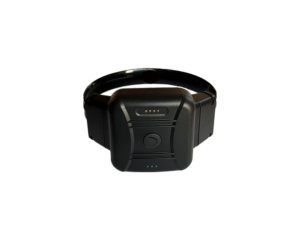
When provinces pair GPS ankle monitor supervision with victim-facing technology, they are not buying a gadget—they are buying time. Alberta’s decision to invest approximately $4 million over three years to expand its ankle monitor program and add real-time smartphone proximity warnings is a clear signal that electronic monitoring has moved from passive check-ins to active public-safety infrastructure for domestic violence and stalking cases. For agencies and vendors, the lesson is straightforward: success depends on GNSS accuracy, geofence discipline, cellular reliability, and monitoring software that can turn location streams into actionable alerts in seconds—not hours.
Alberta’s investment: scaling GPS ankle bracelet supervision and victim alerts
In budget and announcement materials reported in March 2026, Alberta outlined a multi-year commitment—commonly cited at about $4.0–$4.1 million over three years—to deepen its electronic monitoring footprint and accelerate a victim notification capability tied to court-ordered GPS ankle bracelets. The policy narrative is consistent across Canadian coverage: move accountability onto offenders, give survivors earlier warning when risk spikes, and align provincial correctional monitoring with Royal Canadian Mounted Police (RCMP) and municipal police workflows.
Program scale already demonstrates demand. Since a 2024 launch pathway and broader operational rollout into 2025, Alberta has reportedly imposed more than 550 monitoring orders and had on the order of 300 individuals actively monitored under the framework—numbers that matter because every additional enrollee multiplies load on RF spectrum, cellular data plans, charger logistics, and 24/7 watch-floor staffing. When elected officials fund expansion, they are implicitly insisting that the underlying GPS ankle monitor ecosystem can absorb volume without collapsing alert quality.
That is why procurement teams should read Alberta’s move as a requirements document in disguise: if a province will fund victim-facing proximity alerts, it will eventually audit alert latency, geofence integrity, and tamper-truthfulness. The same scrutiny applies anywhere electronic monitoring intersects intimate partner violence, where errors can erode court trust or—worse—create preventable harm.
Canadian coverage has also highlighted the human narrative behind the budget line: officials describe alerts as giving survivors “precious seconds” to leave a location, lock doors, call a support line, or contact police. That framing is useful for vendor engineering because it converts an abstract feature—push notification—into a latency budget. If cellular backhaul batches positions too aggressively, or if map-matching snaps a trace to the wrong side of a street, the seconds evaporate. Alberta’s decision therefore validates investments in continuous supervision platforms that treat victim safety as an SLO (service-level objective), not a brochure bullet.
Finally, the three-year horizon matters commercially. Short grants buy peripherals; multi-year envelopes buy platform hardening, API contracts, and training curricula that outlast a single news cycle. Agencies should expect auditors to ask not only “does the bracelet work?” but also “can we prove what we told the victim, when we told them, and who acknowledged receipt?” That evidentiary posture is exactly where CO-EYE Monitoring Software audit modules and structured event histories earn their keep.
How victim proximity alerts pair with a GPS ankle monitor
At a high level, a GPS ankle monitor (often called a GPS ankle bracelet) solves the offender-side sensing problem: where is the supervised person right now, how fast are they moving, and are they attempting to defeat the strap or enclosure? A modern one-piece device combines multi-constellation GNSS, assisted WiFi and cellular LBS, and hardened anti-tamper subsystems so location traces are defensible in court.
The victim-side problem is different: a survivor should not need to guess whether an offender is approaching a home, workplace, or child’s school. Smartphone proximity warnings close that gap by pushing notifications when analytics detect that the offender’s bracelet has entered a forbidden buffer, breached an exclusion polygon, or matched a risk pattern defined in the supervision order. The architecture is inherently software-heavy—maps, rules engines, audit logs, role-based access, and escalation paths for police—layered on top of reliable device telemetry.
News reporting has noted that Alberta’s victim-facing application is expected to roll out further through 2026, which is typical for large public-sector integrations: security reviews, privacy impact assessments, bilingual support, and training for victim services all take time. The hardware and platform choices made today will determine whether that app launches into a credible alert pipeline or into a fragile prototype that frustrates users.
Technically, proximity alerting usually combines three streams: high-rate device fixes (or tightly bounded fix intervals), server-side geospatial predicates (distance-to-polygon, corridor bans, time windows), and notification fan-out (mobile push, SMS fallback, email archive). Each hop introduces delay. Field-hardened programs therefore instrument the pipeline—timestamp at fix, timestamp at ingest, timestamp at rule evaluation, timestamp at push acceptance—and review weekly with vendors. A GPS ankle bracelet that is accurate but slow to upload is still a liability in victim-alert mode, which is one reason CO-EYE emphasizes modern LTE-M/NB-IoT cellular stacks alongside efficient power budgeting.
Another underappreciated layer is victim handset realism. Survivors may use older phones, restrictive battery optimizers, or intermittent data plans. Programs must test notification delivery across iOS and Android permission models, including what happens when a user temporarily disables push to sleep—without victim-blaming language in training materials. The best deployments pair technology with wraparound services so alerts augment, rather than replace, safety planning.
Why geofencing and GNSS precision define domestic violence outcomes
Domestic violence supervision is unforgiving of sloppy geospatial design. Courts often specify exclusion zones with narrow buffers—sometimes just tens of meters in dense neighborhoods. If a GPS ankle bracelet drifts tens of meters randomly due to multipath or stale fixes, analysts either flood victims with false warnings (training them to ignore alerts) or miss true breaches until it is too late. Neither outcome is acceptable when the goal is real-time proximity warnings.
Strong programs therefore specify:
- Multi-constellation GNSS (GPS, BeiDou, GLONASS, Galileo) for robust sky coverage.
- Hybrid positioning with WiFi and LBS assistance when satellite visibility drops near buildings.
- Modern cellular—for global deployments, 5G-compatible LTE-M/NB-IoT with GSM fallback helps future-proof against sunsetting 2G/3G networks.
- Honest reporting intervals matched to battery capacity so “real-time” claims are not theater.
- Tamper signaling that distinguishes true strap or enclosure events from nuisance alarms that destroy officer confidence.
For a deeper program perspective on intimate partner risk, supervision conditions, and how agencies structure monitoring, see our domestic violence electronic monitoring solution overview—it complements this policy analysis with implementation framing for courts and service providers.
Electronic monitoring as a stalking and intimate partner violence deterrent
Stalking and domestic violence cases frequently share a technical requirement: predictable location accountability combined with rapid escalation when rules break. A GPS ankle monitor does not replace shelter services, counseling, or criminal investigation; it adds a sensor layer that makes court orders mechanically enforceable at scale. When paired with victim notifications, the same stack reframes safety: less burden on survivors to “watch the street,” more burden on offenders to remain verifiably distant.
Alberta’s emphasis on RCMP and police service partnership reflects operational reality. Alerts are only as good as the dispatch playbook—who gets paged, how warrant workflows trigger, and how evidence packets preserve chain-of-custody for later proceedings. Electronic monitoring vendors that think their job ends at the bracelet miss half the value chain; platforms must export timestamped geofence events, support supervisor annotations, and integrate with agency IT realities.
Interagency alignment also influences charging and device swap logistics. If municipal police handle weekend breaches while provincial staff own weekday caseloads, the monitoring platform must support shared visibility without compromising privacy. Role-based access, redacted views for community partners, and immutable audit trails become contract requirements—not nice-to-haves—once victim apps enter production.
From a communications standpoint, transparent public messaging reduces rumor-driven fear. When citizens understand that a GPS ankle monitor order is supervised continuously and that exclusion zones are court-defined, compliance improves and officers field fewer nuisance calls. Alberta’s communications—echoed across national outlets—signal that policymakers see electronic monitoring as a visible accountability tool, not a hidden sanction.
How CO-EYE technology supports victim alert programs
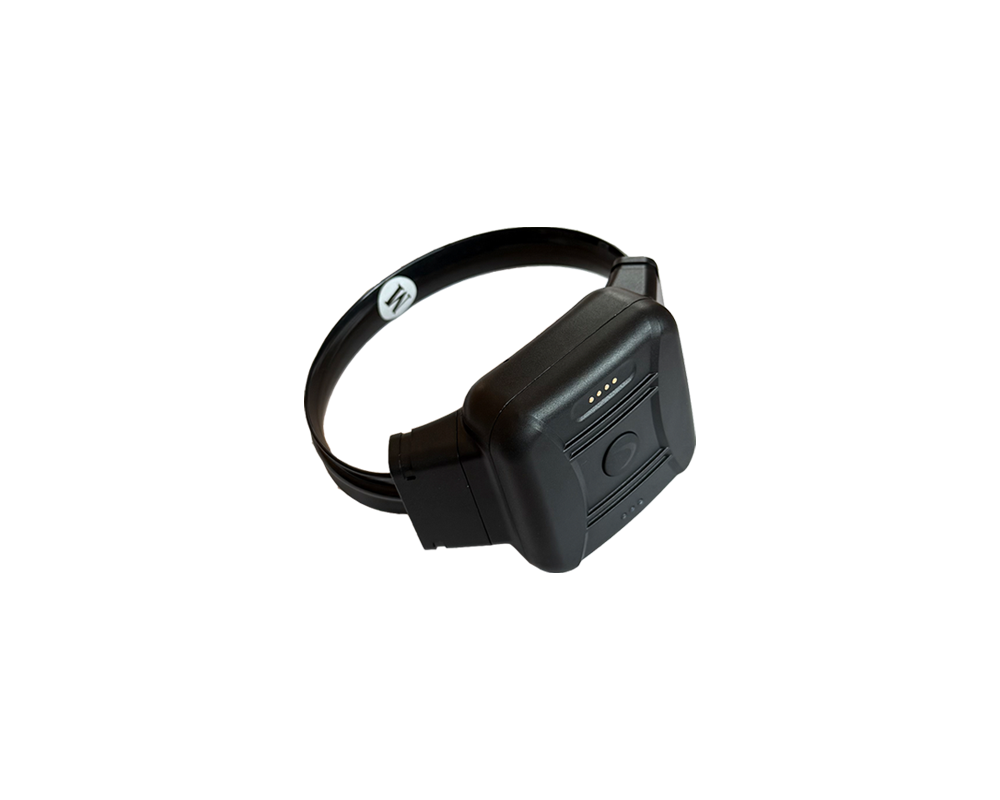
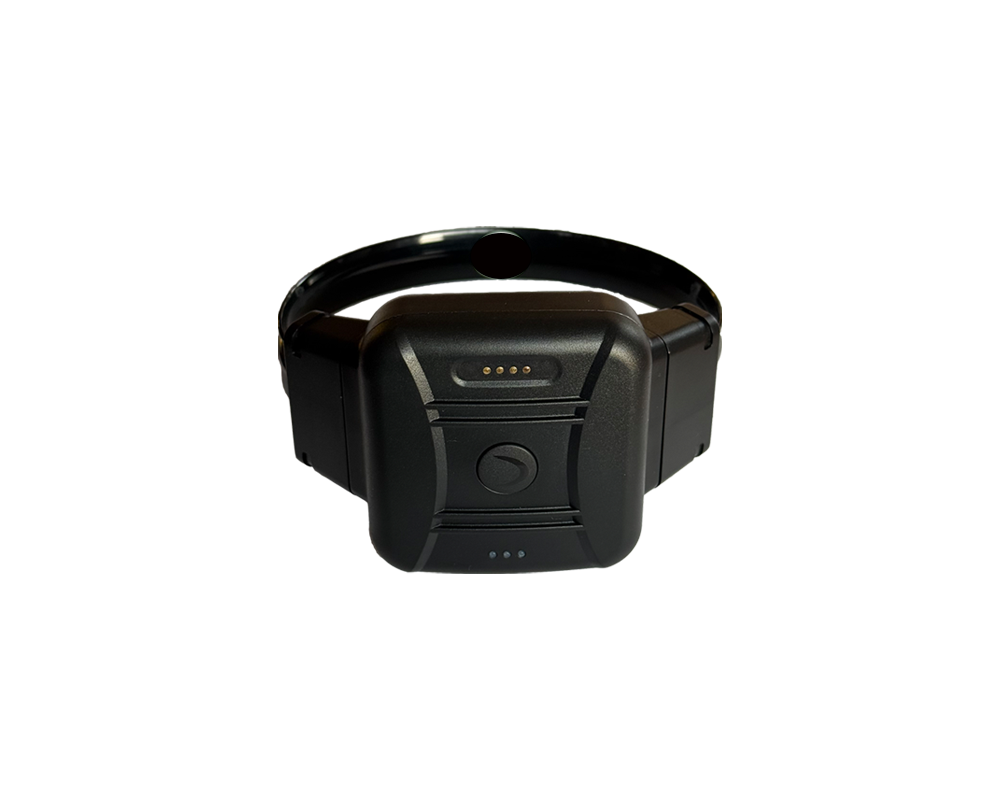
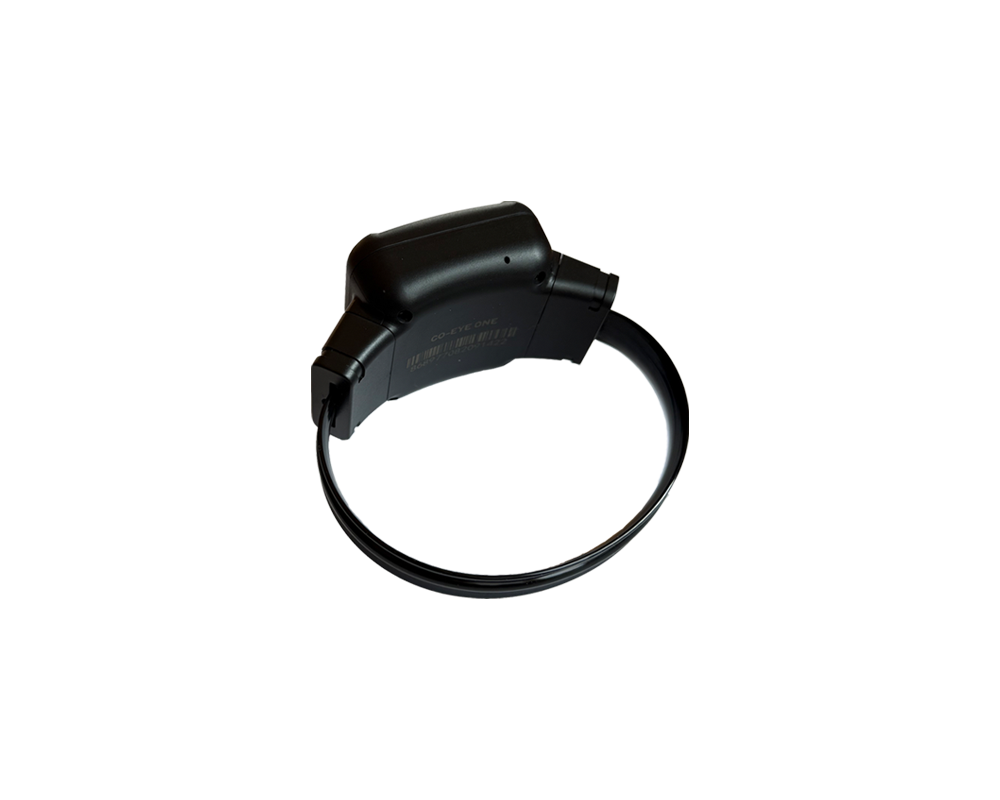
CO-EYE builds the component stack that provinces and vendors need when translating headlines into dependable field operations. The flagship CO-EYE ONE GPS ankle monitor is a 108 g one-piece GPS ankle bracelet (60×58×24 mm) engineered for high-integrity electronic monitoring:
- Sub-2 meter CEP-class GPS accuracy outdoors, supported by GPS + BeiDou + GLONASS + Galileo with WiFi and LBS assistance for challenging environments.
- 5G-compatible LTE-M / NB-IoT / GSM cellular for durable wide-area connectivity.
- About seven-day standalone battery life at a practical LTE-M/NB reporting cadence (5-minute-class intervals), plus 2.5-hour magnetic fast charging—critical when alert programs cannot tolerate chronic dead devices.
- Fiber-optic strap and case tamper detection engineered for zero false-positive tamper events on strap and enclosure sensing—preserving officer trust in victim-alert escalations.
- Under-three-second snap installation and IP68 waterproofing so daily living (including showers) does not become a compliance failure mode.
On the software side, CO-EYE Monitoring Software delivers the unified supervision backbone victim-alert roadmaps require: enrollee monitoring, events and alerts, notification orchestration, interactive maps, history playback, inventory and user management, reporting, configuration, mobile application integration, and audit trails across thirteen functional modules. Geofence-driven rules—approach buffers, exclusion polygons, schedule-aware permissions—are where smartphone warnings are born; without disciplined eventing and role-based visibility, even excellent hardware under-delivers.
CO-EYE’s broader matrix also covers adjacent risk tiers—from smartphone-centric supervision to RF home monitoring—so agencies can match device class to order severity without bolting together incompatible silos. The strategic point for Alberta-style expansions is continuity: one vendor-agnostic architecture lesson is that victim alerts are a workflow product, not a single mobile app feature.
For jurisdictions that need extended battery life in tethered supervision modes, CO-EYE ONE-AC adds eSIM flexibility and BLE-connected operation with the broader CO-EYE ecosystem—useful when programs blend high-risk GPS ankle bracelet supervision with lower-touch verification days while preserving a single software back end. Specifications for the standard and AC variants—including storage, processor architecture, and charging—are documented on the CO-EYE ONE product page for side-by-side procurement comparisons.
Across deployments, CO-EYE’s design philosophy matches what victim-alert pilots keep proving: minimize officer time per install, maximize signal trust per alert, and keep survivors out of the technical weeds while still giving them actionable information. That triad is the real product market fit behind Alberta’s budget headlines.
Procurement checklist: translating political commitments into reliable GPS ankle monitor outcomes
Alberta’s funding headline is the easy part. Delivery is harder. Use this checklist when evaluating GPS ankle monitor and platform stacks for domestic violence or stalking alert programs:
- End-to-end alert latency tests — measure device event to victim handset under real cellular conditions, not lab WiFi.
- Geofence edge-case drills — bridges, parking garages, dense apartments, and rapid transit corridors expose weak fusion logic.
- Tamper adjudication — quantify false positives during charging, strap adjustment, and officer swaps; fiber-based sensing should remain deterministic.
- Battery and charging policy — align court expectations with physics; publish how low-battery states are messaged to victims and officers.
- Privacy and access control — victim apps need least-privilege data exposure, robust authentication, and auditable downloads for court discovery.
- Interagency runbooks — RCMP, municipal police, and provincial supervisors must share a common event vocabulary.
- Regression testing after map updates — road construction, new buildings, and revised parcel boundaries change geofence semantics; version geofences and revalidate buffers quarterly.
- Survivor-centered UX review — localization, trauma-informed wording, and clear escalation buttons outperform flashy maps that confuse under stress.
Programs that pass those gates earn the political narrative Alberta is pursuing: electronic monitoring that is simultaneously accountable to courts and empathetic to survivors.
Looking ahead, other provinces and U.S. states will study Alberta’s rollout for lessons learned—especially how funding duration correlates with sustained staffing, and whether victim opt-in rates climb when alerts prove reliable in the first ninety days. Vendors that publish transparent performance data will shape those copycat procurements; those that hide behind marketing gloss will be filtered out during pilot evaluations.
Frequently asked questions
What is Alberta investing in for GPS ankle monitor victim safety?
Alberta announced multi-year funding—widely reported around four million Canadian dollars over three years—to expand supervised GPS ankle bracelet capacity and introduce smartphone-based victim alerts when offenders breach court-ordered zones or approach protected locations.
How do real-time proximity warnings work?
A supervised offender wears a GPS ankle monitor that streams location to a central platform. Geofences encode court rules. When the platform detects breaches or dangerous approach dynamics, it can push notifications to the victim’s app and to monitoring staff so survivors gain time to act.
Why does domestic violence monitoring need high GPS accuracy?
Narrow court-ordered buffers mean small errors have big consequences—either excessive false alerts or missed true breaches. Multi-constellation GNSS with WiFi/LBS assistance and honest reporting intervals supports defensible electronic monitoring decisions.
How does CO-EYE support these programs?
CO-EYE ONE delivers one-piece GPS ankle bracelet hardware with sub-2 m-class outdoor accuracy, modern cellular, week-class battery, IP68 sealing, fiber-optic tamper integrity, and rapid installation. CO-EYE Monitoring Software supplies mapping, alerts, notifications, and audit-friendly reporting across thirteen modules—ideal for geofence-centric victim alert workflows. Explore CO-EYE ONE and CO-EYE Monitoring Software for specifications, and review our domestic violence monitoring solution page for programmatic context.
Ready to architect a victim-alert-ready electronic monitoring deployment? Contact our sales team for pricing, integration guidance, and benchmark data tailored to your jurisdiction—use Contact Sales or Request Quote pathways on ankle-monitor.com/contact.