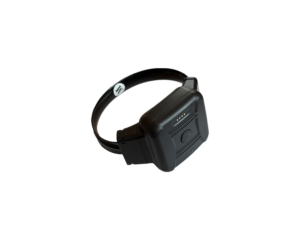
For courts, sheriffs, pretrial services, and community corrections leaders, domestic violence GPS ankle monitor programs are no longer experimental—they are becoming a standard layer of protective order monitoring paired with victim safety GPS workflows. When high-risk respondents are released with geographic conditions, agencies need hardware and software that can prove proximity violations quickly, minimize false alarms that erode victim trust, and survive the realities of continuous wear. This 2026 guide explains why DV GPS monitoring is expanding, how exclusion zone monitoring works in practice, what specifications belong in RFPs, and how CO-EYE ONE fits programs that demand credible tamper evidence and modern cellular paths.
Readers should cross-check our program-oriented pillar Domestic Violence Electronic Monitoring: Technology and Implementation Guide, the product deep-dive CO-EYE ONE GPS ankle monitor, platform capabilities on CO-EYE Monitoring Software, procurement framing in the GPS ankle monitor buyer’s guide, and terminology alignment in the GPS ankle bracelet complete guide. When you are ready to scope hardware counts, alert policies, and integration paths, Contact Sales or Request Quote for a structured discussion—no demo or trial programs are required to begin procurement planning. See also: electronic monitoring technologies guide for criminal justice (2026). See also our GPS ankle monitor buyer’s guide.
Why a Domestic Violence GPS Ankle Monitor Program Matters in 2026
Intimate partner violence cases often turn on distance and timing: victims need defensible notice when a respondent breaches buffers around home, work, school, or childcare. A domestic violence GPS ankle monitor supplies timestamped location history and live alerts that paper orders alone cannot provide. Supervision agencies therefore treat electronic monitoring as part of a coordinated safety plan—alongside civil protection orders, criminal bond conditions, probation rules, and victim services—not as a standalone gadget.
Procurement and clinical stakeholders share a common risk: if alerts cry wolf, victims stop responding; if alerts arrive too late, orders fail their purpose. That tension pushes buyers toward accurate receivers, disciplined geofence geometry, and tamper signaling that distinguishes true strap or case events from conductive false positives. The sections below map those needs to standards language (including NIJ positioning benchmarks) and to deployment practices that hold up in hearings.
Evidence on supervision outcomes supports investment discipline. Peer-reviewed work on Florida’s electronic monitoring program reported roughly a 31% reduction in recidivism risk for monitored cohorts versus comparison groups in the study design—useful context when legislatures fund expansion. Local populations still differ, so agencies should pair external statistics with domestic-violence-specific KPIs: time-to-notify, breach confirmation rate, and victim-reported usefulness of victim safety GPS tools.
Legislative and Policy Landscape (2026)
North American jurisdictions are converging on GPS as an enforceable condition for selected domestic-violence dockets—while leaving implementation details to agencies and vendors. The following examples illustrate momentum; verify statutory text and effective dates for your state before updating court forms or RFPs.
United States: Oklahoma Senate Bill 1325
In March 2026 the Oklahoma Senate unanimously advanced SB 1325, which strengthens GPS supervision pathways tied to domestic abuse charges and protective orders—requiring monitoring for defined violent offenses on pretrial release, routing oversight through the Department of Corrections or qualified vendors, and emphasizing victim-notification concepts when respondents approach restricted areas. Effective dates and House action should be confirmed from enrolled text before operational rollout.
United States: Florida House Bill 277
Florida’s HB 277 (2026 session) expands electronic monitoring themes in domestic-violence and injunction practice, with an effective date of July 1, 2026. The law’s public narrative includes a Pinellas-area pilot posture for certain misdemeanor domestic-violence probation tracks paired with no-contact orders, alongside broader statewide changes to injunction infrastructure and penalties. Agencies should read enrolled provisions for exact eligibility, fee assignment, and map rules governing exclusion zone monitoring.
Canada: Alberta victim-notification investment
Alberta announced additional funding on the order of $4.1 million (multi-year) to scale GPS supervision and smartphone-based victim alerts for high-risk repeat offenders, extending court-ordered inclusion and exclusion zones with opt-in notifications intended to give survivors lead time during potential breaches. Canadian provinces differ from US pretrial practice; still, the pattern—public safety ministry oversight, vendor clouds, and mobile victim apps—mirrors what US counties now procure under DV GPS monitoring umbrellas.
United States: Texas statutory framework and 89th Legislature activity
Texas already authorizes magistrates to impose GPS monitoring as a bond condition in many family-violence matters under Code of Criminal Procedure frameworks (including provisions addressing global positioning monitoring systems, reimbursement, victim input on excluded locations, and tamper offenses). Separately, bills filed in the 2025–2026 session—such as measures related to advanced tracking for domestic-violence offender monitoring—continue to surface in committee; track enrolled law rather than press summaries when updating standard bond conditions.
California and other states: pretrial GPS debates
California and several peer states remain active battlegrounds for pretrial supervision reform. Some proposals would broaden GPS defaults for certain felony tracks; others emphasize risk assessment and services. Because bill numbers and titles churn each session, procurement counsel should subscribe to state legislative trackers rather than relying on static blog footnotes. What is stable is buyer demand: vendors who document GPS ankle bracelet accuracy, alert latency, and export formats win RFPs even as statutes shift.
Multi-state expansion trend
Policy analysts following 2026 sessions describe more than a dozen states considering or enlarging GPS-tied domestic-violence, stalking, or high-risk bail tools—often bundled with victim services funding. Treat the count as directional: your jurisdiction’s court rules, indigency waivers, and vendor certification requirements matter more than a headline number.
Why procurement teams standardize on one platform
When counties run parallel pilot ordinances—pretrial GPS for strangulation-eligible defendants, probation GPS for post-conviction DV tracks, and civil standby for protective orders—fragmented vendor stacks multiply training cost and confuse victims who receive alerts from more than one app skin. A unified domestic violence GPS ankle monitor contract with shared geofence libraries and consistent tamper codes lets judges reference one monitoring brand in orders while risk officers still stratify reporting intervals by docket. That standardization also simplifies discovery: prosecutors learn one export format instead of stitching KML from three consoles during a contempt hearing.
Interagency agreements should spell out which agency owns master geodata (often probation or pretrial), how sheriffs receive after-hours escalations, and how victim advocates access non-technical summaries without exposing raw participant PII to unauthorized viewers. The domestic violence GPS ankle monitor is only one node in that governance model—policy clarity prevents duplicated circles and conflicting standoff distances between criminal and family courts.
How GPS Monitoring Protects Domestic Violence Victims
Effective protective order monitoring translates court language into software objects: circles, polygons, corridors, curfews, and paired victim devices. The same stack must feed officers a coherent story when defense counsel challenges a breach.
Exclusion zones and no-go buffers
Exclusion geofences ban a respondent from volumes around sensitive addresses—victim residence, workplace, school, daycare, or extended family. Polygon tools handle odd parcels; dynamic buffers can track victims who relocate under confidentiality programs. Radius choice balances safety margin against urban multipath error; NIJ Standard 1004.00 historically framed 10 m / 30 m horizontal accuracy benchmarks for location-based offender tracking systems—useful as a procurement reference even when modern multi-constellation receivers outperform those figures outdoors.
Real-time proximity alerts
Proximity alerting pairs live fixes with rules engines: crossing a threshold triggers supervisor review, automated victim notification, or law-enforcement dispatch per local protocol. Latency depends on cellular reporting cadence, server processing, and handset push channels for victim safety GPS apps. Agencies should document expected alert delay under LTE-M/NB-IoT versus legacy GSM footprints.
Victim notification applications
Mobile victim apps and SMS gateways extend electronic monitoring beyond the officer desktop. Privacy, language access, and opt-in consent are mandatory design elements; so is a clear escalation path when a victim silences notifications during work hours.
Evidence collection for violations
Hearings require immutable timelines: fix streams, tamper codes, battery curves, and officer acknowledgments. Export formats (PDF, CSV, KML) should map cleanly to protective-order language. A domestic violence GPS ankle monitor is only as credible as the audit trail behind it.
Monitoring center workflow and alert fatigue
Even perfect hardware fails if supervisors mute queues. Run staffing models that assume DV breaches spike evenings and weekends. Tier-1 reviewers should confirm GPS-assisted indoor fixes before pushing victim safety GPS notifications; tier-2 should handle cut-strap or case-open events as potential emergencies. Document grace seconds for freeway overpass shadows and parking structures so defense experts cannot conflate multipath with intentional stalking—yet keep grace tight enough that true approach events still notify inside useful windows.
Technical Requirements for DV GPS Monitoring
RFP teams should score devices against both NIJ-era benchmarks and modern carrier realities.
- Sub-2-meter outdoor GPS accuracy — Multi-constellation GNSS with Wi-Fi and LBS assistance supports tighter standoff radii than single-constellation legacy units, reducing ambiguous edge cases in exclusion zone monitoring.
- Anti-tamper integrity — Fiber-optic strap and case sensing aims for definitive break signals with zero false-positive tamper events relative to resistive straps that can nuisance-trip on sweat or abrasion—critical when victims must trust alerts.
- Real-time cellular connectivity — 5G-compatible LTE-M / NB-IoT / GSM paths future-proof reporting as carriers retire 3G; ask vendors for band maps in your state.
- Battery life — Roughly seven days standalone life at a five-minute LTE-M/NB reporting cadence shrinks charging gaps that create dangerous coverage holes.
- Environmental durability — IP68 waterproofing supports showers and weather exposure without encouraging removal “for safety.”
- Rapid installation — Tool-free, sub-three-second strap attachment speeds intake and reduces field touch time.
Pair hardware specs with software SLAs: map UX, bulk geofence edits, role-based access, and API hooks to county victim-services systems where required.
Programs that mix civil protection orders and criminal bond conditions should test the same hardware footprint for both tracks so participants are not swapped between incompatible GPS ankle bracelet brands mid-case—continuity supports clearer domestic violence GPS ankle monitor narratives in contested hearings.
CO-EYE ONE for Domestic Violence GPS Ankle Monitor Programs
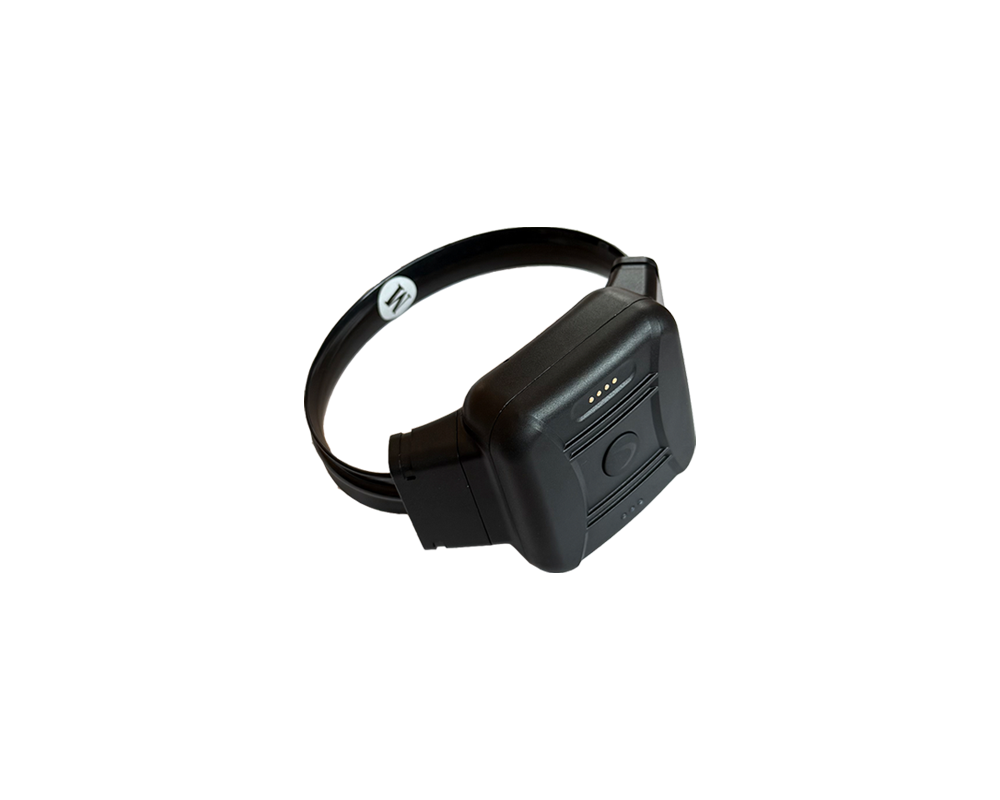
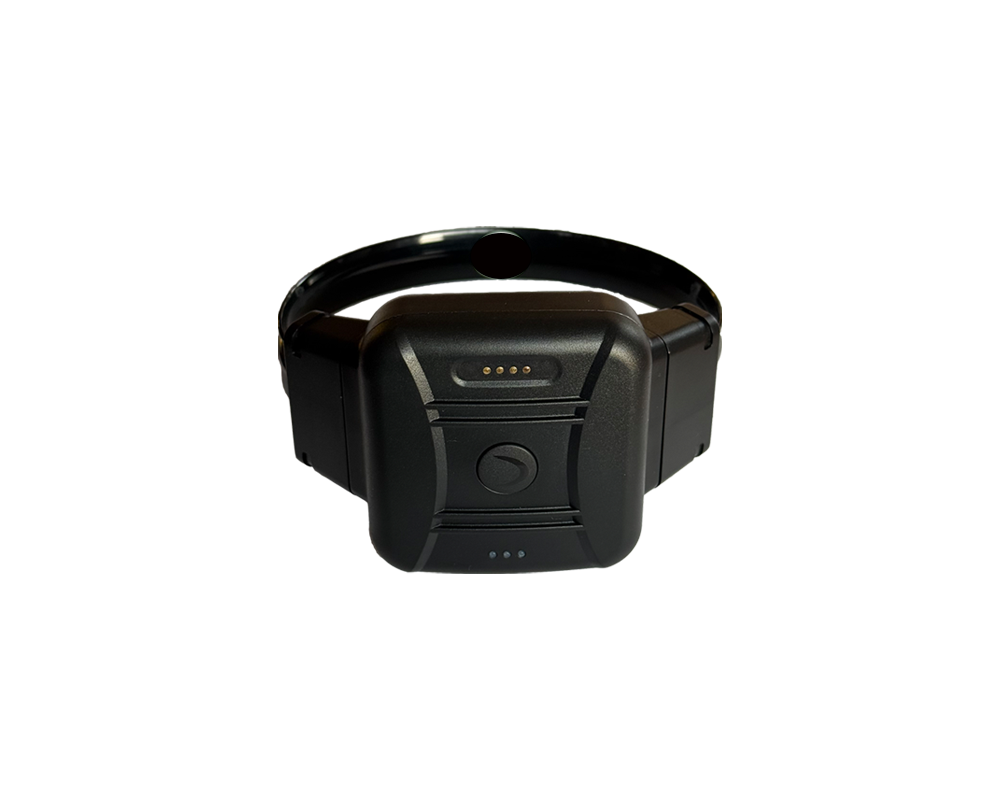
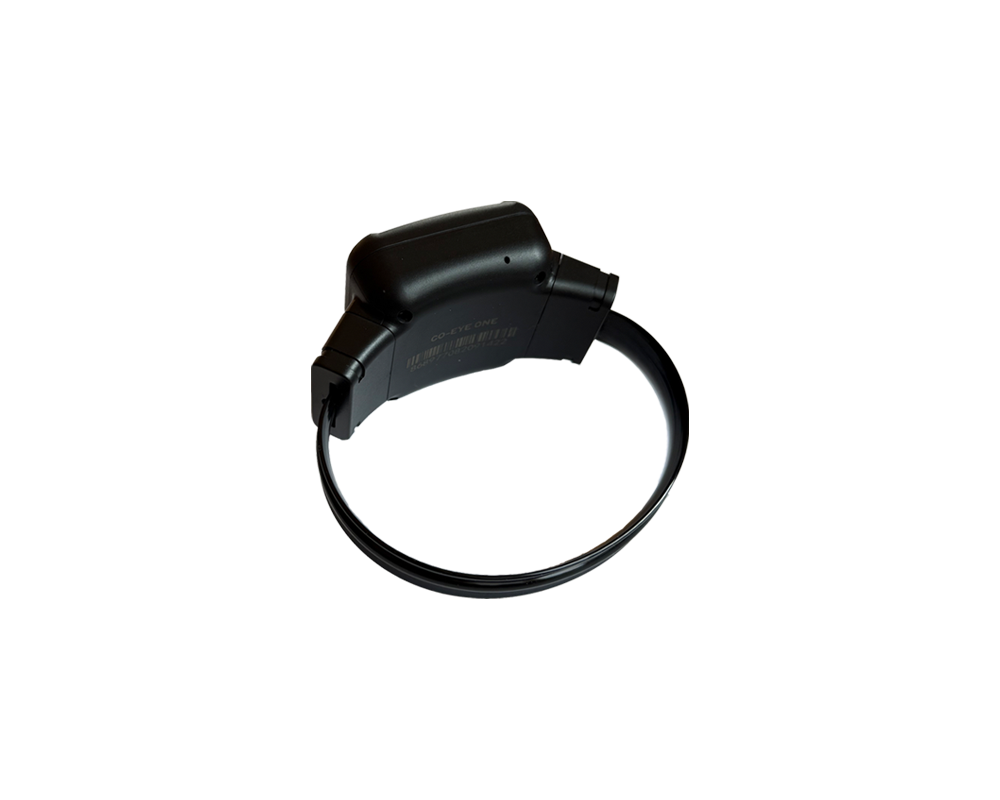
REFINE Technology’s CO-EYE ONE is a one-piece GPS ankle bracelet class device at 108 g and approximately 60×58×24 mm, built for agencies that need credible tamper stories and modern cellular stacks. Fiber-optic tamper detection on strap and case supports the domestic violence GPS ankle monitor use case where a false tamper can re-traumatize victims and burn officer bandwidth. Multi-constellation GNSS plus assistance targets <2 m GPS accuracy under representative outdoor conditions—tighter than legacy NIJ 10 m / 30 m discussion points, giving geofence designers more flexibility indoors still requires assisted modes and officer judgment.
Cellular connectivity includes 5G-compatible LTE-M / NB-IoT / GSM. Battery life reaches about seven days at a five-minute LTE-M/NB interval, with roughly 2.5 hours to full charge on the magnetic cradle. IP68 waterproofing and <3 second tool-free installation align with continuous wear expectations common in DV GPS monitoring orders.
CO-EYE Monitoring Software provides real-time alert routing, geofence lifecycle management, and integration pathways monitoring centers use to operationalize protective order monitoring. Agencies evaluating a domestic violence GPS ankle monitor ecosystem should pilot alert tuning with live caseloads before statewide rollout.
Comparison: CO-EYE ONE vs traditional two-piece GPS (DV supervision context)
| Dimension | CO-EYE ONE (one-piece) | Typical two-piece legacy GPS |
|---|---|---|
| Form factor | Single ankle module (~108 g) | Ankle beacon plus separate cellular/GPS pack; more bulk |
| Install time | <3 seconds, tool-free | Often slower; more field adjustments |
| Tamper sensing | Fiber-optic strap + case; zero false-positive tamper design goal | Resistive strap common; higher nuisance tamper risk |
| Battery / charging | ~7 days at 5-min LTE-M/NB cadence; magnetic fast charge | Highly vendor-dependent; frequent charging can stress DV compliance |
| Cellular path | 5G-compatible LTE-M / NB-IoT / GSM | Often 3G/legacy LTE; verify sunset exposure |
| Water resistance | IP68 | Varies; confirm for shower-continuous orders |
Two-piece architectures from incumbent vendors can still win where contracts demand specific workflows; the table highlights why many counties re-score RFPs toward one-piece domestic violence GPS ankle monitor candidates when tamper noise and charging gaps drive victim complaints.
Implementation Guide for Agencies
RFP considerations
Bundle hardware, software, spare pools, training, and data retention into a single statement of work. Require tamper false-positive methodology in writing, map screenshots with your actual urban canyon test addresses, and specify export formats for district attorneys handling protective-order violations. Cite NIJ 1004.00 benchmarks as background, then ask bidders how their GPS ankle bracelet exceeds those baselines outdoors while documenting indoor limitations honestly.
Cost analysis
Build TCO from device leases, cellular backhaul, monitoring-staff hours per alert, spare straps, and victim-app licensing. Compare participant-paid models against indigency waivers to avoid unintended revocation spikes. Cross-reference the buyer’s guide for negotiation checkpoints.
Training and change management
Train judges, clerks, victim advocates, and law enforcement on the same definitions of breach, grace periods, and evidence packages. Run tabletops where a domestic violence GPS ankle monitor loses fix briefly in a parking garage—officers should narrate the difference between multipath jitter and a true zone attempt.
Data privacy, retention, and victim confidentiality
DV programs intersect with family court gag rules, address confidentiality registries, and sometimes federal shelter grants. Retention schedules should separate victim relocation polygons from public GIS layers, log every user who views sensitive coordinates, and align purge timelines with state discovery rules. When victims opt into mobile alerts, consent flows must state whether location data ever transits third-party push vendors. A mature DV GPS monitoring procurement addresses HIPAA-adjacent counseling referrals even when the strap itself is not a medical device—because coordinated community response teams share risk information across silos.
Audit annually: random sample twenty cases, verify geofence edits were court-authorized, confirm protective order monitoring alerts matched written standoff distances, and measure median time from breach flag to documented victim outreach. Those audits keep programs defensible when civil liberties advocates scrutinize electronic monitoring scale-up.
FAQ: Domestic Violence GPS Ankle Monitor Programs
What is a domestic violence GPS ankle monitor?
A domestic violence GPS ankle monitor is a court-ordered wearable that transmits location data so agencies can enforce exclusion zones, curfews, and proximity rules designed to protect victims of intimate partner violence.
How does protective order monitoring use GPS?
Software draws geofences from the order, compares live fixes, and raises supervisor or victim alerts when rules break—documenting timestamps for hearings.
Why do false tamper alarms matter in DV programs?
Nuisance tampers exhaust victims and officers, undermining trust; fiber-optic tamper architectures aim to eliminate false-positive strap events that plague resistive designs.
What accuracy should RFPs specify?
Use NIJ 1004.00 (10 m / 30 m historical benchmarks) as context, then demand modern multi-constellation performance and assisted indoor behavior transparently disclosed by vendors.
Can victim safety GPS apps replace law enforcement?
No—they supplement officer response. Protocols must define dispatch, verification, and victim support when alerts fire.
How do we procure CO-EYE for a pilot?
Contact Sales or Request Quote with caseload size, state, reporting interval, and victim-notification requirements; REFINE Technology will align device and software modules to your workflow.
Last updated April 2026. Statutes and pilot programs change; confirm effective dates with primary legal sources. CO-EYE specifications reflect manufacturer documentation. Florida recidivism statistic references published electronic monitoring research; local outcomes may differ.