
Electronic monitoring is the umbrella for supervised-release technologies that verify location, schedule, sobriety, or voice identity in the community. In 2026, agencies are modernising fleets as legacy cellular sunsets collide with higher expectations for victim safety, audit-ready alerts, and total cost discipline. This guide defines electronic monitoring for criminal justice buyers, walks through seven electronic ankle monitor technology pillars, maps common program types, and shows how to evaluate electronic monitoring equipment against National Institute of Justice (NIJ) concepts and real-world operations.
Start with our GPS ankle bracelet and electronic monitoring homepage, the what is an ankle monitor primer, and product depth on CO-EYE ONE, CO-EYE HouseStation, CO-EYE AMClient, and CO-EYE Monitoring Software. For fees and total cost of ownership, see the ankle monitor cost guide; for supervision rules context, read ankle monitor rules and restrictions in 2026 and, for GPS-bracelet-specific compliance, GPS ankle bracelet rules. To scope hardware, integration, and fleet sizing, use Contact Sales or Request Quote.
What Is Electronic Monitoring in Criminal Justice?
Electronic monitoring uses wearable tags, home beacons, breathalyzers, biometric checks, or smartphones to enforce court and agency conditions while someone remains in the community. It is not a single device category: the same procurement office may run GPS ankle monitor tracks for high-acuity dockets, RF curfew models for lower risk, and smartphone apps for check-ins. Effective programs pair electronic monitoring equipment with clear alert semantics, charging logistics, and officer workflows so hearings rely on defensible evidence rather than noisy pings.
Because orders use overlapping vocabulary—ankle monitor, bracelet, tag, or electronic tagging (common in UK and Commonwealth dockets)—RFP writers should define the legal question each layer must answer. Continuous location accountability differs from “at home by 9 p.m.” presence tests. Mixing those questions under one vague supervision line item is a common source of vendor mismatch and contested violations.
Seven Technologies Reshaping Electronic Monitoring in 2026
The sections below are the seven critical technology lanes procurement teams should standardise in specifications and training. Together they explain why digital supervision platforms in 2026 look more like secure mobility programs than legacy call-center accessories.
1) GPS tracking and multi-constellation GNSS
Global Positioning System-class tracking remains the default when courts require route history, exclusion zones around protected addresses, or proof that someone avoided schools and workplaces. Modern GPS supervision straps combine GNSS with Wi-Fi and cellular referencing to improve fixes in urban canyons. Buyers should request disclosure of horizontal accuracy under NIJ-style testing concepts (see below) and specify reporting cadence for high-risk windows.
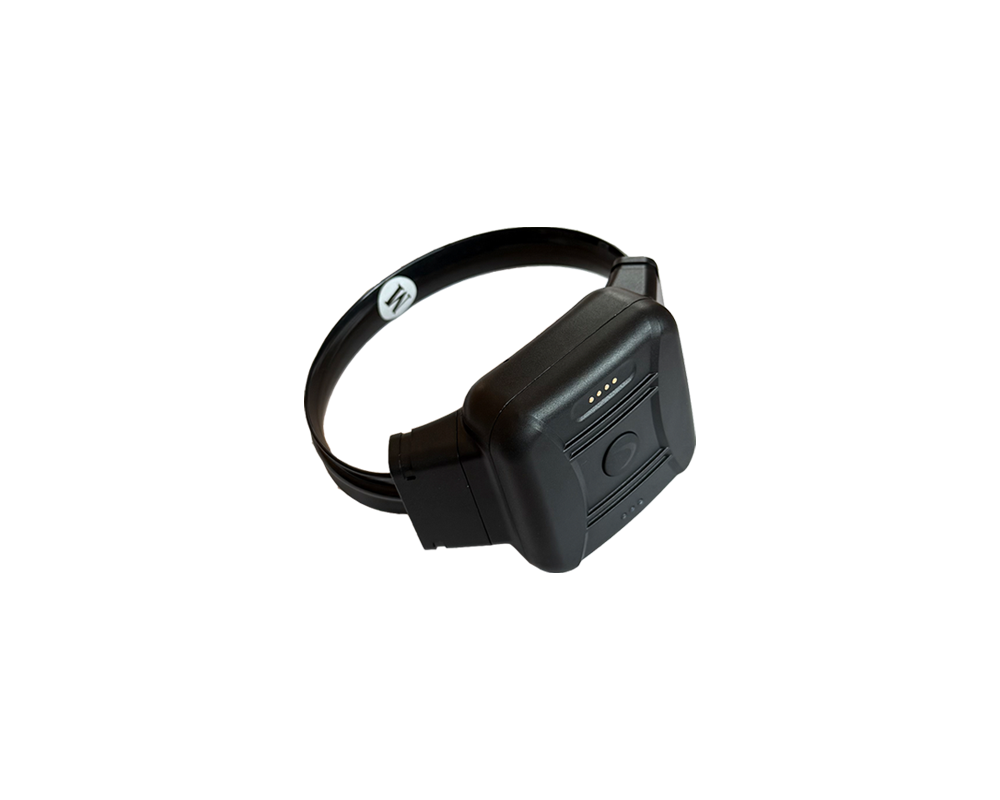
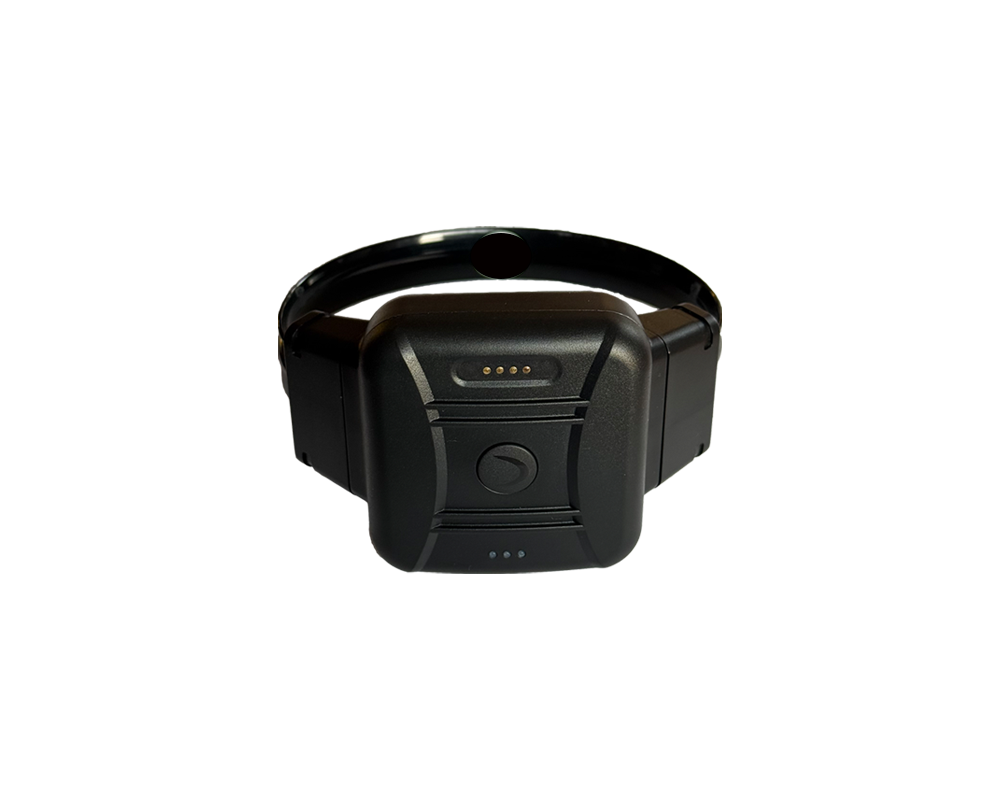
One-piece GPS ankle monitor architectures integrate modem, battery, and strap sensors in a single wearable, which often reduces strap-to-beacon pairing faults seen in older two-piece kits. For a full device overview, see CO-EYE ONE—a 108g one-piece unit (60×58×24mm) rated IP68, with multi-constellation GNSS, sub-two-meter-class positioning under vendor field conditions, fiber-optic tamper detection on strap and case, and up to seven-day standalone battery life in LTE-M/NB-IoT reporting profiles.
2) RF proximity and home curfew beacons
Radio-frequency proximity models answer a narrower supervision question: is the strap near an approved residence during ordered hours? They remain staples for house arrest, structured curfews, and blended programs that use GPS while away and RF at night. Electronic monitoring equipment in this class should document indoor/outdoor range, tamper codes, and power-failure behaviour.
CO-EYE HouseStation functions as an RF home beacon platform at 225×173×55mm and 750g, using 433MHz links with enhanced antenna penetration; vendor specifications cite roughly 50m indoor and 200m outdoor range depending on structure and interference. Pairing HouseStation-style beacons with a one-piece GPS strap or app check-in is a common architecture when orders mix curfew and movement accountability.
3) BLE beacons and supervised Bluetooth tethering
Bluetooth Low Energy (BLE) anchors appear in both facility workflows and community supervision. BLE can enforce tethering to a mobile phone, validate proximity to a home hub, or support structured zones where GPS alone is too jittery. As wearable supervision programs add smartphone layers, BLE provides a low-power channel for presence corroboration when combined with policy-grade server logic.
4) Alcohol monitoring and transdermal alternatives
Alcohol programmes use breath, transdermal, or hybrid schedules to verify sobriety conditions. While distinct from pure location GPS supervision, they frequently ride on the same vendor contracts and officer dashboards. Agencies should isolate alert types so alcohol misses are not misread as location escapes, and should document hygiene, calibration, and contested-hearing evidence handling.
5) Voice verification and biometric check-ins
Voice verification and related biometric check-ins provide probabilistic identity assurance for lower-acuity cohorts or for supplementing strap telemetry. They rarely replace a court-ordered ankle monitor for high-risk geofences, but they can reduce officer workload when orders permit scheduled call-ins. Security reviews should cover spoofing resistance, language access, and privacy retention limits.
6) Smartphone supervision apps
Smartphone applications now deliver encrypted check-ins, document uploads, victim-notification hooks where statutes allow, and assisted GPS traces on consumer hardware. They are part of the broader digital supervision ecosystem rather than a universal substitute for straps. Policy must decide what legal standard applies when a phone powers off versus when tamper bands trigger.
CO-EYE AMClient is REFINE Technology’s iOS/Android continuous tracking application with SOS, scheduled check-ins, and BLE tethering features designed to complement strap-based programs inside unified monitoring software.
7) Cellular backhaul: LTE-M, NB-IoT, and 5G-ready connectivity
Carrier retirements of 2G and 3G make modern cellular non-negotiable for long-life field devices. LTE-M and NB-IoT provide power-budget-friendly links for field electronic monitoring equipment that must report for days without a charge event. Forward-looking buyers ask whether modems are multi-band and whether eSIM profiles can simplify cross-border deployments.
CO-EYE ONE is positioned as 5G-compatible through LTE-M/NB-IoT/GSM class coverage, aligning community-supervision hardware with the same macro trend driving smartphone refreshes across justice agencies.
Program Models: Where Electronic Monitoring Shows Up
Electronic monitoring programs span pretrial release, sentenced probation, parole, house arrest and home detention, intimate partner violence dockets, and sex-offender registration conditions. Each model stresses different features: pretrial may emphasise rapid geofence escalation; parole may emphasise employment corridor flexibility; DV programs may emphasise victim-distance buffers and multi-agency alerting.
Software orchestration matters as much as straps. CO-EYE Monitoring Software describes the vendor’s unified platform modules for alerts, caseload dashboards, and device management—buyers should map those modules to their docket mix before selecting supervision hardware SKUs.
Pretrial and bail-adjacent supervision
Pretrial electronic monitoring verifies release conditions before case resolution. GPS-primary orders have grown where courts want continuous location accountability rather than intermittent phone calls. Agencies should align alert playbooks with local prosecutors and defense access rules so strap and app telemetry is discoverable and interpretable.
Probation and post-conviction community supervision
Probation departments often operate the largest sustained caseloads. Here, GPS ankle monitor battery life and tamper clarity directly affect revocation hearings. Programs should publish charging expectations to participants to avoid false “absconding” narratives created by dead batteries.
Parole and reentry transitions
Parole boards may impose layered conditions combining residence restrictions, treatment attendance, and movement permissions. Electronic monitoring equipment should support inclusion corridors (work, treatment, approved travel) without forcing officers to manually whitelist every trip.
House arrest and home detention
House arrest focuses on curfew integrity; RF beacons and hybrid GPS remain common. Readers evaluating total costs should compare strap-plus-beacon kits against integrated one-piece GPS where orders actually require all-day route accountability—see the ankle monitor cost guide for fee and TCO framing.
Domestic violence and protected-person buffers
DV-related dockets increasingly expect geospatial exclusion zones and rapid escalation paths. These requirements push supervision architectures toward reliable GNSS fixes, clear tamper codes, and sometimes smartphone augmentation for victim-side notifications where law permits.
Sex offender registration and compliance monitoring
Sex-offender caseloads often combine strict residence reporting with movement restrictions near schools and parks. Because political scrutiny is high, agencies should document test methodologies for alerts and maintain chain-of-custody discipline for downloads from ankle monitor devices.
2026 Legislative Expansion: Fourteen States Scaling Electronic Monitoring
Composite tracking of 2025–2026 state sessions shows at least fourteen states advancing statutes, budget line items, or enrolled chapters that expand who may be placed on supervised-release GPS and RF programs, how GPS orders are written, or how counties fund straps and monitoring fees. Momentum clusters around pretrial modernisation, domestic-violence supervision, sex-offender compliance, and opioid-related sobriety overlays—not a single uniform national code, but a clear direction: more supervised release with telemetry instead of default jail days.
California’s SB 437 debate illustrates GPS-first pretrial framing for large eligible cohorts, while Florida’s 2026 domestic-violence GPS supervision expansions (including HB 277–style pilot language discussed in policy summaries) show how geofence expectations harden. Texas-style county pretrial systems, Midwest probation reforms, and Northeast bail-review adjustments add further examples. Always verify enrolled text, effective dates, and local administrative rules before changing standard orders—this article summarises industry-level trends, not legal advice.
Cost: Electronic Monitoring vs Incarceration
Budget officers routinely cite participant fees near $5–$25 per day for many community GPS and RF supervision programs, while jail marginal costs often exceed $100 per day when staffing, medical, and capital depreciation are included. Actual ranges swing by vendor contract, payer of record (participant vs county), call-center SLAs, and device mix. The comparison is not ideology—it is cash-flow and outcome risk: underfunded programs generate false failures from dead batteries and slow alerts.
Use our ankle monitor cost guide to structure RFP scenarios that separate hardware lease, cellular, software seats, and field officer minutes. Cheap per-day pricing with opaque alert fees often costs more in revocation hearings and overtime.
Equipment Architectures Buyers Compare
Electronic monitoring equipment generally falls into one-piece GPS straps, two-piece kits (strap plus modem or beacon), RF-only home bases, alcohol bracelets or breath schedules, and smartphone-first workflows. Two-piece kits sometimes allow smaller modules but introduce pairing and charging complexity; one-piece designs consolidate accountability in a single sealed wearable.
CO-EYE enters the vendor landscape as a newer one-piece specialist emphasising 108g weight, seven-day standalone endurance, fiber-optic tamper integrity on strap and enclosure, IP68 sealing, and LTE-M/NB-IoT-class connectivity—positioned alongside legacy providers that agencies already know.
Vendor Landscape (Text References Only)
Major suppliers referenced in NIJ-era market surveys and contemporary RFPs include BI Incorporated, SCRAM Systems (alcohol and GPS lines), SuperCom, Geosatis, Buddi, and Track Group. REFINE Technology’s CO-EYE line—including CO-EYE ONE, HouseStation, AMClient, and monitoring software—represents a newer entrant focused on lightweight one-piece GPS ankle monitor industrial design and fiber-optic tamper sensing. This article provides no outbound links to competitor domains; evaluation should rely on your RFP tests and independent lab metrics.
NIJ GPS Accuracy Benchmarks Buyers Still Cite
NIJ Standard 1004.00–style discussions in offender-tracking procurement often reference horizontal accuracy reporting such as 10m CEP50 and 30m CEP95 as conceptual benchmarks for GPS performance under defined test conditions. Agencies should demand vendor disclosure of how devices were tested, sample sizes, and whether fixes include blended Wi-Fi or cellular assistance. Treat marketing “best case” numbers separately from envelope scenarios that mirror your county’s urban canopy.
Evidence on Outcomes: Florida Recidivism Research
Policy briefs summarising Florida analyses of electronic supervision frequently cite roughly a 31% reduction in recidivism risk for monitored cohorts compared with non-monitored comparators in the underlying study framing. Use such statistics carefully: effect sizes depend on population, supervision intensity, and local services. The takeaway for buyers is that well-run supervision is not merely a sanction—it is a conditions-enforcement tool whose integrity depends on equipment quality and officer response times.
Future Trends: AI Analytics, 5G eSIM, and Fiber-Optic Tamper Detection
Three trends will dominate RFP language through late 2026. First, AI-assisted analytics will prioritise officer queues based on trajectory risk, but only if field straps and platforms deliver clean tamper semantics and consistent fix cadence—noisy feeds break models. Second, 5G-era eSIM provisioning will matter for agencies that cross state lines or need rapid carrier changes without swapping hardware. Third, fiber-optic tamper channels discriminate strap cuts and enclosure breaches with deterministic sensing that avoids brittle proxy inference—CO-EYE ONE’s architecture highlights that approach for buyers comparing strap options.
Implementation Discipline: Making Electronic Monitoring Credible in Court
Hardware purchases fail when community electronic monitoring is treated as a gadget rollout instead of an evidence pipeline. Agencies need written alert definitions, supervisor response times, and escalation maps that prosecutors can explain to judges. If your center cannot articulate why a ping became a violation, defense counsel will—and credibility erodes faster than any single device defect.
Start with a triage matrix: power-down, strap tamper, missed check-in, geofence breach, and communication loss should be different buckets with different remedies. Train officers to avoid conflating charging lapses with absconding unless policy explicitly treats them as equivalent. The same discipline applies whether you issue a one-piece GPS strap, an RF home kit, or a smartphone layer.
Data retention, discovery, and audit trails
Supervision hardware generates high-volume time-series data. Your retention schedule must satisfy court discovery obligations without drowning analysts in redundant points. Store enough raw context to reconstruct contested movements, but summarise routine compliance for dashboards. Chain-of-custody rules for downloads from strap devices should mirror other digital evidence: who extracted, when, with what tool version, and under which legal authority.
Charging logistics and participant communication
Even the best satellite-tracked strap fails if charging expectations are vague. Publish how long a device needs on-cradle, whether partial charges are acceptable, and what participants should do before travel. Programs that explain electronic tagging as a shared operational duty—rather than a punitive surprise—see fewer heat-of-the-moment strap incidents and fewer technical revocations.
Cellular Migration: Replacing 2G/3G Dependent Fleets
Legacy sunsets force budget spikes, but they are also a rare moment to standardise digital supervision architecture. Build a migration wave plan: inventory modems, identify dead zones, test LTE-M/NB-IoT coverage against your county’s risk map, and schedule swaps before court orders peak in summer dockets. A rushed Friday afternoon mass-swap is how agencies lose historical baselines and annoy judges.
Procurement should require multi-band LTE-class radios and documented fallback behaviour when towers hand off. If your vendor cannot show field logs from jurisdictions like yours, treat claims as provisional. This is where modern field devices differentiate from rebranded consumer trackers.
One-Piece vs Two-Piece GPS: Operational Trade-offs
Two-piece kits sometimes separate the strap sensor from a carried modem or cradle-mounted unit. That can reduce ankle bulk but increases pairing loss, forgotten components, and ambiguous tamper attribution. One-piece sealed wearables shift all accountability to a single device identity, which simplifies audits when a violation is alleged.
Use your legal template as the guide: if orders require continuous location wherever the person travels, one-piece designs often match officer mental models. If orders only require nightly home presence, RF-centric supervision may suffice—though many jurisdictions still specify GPS-capable straps for victim-buffer cases. When in doubt, specify both capabilities in the RFP and let fee schedules show the true TCO.
Domestic Violence and High-Risk Supervision: Design Notes
DV dockets stress supervised-release telemetry because small delays matter. Exclusion zones need crisp semantics: is the alert on line-of-sight GPS jitter or smoothed geofences? Victim-notification statutes vary; some frameworks allow automated prompts while others require human confirmation. Multi-agency workflows—probation, local police, advocates—should rehearse tabletop exercises before go-live.
This is also where smartphone apps can help—or hurt. If a participant can silence alerts, your policy must define compensating controls. Pairing CO-EYE AMClient with strap telemetry is one pattern; another is GPS-primary straps with strict call-center SLAs. Either way, clarity beats volume of raw pings.
Vendor Evaluation Scorecard for Electronic Monitoring Equipment
Score vendors on seven rows: fix reliability in your terrain, tamper false-positive behaviour, battery life at your mandated reporting interval, cellular roadmap, cybersecurity posture, API/export for analytics, and domestic support coverage. Weight rows by docket: pretrial GPS-heavy programs should overweight fix reliability and battery; RF-heavy home detention should overweight beacon penetration and power fail-safes.
Ask each finalist to run a two-week shadow trial on a volunteer caseload before full award. Shadow trials reveal integration friction that slide decks hide. Remember that supervision service contracts are long-term relationships; optimize for sustainable operations, not only per-device sticker price.
Training: Officers, Call Centers, and Participants
Officers need scenario training: how to read maps, how to explain uncertainty bands, and how to document decisions when GPS drops in parking structures. Call centers need scripts that avoid legal advice but capture structured reasons for each escalation. Participants need plain-language orientation that covers charging, water exposure, travel notices, and tamper rules—our rules overview helps bridge that gap for community readers.
When agencies under-invest in training, RF and GPS strap programs accumulate “technical violations” that courts discount over time—undermining the entire sanction. Treat training hours as capital expenses, not soft costs.
Cybersecurity and Platform Integrity
Modern supervision stacks are networked sensor fleets. Require TLS for backhaul, role-based access in monitoring consoles, and logging for administrator actions. Penetration tests should cover both cloud APIs and field provisioning workflows. If your integration touches jail case-management systems, assume adversaries will probe weakest links.
CO-EYE ONE emphasizes encrypted transport and hardened device semantics; pairing those devices with CO-EYE Monitoring Software keeps alert policy and user permissions inside a single vendor boundary for agencies that prefer consolidated stacks.
RFP Language: Specifying Electronic Monitoring Without Ambiguity
Strong RFPs name the supervision question, the reporting interval, the geofence smoothing rules, and the evidence package required for hearings. Weak RFPs say “GPS monitoring” without defining continuous versus scheduled fixes—then blame vendors when maps look inconsistent. Require disclosure of test protocols for horizontal accuracy, tamper classes, and battery life at your chosen interval, and ask how exports flow to prosecutor portals or data warehouses so supervision data becomes an operational asset—not a parallel silo officers distrust.
Interoperability With Case Management and Prosecutor Workflows
Many counties want event feeds inside case-management systems, not another standalone browser tab. Map APIs early: authentication model, rate limits, and whether geofence edits require dual control. Prosecutors may need redacted map bundles for hearings; defense may need discovery extracts with consistent timestamps. If your vendor cannot produce repeatable exports, expect motion practice over metadata.
CO-EYE’s stack is positioned for agencies that want device telemetry, alert policy, and officer dashboards unified—see CO-EYE Monitoring Software for module scope before you wire integrations.
Program KPIs: Measuring Quality Beyond “Uptime”
Measure alert precision (true positives versus false positives), time-to-first-human review, charging-failure rates, and average map latency during high-risk hours. Track revocation hearings where GPS evidence was contested versus accepted. These KPIs reveal whether your supervision stack investment buys credibility or merely buys hardware leases.
When KPIs drift, fix policy before swapping vendors: many “accuracy” problems are smoothing thresholds or officer training gaps, not constellation failures.
Why Electronic Monitoring Remains Central to Justice Policy in 2026
Fiscal pressure, decarceration goals, and victim-safety politics all point toward supervised release with telemetry. The question is no longer whether counties will buy electronic monitoring—it is whether they buy durable architectures that survive discovery, political scrutiny, and carrier technology churn. Agencies that standardize on clear legal questions, disciplined alert taxonomies, and modern GPS ankle monitor backhaul will deliver better outcomes than those chasing novelty features without operator buy-in.
For pricing models that translate straps into annual budgets, return to the ankle monitor cost guide and the homepage overview of CO-EYE capabilities. When you are ready to compare hardware against your docket mix, use Contact Sales or Request Quote for a structured procurement conversation.
FAQ: Electronic Monitoring Technology and Procurement
What does “electronic monitoring” include in 2026?
It includes location straps, RF home beacons, BLE tethering, alcohol sensors, voice biometric check-ins, smartphone apps, and the cellular networks that backhaul telemetry to monitoring centers—plus the software that turns raw events into officer actions.
How is a GPS ankle monitor different from electronic tagging?
“Electronic tagging” often refers generically to wearable straps, while GPS ankle monitor specifies continuous satellite-assisted tracking. Many court orders use both phrases; your specification should spell out continuous map-based reporting versus curfew-only presence tests.
Which NIJ concepts apply to GPS accuracy?
Procurement teams cite NIJ 1004.00–style horizontal accuracy ideas such as 10m CEP50 and 30m CEP95 as comparison anchors. Always read the vendor’s test protocol to see whether those figures apply to your terrain and fix rate.
Why are fourteen states expanding electronic monitoring now?
Drivers include jail capacity pressure, pretrial modernisation statutes, domestic-violence policy, sex-offender compliance mandates, and cellular hardware refresh cycles that force fleet replacements anyway.
What should a cost comparison include?
Model device lease, cellular data, software seats, call-center SLAs, field officer time per alert, and revocation risk. Community supervision with straps and apps often shows lower direct per-day costs than incarceration, but only with disciplined operations.
How do CO-EYE devices fit typical programs?
CO-EYE ONE covers continuous GPS supervision with long battery life and fiber-optic tamper sensing; HouseStation supports RF home detention; AMClient adds smartphone check-ins and BLE tethering; monitoring software aggregates alerts. Use Contact Sales for quotes tailored to your docket mix.
Where can I learn ankle monitor basics and supervision rules?
Read what is an ankle monitor and ankle monitor rules and restrictions in 2026 for participant-facing context that complements this procurement-focused overview.