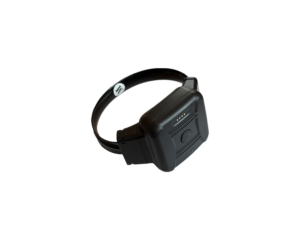

Sex offender GPS monitoring is one of the most demanding applications in community corrections. Orders often combine exclusion zones around schools, parks, and daycares with strict reporting expectations for courts, victims, and law enforcement. When programs need location truth—not just “home by curfew” compliance—agencies rely on continuous GNSS-backed tracking paired with disciplined alert handling and audit-ready exports. This guide explains why GPS ankle bracelet programs outperform RF-only models for many high-risk caseloads, outlines seven requirements supervisors should document in RFPs and court language, and connects policy context to hardware choices that hold up in hearings.
For foundational definitions, see what is an ankle monitor and our GPS ankle monitor and electronic supervision hub. Product depth for one-piece hardware lives on CO-EYE ONE, while geofence automation, dashboards, and retention policies are covered on CO-EYE Monitoring Software. Budget planning references our ankle monitor cost guide, and a broader technology survey appears in the electronic monitoring technologies 2026 guide. For commercial quotes and integration questions, use Contact Sales or Request Quote.
Throughout this guide, GPS means court-supervised community tracking with cellular backhaul and vendor software rules—not ad hoc consumer phone sharing unless an order explicitly allows it. Shared vocabulary keeps procurement, legal counsel, and field teams aligned when spoken bench orders become live polygons.
Why GPS supervision matters for sex offender caseloads versus RF-only home arrest
Radio-frequency (RF) home monitoring answers a narrow question: is the transmitter near the base unit during scheduled windows? That design still fits some curfew-centric orders. Sex offender GPS monitoring usually asks broader questions: Did the supervisee enter an exclusion polygon? How close did they get to a protected address? Can investigators reconstruct a timeline after a new incident is reported?

Without continuous outdoor positioning, agencies lose the ability to document proximity events away from the residence. That gap matters when courts expect map-grade logs, when schools need confidence that exclusion buffers are enforced, and when prosecutors must show patterns of movement. For those scenarios, a purpose-built GPS ankle monitor program—with cellular backhaul, trained monitoring staff, and written escalation rules—is the defensible default.
Choosing GPS does not remove operational burden. It shifts it toward data quality: minimizing gaps, clarifying tamper semantics, and ensuring exports are readable to judges who are not RF engineers. Agencies that scale sex offender GPS monitoring successfully treat documentation as infrastructure, not paperwork. The following requirements translate those needs into procurement language.
Probation and sheriff-led programs that run GPS-tracked sex offender caseloads should publish a short public-facing FAQ. Plain language reduces rumor, helps family members understand charging rules, and signals transparency to school boards reviewing buffer policies.
Data governance and QA for GPS-tracked sex offender programs
Even excellent hardware fails when databases drift. Assign an owner for polygon versions, map imports, and device swaps. When a defendant changes straps, link the new serial to the same court order so historical tracks stay continuous.
Run quarterly QA on a random sample of alerts: confirm coordinates land inside the intended polygon, verify timestamps against raw GNSS sentences when disputes arise, and test export redaction rules before discovery requests arrive. Strong QA is what keeps sex offender GPS monitoring credible when defense counsel challenges a single point on a map.
Privacy and sharing agreements should spell out which agencies may receive raw tracks versus summarized breach notices. Many states limit victim-notification content; your workflow must automate those rules so operators cannot accidentally overshare.
Those habits separate sustainable sex offender GPS monitoring programs from teams that spend each week firefighting preventable data errors.
Seven essential requirements for GPS sex offender supervision in 2026
These seven items recur in well-run sex offender GPS monitoring contracts. Treat them as minimum specifications when drafting orders, vendor scopes, and QA checklists.
1. Continuous GPS tracking with clear gap-handling policies
Programs should define what “continuous” means in reporting intervals, indoor fallback behavior, and carrier dead zones. Supervisors need playbooks for distinguishing device faults from willful interference. Written policies prevent hearings from devolving into arguments about semantics.
Spell out what happens during medical imaging, long air travel, or disaster evacuations. When everyone agrees on temporary monitoring suspensions up front, sex offender GPS monitoring data stays interpretable later.
Your electronic monitoring vendor should supply timestamped event streams, not just daily summaries. That granularity supports both supervision and later investigative review.
2. Exclusion zone enforcement for schools, parks, and playgrounds
Geofencing is the operational heart of many post-conviction orders. Polygons must be editable, versioned, and large enough to avoid nuisance alerts while still protecting sensitive locations. Agencies should require map previews, buffer distances, and named zones so defendants understand boundaries.
CO-EYE Monitoring Software supports exclusion and inclusion logic so supervision teams can align alerts with court maps. Pair software rules with staff training so every alert has an assigned reviewer.
School resource officers often ask how quickly they will learn about a breach. Publish expected notification times, including after-hours routing, so partners know the difference between “real-time awareness” marketing language and your actual SLA.

3. Victim proximity alerts where orders require them
Some jurisdictions layer victim-specific buffers on top of statutory exclusion lists. These alerts are legally and emotionally sensitive. Configure them with explicit start/stop times, override procedures for supervised visitation, and dual verification so a single bad address import does not create false emergencies.
Document how GPS ankle monitor data flows to victim services partners under local privacy rules.
When prosecutors reference proximity alerts, they need human-readable narratives. Build templates that translate machine codes into short statements judges can scan without opening a spreadsheet.
4. Tamper-proof detection that is explainable in court
Strap cuts, case attacks, and masking attempts must generate distinct, well-documented codes. Agencies increasingly prefer sensing methods that reduce ambiguous “maybe tamper” events because those events erode judicial confidence.
Fiber-optic strap and case sensing on CO-EYE ONE is designed for high-integrity signaling, supporting narratives that separate true tampers from benign strain. Clear tamper semantics strengthen sex offender GPS monitoring programs when revocation hearings turn on a single log line.
5. Multi-constellation GNSS for address-level accuracy
Urban canyons, tree cover, and storm fronts degrade single-system fixes. Multi-constellation receivers that blend GPS with additional satellite families—plus assisted modes when signals weaken—produce tracks that survive cross-examination.
CO-EYE ONE lists sub-two-meter CEP GPS accuracy and multi-constellation positioning, helping analysts explain why a point fell on a particular side of a street or parking lot. Accuracy claims should always be paired with your agency’s map maintenance practices.
Document how Wi-Fi and cellular fallback participate in fixes. Reviewers should know when a point is GNSS-primary versus network-assisted so courtroom testimony stays precise.
6. Twenty-four-seven monitoring center support with escalation ladders
Hardware is only as good as the human response. Centers need staffing maps, after-hours on-call paths, and written agreements on when law enforcement gets notified versus when a field officer handles follow-up. Because sex offender GPS monitoring never pauses, fatigue is predictable—rotate reviewers and audit a sample of alerts monthly.
Monitoring software should let supervisors filter alert storms, attach case notes, and export bundles for court.
7. Court-ready reporting and chain-of-custody discipline
Judges expect PDF or CSV packets with coherent legends, time zones, and device identifiers. Capture metadata about exports—who ran them, when, and from which software build—so authentication questions have answers.
Link reporting requirements to your records retention schedule. Many ankle monitor disputes turn on whether historical polygons were active when an event fired, not on the event itself.
Archive the exact map files delivered to defendants. If a buffer shifts after a zoning change, you need proof of which version was in force on the date of the alleged violation.
Federal frameworks and state GPS mandates
United States policy layers federal expectations with state statutes and local court forms. Sex offender GPS monitoring discussions usually touch three federal names: Jessica’s Law (state-level packages often include residency restrictions and enhanced penalties), Megan’s Law (registration and community-notification frameworks), and the Adam Walsh Act (SORNA categories and baseline registration standards). None of these replaces local court orders—but they shape what legislatures fund and what victims expect.
States differ sharply on mandatory GPS ankle monitor use, who pays user fees, and how exclusion zones are drawn. Always verify enrolled statutory text, administrative rules, and chief-judge directives. Procurement teams should invite legal counsel early so vendor scopes match enforceable language.
County clerks sometimes maintain parallel forms for registration versus active supervision. Align those forms with your GPS supervision vendor intake so device activation dates match court orders and billing records.
How GPS ankle monitor data assists criminal investigations
Location histories do not prevent every new offense, but they frequently accelerate investigations once a pattern is suspected. In early 2026, South Florida news outlets reported a North Miami Beach investigation in which detectives reviewed GPS ankle monitor logs during a string of residential burglaries.
According to those reports, records showed repeated presence at a neighbor’s home across numerous separate dates within a multi-week span—illustrating how sex offender GPS monitoring archives can corroborate timelines even when initial field contacts were inconclusive. Agencies should treat such cases as training prompts, not as guarantees that every program will produce equally clean data.
Agencies should treat these examples as reminders to train detectives on how to request structured exports from electronic monitoring vendors and how to validate time zones. Stories also underline why RF-only tools would have missed away-from-home conduct entirely.
Establish a single liaison between your monitoring center and major-case squads so subpoenas request the correct UUIDs, polygon versions, and authentication hashes. Small formatting errors can delay trials even when the underlying GPS ankle monitor evidence is sound.
Technology design priorities for high-risk GPS programs
One-piece GPS ankle monitor designs reduce the connector failures and strap-to-beacon mismatches common in older two-piece kits. Fewer removable modules mean fewer “partial install” states that confuse alert reviewers.
Fiber-optic tamper paths aim at zero false-positive signaling for strap and case events—an important phrase when defense counsel challenges alert quality. Seven-day standalone battery life (LTE-M/NB reporting at five-minute intervals on CO-EYE ONE) shrinks charging windows that otherwise create predictable gaps. IP68 ingress protection supports showering and weather exposure without spurious offline bursts.
Installation under three seconds with a tool-free clasp helps field teams standardize fitting and reduces time-on-leg—relevant when officers must document consistent procedures. Pair hardware with CO-EYE Monitoring Software for geofence libraries, user roles, and export templates aligned to high-risk GPS supervision workflows.
CO-EYE ONE ships at 108 grams in a 60×58×24 millimeter one-piece housing, supports IP68 ingress protection, and targets seven-day standalone endurance on LTE-M or NB-IoT at a five-minute reporting cadence. Fiber-optic strap and case tamper sensing is engineered for zero false-positive signaling on those channels, supporting the court narratives supervision teams need.
Pair those hardware attributes with documented standard operating procedures for field swaps, charger issuance, and lost-device escalation. Judges increasingly ask how agencies prevent “charger vacations” that create gaps; your electronic monitoring policy should answer that question before defense counsel raises it.
Costs, Florida recidivism research, and stakeholder communication
Supervision economics routinely compare community electronic monitoring fees with jail bed-day costs. Commissioners reviewing sex offender GPS monitoring budgets should expect vendor fees in the roughly five-to-twenty-five-dollars-per-day band for many published county discussions, while fully loaded incarceration frequently exceeds one hundred dollars per day. Treat local invoices as the authoritative numbers—use ranges only for planning conversations.
Florida-focused research on electronic monitoring has been widely summarized as showing about a thirty-one percent reduction in recidivism risk for monitored cohorts relative to comparison groups—helpful context when councils ask whether GPS funding buys outcomes. Pair statistics with your jurisdiction’s own dashboards.
Transparent communication matters: defendants should receive plain-language maps, victims should know alert limitations, and courts should understand that no sensor eliminates risk. Sex offender GPS monitoring is a risk-management layer, not a guarantee.
When councils compare vendor bids, ask how daily fees map to service tiers: some contracts bundle victim alerts, others bill them separately. Use our ankle monitor cost guide to frame questions before budget hearings.
Field officers appreciate when the same ankle monitor vendor portal matches what monitoring centers see. Divergent UIs breed duplicate calls and conflicting instructions for defendants.
Implementation checklist for multi-agency coordination
Successful GPS programs for sex offender caseloads rarely live inside a single department. Probation, sheriff’s offices, district attorneys, schools, and community corrections vendors must share a written playbook.
Start with a tabletop exercise: walk a fictional breach from alert to arrest-warrant affidavit. Note every handoff. If any step lacks a named owner, fix the process before you onboard a high-profile caseload where sex offender GPS monitoring data will face intense scrutiny.
Invite IT security early. Cellular devices touch public networks; insist on encrypted transport, role-based access, and logging that satisfies CJIS-minded reviewers where applicable. Reference the technology primer on ankle-monitor.com when briefing non-technical stakeholders.
Finally, revisit proportionality during program reviews. Sex offender GPS monitoring is a powerful tool; periodic audits should confirm that order conditions, polygon sizes, and alert volumes still match statutory goals and community standards.
FAQ: GPS supervision for sex offender programs
What is sex offender GPS monitoring? It is court-ordered community supervision that uses a GPS ankle monitor (and supporting software) to record location, enforce exclusion zones, and generate alerts reviewed by a monitoring center.
How is GPS monitoring different from RF home detention? RF systems chiefly verify presence near a base unit. Sex offender GPS monitoring documents outdoor movement, which is necessary for school buffers, parks, and many victim-distance orders.
Which laws influence U.S. sex offender GPS programs? State statutes and local court rules dominate daily operations, while federal frameworks such as Megan’s Law, Jessica’s Law initiatives, and the Adam Walsh Act shape registration categories and political expectations.
What tamper features should agencies require? Distinct strap, case, and charge-state codes—with fiber-optic sensing where courts demand minimal ambiguous alerts—plus written definitions for each code in your electronic monitoring policy.
How much does GPS monitoring cost compared to jail? Vendor fees often fall near five to twenty-five dollars per day in public discussions, while jail costs commonly exceed one hundred dollars per day; verify local contracts and budgets.
Why specify seven-day battery life? Longer intervals between charging reduce predictable offline windows that complicate sex offender GPS monitoring and frustrate judges reviewing compliance.