
When finance committees ask for the real ankle monitor cost in 2026, they are rarely satisfied with a single daily rate. Supervision leaders see a GPS ankle monitor quote; auditors see capital, airtime, software seats, training hours, and the labor buried inside alert queues. This cluster article unpacks ankle monitor cost from every practical angle—hardware acquisition paths, monitoring-center fees, hidden operations, detention comparisons, payer design, and concrete savings levers—so your electronic monitoring budget matches what actually happens after go-live. For the full pillar narrative and worked examples, start with our ankle monitor cost complete guide, then use this breakdown in RFP scoring and board briefings.
What drives ankle monitor cost in 2026?
Three forces now dominate how ankle monitor cost shows up on ledgers. First, hardware economics split between vendor-owned rental pools, capital purchase, and lease-to-service bundles—each with different refresh risk when carriers retire legacy bands. Second, monitoring-center service tiers price human review depth: business-hours triage costs less than true 24/7 escalation, and victim-notification workflows add premium staffing. Third, operational drag from charging logistics, strap swaps, and false tamper clears can exceed the printed per diem even when the GPS ankle monitor headline price looks competitive. Buyers who model only the device fee underestimate total ankle monitor cost; buyers who model supervision as a system catch the variance early. If you are new to terminology, see what is an ankle monitor before you compare vendor rows.
Procurement teams should also synchronize IT security reviews with justice-center intake schedules. Delayed security sign-off stretches interim manual check-ins—an invisible adder to ankle monitor cost because staff hours are reallocated from other dockets. Likewise, interoperability expectations with case-management systems, prosecutor portals, and county data warehouses should be captured in the RFP; custom integration sprints billed as change orders will move the realized ankle monitor cost even when the monitoring fee stays flat. Finally, remember that electronic monitoring is rarely a single-device story: mixed-risk portfolios blend continuous GPS with lower-intensity tracks, so finance models need cohort-weighted averages instead of a lone ankle monitor quote multiplied by headcount.
Hardware costs: one-piece GPS, two-piece systems, and complementary wearables
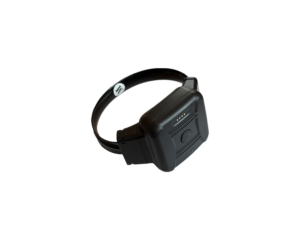
Equipment is the first lever on ankle monitor cost. One-piece GPS ankle bracelets integrate cellular modems and GNSS in a single wearable; planning discussions often place unit economics in roughly the $800–$1,500 range when agencies purchase inventory outright, with lease and rental pools smoothing cash flow into the daily rate. Two-piece architectures—ankle radio paired with a home beacon or hub—may show $600–$1,200 device bands in quotes, but ankle monitor cost climbs once you capitalize spare beacons, power installs, and the second charging path. BLE wristbands and lightweight tags used as complementary risk steps commonly land near $50–$200 per unit in procurement conversations because they carry lighter radios and batteries. None of these figures replace your jurisdiction’s bid tab; they are anchors so finance and field staff speak the same language while reviewing any GPS ankle bracelet proposal.

Purchase versus lease changes who carries depreciation. Agencies that own inventory book asset lives and spare-pool depth; vendor-owned programs push refresh risk to the supplier but bake it into monitoring fees. Either way, align replacement rules for damaged straps and lost chargers before award—ambiguous policies inflate ankle monitor cost through unplanned purchase orders. For architecture context beyond dollars, read GPS ankle monitor guide alongside your finance model.
Warranty calendars matter for capital plans: if a vendor expects refresh every thirty-six months but your justice partners assume five-year life, the fourth-year budget shock shows up as “unexpected” ankle monitor cost even though the contract hinted at replacement timing. Spare-pool ratios—how many cold spares per hundred active enrollees—also change field economics. Thin spares increase overnight shipping charges and shorten device retirement cycles because officers grab whatever works today. Thicker spares raise carrying cost but reduce emergency freight and intake delays. Document the ratio you expect vendors to support and price it explicitly; otherwise the GPS ankle bracelet line item and the logistics line item drift out of sync.
Daily monitoring fees: from basic GPS to premium victim services
The visible heart of ankle monitor cost is the daily monitoring fee. Continuous GPS ankle monitor reporting with geofences and tamper workflows commonly falls near $5–$10 per day for basic service tiers—map visualization, scheduled reporting, and standard business-hours review. Programs that require dedicated 24/7 monitoring-center staffing, rapid escalation playbooks, and richer analytics frequently move into roughly $10–$25 per day, because labor—not silicon—dominates the marginal dollar. When courts mandate automated victim proximity alerts, bilingual call trees, or specialized domestic-violence dashboards, ankle monitor cost can approach $15–$35 per day in vendor quotes that fully burden those workflows. Always ask whether cellular data, software seats, and export tooling are included; unbundled rows make two proposals impossible to compare even when headline electronic monitoring rates look identical.
Hidden costs agencies miss after award
After the contract signature, ankle monitor cost accretes in line items that rarely appear on marketing PDFs. Charger wear and dock failures drive repeat shipments; strap inventories shrink when officers cut bands in the field; training time spikes each time a monitoring platform changes alert taxonomy. False tamper signals are especially expensive: industry planning sometimes budgets $15–$25 in fully loaded analyst time per reviewed alert once supervision, callbacks, and documentation are included—multiplied across hundreds of devices, noisy tamper paths can dwarf savings from a slightly cheaper ankle monitor lease. Discovery exports, long retention storage, and help-desk load during enrollment waves belong in the same workbook. Programs that treat these items as “incidentals” learn that the true ankle monitor cost is an operations budget, not a hardware receipt.

Platform consolidation matters: agencies that juggle multiple dashboards pay twice for supervisor attention. The CO-EYE Monitoring Software stack is designed to present one operational picture across device tiers, which helps contain the software-and-labor slice of ankle monitor cost as cohorts grow.
TCO snapshot: detention versus electronic monitoring
Legislatures and county boards rarely approve electronic monitoring budgets without comparing custody alternatives. ICE detention cost discussions frequently cite roughly $142–$160 per day in publicly referenced bed-night economics, while community GPS programs often land nearer $5–$15 per day in vendor service bands—implying well over 90% marginal savings when supervision is clinically appropriate and legally permitted. Your finance office should substitute jurisdiction-specific jail and detention figures; the point for ankle monitor cost modeling is directional: community GPS ankle bracelet tracks are orders of magnitude cheaper than facility bed days, which is why supervised release scales when risk rules align. Scale also shows up in population statistics—research organizations such as the Vera Institute have estimated on the order of 254,700 adults on electronic monitoring in the United States (2021 context), underscoring how sensitive total public spend is to small movements in per capita ankle monitor cost.
Outcome narratives still matter: Florida-oriented research summarized in National Institute of Justice discussions associates electronic monitoring programs with about a 31% reduction in recidivism in the studied context—another lens for justifying supervision technology investments beyond simple per diems. Pair those policy points with the equipment deep dive on CO-EYE ONE when you translate ankle monitor cost into public safety outcomes.
Who pays? Government funding versus defendant-funded models
Ankle monitor cost is never only technical—it is political. Some counties fully fund GPS ankle monitor programs from corrections or pretrial budgets; others assign daily user fees that resemble utility bills. Defendant-funded models can recover vendor outlays but may trigger equity concerns when ability to pay is uneven, potentially pushing participants toward failure-to-pay motions or noncompliance that paradoxically raises total system cost. Hybrid approaches—sliding scales, partial subsidies, or court-controlled waivers—change collection risk and should be stress-tested beside the nominal ankle monitor cost. Transparency with judges and clerks about what is included in the daily rate (device, cellular, review labor) prevents docket surprises that undermine trust in electronic monitoring overall.
How to reduce ankle monitor cost without cutting public safety
Savings that hold up under audit target noise and downtime, not fewer check-ins. Longer battery life shrinks charging-related alerts and officer welfare calls—programs that cut charge events materially reduce the hidden labor component of ankle monitor cost. Reliable tamper detection lowers analyst queue depth; when each false positive burns tens of dollars in review time, optical-grade certainty pays back quickly. Faster field installation trims intake labor during Monday morning docket surges. Finally, modern cellular flexibility—especially profiles that avoid carrier lock-in—helps procurement teams negotiate airtime as a pass-through instead of a mystery surcharge. These levers matter whether you supervise high-risk GPS ankle monitor cohorts or mixed portfolios that also include lower-risk tracks discussed in our GPS ankle bracelet guide.
CO-EYE ONE: engineering choices that bend the cost curve
On the brand site we state the economics plainly: CO-EYE ONE is engineered to attack the operational slices of ankle monitor cost that spreadsheets miss. At 108g, the one-piece wearable is lightweight enough to reduce comfort complaints that drive strap removals and RMA churn. Up to seven-day standalone battery life (LTE-M/NB-IoT at a five-minute reporting cadence per published specifications) can translate into roughly 70–80% fewer charge-cycle alerts versus legacy short-cycle hardware—fewer alerts mean fewer triaged events and lower fully loaded supervision time. Fiber-optic tamper detection on strap and case delivers zero false positives on the optical path, which removes entire categories of analyst review that inflate ankle monitor cost at scale. Tool-free installation in under three seconds reduces onboarding labor when agencies enroll large pretrial cohorts. 5G-compatible LTE-M / NB-IoT / GSM radios—and optional eSIM on CO-EYE ONE-AC—help teams source competitive airtime instead of accepting a single-carrier bundle. Together, these specifications turn ankle monitor cost conversations from “cheapest per diem” into “lowest drama per supervised day.”
Ready to model CO-EYE ONE inside your county’s workbook? Use Contact Sales or Request Quote with census, payer rules, and SLA expectations—we will align hardware, software, and service tiers to the ankle monitor cost story your board actually needs.
FAQ: ankle monitor cost
What is the typical ankle monitor cost per day?
Basic continuous GPS electronic monitoring often quotes $5–$10 per day, while full-service 24/7 monitoring centers and premium victim-notification workflows frequently land near $10–$35 per day depending on SLA, modules, and census discounts.
How much does GPS ankle monitor hardware cost?
Planning bands for one-piece GPS ankle monitor purchases commonly sit around $800–$1,500 per unit, while two-piece systems may list $600–$1,200 before home beacons and accessories; complementary BLE wristbands often range $50–$200.
What hidden fees increase ankle monitor cost?
Charger replacements, strap inventories, training refreshes, false tamper triage (often estimated at $15–$25 per analyst-reviewed alert in fully loaded labor models), discovery exports, and cellular migrations routinely push realized ankle monitor cost above the brochure daily rate.
Who pays ankle monitor cost?
Some jurisdictions fully fund programs; others bill participants. Payer design changes collection risk and equity outcomes, which in turn affect effective ankle monitor cost to the community even when vendor invoices stay flat.
How does ankle monitor cost compare to detention?
Policy discussions often contrast roughly $142–$160 per day ICE detention references with roughly $5–$15 per day community EM service bands—suggesting 90%+ marginal savings when legal and risk criteria support supervised release instead of bed nights.
Closing thought: treat every ankle monitor proposal as a bundle—hardware, airtime, software, staffing, and payer mechanics—then stress-test it against the operational realities your supervisors already see. That discipline keeps ankle monitor cost honest in 2026 and beyond.