
For procurement teams, monitoring-center directors, and integrators serving federal immigration supervision, the ankle monitor is no longer a niche criminal-justice accessory—it is a core modality inside U.S. Immigration and Customs Enforcement (ICE) Alternatives to Detention (ATD). Public programme summaries and congressional oversight materials have described GPS-oriented ATD cohorts on the order of roughly 42,000 active users, reflecting rapid growth relative to prior baselines and a reported surge that has reshaped vendor capacity planning nationwide. This guide explains how an immigration ankle monitor programme works in practice, what buyers should require from GPS ankle monitor hardware, how daily economics compare to detention bed-days, and where supervisee obligations intersect with operational risk—then maps those requirements to CO-EYE ONE for agencies evaluating next-generation hardware. For foundational vocabulary, start with what is an ankle monitor and our GPS ankle monitor guide; for bracelet-class comparisons, see the GPS ankle bracelet pillar; for fee mechanics, read the ankle monitor cost analysis.
1) How an immigration ankle monitor works in the field
An ankle monitor used in immigration supervision is a continuous location device—often a one-piece GPS ankle bracelet—that reports fixes over cellular backhaul to a contractor or agency monitoring center. Supervisors define rules: reporting interval (how often the device phones home), curfew or inclusion zones (where the person must be during set windows), and exclusion geofences (locations or perimeters the person must avoid). Tamper sensors on the strap and housing generate alerts when the enclosure is cut, separated, or otherwise compromised. Many release orders pair the ankle monitor with weekly check-ins, voice verification, or smartphone applications so that human verification complements map-based telemetry.
Unlike a one-time court-date reminder, immigration electronic monitoring can run for months or years while removal cases proceed. That duration makes comfort, battery life, and charging logistics first-class requirements—not afterthoughts. Programmes that treat a participant’s GPS ankle monitor purely as a sanctioning tool without operational support often generate technical violations (missed charges, indoor signal loss) that courts and advocates later dispute. Buyers should therefore specify help-desk languages, spare-pool turnaround times, and plain-language participant manuals alongside radio specifications.
Geofencing behaviour deserves explicit contract language. Inclusion zones may anchor a supervisee to a home address at night while permitting work or school corridors by exception; exclusion zones may buffer ports of entry, sensitive facilities, or protected addresses. The ankle monitor platform must timestamp breaches, capture fix quality indicators, and avoid ambiguous polygons that generate endless edge-case alerts along rural highways or multi-tenant housing. Analysts should be able to replay tracks with map context so field officers can separate innocent signal drift from intentional evasion.
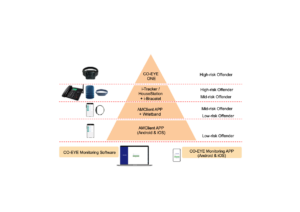
Supervised individuals are typically instructed to keep the ankle monitor charged, avoid tampering, remain within any ordered geographic boundaries, and comply with reporting appointments. Travel outside an approved area—whether for employment, education, or family emergencies—may require pre-approval workflows that monitoring centers must execute quickly when orders change. Smartphone-centric pathways such as CO-EYE AMClient can complement bracelet-grade programmes for lower-risk tracks, but high-acuity immigration files still drive demand for dedicated GPS ankle monitor hardware with strap-level tamper evidence.

2) ICE ATD scale: why ~42,000 GPS ankle monitors signals market strain
ICE’s ATD portfolio blends voice reporting, mobile apps, and wearable GPS. Oversight documents and industry-facing summaries in the 2024–2026 window have cited GPS ankle monitor counts near 42,000 participants—an order of magnitude that implies national spare inventory, multilingual staffing, and firmware governance comparable to large state probation contracts. When enrolment grows sharply (public materials have described surges on the order of three-quarters relative to earlier baselines in some reporting periods), primes and subcontractors face the same constraints as criminal-justice deployments: carrier migrations, strap wear, and monitoring-center queue depth.
For hardware OEMs, immigration scale validates demand for ankle monitor SKUs that can be provisioned quickly, sustained for multi-year wear, and serviced without excessive truck rolls. For agencies, scale underscores the need for honest statistics on alert quality—false tamper storms can swamp analysts exactly when political scrutiny peaks. Programme integrity therefore depends on tamper architectures that minimize bogus removals while preserving evidentiary clarity for true breaks.
Surge enrolments also stress onboarding logistics: fingerprinting-equivalent identity checks, strap sizing inventories across body types, and same-day provisioning when judges or officers release individuals after hours. A monitoring center that cannot activate accounts within SLA windows effectively extends detention through technical friction—even when the legal order says release. RFPs should therefore score vendors on intake throughput per hour, not only on per-day pricing.
Finally, immigration geography spans dense urban canyons, border counties, and rural circuits with uneven LTE coverage. A GPS ankle monitor roadmap that assumes uniform suburban signal strength will fail in the field. Buyers should require drive-test artefacts or carrier partnership letters for the regions they serve, and should plan firmware channels that can adjust reporting aggressiveness when participants travel temporarily for family or medical reasons.
Immigration caseloads also intersect with broader U.S. electronic monitoring demographics. Vera Institute of Justice research on people under electronic supervision has documented national populations in the hundreds of thousands; published estimates in the 2021 analytic window placed roughly 254,700 adults on electronic monitoring in the United States—context that shows how ICE ATD sits inside a much larger EM ecosystem spanning pretrial, probation, parole, and specialty courts. Buyers comparing vendors should ask how immigration-grade service tiers differ from county criminal-justice tiers, and whether data retention rules align with civil removal proceedings as well as state court discovery.
3) Technical requirements buyers should write into immigration GPS RFPs
Immigration GPS ankle monitor requirements should mirror high-reliability criminal-justice specifications while adding civil-docket nuances. At minimum, procurement language should demand:
- Multi-constellation GNSS with Wi-Fi and cellular fallback positioning when satellite fixes degrade indoors.
- Modern cellular—5G-compatible LTE-M/NB-IoT paths with GSM fallback—to reduce stranded-device risk during carrier sunsets.
- Tamper detection that distinguishes true strap or enclosure breaches from benign motion artifacts; programmes should request documented false-positive performance for the optical or electronic chain.
- Battery life aligned to reporting cadence, with explicit policies for low-battery escalation that do not equate charging friction with absconding.
- Encrypted transport and role-based monitoring software that exports court-ready timelines and audit logs.
CO-EYE ONE delivers multi-constellation geo-location (GPS, BeiDou, Galileo, GLONASS, Wi-Fi, LBS) with < 2m CEP GPS accuracy, IP68 sealing, 5G-compatible LTE-M/NB-IoT/GSM connectivity, and patented fiber-optic strap and case tamper detection engineered for zero false-positive signaling on the optical detection path. Standalone battery life reaches seven days at a five-minute LTE-M/NB reporting interval (1700mAh cell, 2.5-hour recharge), while snap-on installation completes in under three seconds without tools—metrics that directly affect monitoring-center labor when intakes spike.

4) Cost analysis: detention bed-days versus electronic monitoring per diems
Budget officers routinely compare immigration detention to supervised release. Fully loaded detention figures often land near $150 per day (or higher) when staffing, medical, and facility capital are included, while vendor-provided electronic monitoring for continuous GPS commonly falls nearer $5–$15 per day depending on contract volume, risk tier, analytics bundles, and payer model. The spread is not purely “cheaper is better”—it reflects different public-safety theories, legal authority, and downstream social costs—but it explains why ATD expansions accompany fiscal scrutiny.
Agencies should still model hidden costs: false tamper triage, charging-support calls, device replacement logistics, and evidence exports for immigration courts. A slightly higher daily vendor rate can outperform a lower rate if the ankle monitor reduces analyst overtime and field visits. For a fuller fee taxonomy—activation charges, participant-funded models, and annual TCO bands—use the ankle monitor cost complete guide alongside this immigration framing.
Outcome data also belongs in leadership briefings. Florida Department of Juvenile Justice research on electronic monitoring programmes reported roughly a 31% reduction in recidivism for youth supervised with electronic monitoring compared with non-monitored comparators—evidence lawmakers may cite when funding community alternatives. ICE publicly emphasizes compliance-oriented narratives for ATD; monitoring centers should still publish de-identified operational metrics (alert volumes, mean time to acknowledge breaches) so oversight bodies can judge programme quality beyond slogans.
Procurement officers should also separate capital from service when comparing quotes. Some contracts embed hardware depreciation inside the daily rate; others bill equipment explicitly. Immigration programmes with volatile cohort sizes may prefer vendor-owned inventory so spikes do not force emergency capital requests. Either model can work if finance teams translate bids into identical TCO worksheets—hardware, airtime, software seats, training, spare pool, and evidence-export fees—before awarding.
5) Rights, obligations, and operational fairness
Immigration supervisees remain subject to removal proceedings while on ATD. Typical obligations include wearing the GPS ankle monitor continuously except during approved servicing, maintaining charge levels, honoring curfew or inclusion schedules, avoiding prohibited locations, attending scheduled ICE check-ins, and updating address or employment changes promptly. Failure modes can escalate from technical troubleshooting to enforcement action—so contracts should require vendor workflows that distinguish signal loss from tamper, and that document good-faith charging attempts.
Civil-liberties advocates highlight duration, proportionality, and data retention as flashpoints. Technology vendors cannot resolve legal standards, but they can supply transparency: configurable retention windows, tamper-evident exports, and multilingual participant instructions. Buyers evaluating any ankle monitor programme should require those artefacts upfront rather than retrofitting them after media attention.
Employment and education create recurring scheduling conflicts. Night-shift workers may struggle to charge during prescribed windows; students may lose signal inside campus basements. Fair programmes document how officers approve alternative charging plans, how quickly geofences update when employment changes, and how participants request travel for emergencies. The ankle monitor is only as legitimate as the operational empathy built around it—otherwise technical telemetry becomes a proxy for punishment.
6) CO-EYE ONE for immigration GPS ankle monitor programmes
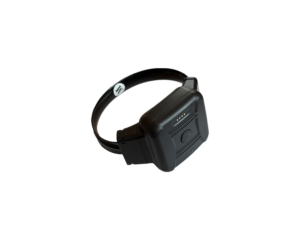
REFINE Technology positions CO-EYE ONE as a one-piece GPS ankle monitor for high-reliability supervision: 108g weight and 60×58×24mm footprint for long-wear comfort, seven-day standalone battery (five-minute LTE-M/NB interval), fiber-optic tamper detection with zero false positives on the optical strap and case path, <3 second tool-free installation, multi-constellation GNSS with <2m GPS accuracy, and 5G-compatible LTE-M/NB-IoT/GSM cellular connectivity. Agencies needing flexible carrier profiles can evaluate CO-EYE ONE-AC, which adds eSIM alongside nano-SIM and supports BLE-connected modes with extended battery life for compatible architectures.
Pair hardware with CO-EYE Monitoring Software for geofence orchestration, alert triage, and evidence-grade exports—critical when immigration dockets demand reproducible location histories. Procurement teams ready to model device mix, reporting intervals, and service tiers should use Contact Sales or Request Quote (we do not offer free trials or demo hardware programmes).
7) Frequently asked questions: immigration ankle monitor programmes
What is an immigration ankle monitor?
An immigration ankle monitor is typically a GPS ankle bracelet used under ICE ATD or related orders to track location continuously while a person remains in removal proceedings outside a detention facility—often combined with check-ins and other conditions.
How many GPS ankle monitors does ICE ATD use?
Public oversight summaries and industry reporting in 2025–2026 have cited GPS-oriented ATD populations near 42,000 users, though exact figures fluctuate with enrolment policies. Always verify current statistics against official ICE releases.
Is electronic monitoring cheaper than immigration detention?
Budget comparisons often cite detention near $150 per day loaded versus electronic monitoring near $5–$15 per day for continuous GPS vendor service, but total programme costs must include monitoring-center labor, device logistics, and legal compliance.
What technical specs matter most for immigration GPS?
Prioritize multi-constellation GNSS with indoor fallbacks, modern LTE-M/NB-IoT/GSM connectivity, trustworthy tamper detection, battery life matched to reporting cadence, encrypted backhaul, and software that produces audit-ready exports.
Does CO-EYE ONE support long-term immigration supervision?
CO-EYE ONE’s 108g one-piece design, seven-day standalone battery, fiber-optic tamper detection with zero false positives on the optical path, and 5G-compatible cellular modules are engineered for sustained GPS ankle monitor deployments—complement with CO-EYE Monitoring Software for geofences and analyst workflows.