

By Kevin Zhao, Senior Product Manager — CO-EYE / REFINE Technology
Between March and April 2026, a cluster of GPS ankle bracelet escape incidents across Pennsylvania, Texas, Oregon, and Colorado made national headlines. In each case, the pattern was disturbingly similar: a supervised individual cut or destroyed their GPS ankle bracelet and walked away — sometimes for hours, sometimes for months.
These are not isolated events. They represent a systemic failure in how traditional GPS ankle bracelet tamper detection works, and they are happening precisely as 14 states expand their electronic monitoring programs in 2026. The technology to prevent these escapes exists today. The question is whether agencies will demand it before the next headline.
What happened in the 2026 GPS ankle bracelet escape cases?
Four cases from early 2026 illustrate the scope of the problem:
| Case | Date | What Happened | Time at Large |
|---|---|---|---|
| Terry J. Johnson Jr. (Union County, PA) | Sept 2025 | Removed and destroyed GPS ankle bracelet on Route 522 near Selinsgrove. Device so damaged it was sent back to the manufacturer. Originally charged with aggravated assault/strangulation. Source: NorthCentral PA | ~4 months (captured in Alabama, Jan 2026) |
| Mehki Rideout (Chambersburg, PA) | Apr 9, 2026 | Cut off GPS ankle bracelet at 11:28 AM while on house arrest for drug possession with intent to deliver. Source: WGAL | ~24 hours (arrested next day) |
| Anthony Cascio (Jasper, TX) | Apr 2026 | Cut GPS ankle bracelet. Captured via license plate reader technology | ~3 hours |
| Hector Carranza (Multnomah County, OR) | Mar 21, 2026 | Removed GPS ankle bracelet. Arrest warrant issued two days later | At large at time of reporting |
The Johnson case is particularly alarming: a domestic violence offender destroyed his GPS ankle bracelet and fled across state lines, remaining free for four months before being apprehended in Alabama. The device was so badly damaged it had to be returned to the manufacturer — suggesting it was built with materials that could be physically destroyed by hand or with basic tools.
Why do current GPS ankle bracelets fail to prevent cutting?
The majority of GPS ankle bracelets deployed in U.S. corrections programs use one of two tamper detection technologies, both of which have fundamental limitations:
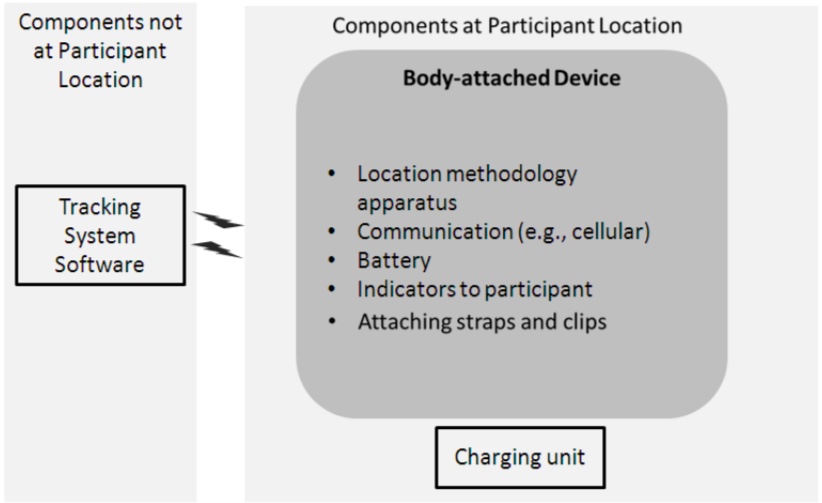
Resistive/capacitive loop detection (used by most vendors)
A thin conductive wire or strip runs through the strap. If the circuit is broken (strap cut), the device sends a tamper alert. The problems:
- False alarm rate of 5-15%: Electromagnetic interference, sweat, and mechanical stress create circuit noise that triggers false tamper alerts. NIJ research has documented that excessive false alarms degrade monitoring center responsiveness
- Alert latency: The tamper event must be transmitted via cellular network to the monitoring center. If the individual cuts the strap in a cellular dead zone, the alert may not reach the center until the device is found — hours or days later
- No physical deterrent: The conductive wire adds no structural strength to the strap. A pair of scissors or a razor blade cuts through in seconds
Heart rate / PPG (photoplethysmography) skin contact sensors
An optical sensor detects blood flow through the skin. If the sensor loses skin contact, a tamper alert fires. The problems:
- False alarm rate of 15-30%: Dry skin, excessive hair, sweat, device shifting during sleep, and cold weather all cause the sensor to lose reliable skin contact — generating false tamper alerts that waste officer time
- Still cuttable: The strap material itself remains a standard TPU or rubber band with no structural reinforcement. PPG detects removal but does not prevent it
- Delayed detection: Some PPG systems require 30-60 seconds of continuous signal loss before triggering an alert, giving the individual a head start
How does fiber optic tamper detection change the equation?
Fiber optic anti-tamper technology takes a fundamentally different approach. Instead of measuring electrical conductivity or skin contact, it passes a continuous beam of light through an optical fiber embedded in the strap and device housing. The detection is binary: light either passes through the fiber, or it doesn’t.
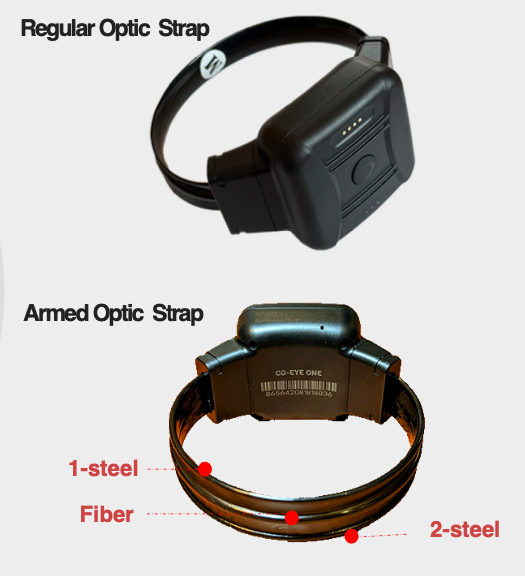
This architecture delivers three capabilities that directly address the 2026 escape pattern:
| Capability | How It Works | Impact on Escape Prevention |
|---|---|---|
| Zero false alarms | Light signal is binary (intact/severed). No analog noise, no skin contact dependency, no environmental interference | Monitoring centers can treat every fiber optic tamper alert as a confirmed tamper event — not a “maybe.” Response time drops from minutes to seconds |
| Steel-armed cut resistance | Optional steel wire reinforcement embedded in the fiber optic strap. Standard cutting tools (scissors, razors, wire cutters) cannot sever the strap | Physical deterrent — the strap cannot be quickly or quietly cut. Buys critical time for law enforcement response |
| 3-month post-battery tamper protection | Fiber optic integrity detection continues for 3+ months after battery depletion. Even a dead device retains physical evidence of tampering | In the Johnson case, the destroyed device lost all forensic evidence. Fiber optic technology preserves tamper evidence regardless of device power state |
How would fiber optic GPS ankle bracelets have changed the 2026 escape outcomes?
Applying fiber optic tamper detection to each of the four 2026 cases:
- Johnson (4-month escape): A steel-armed strap would have significantly delayed or prevented physical destruction. Even if eventually defeated, the zero-false-alarm fiber optic alert would have reached the monitoring center as a confirmed tamper — not buried among dozens of daily false positives. Response would have been immediate, not “discovered” days later
- Rideout (cut at 11:28 AM): Steel-armed straps resist common cutting tools. Even if he obtained industrial cutting equipment, the instant binary tamper alert and the extra time required to defeat the steel strap would have compressed his escape window dramatically
- Cascio (captured in 3 hours): He was caught by a license plate reader, not by the monitoring system. With fiber optic instant detection + zero false alarms, the monitoring center could have alerted law enforcement within minutes of the cut, potentially reducing the 3-hour window to under 30 minutes
- Carranza (warrant issued 2 days later): A 2-day delay between device removal and warrant issuance suggests the monitoring center was uncertain whether the event was a real tamper or a false alarm. Fiber optic binary detection eliminates this uncertainty entirely
What should agencies require in GPS ankle bracelet tamper detection?
For agencies expanding their GPS ankle bracelet programs in 2026 — particularly those implementing new domestic violence or pretrial monitoring mandates — the tamper detection specification should include:
- Documented false alarm rate below 1% — request field data, not just vendor claims. Traditional PPG and resistive systems cannot achieve this. Fiber optic systems deliver verified zero false-positive rates
- Physical cut resistance option — for high-risk populations (DV, violent felony, flight risk), require availability of steel-armed or reinforced straps that resist common cutting tools
- Alert latency under 30 seconds — from physical tamper event to monitoring center notification. Multi-mode connectivity (BLE + WiFi + LTE) ensures alerts reach the center even in cellular dead zones
- Post-battery tamper evidence preservation — the device must retain physical evidence of tampering even after battery depletion, for forensic and court proceedings
- Binary tamper detection — the system should produce unambiguous tamper/no-tamper signals, enabling monitoring centers to respond to every alert with full confidence
The CO-EYE ONE GPS ankle bracelet — at 108 grams, the lightest one-piece GPS ankle bracelet on the market — delivers all five of these requirements through its dual fiber optic loop (strap + housing), optional steel-armed cut-resistant strap, and adaptive BLE/WiFi/LTE multi-mode connectivity that ensures tamper alerts reach the monitoring center regardless of the local cellular environment.
Frequently Asked Questions
Can you cut off a GPS ankle bracelet?
Traditional GPS ankle bracelets with rubber or TPU straps can be cut with scissors or a razor blade in seconds. However, next-generation devices with steel-armed fiber optic straps resist common cutting tools and deliver instant, zero-false-alarm tamper alerts the moment any cutting attempt begins.
What happens when someone cuts a GPS ankle bracelet?
The device sends a tamper alert to the monitoring center, which then notifies the supervising officer and law enforcement. However, with traditional resistive detection systems, alert delays and high false alarm rates (5-30%) mean that real tamper events are often not treated as emergencies. Fiber optic detection eliminates this problem by producing zero false alarms.
What is the most tamper-resistant GPS ankle bracelet?
GPS ankle bracelets with fiber optic tamper detection and steel-armed cut-resistant straps represent the highest level of tamper resistance currently available. This technology delivers binary detection with zero false alarms, physical cutting resistance, and tamper evidence preservation for 3+ months after battery depletion.