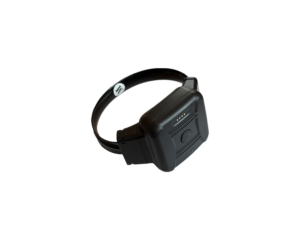
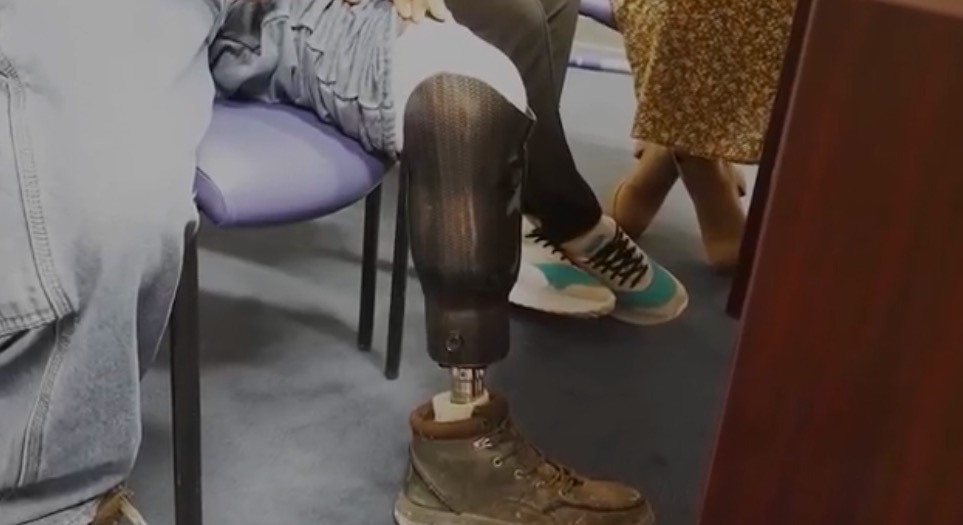
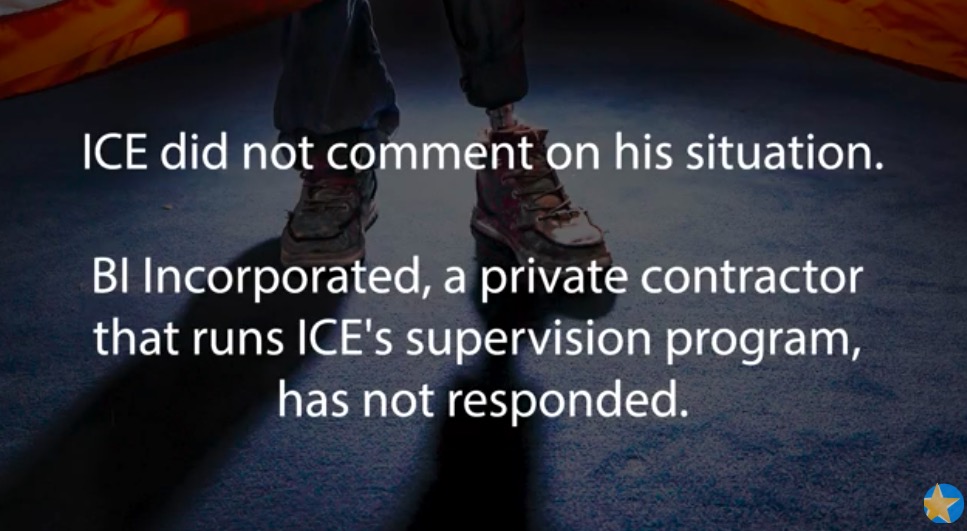
On May 28, 2026, the Indianapolis Star published an investigation that should force every electronic monitoring stakeholder to confront an uncomfortable truth: a GPS ankle monitor — a device designed to track location — led to the amputation of an asylum seeker’s leg in Indiana.
The bracelet gripped his left ankle so tightly that it restricted blood flow. Discomfort escalated to pain. It kept him awake at night and made standing and walking almost unbearable. What began as swelling progressed to a medical emergency that ended with the loss of a limb.
This is not the first such case. In Corpeno-Argueta v. United States & B.I. Inc. (2018), an asylum seeker in Illinois suffered a right ankle fracture caused by the physical stress her ankle monitor placed on her ankle — nine months after repeated complaints went unaddressed. A peer-reviewed case report in Clinical Practice and Cases in Emergency Medicine documented septic malleolar bursitis — a painful infection of the ankle bursa — in a patient wearing an electronic monitoring device, with no other identifiable risk factor.
These are not isolated anecdotes. They are symptoms of a systemic design failure in how the EM industry approaches the interface between device and human body.
How Does an Ankle Monitor Cause Physical Harm?
An ankle monitor causes physical harm when device design prioritizes tamper resistance over physiological compatibility. The mechanism is straightforward: a rigid or semi-rigid device, strapped tightly around the narrowest part of the lower leg just above the malleoli, creates sustained compression against bone, tendon, and soft tissue.
The ankle is uniquely vulnerable. Unlike the wrist, the ankle joint has minimal subcutaneous fat padding the medial and lateral malleoli. The posterior tibial artery runs directly behind the medial malleolus with less than 3mm of tissue coverage. A strap that compresses this area — even moderately — can restrict venous return, cause edema, and in prolonged cases, compromise arterial perfusion to the foot.
Three design factors determine whether a device causes harm:
- Strap material and flexibility — Metal wire reinforcement (stainless steel anti-tamper wires embedded in rubber or silicone straps) creates rigid pressure points that cannot conform to the ankle’s changing diameter during movement, standing, or fluid shifts throughout the day
- Weight distribution — A 200-250g device concentrates gravitational force on a small contact area, magnifying pressure against the malleoli during every step
- Fit adjustment mechanism — Traditional screw-tightened or tool-locked straps create a static circumference that cannot accommodate the 5-15% diurnal variation in ankle diameter caused by normal edema cycles
The Indiana case follows a depressingly predictable pattern: the device was fitted at a static point in time, the wearer’s ankle swelled (from heat, activity, or gravity), the strap could not accommodate the swelling, and compression escalated until tissue ischemia became irreversible.
What Makes Traditional Strap Designs Fundamentally Unsafe?
Most ankle monitors on the market today use one of two anti-tamper approaches in their straps — and both create inherent tension between security and safety.
Metal wire anti-tamper straps embed stainless steel wires inside a rubber or silicone strap. The wires serve as a conductive loop: if cut, the circuit breaks and triggers a tamper alert. This approach is simple and inexpensive. It is also the primary cause of pressure injuries, because steel wires cannot flex with the ankle’s natural range of motion. Every step, every shift in body position, every moment of rest creates micro-trauma where rigid wire presses against soft tissue over bone.
Many GPS tracking watches marketed as “ankle monitors” use this exact approach — a metal wire loop inside a generic watch strap. The fundamental problem is that a design optimized to detect cutting is inherently optimized to be rigid, and rigidity against skin over bone is the mechanism of injury.
Resistive/capacitive sensor straps monitor electrical properties of the strap material. These are more flexible than metal wire designs but still require consistent skin contact, creating a catch-22: too loose and the sensor loses contact (triggering false alarms), too tight and the device causes compression injury. A Columbia Law School analysis found that 90% of ISAP participants reported physical harm from their ankle monitors, with nearly three-quarters describing aches, pains, and cramps in their legs, feet, or ankles.
The industry has lived with this trade-off for decades because the conventional assumption was that tamper resistance requires mechanical rigidity. That assumption is wrong.
Why Does Fiber Optic Detection Solve the Safety-Security Trade-Off?
Fiber optic tamper detection eliminates the need for rigid materials in the strap entirely. Instead of monitoring the electrical continuity of a metal wire or the capacitance of a conductive surface, it monitors the optical continuity of a thin glass or polymer fiber embedded in a flexible TPU (thermoplastic polyurethane) strap.
The detection logic is binary: light either passes through the fiber or it does not. Any cut, any significant deformation that breaks the fiber, instantly triggers a tamper alert. Unlike metal wire, the optical fiber itself is thin (125-250 micrometers), lightweight, and — critically — it does not need to be rigid to function. The fiber can be embedded in a soft, medical-grade TPU strap that flexes naturally with ankle movement.
This matters for three specific reasons:
- The strap can be genuinely flexible — Because the detection medium is light rather than electrical current through metal, the strap material can prioritize skin compatibility without compromising tamper detection
- Zero false alarms mean the strap does not need to be over-tightened — Traditional sensors with 15-30% false alarm rates create operational pressure to tighten straps for better sensor contact. Fiber optic detection has zero false positives, so there is no incentive to over-tighten
- Detection continues even after battery depletion — Physical evidence of a cut fiber remains for forensic verification months after the device loses power, meaning the strap does not need to be so tight that removal without cutting is physically impossible
What Does 16 Years and 130,000 Wearers With Zero Safety Incidents Tell Us?
At REFINE Technology, we have operated CO-EYE electronic monitoring solutions for over 16 years, with more than 130,000 individuals wearing our devices across 30+ countries. In that entire history, we have recorded zero cases of wearer physical injury from the device — no skin lacerations, no compression injuries, no circulatory complications, no hospitalizations — and simultaneously zero cases of undetected tamper or absconder events.
That dual record is not accidental. It is the direct result of a design philosophy that treats wearer health safety and monitoring security as co-equal, non-negotiable requirements — not as competing priorities where one must be sacrificed for the other.
The CO-EYE ONE weighs 108 grams — 40-55% lighter than competing one-piece GPS ankle monitors that typically range from 150 to 252 grams. Weight matters enormously for long-term wearability: every gram concentrated on the ankle translates to cumulative pressure on the malleoli over days, weeks, and months of continuous wear. The difference between 108g and 220g is the difference between a device the wearer forgets is there and one that causes chronic discomfort.
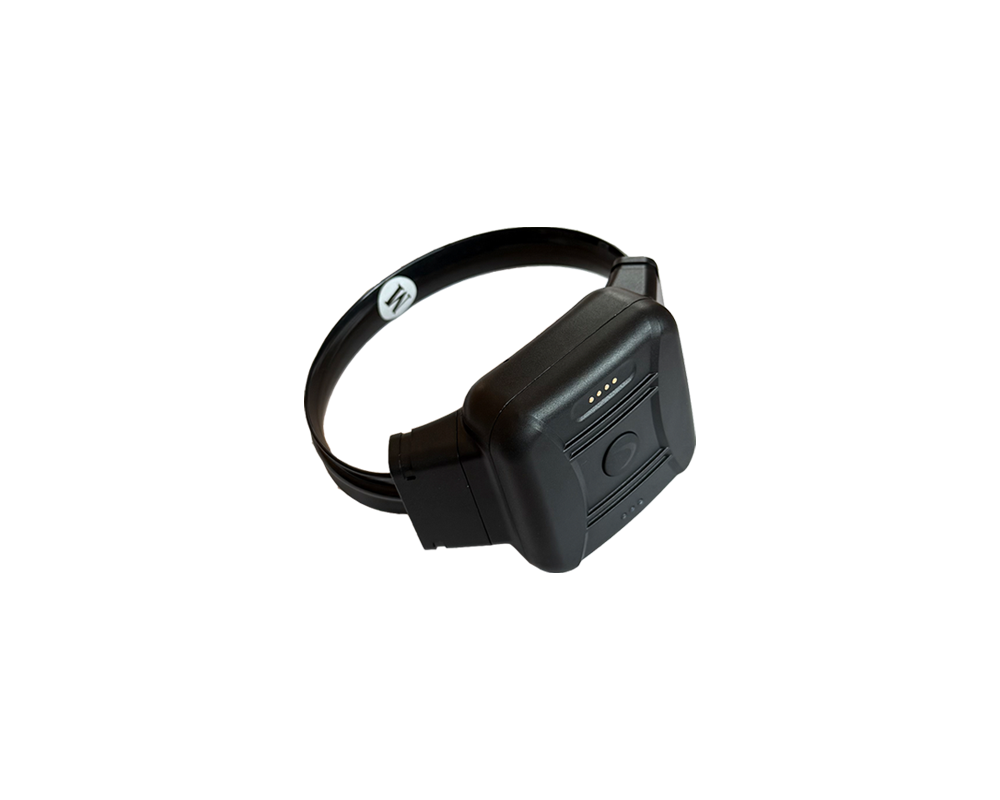
The TPU fiber optic strap is available in pre-configured S/M/L/XL sizes, which matters more than most procurement officers realize. A one-size-adjustable strap — the industry norm — means the excess strap material creates bulk, the adjustment mechanism adds rigid hardware against the skin, and the fit is inevitably a compromise. Size-specific straps conform to the ankle’s actual circumference with minimal excess material and no rigid adjustment hardware.
The CO-EYE ONE’s snap-on installation takes less than 3 seconds without tools. This is not just an officer convenience feature — it means the strap does not require a torque driver or screw mechanism that inherently creates pressure hotspots. The same click mechanism allows rapid removal in medical emergencies, something the BMJ Case Reports documented as a critical gap when healthcare providers treating an ICE-monitored patient had no guidelines or mechanism to remove the device during emergency surgery.
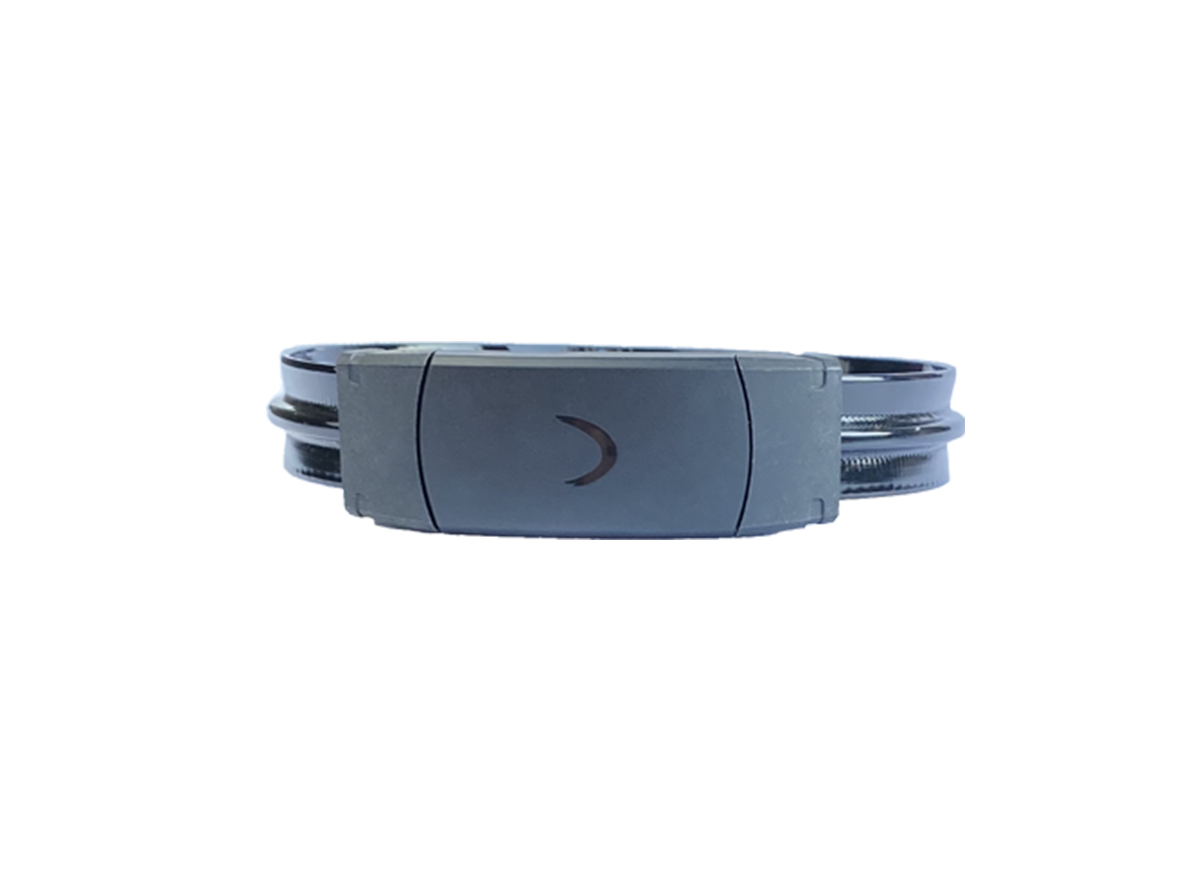
For mid-to-low risk supervision scenarios, the question is even more fundamental: why use a GPS ankle monitor at all? The CO-EYE BLE i-Bracelet weighs just 17 grams — lighter than a watch strap — and is virtually indistinguishable from a consumer fitness band. It provides presence verification via BLE connectivity with a HouseStation or smartphone app, delivers a 2-year battery life with zero charging requirements, and carries FCC certification. There are no metal components against the skin, no rigid housings creating pressure points, and no weight-induced joint stress. For pretrial defendants, parolees in stable housing, or monitored individuals re-entering the workforce, a device that causes zero physical awareness during wear is not a luxury — it is the difference between compliance and device-induced recidivism triggered by visible stigmatization.
What Should Procurement Officers Evaluate Beyond Basic Specs?
The Indiana amputation case exposes a procurement blind spot. When agencies evaluate ankle monitors, RFP scoring matrices typically weight tamper detection, battery life, GPS accuracy, and connectivity. Wearability and physical safety specifications rarely appear at all — and when they do, they are treated as pass/fail checkboxes rather than weighted scoring criteria.
Based on 16 years of deployment experience across environments ranging from tropical humidity to sub-zero temperatures, here are the specifications that directly predict whether a device will cause physical harm over months of continuous wear:
| Safety-Critical Spec | What to Look For | Red Flags |
|---|---|---|
| Device weight | <120g (one-piece) | >180g without clinical justification |
| Strap material | Medical-grade TPU or silicone with documented biocompatibility | Metal wire reinforcement in strap |
| Tamper detection method | Fiber optic (inherently flexible) or non-contact sensing | Conductive wire loops requiring rigid strap tension |
| Strap sizing | Multiple pre-configured sizes (S/M/L/XL minimum) | Single adjustable strap for all wearers |
| Installation/removal | Tool-free snap mechanism (<5 seconds) | Screw/torque-driver lock requiring scheduled appointments for adjustment |
| Emergency removal | Documented medical emergency removal procedure | No removal protocol — device stays on regardless of medical need |
| False tamper alarm rate | <1% (fiber optic achieves 0%) | >5% — creates pressure to over-tighten straps |
If your current vendor cannot provide documented data on device weight, strap material biocompatibility, and false tamper alarm rates from actual deployed environments, that absence of data is itself a red flag.
Why Does Electronic Monitoring Exist — and What Does That Mean for Device Design?
Electronic monitoring is not incarceration. It exists as an alternative to detention precisely because society has recognized that people awaiting trial, serving community sentences, or navigating immigration proceedings are better served by remaining in their communities — working, supporting families, attending appointments, building the stability that reduces recidivism.
The ACLU has documented how ankle monitors can undermine this purpose: social stigma, employment discrimination, sleep disruption, chronic pain, anxiety, and depression. An analysis in the University of Colorado Law Review described the experience as “digital cages” — where 80% of monitored individuals reported anxiety and nearly three-quarters reported depression from wearing the device.
When a device is so uncomfortable that it prevents sleep, so heavy that it causes chronic pain, so poorly designed that it requires amputation — that device has failed its stated purpose entirely. It is no longer facilitating community reintegration. It is inflicting harm.
The design standard should be simple: a person wearing an ankle monitor should be able to work a full shift, sleep through the night, shower without worry, and walk through their day without the device causing pain, irritation, or injury. If the device cannot meet that standard while maintaining tamper detection and location accuracy, the device is not fit for purpose.
We build CO-EYE products to this standard because we have seen — across 30+ countries and every climate on earth — what happens when devices prioritize security theater over genuine human safety. The agencies that achieve the best compliance rates are not the ones with the heaviest, tightest, most punitive devices. They are the ones whose wearers can live normal lives while being monitored, because wearers who can work and support their families are wearers who show up to court.
What Comes Next After Indiana?
The IndyStar investigation will generate headlines, legislative questions, and perhaps policy reviews. The lawsuit will proceed through federal court. BI Incorporated and ICE will likely issue statements emphasizing their commitment to participant welfare.
But the underlying engineering problem will remain until the industry addresses it directly: as long as ankle monitors use rigid metal wires for tamper detection, they will continue to cause compression injuries. The severity will vary — from chronic discomfort to skin breakdown to, in the worst cases, what happened in Indiana — but the mechanism is inherent to the design.
The technology to solve this problem already exists. Fiber optic tamper detection, medical-grade TPU straps, pre-configured sizing, tool-free installation, and lightweight one-piece designs are not theoretical — they are deployed and proven at scale. The question is not whether better solutions exist, but whether procurement decisions and policy frameworks will catch up to the engineering.
For the person in Indiana who lost a leg to a device that was supposed to help them live in their community while awaiting a hearing — that gap between available technology and deployed technology is not an abstraction. It is the distance between keeping a limb and losing one.
About REFINE Technology (CO-EYE)
REFINE Technology is the leading electronic monitoring solutions provider in China with over 16 years of experience in the criminal justice industry. As the exclusive supplier for top security agencies, REFINE Technology has deployed 200,000+ devices across 30+ countries, monitoring 130,000+ individuals. The CO-EYE product line — featuring the next-generation all-in-one GPS ankle monitor, BLE wristbands, RF home beacons, and a unified monitoring platform — delivers high-security, low-stigma supervision for high-risk, mid-risk, and low-risk offender monitoring and victim protection. All CO-EYE devices carry full European NB CE directives (RED/Cybersecurity/LVD/SAR) and FCC certifications, with IP68 waterproof and REACH/RoHS/WEEE compliance. CO-EYE solutions are trusted in the USA, Europe, Africa, Bhutan, Papua New Guinea, Dominican Republic, Armenia, and expanding globally.
For more information, visit www.ankle-monitor.com or contact marketing@rfidcn.com.
Related: GPS Ankle Bracelet Guide 2026: Costs, Technology & Vendor Selection