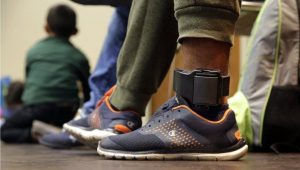

A probation officer in Oklahoma opens her dashboard. Three scheduled biometric check-ins came through overnight — each showing a clear selfie of the defendant, matching enrollment photos, passing the liveness detection prompt. Location data shows the phone at the defendant’s registered address. Everything looks clean.
But the defendant hasn’t been at that address in 72 hours. The selfies were generated by a $20/month deepfake app running on a second phone. The “liveness” prompt — a head turn, a blink — was synthesized in real time by the same software that defeated financial KYC platforms across three continents earlier this year.
This scenario isn’t hypothetical. It’s the logical endpoint of a collision between two accelerating trends: the rapid adoption of smartphone-only monitoring apps in U.S. community corrections, and the equally rapid democratization of AI-generated synthetic media. The correction industry’s software-only verification model is approaching a breaking point — and the fix isn’t better AI. It’s a physical trust anchor.
How Did We Get Here? The Rise of App-Based Offender Monitoring
Smartphone monitoring apps have become one of the fastest-growing segments in U.S. community corrections. Products like BI SmartLINK (GEO Group), SCRAM TouchPoint (Alcohol Monitoring Systems), and Absolute ID (Oklahoma’s pilot program) allow agencies to supervise low-to-medium-risk individuals without body-worn devices. The value proposition is straightforward: install an app on the defendant’s phone, collect biometric check-ins, track GPS location, enable two-way messaging — all without the stigma, cost, or logistics of an ankle monitor.
The COVID-19 pandemic accelerated adoption dramatically. When in-person reporting became impossible, agencies that had been piloting SmartLINK or TouchPoint suddenly rolled them out to entire caseloads. BI Incorporated reported over 26,000 video conferences completed through SmartLINK in just six weeks during 2020. By 2026, smartphone monitoring has become a standard supervision tier — not just an emergency stopgap.
The identity verification model behind these apps follows a common pattern: at enrollment, the officer captures a reference photo. At each scheduled check-in, the app prompts the individual to take a selfie. Software compares the new image against enrollment data, performs a liveness check (blink, head turn, random prompt), and confirms location via the phone’s GPS. If the photos match and liveness passes, the check-in is marked compliant.
This model rests on a single, increasingly fragile assumption: that the camera feed is trustworthy.
Why That Assumption Is Collapsing: The AI Deepfake Explosion
On May 29, 2026, Ottawa police announced charges against two men who used AI to generate deepfake sexual images of over 50 victims — women aged 16 to 55 — across multiple Canadian provinces. The investigation, which began with a single report in September 2025, expanded rapidly as police discovered the technology-facilitated exploitation crossed jurisdictional boundaries. The suspects weren’t sophisticated hackers. They used commercially available generative AI tools.
This case is the tip of a rapidly growing iceberg. The tools that create convincing synthetic faces have dropped from research-lab exclusives to consumer apps in under three years:
- JINKUSU CAM, documented by Biometric Update in April 2026, is specifically designed to defeat live KYC verification sessions — not static photo matching, but real-time video feeds with liveness prompts.
- Biometric injection attacks — where a virtual camera feeds synthetic video directly into the verification pipeline, bypassing the physical camera entirely — jumped 783% between 2024 and 2025 according to threat intelligence firm Group-IB, which documented 8,065 such attempts against a single financial institution in just eight months.
- Oracle-42 Intelligence reported in January 2026 that 3D-aware diffusion deepfakes — combined with voice cloning — bypassed Apple Face ID, Windows Hello, and Samsung Iris Lock with an average 89% success rate in controlled testing.
- By 2026, Gartner predicts that 30% of enterprises will no longer trust standalone identity verification against AI-driven impersonation.
In China, researchers at Tsinghua University’s RealAI demonstrated as early as 2021 that a pair of glasses printed with a computed adversarial pattern could defeat facial recognition on 19 of 20 smartphones and multiple banking/government apps. The adversarial patch cost less than $1 to print. Five years later, the same attack vector has become dramatically more powerful and accessible, with 3D-aware models and neural radiance fields enabling attacks from any angle.
What Does This Mean for Corrections Monitoring Apps?
Financial services companies have entire security teams, fraud detection stacks, and risk budgets to counter deepfake attacks. Community corrections agencies typically do not. And the monitoring apps they rely on were designed before the current generation of real-time deepfake tools existed.
The attack surface for a typical smartphone monitoring app is disturbingly simple:
| Attack Method | Difficulty (2024) | Difficulty (2026) | What It Defeats |
|---|---|---|---|
| Static photo replay | Trivial | Trivial | Basic photo matching (no liveness) |
| Pre-recorded video with head movement | Easy | Easy | Simple liveness (blink/turn prompts) |
| Real-time deepfake face swap (e.g., JINKUSU CAM) | Moderate | Low — $20/month apps | Liveness detection + photo matching |
| Virtual camera injection (bypass physical camera) | Moderate | Low — open source tools | All camera-based verification |
| Adversarial patch glasses (physical attack) | Moderate | Moderate | On-device facial recognition |
| GPS spoofing + deepfake combo | Difficult | Moderate | Location + identity verification together |
The critical insight is this: every one of these attacks targets the software layer. They exploit the fact that the verification chain — from camera to liveness check to photo match — exists entirely within a software environment that can be manipulated by the device owner. The phone itself is the attack surface. And unlike a bank customer who has no incentive to hack their own KYC flow, a monitored individual has every incentive to defeat their own verification.
The Banking Industry Already Solved This Problem
The financial services sector faced a structurally identical challenge a decade ago: how do you authenticate a user through a device that the user controls, when the user might have adversarial intent?
The answer was hardware-bound authentication. Online banking apps don’t rely solely on passwords, PINs, or biometrics. They require a physical token — a USB security key, a smart card, or at minimum, a separate registered device — that cryptographically proves the user’s physical presence. The token generates a one-time code or signs a challenge-response that cannot be replicated by software alone.
The logic is simple: software can be spoofed. Hardware can’t — at least not remotely.
FIDO2/WebAuthn standards, now supported by every major browser and mobile OS, formalized this approach. The authenticator (hardware token) holds a private key that never leaves the device. Even if an attacker compromises the phone, steals the password, and generates a perfect deepfake of the user’s face, they still can’t produce a valid cryptographic assertion without the physical token.
Community corrections is the last major identity-verification vertical that hasn’t adopted this model.
What a Hardware Trust Anchor Looks Like for Corrections
A corrections-grade hardware trust anchor needs to satisfy constraints that consumer security tokens don’t face:
- Tamper-evident and non-removable — unlike a USB key the user can leave at home, the token must be continuously worn and any removal attempt must be detectable.
- Zero maintenance for the wearer — no charging cables, no battery management, no user intervention. Officers supervising 200+ person caseloads cannot troubleshoot token hardware.
- Cryptographically secure BLE pairing — the token must authenticate to the monitoring app through an encrypted channel that cannot be replayed or spoofed by a second device.
- Physically unobtrusive — to support rehabilitation and reintegration, the token should resemble a fitness band, not a shackle.
- Long operational life — ideally 12-24 months without intervention.
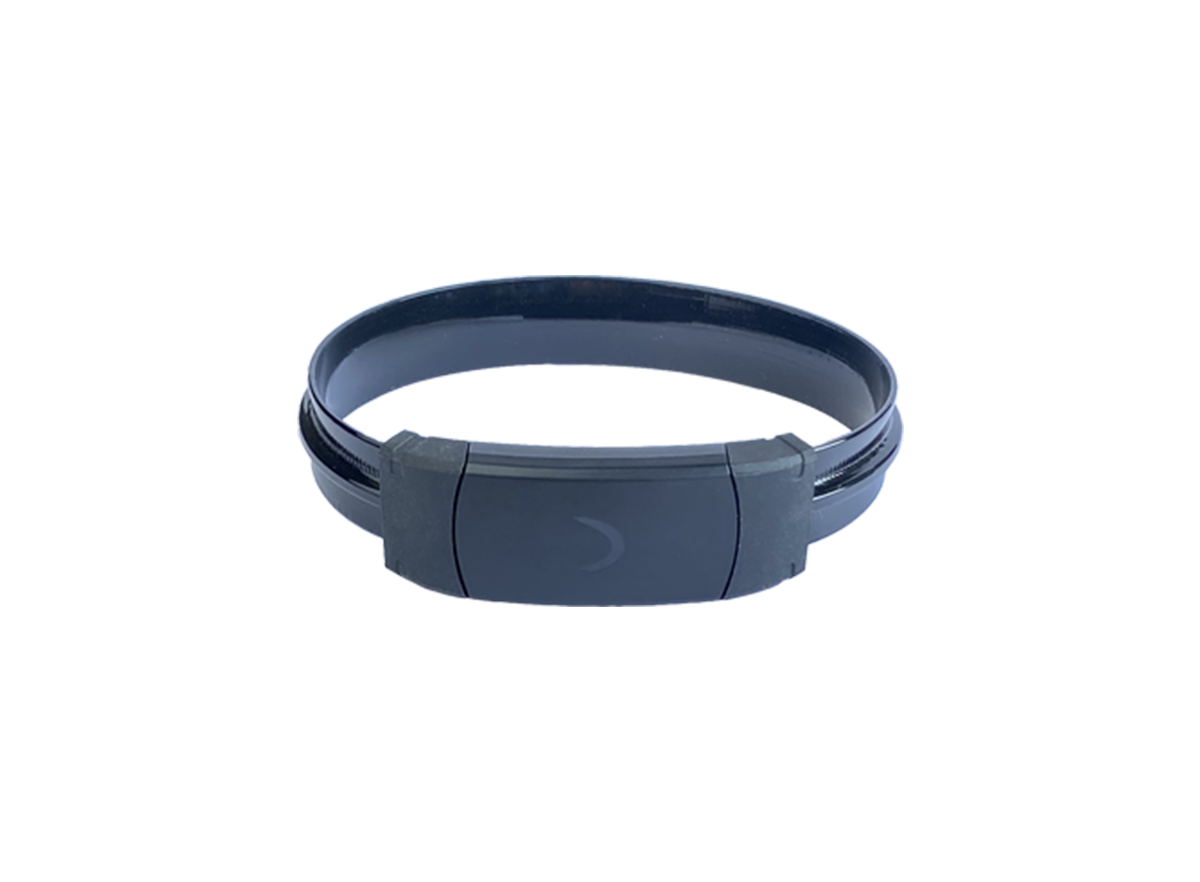
The CO-EYE BLE i-Bracelet from REFINE Technology was designed exactly for this role. It integrates seamlessly with smartphone monitoring platforms like the CO-EYE AMClient app. At 17 grams — lighter than most fitness trackers — with a 2-year battery life, FCC certification, and IP68 waterproofing, it’s a criminal justice-grade wearable that pairs via encrypted Bluetooth (SHA256 authentication + AES ECB/CBC encryption) with any smartphone monitoring app that supports the pairing protocol.
The verification logic shifts fundamentally when hardware enters the equation:
Software-Only Verification (Current Model):
Camera feed → Liveness check → Photo match → GPS location → “Verified”
Vulnerability: Every step occurs within software the user controls. Deepfakes and virtual cameras defeat the entire chain.
Hardware-Anchored Verification (Proposed Model):
BLE token proximity confirmation → Cryptographic challenge-response → Camera feed → Photo match → GPS location → “Verified”
Advantage: Even if the camera feed is compromised, the system knows whether the physical token — and therefore the wearer — is present. A deepfake cannot generate a valid BLE handshake.
How Does BLE Token Integration Actually Work?
From an engineering perspective, the integration between a BLE wearable token and a smartphone monitoring app follows a well-established security pattern:
- Enrollment binding: During initial setup, the officer pairs the bracelet to the defendant’s monitoring app instance. The bracelet and app exchange public keys and establish a shared secret. This binding is one-time and officer-controlled.
- Continuous presence verification: The bracelet broadcasts encrypted BLE beacons at regular intervals. The app validates each beacon against the shared secret. If the bracelet moves out of BLE range (typically 10-60 meters depending on environment), the app immediately flags a proximity alert — regardless of what the camera shows.
- Challenge-response at check-in: When the app triggers a biometric check-in, it first validates bracelet presence through a cryptographic challenge-response. Only after the bracelet confirms physical proximity does the app proceed to the camera-based verification. This means even a perfect deepfake fails the check-in if the bracelet isn’t within range.
- Tamper detection: If the bracelet strap is cut or the device is physically compromised, the system generates a tamper alert independent of the app. This covers the scenario where a defendant removes the bracelet and hands it to an accomplice near the phone.
BI Incorporated appears to have recognized a version of this architecture with their SmartBAND 1.0 — a wrist-worn BLE device that pairs with SmartLINK to provide “multi-factor authentication that assures officers of a client’s proximity and location to their smartphone.” But the SmartBAND is a proprietary, closed-ecosystem device that only works within BI’s platform. For the hundreds of independent monitoring app developers and smaller agencies across the U.S. that use different software platforms, there is no interoperable hardware token available.
That’s the gap the i-Bracelet is designed to fill — a universal, standards-based BLE hardware trust anchor that any monitoring app can integrate.
What Does This Mean for Smartphone Monitoring App Developers?
If you’re building or maintaining a smartphone monitoring app for U.S. corrections agencies, here’s the uncomfortable reality you’ll face in your next RFP:
- Procurement officers are starting to ask: “How does your app verify that the person completing the check-in is actually the defendant, and not a deepfake?” If your answer is “liveness detection,” you’ll need to explain why the same technology being defeated at banks and crypto platforms won’t be defeated by a motivated defendant with a $20 app.
- The liability question is coming: When (not if) a supervised individual commits a violent crime while “verified” by a spoofed check-in, the monitoring provider’s defense will be scrutinized. “We used industry-standard liveness detection” may not survive a wrongful death lawsuit when published research shows that standard was broken.
- Hardware integration isn’t optional — it’s differentiation: The developer who ships hardware-anchored verification first gains a defensible competitive moat. Every competitor without it becomes “the app that can be fooled by AI.”
For app developers evaluating hardware token options, the integration requirements are modest: BLE 5.x SDK support, challenge-response protocol implementation, and UI flow changes to display bracelet status. The CO-EYE BLE i-Bracelet SDK provides a documented API for pairing, presence monitoring, tamper event callbacks, and challenge-response authentication — designed specifically for third-party integration rather than locked to a single platform.
What Happens If We Don’t Fix This?
The window between “theoretically possible” and “widely exploited” for deepfake attacks on corrections monitoring is closing fast. The financial sector had 2-3 years between the first documented deepfake KYC attacks and the wave of regulatory response. Community corrections, with its smaller budgets, slower procurement cycles, and less technical scrutiny, will have less time.
When a high-profile failure occurs — a violent offender passing deepfake check-ins while absconding, a sex offender spoofing location verification while violating a protection order — the public and legislative response will be swift and punitive. The correction industry’s response shouldn’t be to wait for that moment.
The path forward is the same one banking took: don’t trust the camera. Trust the hardware.
About REFINE Technology (CO-EYE)
REFINE Technology is the leading electronic monitoring solutions provider in China with over 16 years of experience in the criminal justice industry. As the exclusive supplier for top security agencies, REFINE Technology has deployed 200,000+ devices across 30+ countries, monitoring 130,000+ individuals. The CO-EYE product line — featuring the next-generation all-in-one GPS ankle monitor, BLE wristbands, RF home beacons, and a unified monitoring platform — delivers high-security, low-stigma supervision for high-risk, mid-risk, and low-risk offender monitoring and victim protection. All CO-EYE devices carry full European NB CE directives (RED/Cybersecurity/LVD/SAR) and FCC certifications, with IP68 waterproof and REACH/RoHS/WEEE compliance. CO-EYE solutions are trusted in the USA, Europe, Africa, Bhutan, Papua New Guinea, Dominican Republic, Armenia, and expanding globally.
For more information, visit www.ankle-monitor.com or contact marketing@rfidcn.com.