

On October 1, 2026, the Council of the EU formally adopted Regulation (EU) 2026/2280 — the new Return Regulation that replaces the 2008 Return Directive. Twenty-three member states voted in favor, Spain voted against, and Belgium abstained. The regulation enters force in autumn 2027.
For GPS ankle monitor manufacturers and electronic monitoring service providers, this is not just a policy update — it is a formal, legally binding mandate that creates a 27-nation procurement market for immigration EM equipment that did not exist at EU level before.
What Does the EU Return Regulation Say About Electronic Monitoring?
Article 23 of the regulation defines alternatives to detention (ATDs) for third-country nationals in return procedures. The three ATDs explicitly listed are: deposit of a financial guarantee, electronic monitoring, and other measures provided under national law. These measures apply to any person subject to a return procedure — not just high-risk cases.
Two provisions make this regulation particularly consequential for EM equipment demand:
- No time limit on ATDs. While detention has a maximum period, the regulation sets no specific ceiling for how long electronic monitoring can last. Article 30(4) expressly allows member states to continue applying ATDs even after the detention maximum expires.
- ATDs as a complement to detention, not just an alternative. A person can be moved from detention to electronic monitoring when detention time runs out — extending state control beyond what the old directive allowed.
In practice, this means more individuals will be placed on GPS ankle monitors for longer periods than under any previous EU framework.
How Large Is the Potential EU Immigration EM Market?
The numbers are substantial. According to Eurostat, EU member states issued approximately 400,000 return decisions in 2023, but only 80,000 people were actually returned — a compliance rate of roughly 20%. The Return Regulation was explicitly designed to close this gap.
If even 10-15% of the 320,000 annual non-compliance cases are placed on electronic monitoring (a conservative estimate given that the regulation positions EM as a standard tool, not a last resort), the EU would need 32,000-48,000 active GPS ankle monitor units annually. At typical government procurement rates of $3-8/day per device, this represents a $35-140 million annual market.
Canada’s Border Services Agency provides a useful reference point. After launching its ATD Program with electronic monitoring in 2018, Canada enrolled 60 clients by 2024 and saw a 39% reduction in immigration detention between 2017-2023. The EU’s population is roughly 10 times Canada’s — the scale multiplier is enormous.
Which EU Countries Already Use GPS Ankle Monitors for Immigration?
Several member states have been piloting EM in immigration contexts before the regulation:
- Lithuania — developed electronic reporting systems including mobile applications and electronic monitoring devices, with court referral for non-compliance
- United Kingdom (pre-Brexit) — the Home Office used GPS ankle tags for immigration bail since 2021, with Buddi as the primary supplier under a £60M+ contract
- Belgium — piloted GPS tracking for certain immigration cases through its Justice Department’s EM infrastructure
- Netherlands — tested smartphone-based reporting (the predecessor to full GPS monitoring)
The regulation will accelerate adoption in the remaining 20+ states that have not yet implemented EM for immigration. Many of these countries — particularly in Central and Eastern Europe — will be first-time buyers of GPS ankle monitoring equipment for immigration purposes.
What GPS Ankle Monitor Specifications Does Immigration EM Require?
Immigration electronic monitoring differs from criminal justice EM in several ways that matter for equipment selection:
| Requirement | Criminal Justice EM | Immigration EM | Equipment Implication |
|---|---|---|---|
| Monitoring duration | Weeks to months | Months to years (no time limit) | Battery life and device durability become critical |
| Wearer profile | Convicted or accused offenders | Administrative subjects (non-criminal) | Low-stigma, lightweight design essential |
| Privacy scrutiny | Standard criminal law protections | GDPR + fundamental rights charter | EN 18031 cybersecurity certification and data encryption mandatory |
| Connectivity | Single country | Potential cross-border (EU-wide recognition) | Multi-carrier eSIM + roaming support needed |
| Scale | Varies by jurisdiction | 400,000+ return decisions/year EU-wide | High-volume procurement, TCO sensitivity |

The no-time-limit provision is the most important for equipment procurement. A device with 24-72 hour battery life (typical for current-generation GPS ankle monitors) means daily charging management for potentially thousands of immigration subjects spread across a country. The operational burden is unsustainable at scale.
Devices with adaptive multi-mode connectivity — BLE-connected mode extending battery to 6 months, WiFi-directed mode providing 3 weeks, and LTE standalone at 7 days — fundamentally change the TCO equation for immigration EM. When most monitored individuals are in stable residences (not in transit), BLE/WiFi modes handle 90%+ of monitoring time at a fraction of the power consumption.
How Should GPS Ankle Monitor Suppliers Prepare for EU Immigration EM?
Based on our experience entering 30+ national markets, here is what equipment suppliers need to address before the regulation takes effect in autumn 2027:
1. CE Certification Is Non-Negotiable
Every GPS ankle monitor sold in the EU must carry full European NB CE directives — RED, EMC, SAR, LVD. Additionally, the Cyber Resilience Act (CRA) and EN 18031 cybersecurity standard will apply to connected devices. Suppliers without existing CE + cybersecurity certifications face 12-18 months of testing before they can bid.
2. GDPR-Compliant Data Architecture
Immigration monitoring generates continuous location data on administrative (non-criminal) subjects. Under GDPR, this requires explicit legal basis, data minimization, purpose limitation, and right-to-erasure compliance. Monitoring platforms must support data sovereignty (on-premise deployment within each member state) and provide auditable data deletion workflows.
3. Multi-Language, Multi-Jurisdiction Platform
Twenty-seven member states means 24 official languages. Monitoring software must support full localization — not just UI translation, but legal notice templates, wearer consent forms, and automated reporting in each jurisdiction’s required format. The European Return Order introduces standardized forms, but national implementation will vary.
4. Low-Stigma Device Design
The UN Special Rapporteur on migrants’ human rights has already criticized the regulation’s ATD framework for “normalising the use of restrictive measures and surveillance.” Political pressure will push agencies toward devices that minimize visible stigma — lightweight one-piece designs under 110g rather than bulky two-piece GPS systems that visibly mark the wearer.
What Does This Mean for CO-EYE’s EU Market Strategy?
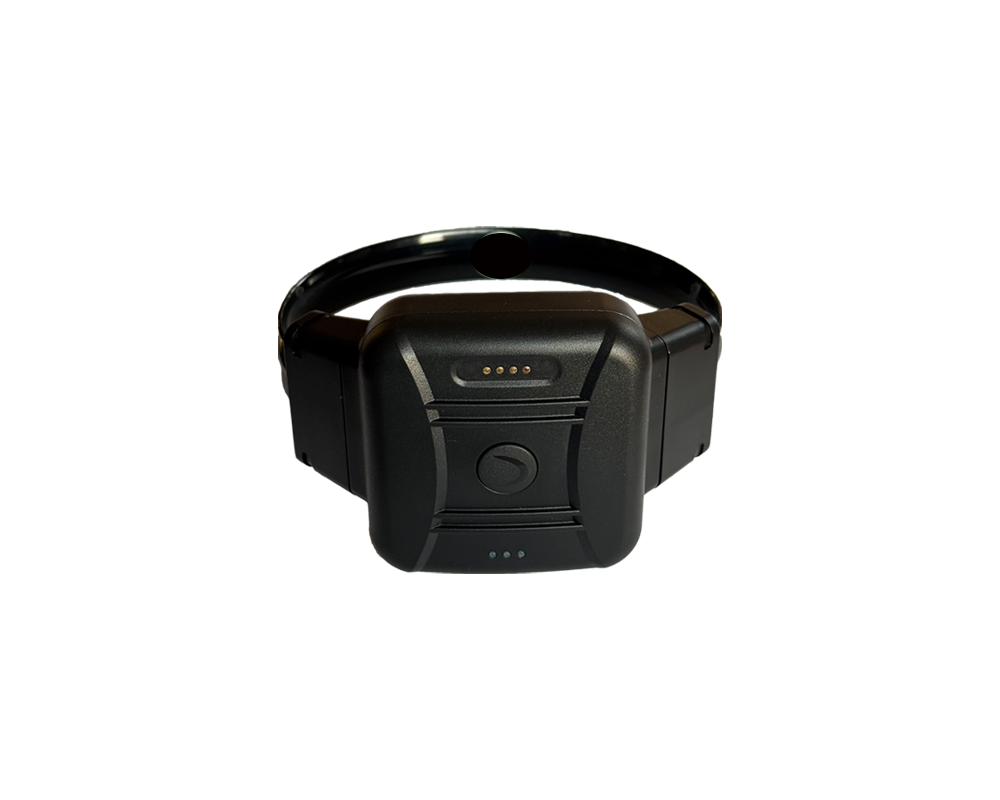
REFINE Technology has been operating in European markets since 2019, with CO-EYE GPS ankle monitors deployed in several EU and EEA countries. The Return Regulation validates and accelerates the market trajectory we have been building toward.
Three CO-EYE capabilities are directly relevant to EU immigration EM requirements:
- Full European NB CE + EN 18031 cybersecurity certification already in hand — while competitors will spend 12-18 months certifying, CO-EYE ONE is ready to bid today
- Adaptive multi-mode connectivity (BLE/WiFi/LTE) — designed for exactly the kind of long-duration, residential-primary monitoring that immigration EM requires
- eSIM + Nano SIM dual-carrier management — supporting cross-border roaming as the EU moves toward mutual recognition of return decisions
The regulation’s autumn 2027 implementation deadline gives member states roughly 12 months to procure equipment and train staff. RFP cycles in European government procurement typically run 6-9 months, which means the first tenders should appear in Q1-Q2 2027.
Frequently Asked Questions
Does the EU Return Regulation require GPS ankle monitors for all deportees?
No. Article 23 lists electronic monitoring as one of three alternatives to detention, alongside financial guarantees and other national measures. Member states decide which ATD to apply based on individual risk assessment. However, the regulation removes the previous obligation to consider ATDs before detention — making EM more of a parallel tool than a mandatory step.
When will EU countries start procuring GPS ankle monitors for immigration?
The regulation’s substantive provisions (including ATDs) apply from autumn 2027. Government procurement cycles in Europe typically take 6-9 months, so the first RFPs for immigration EM equipment are expected in Q1-Q2 2027. Countries with existing criminal justice EM contracts may add immigration provisions through contract amendments rather than new tenders.
About REFINE Technology (CO-EYE)
REFINE Technology is the leading electronic monitoring solutions provider in China with over 16 years of experience in the criminal justice industry. As the exclusive supplier for top security agencies, REFINE Technology has deployed 200,000+ devices across 30+ countries, monitoring 130,000+ individuals. The CO-EYE product line — featuring the next-generation all-in-one GPS ankle monitor, BLE wristbands, RF home beacons, and a unified monitoring platform — delivers high-security, low-stigma supervision for high-risk, mid-risk, and low-risk offender monitoring and victim protection. All CO-EYE devices carry full European NB CE directives (RED/Cybersecurity/LVD/SAR) and FCC certifications, with IP68 waterproof and REACH/RoHS/WEEE compliance. CO-EYE solutions are trusted in the USA, Europe, Africa, Bhutan, Papua New Guinea, Dominican Republic, Armenia, and expanding globally.
For more information, visit www.ankle-monitor.com or contact marketing@rfidcn.com.