
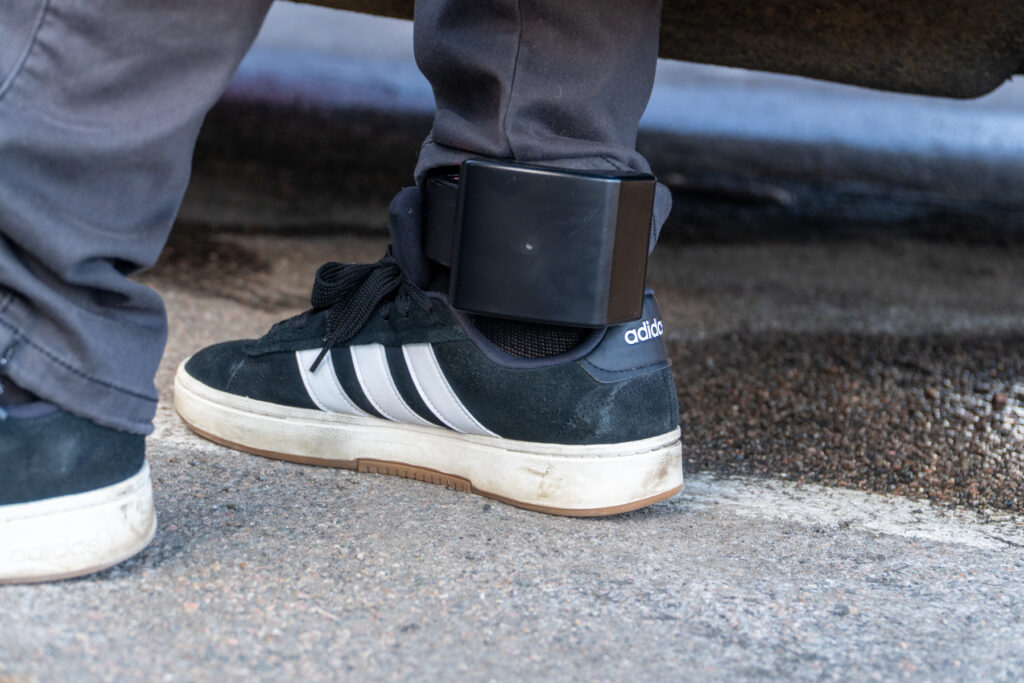
When GEO Group CEO George Zoley told investors in August 2026 that the number of immigrants on GPS ankle monitors had tripled from 17,000 to 54,000 in just 18 months, the number itself wasn’t surprising. What was striking was the reason: a single internal memo from June 2025 directed ICE field offices to place ankle monitors on all Alternatives to Detention participants “whenever possible.”
That memo created the largest single-year expansion of electronic monitoring in U.S. history — and exposed every weakness in the current GPS monitoring infrastructure. For agencies and technology providers watching this unfold, the ICE experience offers a live stress test of what happens when legacy monitoring systems scale beyond their design limits.
How Did 54,000 Ankle Monitors Get Deployed in 18 Months?
ICE’s Intensive Supervision Appearance Program (ISAP) has existed since 2004, operated exclusively by BI Incorporated — a GEO Group subsidiary headquartered in Boulder, Colorado. The program monitors immigrants awaiting resolution of their cases as an alternative to physical detention.
Before the 2025 directive, most of the program’s 183,000 participants used SmartLINK, a smartphone app that tracks location and uses facial recognition for identity verification. Ankle monitors accounted for roughly 10% of participants in 2024.
By July 2026, that share had climbed to 29% — with 53,000+ individuals wearing GPS ankle monitors nationwide, according to TRAC Immigration data from Syracuse University. The geographic distribution reveals the operational reality: Phoenix, El Paso, Harlingen, and Dallas — all southwest border regions — have 75% or more of their ATD participants on ankle monitors. Seattle, Detroit, and Newark sit below 15%.
The contract backing this expansion is substantial. USAspending.gov records show BI Incorporated received a September 2025 contract initially valued at $1.02 billion, with $228.5 million obligated to date. Each monitored individual generates approximately $3.70 per day in revenue for GEO Group, according to The Washington Post’s reporting.
What Technology Challenges Has the Rapid Scale-Up Exposed?
The 3x expansion hasn’t just been a logistics challenge — it has surfaced the fundamental technology limitations that the corrections and immigration monitoring industries have tolerated for years.
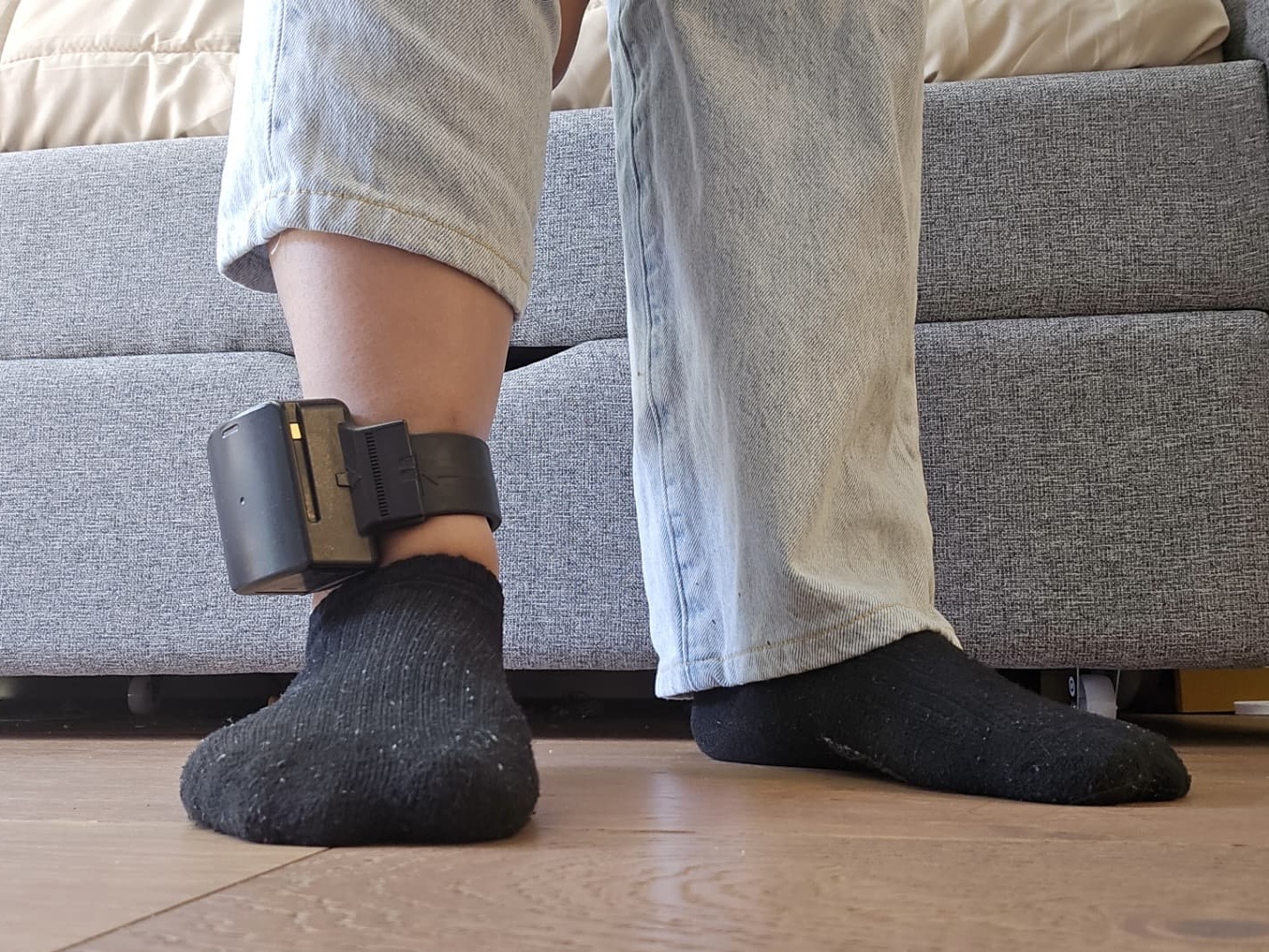
Battery depletion as a compliance trap. Immigrants report being woken every other night by the monitor’s vibrations demanding a charge. María, a 21-year-old Guatemalan mother profiled by Mission Local, described the cycle: “It’s the discomfort of having it — of not being able to lie down properly, because it hurts.” If the monitor isn’t charged promptly, the participant faces “increasing restrictions.” For an agency managing 54,000 devices, every missed charge generates an alert requiring staff response — multiply that across southwest border field offices already operating at capacity, and the operational burden becomes clear.
Device malfunctions at scale. Immigration attorneys in San Francisco, Minnesota, and Ohio report widespread issues. “If you complain, they switch to the other ankle,” said Milli Atkinson, director of the Immigrant Legal Defense Program at the Bar Association of San Francisco. Electric shocks, rashes, and false malfunction alerts are common complaints. At the two-piece system level (ankle monitor + home base station + phone app), each additional component adds a potential failure point.
Geographic coverage gaps. The heaviest deployment — southwest border states — includes vast rural areas with limited cellular coverage. When a device loses signal in rural Texas or Arizona, the system logs it as a potential compliance violation rather than a technology limitation. For field offices processing hundreds of “signal loss” alerts daily, distinguishing genuine absconding from dead zones becomes an unsustainable manual review process.
What Does BI Incorporated’s $1 Billion Contract Tell the Industry?
The ISAP V contract represents the single largest electronic monitoring procurement in history. Its structure reveals what federal buyers prioritize — and where the technology gaps create opportunities for the next generation of monitoring equipment.
| Metric | Value |
|---|---|
| Total ATD participants | 183,181 |
| GPS ankle monitors | ~54,000 (29%) |
| SmartLINK app users | ~129,000 (71%) |
| Contract value (ISAP V) | $1.02 billion |
| Obligated to date | $228.5 million |
| Revenue per person per day | ~$3.70 |
| Average days in program | 788.5 |
| Highest deployment AORs | Phoenix, El Paso, Harlingen, Dallas (75%+ on GPS) |
Sources: TRAC Immigration (Syracuse University), USAspending.gov, GEO Group Q2 2026 Earnings Call, The Washington Post.
The $3.70-per-person-per-day revenue model, applied to 54,000 GPS participants averaging 788.5 days in the program, represents approximately $155 million in annual GPS monitoring revenue alone. That figure explains GEO Group’s investor enthusiasm — and why Zoley predicted “more monitors and money” as additional populations, particularly Haitians who lost Temporary Protected Status, enter the program.
How Does the ICE Deployment Compare to Corrections GPS Monitoring?
ICE’s 54,000-device deployment dwarfs typical state corrections programs. For comparison, Florida — one of the most aggressive state users of GPS monitoring — supervises approximately 6,000-8,000 individuals on ankle monitors at any given time. Texas runs approximately 4,000-5,000. The entire UK electronic monitoring program covers roughly 15,000 individuals including both GPS and RF tags.
The scale difference matters because it amplifies every technology limitation. A device that generates one false alert per week is manageable at 500 units; at 54,000 units, it creates 7,700 false alerts per week — overwhelming any monitoring center.
The University of Washington study cited by immigration attorneys found that electronic monitoring improved court appearance rates modestly: 95% for monitored individuals versus 83% overall. But the study also found that having legal representation was a stronger predictor of appearance than the monitoring device itself — raising questions about whether the $1 billion invested in hardware would produce better outcomes if partially redirected to legal services.
What Technology Specifications Should Large-Scale GPS Deployments Demand?
The ICE experience provides a blueprint for what matters when GPS ankle monitors are deployed at five-figure scale. These are not theoretical requirements — they are operational necessities that the current deployment’s challenges have made obvious.
Battery life measured in weeks, not hours. At 54,000 units, every 24-hour charging cycle generates thousands of compliance alerts. Devices capable of 7+ days on a single charge in cellular mode — or weeks in lower-power modes — fundamentally change the operational equation. The difference between daily charging and weekly charging at this scale translates to roughly 85% fewer battery-related alerts.
Multi-mode connectivity that eliminates dead zones. The southwest border deployment areas include some of the worst cellular coverage in the United States. Devices that can fall back to WiFi or BLE connectivity when cellular isn’t available prevent signal-loss alerts from being misclassified as compliance violations. A GPS ankle bracelet that maintains its connection through WiFi repeaters in dead-zone residences eliminates the most common source of false non-compliance flags.
Weight and comfort for extended wear. With the average program duration at 788.5 days — over two years — device weight directly affects compliance and wellbeing. The difference between a 200g device and a 108g device compounds over 788 days of continuous wear, affecting sleep quality, employability, and program cooperation. María’s testimony about being unable to “lie down properly” because of her device underscores this point.
Tamper detection that holds up in adjudication. When Pierre Damas Bel, a 20-year-old Haitian immigrant, posted on Instagram that his ankle monitor caused “a feeling of shame and humiliation” before his death, the case drew national attention to the human cost of monitoring. For agencies, the technology question is whether tamper-detection systems produce evidence that withstands legal challenge — or generate false alarms that undermine program credibility.
Major GPS monitoring equipment providers serving the corrections and immigration markets include BI Incorporated (ExacuTrack One, LOC8), SCRAM Systems (SCRAM GPS), SuperCom (PureOne), Geosatis, Track Group (ReliAlert), and REFINE Technology (CO-EYE ONE) — each offering different approaches to these scale challenges through varying device architectures, connectivity modes, and tamper-detection technologies.
What Are the Procurement Implications for State and Federal Agencies?
The ICE expansion has effectively created a live demonstration project for large-scale electronic monitoring deployment. State corrections agencies, pretrial services programs, and probation departments can draw specific lessons:
Single-vendor dependency creates risk. BI Incorporated’s exclusive 21-year operation of ISAP — without meaningful competition in re-procurement — means the entire federal immigration monitoring infrastructure depends on one company’s technology decisions. The $1.02 billion contract, while impressive in scale, also represents a single point of failure. State agencies considering their own large-scale deployments should evaluate multi-vendor strategies that maintain competitive pressure on equipment performance.
Total cost of ownership extends beyond device pricing. The $3.70-per-day revenue figure includes device hardware, monitoring platform, case management, and field office operations. Agencies evaluating GPS monitoring should decompose these costs to understand where technology improvements — longer battery life reducing field visits, better connectivity reducing false alerts, lighter weight reducing medical complaints — directly translate to operational savings.
Court appearance data should drive technology selection. The 95% vs. 83% appearance rate differential from the University of Washington study suggests that the monitoring technology contributes modestly to program outcomes. Equipment procurement should weight factors that reduce operational burden (battery life, false alert rates, connectivity reliability) alongside raw tracking capabilities.
Frequently Asked Questions
How many immigrants are currently on ICE ankle monitors?
As of July 2026, approximately 54,000 immigrants wear GPS ankle monitors as part of ICE’s Alternatives to Detention program, according to TRAC Immigration data and GEO Group’s Q2 2026 earnings call. This represents 29% of the 183,181 total program participants, up from roughly 10% in 2024.
Who manufactures the ankle monitors used by ICE?
BI Incorporated, a subsidiary of GEO Group based in Boulder, Colorado, is the sole contractor operating ICE’s Intensive Supervision Appearance Program (ISAP). BI Incorporated has held this contract since 2004 and was awarded a new $1.02 billion ISAP V contract in September 2025.
How long do immigrants typically wear ankle monitors?
The average duration in ICE’s ATD program is 788.5 days — over two years. Individual cases vary significantly based on immigration court backlogs, case complexity, and legal representation availability.
About REFINE Technology (CO-EYE)
REFINE Technology is the leading electronic monitoring solutions provider in China with over 16 years of experience in the criminal justice industry. As the exclusive supplier for top security agencies, REFINE Technology has deployed 200,000+ devices across 30+ countries, monitoring 130,000+ individuals. The CO-EYE product line — featuring the next-generation all-in-one GPS ankle monitor, BLE wristbands, RF home beacons, and a unified monitoring platform — delivers high-security, low-stigma supervision for high-risk, mid-risk, and low-risk offender monitoring and victim protection. All CO-EYE devices carry full European NB CE directives (RED/Cybersecurity/LVD/SAR) and FCC certifications, with IP68 waterproof and REACH/RoHS/WEEE compliance. CO-EYE solutions are trusted in the USA, Europe, Africa, Bhutan, Papua New Guinea, Dominican Republic, Armenia, and expanding globally.
For more information, visit www.ankle-monitor.com or contact marketing@rfidcn.com.