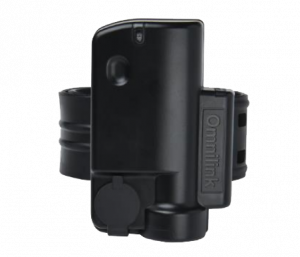

Parole GPS Tracking Hardware: What State Programs Need
Parolees typically wear GPS monitors for 6-24 months — considerably longer than pretrial defendants. Parole GPS tracking hardware selection must prioritize long-term durability, anti-tamper reliability, and minimal maintenance. Parole offender monitoring devices that fail in the field create investigation backlogs, replacement costs, and potential supervision gaps.
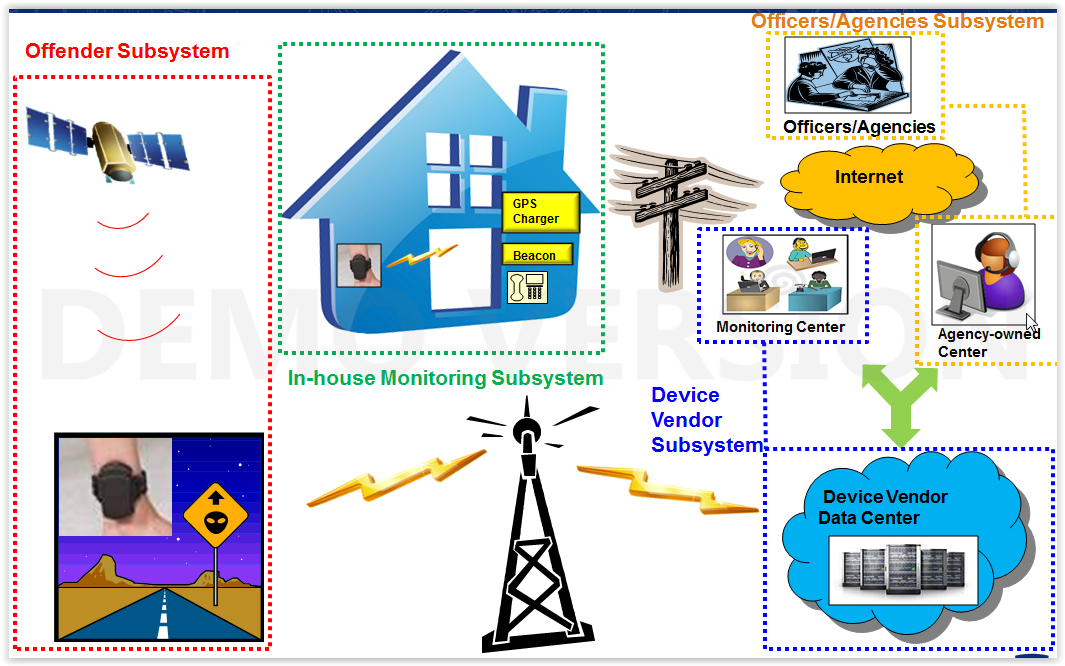
This guide covers durability specifications for extended wear, anti-tamper technology comparison, device lifecycle management, and how parole monitoring device manufacturers and parole monitoring device suppliers address state-level requirements.
Durability Specifications for Parole Offender Monitoring Devices
Waterproof Rating: IP68 Non-Negotiable
Parolees work in construction, warehouses, food service, and manufacturing. Devices must survive daily exposure to sweat, rain, and incidental submersion. The IP68 rating indicates submersion-rated protection — the device withstands continuous immersion to specified depth. Parole monitoring equipment providers that offer IP67 (splash-resistant only) are unsuitable for 12+ month continuous wear in real-world conditions.
IP67 devices fail at higher rates in parole populations. Sweat accumulation, shower exposure, and occupational hazards degrade IP67 seals over time. State parole departments should specify IP68 as a minimum requirement in procurement documents.
Battery Life and Charge Cycle
Parolees on shift work cannot always charge on a fixed schedule. Parole GPS tracking hardware should deliver:
- 48+ hours per charge for GPS ankle monitors — allows flexibility when charging is missed
- Battery chemistry rated for 500+ charge cycles — devices charged daily for 12 months need batteries that do not degrade significantly
- 2-year battery life for BLE tether devices — wrist-worn proximity monitors used with smartphone tracking require minimal maintenance; 2-year continuous operation is available from parole monitoring device manufacturers
Anti-Tamper Comparison for Parole Monitoring
False tamper alerts are the top operational drain in parole programs. Every false alert requires officer investigation. Parole monitoring device manufacturers use three primary anti-tamper technologies:
| Technology | Detection Method | False Positive Rate | Best For |
|---|---|---|---|
| Optical fiber | Light through fiber — intact or severed | Near zero | All parole programs; highest reliability |
| Fiber-optic strap detection (industry standard) | Body proximity measurement | 5-15% | Low-risk only; environment-sensitive |
| Heart rate (PPG) | Blood pulse confirmation | High | Not recommended for parole |
Optical fiber anti-tamper provides deterministic binary detection — the strap is either intact or cut. Environmental conditions (sweat, water, temperature, movement) do not affect the signal. One-piece GPS ankle monitors with optical fiber anti-tamper produce approximately 60% fewer false tamper alerts than two-piece systems with capacitive sensing.
For the highest-risk parolees — sex offenders, violent felons — an independent anti-tamper circuit is strongly recommended. This circuit operates on a separate power source so tamper detection continues even when the main device battery is depleted. Offenders who drain the battery to defeat tamper detection cannot bypass an independent circuit.
Parole Monitoring Device Selection by Use Case
Parole monitoring equipment providers offer several device types. Match the device to the supervision model:
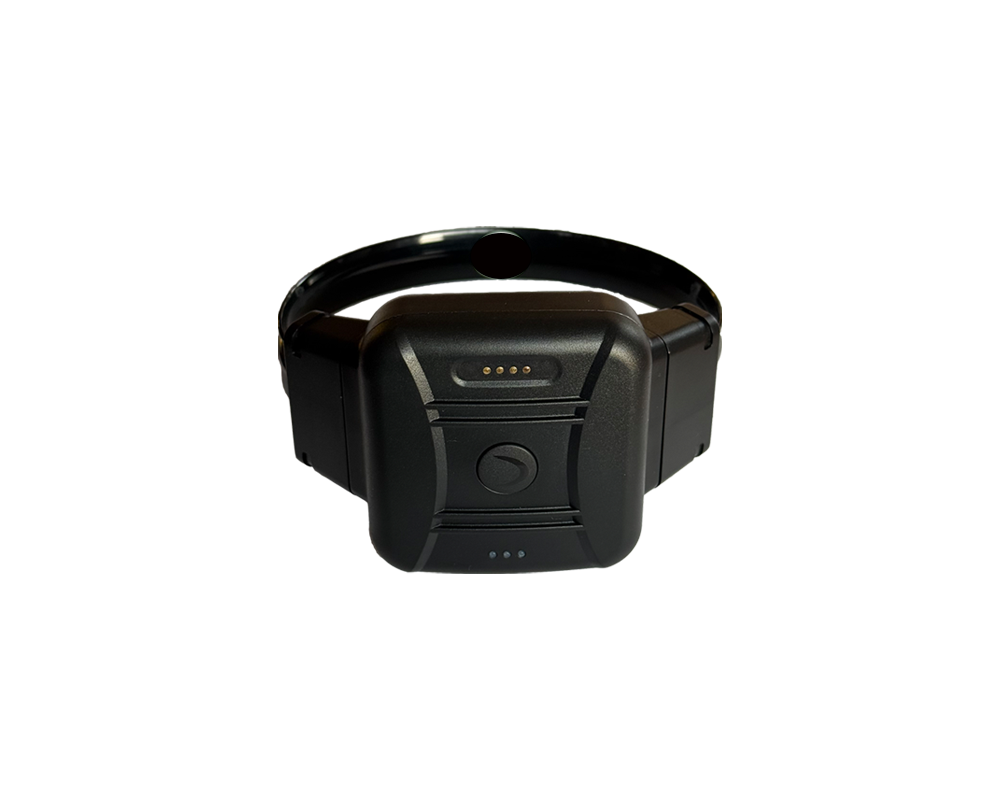
- GPS ankle monitor (one-piece): Primary choice for real-time location tracking. Integrates GPS, cellular, and tamper detection in a single unit. Eliminates Bluetooth connection failures common in two-piece systems. The CO-EYE ONE provides one-piece GPS tracking with optical fiber anti-tamper and IP68 waterproofing.
- Enhanced GPS ankle monitor (independent anti-tamper): For highest-risk parolees. The CO-EYE DUO offers independent anti-tamper monitoring that operates even at 0% main battery — tamper detection cannot be defeated by draining the device.
- BLE wristband for proximity tethering: For parolees using smartphone-based tracking with an additional proximity requirement. The CO-EYE Wristband provides 2-year battery life, IP68 waterproof rating, and optical fiber anti-tamper in a compact form factor — no charging required during the typical parole term.
Device Lifecycle Management for State Parole Programs
State parole departments managing 5,000-20,000 devices need systematic lifecycle management. Parole monitoring device suppliers should support:
- Inventory tracking: Device assignment history, maintenance records, strap replacement dates
- Refurbishment protocols: Standard procedure for cleaning, strap replacement, firmware update, and quality testing between assignments
- Failure analysis: Categorize failures (battery, strap, sensor, communication) to identify systematic issues and negotiate warranty terms
- Mean time between failures (MTBF): Request field MTBF data from comparable deployments. Target 18+ months MTBF for parole programs
- End-of-life planning: GPS devices have 3-5 year useful lifespans. Budget for phased replacement rather than fleet-wide procurement cycles
Cellular and Positioning Requirements
Parole GPS tracking hardware must maintain connectivity across diverse environments — warehouses, construction sites, retail stores. Evaluate parole monitoring device manufacturers for:
- Multi-mode positioning: GPS (outdoor), Wi-Fi (indoor), cellular LBS (fallback) — seamless transition without gaps in the location trail
- LTE-M / NB-IoT support: Preferred for coverage and power efficiency; GSM/GPRS fallback for legacy network areas
- Configurable sampling: 5-minute standard, 1-minute for high-risk or during active violations
Related Resources
For comprehensive guidance on parole electronic monitoring technology, dashboards, software platforms, and vendor selection, see the Parole Electronic Monitoring Guide. Product details:
- CO-EYE ONE — One-piece GPS ankle monitor, optical fiber anti-tamper, IP68, 48-hour battery
- CO-EYE DUO — Independent anti-tamper, works at 0% battery
- CO-EYE Wristband — BLE tether, 2-year battery, IP68
- CO-EYE Software — Monitoring platform and device management