
On a weekday morning in May 2025, representatives from Amazon, Google, Microsoft, IBM, Palantir, and Serco filed into a TechUK conference room in London to hear a question from Britain’s Prisons Minister, Lord James Timpson: “What could a digital, data and technology-enabled justice system look like by 2050?”
Among the responses — revealed only now through a Freedom of Information request by the digital rights group Foxglove — was a proposal for “subcutaneous tracking”: microchip implants placed under offenders’ skin to monitor their location, health, and behaviour in real time.
The revelation, reported across the Daily Mail, GB News, and Inside Time, ignited immediate controversy. But for anyone who actually works in electronic monitoring, the reaction should be neither alarm nor excitement. It should be a sigh of recognition: this is what happens when Silicon Valley meets a government desperate enough to listen to anything.
What Exactly Was Proposed — and by Whom?
The roundtable, hosted by TechUK on 8 May 2025, brought together over 30 technology companies alongside Justice Secretary Shabana Mahmood and Lord Timpson. The discussion was framed as blue-sky brainstorming — what could criminal justice look like in 25 years?
According to the FOI-released minutes, proposals included:
- Subcutaneous tracking chips for “real-time behavioural monitoring” and “health management” of offenders on licence
- Robotics to “manage prisoner movement and containment”
- Autonomous vehicles to transport prisoners
- AI-generated risk assessments to predict future criminal behaviour
- Quantum computing for behavioural prediction
The Ministry of Justice has stressed that no decisions have been taken. A follow-up “Innovation Den” session — described as a Dragon’s Den-style pitch event — was scheduled for July 2025, where companies would deliver 20-minute presentations on their ideas.
Is Subcutaneous Tracking Actually New Technology?
No. Human microchip implants have existed since 1998, when British scientist Kevin Warwick implanted an RFID transponder in his arm at the University of Reading. Today, an estimated 50,000-100,000 people worldwide carry voluntary subcutaneous chips — typically passive NFC/RFID devices the size of a rice grain, used for door access, contactless payment, or digital identity storage.
But here is the critical distinction that the breathless headlines miss: current implantable chips cannot perform GPS tracking.
The technology proposed in the MoJ roundtable does not exist in any deployable form. Here is why:
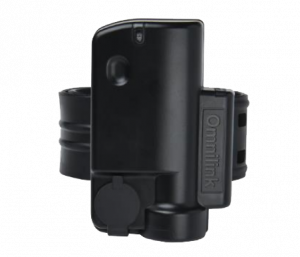
| Technical Requirement | GPS Ankle Monitor (Current) | Subcutaneous Implant (Proposed) |
|---|---|---|
| Power source | 1700 mAh rechargeable lithium battery | No viable internal battery at implant scale; passive RFID requires external reader within centimetres |
| GPS reception | Multi-constellation GNSS antenna (GPS + Galileo + GLONASS + BeiDou), <2m accuracy | Impossible — GPS antenna requires line-of-sight to sky; subcutaneous placement blocks satellite signals entirely |
| Cellular transmission | LTE-M/NB-IoT modem, continuous data upload | No cellular modem exists at implantable scale; thermal dissipation from RF transmission would damage tissue |
| Battery life | 7 days (LTE) / 3 weeks (WiFi) / 180 days (BLE) | Theoretically years for passive ID-only chips; minutes to hours for any active GPS/cellular function |
| Tamper detection | Fiber-optic strap continuity monitoring (zero false alarms) | Theoretically impossible to remove without surgery — but also impossible to charge, maintain, or update |
| Real-time tracking capability | Yes — continuous position reporting every 5-10 minutes | No — current implants can only confirm identity at short range, not track location |
In short: a subcutaneous microchip that could actually replicate what a modern GPS ankle monitor does would need to violate several laws of physics as we currently understand them. The energy density required for GPS acquisition and cellular transmission simply cannot be delivered in a biocompatible package small enough to implant under human skin without causing thermal injury.
Why Is the UK Government Listening to This?
Context matters. Britain’s prison system is in genuine crisis:
- 87,342 prisoners as of March 2026 — against operational capacity of ~89,573
- Prisons have operated at over 95% capacity for 12 consecutive years
- 72% of prisons were officially “overcrowded” in 2024-25 (up from 63% the previous year)
- 179 prisoners accidentally released in the year to March 2026
- Without intervention, the prison population is projected to exceed 100,000 by November 2032
The Sentencing Act 2026, which received Royal Assent in January, represents the most significant reform in two decades. It introduces a presumption that sentences of 12 months or less will be served in the community — meaning tens of thousands more offenders will need to be monitored outside prison walls.
Electronic tagging has already expanded to its largest deployment since 1999: 28,687 individuals were tagged as of March 2026. The government’s own projections show this number will grow dramatically as community sentences replace short custodial terms.
In this context, Lord Timpson’s willingness to hear outlandish pitches from tech companies makes political — if not technological — sense. When you are staring at the complete exhaustion of physical prison capacity within months, anything that sounds like it might help gets a hearing.
Does This Threaten the Current Ankle Monitor Technology Pathway?
Not remotely. The proposal is decades away from technical feasibility — if it ever becomes feasible at all. Consider what would need to happen:
- Energy harvesting breakthrough: A method to power GPS/cellular circuits from body heat or motion at sufficient density without heating surrounding tissue above 1°C (the internationally accepted biocompatibility threshold)
- Antenna miniaturization: A GPS antenna that functions while surrounded by human tissue and bone — which attenuates satellite signals by 20-40 dB
- Biocompatible RF transmission: A cellular modem that can transmit through skin without exceeding SAR limits
- Regulatory approval: Medical device certification that would require years of clinical trials
- Legal framework: Human rights legislation currently prohibits forced medical procedures — the European Convention on Human Rights Article 3 (prohibition of torture and inhuman treatment) and Article 8 (right to privacy) create near-insurmountable barriers
Meanwhile, the actual technology trajectory in electronic monitoring is moving in a completely different direction: smaller, lighter, less invasive, more intelligent external devices. The industry evolution from 250g two-piece GPS systems to 108g one-piece ankle monitors to 17g BLE wristbands represents a clear path toward miniaturization that maintains all monitoring capabilities without any medical procedure.
What Does This Mean for Electronic Monitoring Procurement?
For agencies and service providers evaluating GPS monitoring equipment today, the UK microchip discussion changes nothing about immediate purchasing decisions. The technology that works — and will continue to work for the foreseeable future — is external wearable devices with multi-mode connectivity.
The real takeaway for procurement teams is different: Britain’s crisis validates the massive expansion of electronic monitoring as prison alternatives. With the Sentencing Act mandating community supervision for short sentences, and the government committing £700 million in additional probation funding, the addressable market for GPS ankle monitors in the UK alone is growing by thousands of units per year.
What agencies should be evaluating is not science-fiction implants, but which current-generation ankle monitors can deliver:
- Continuous coverage even in cellular dead zones (multi-mode BLE/WiFi/LTE connectivity)
- Battery life measured in weeks rather than hours (reducing the operational burden of daily charging)
- Zero false tamper alarms (fiber-optic detection vs. legacy PPG/resistive sensors)
- 5G-compatible architecture (future-proofing against 3G/4G network sunsets)
Where Does the Ethical Line Fall?
The most important dimension of this story is not technological but ethical. As TechPolicy.Press noted in their analysis of the Sentencing Act, the UK is systematically building “digital prisons” — outsourcing components of criminal justice to private technology corporations.
Foxglove’s Donald Campbell called the MoJ-tech sector engagement “chilling,” noting: “It’s worrying that justice ministers have sat with the tech sector to discuss using robots to manage prisoners, implanting devices under people’s skin to track their behaviour, or using computers to ‘predict’ what they will do in future.”
This is not hypothetical. Washington State passed House Bill 2303 in March 2026 specifically to prohibit employers from requiring microchip implants — indicating that legislative bodies already see involuntary microchipping as a credible enough threat to warrant pre-emptive prohibition.
The electronic monitoring industry has always navigated the tension between surveillance capability and individual rights. GPS ankle monitors represent a carefully calibrated compromise: they restrict freedom without eliminating it, they monitor without physically modifying the body, and they can be removed when a sentence concludes. Subcutaneous implants obliterate every one of those boundaries.
What Happens Next?
The MoJ roundtable was explicitly framed as a 2050 thought exercise. The immediate policy direction is clear: massive expansion of conventional electronic tagging using GPS, alcohol sobriety monitoring, and emerging AI-powered risk assessment tools. Lord Timpson himself noted that “tagging has a big future” and called for a “tech-led approach to justice.”
The second meeting — the “Innovation Den” — reportedly took place in July 2025. The government has not disclosed what was pitched or whether subcutaneous tracking was among the presentations.
For the corrections technology industry, the signal is unmistakable: the UK market is opening wider than at any point in two decades. But the products that will fill that gap are the ones that exist today — reliable, proven, deployable GPS ankle monitors and alcohol tags — not speculative implants that violate both physics and human rights frameworks.
The microchip headlines make for compelling reading. The procurement orders will go to whoever builds the best ankle monitor.