

The 3G sunset ankle monitor replacement clock did not stop when press releases aged out of news cycles. For electronic monitoring fleets, sunsetting is a bricking event: devices that cannot authenticate to modern LTE layers simply disappear from dashboards—often without a polite grace period aligned to court calendars. If your program still issues WCDMA-class hardware, you are not debating "if" migration; you are debating whether swap logistics happen on your schedule or on the night a carrier flips a final switch.
This guide names the operational risks in vendor-neutral language, then shows how LTE-M and NB-IoT LPWAN classes fit EM workloads, how CO-EYE ONE-AC packages dual-SIM flexibility (eSIM plus nano-SIM) with next-generation power modes, and how to run a disciplined 90-day migration without drowning monitoring centers in duplicate enrollments. Use it alongside the GPS ankle bracelet pillar and the products overview when briefing judges and county purchasing boards.
Fleet operators should also inventory accessories and back-office glue: charging cradles with obsolete USB pinouts, Windows-only enrollment binaries that fail on new IT images, and SMS gateways that still dial legacy USSD strings. Sunset is not only a modem problem; it is an integration surface area problem. A strap that attaches perfectly to LTE means little if your monitoring center cannot push OTA profiles because a middlebox firewall rule predates TLS 1.2.
Insurance and surety partners sometimes care more than procurement expects: if a device class loses supervision statistically after a carrier change, who bears liability for a missed victim-notification geofence breach? Address those questions in pre-migration memoranda of understanding so politics do not hijack engineering timelines mid-swap.
Why 3G sunset is a ticking clock
U.S. nationwide carriers have largely completed consumer-facing 3G retirements, yet electronic monitoring inventory turns far slower than handset cycles. Older GPS ankle monitor and voice-reporting units built around WCDMA may still show as "working" in favorable ZIP codes while silently roaming into unsupported bands at the edge of county lines. Similar stories repeat internationally wherever regulators pushed NB/LTE refarming faster than justice budgets replaced straps.
Fleet managers still encounter legacy architectures tied to 3G-era modules—commonly referenced in industry discussions around programs that issued BI LOC8-class WCDMA devices, Track Group ReliAlert lines carried on older cellular certifications, and earlier SCRAM GPS generations that predated current LTE module stacks. This article cites vendor-public generation labels only as migration context; procurement teams must verify current SKUs directly with each manufacturer before assuming any field unit's radio class.
From 3G to future IoT: LTE-M and NB-IoT
LTE-M (LTE Cat-M1) and NB-IoT sit inside the 5G family as LPWAN layers engineered for IoT duty cycles—long sleep intervals, small payloads, and better in-building penetration than classic smartphone LTE categories for many tower configurations. For ankle-worn telemetry, that physics story matters: smaller bursts, more graceful failures, and modern chipset roadmaps that carriers actually maintain as they refarm spectrum. Migration is therefore not only a compliance task; it is an opportunity to reduce recurring airtime waste and to retire power models that depended on always-on 3G registration.
Buyers should insist on forward-looking modem certifications, carrier certification matrices per country of operations, and explicit statements about VoLTE or voice fallbacks if voice check-ins remain statutory. If a vendor hedges with "4G" marketing language, ask for the literal 3GPP release and band list on the purchase order.
Procurement counsel should also distinguish module longevity from SKU longevity. A modem chipset family may remain technically orderable while the exact ankle-worn SKU you deployed three years ago cannot be reprovisioned because its RF front-end was certified only against a carrier profile that no longer exists. That gap is where 3g sunset ankle monitor replacement projects stall: purchasing sees green lights on a vendor portal while field services cannot obtain identical replacements for evidence-chain continuity. Contract language should therefore tie replacement rights to certified radio behavior, not merely to model numbers printed on plastic.
International programs face compounded complexity: a device lawful in one country may default to a roaming IMSI profile that still assumes 3G circuit-switched voice in another. Global EM vendors publish regional SKUs for good reason—your fleet inventory spreadsheet needs a column for country-of-activation as well as IMEI. When in doubt, require a written attach-time benchmark measured at representative supervised addresses, not only lab bench results.
Finally, involve prosecutors early. If statutory language still references technologies that carriers have retired, courts may need stipulated orders clarifying that LTE-M or NB-IoT check-ins satisfy the same policy intent as legacy WCDMA heartbeats. Waiting until the first motion to suppress is the expensive path.
CO-EYE ONE-AC replacement architecture
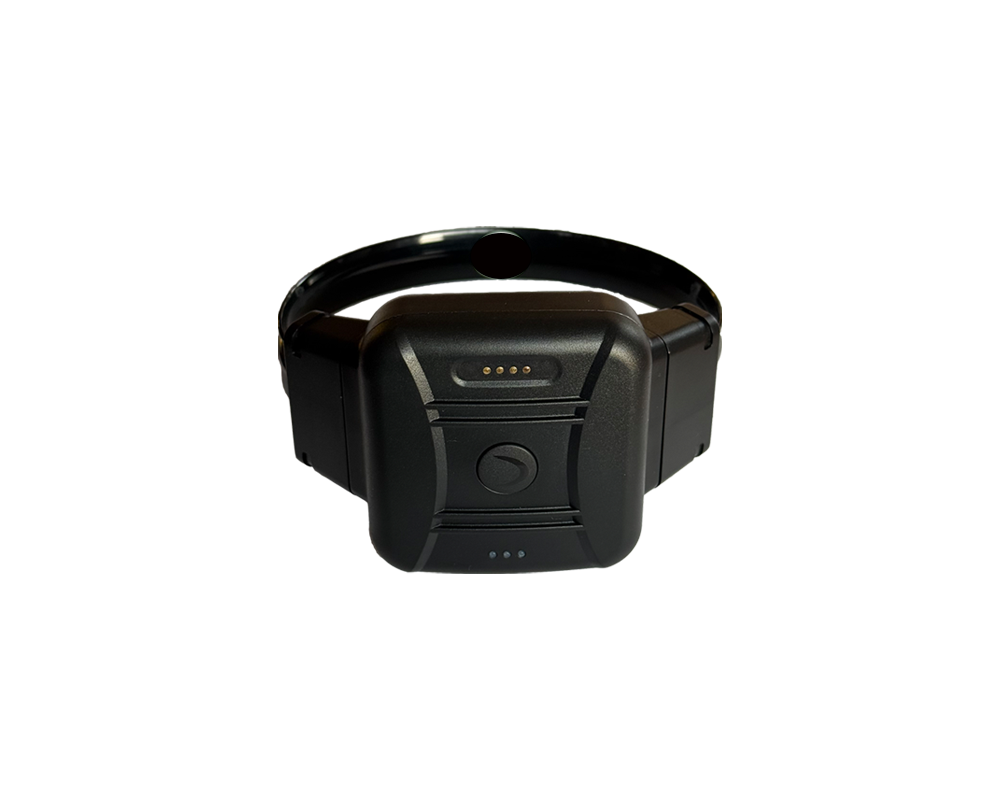
CO-EYE ONE-AC targets sunset replacement programs with a one-piece industrial design (~108 g), tool-free strap installation in seconds per manufacturer claims, fiber-optic tamper detection described as zero false-positive at the optical continuity layer, and dual cellular identity management via eSIM plus nano-SIM to simplify carrier changes without mailing new plastics for every swap. Radios emphasize 5G-compatible LTE-M/NB-IoT positioning alongside GSM fallbacks where still supported—exact band acceptance remains a country-by-country validation task.
Power modes merit special attention during 3g sunset ankle monitor replacement: BLE-connected endurance up to roughly six months, WiFi-directed endurance on the order of three weeks, and LTE standalone endurance on the order of seven days give programs levers beyond yesterday's 24–72 hour LTE-only norms. Pair hardware with the CO-EYE ONE technical materials for export compliance, charging cradle behavior, and software integration notes.
90-day migration timeline
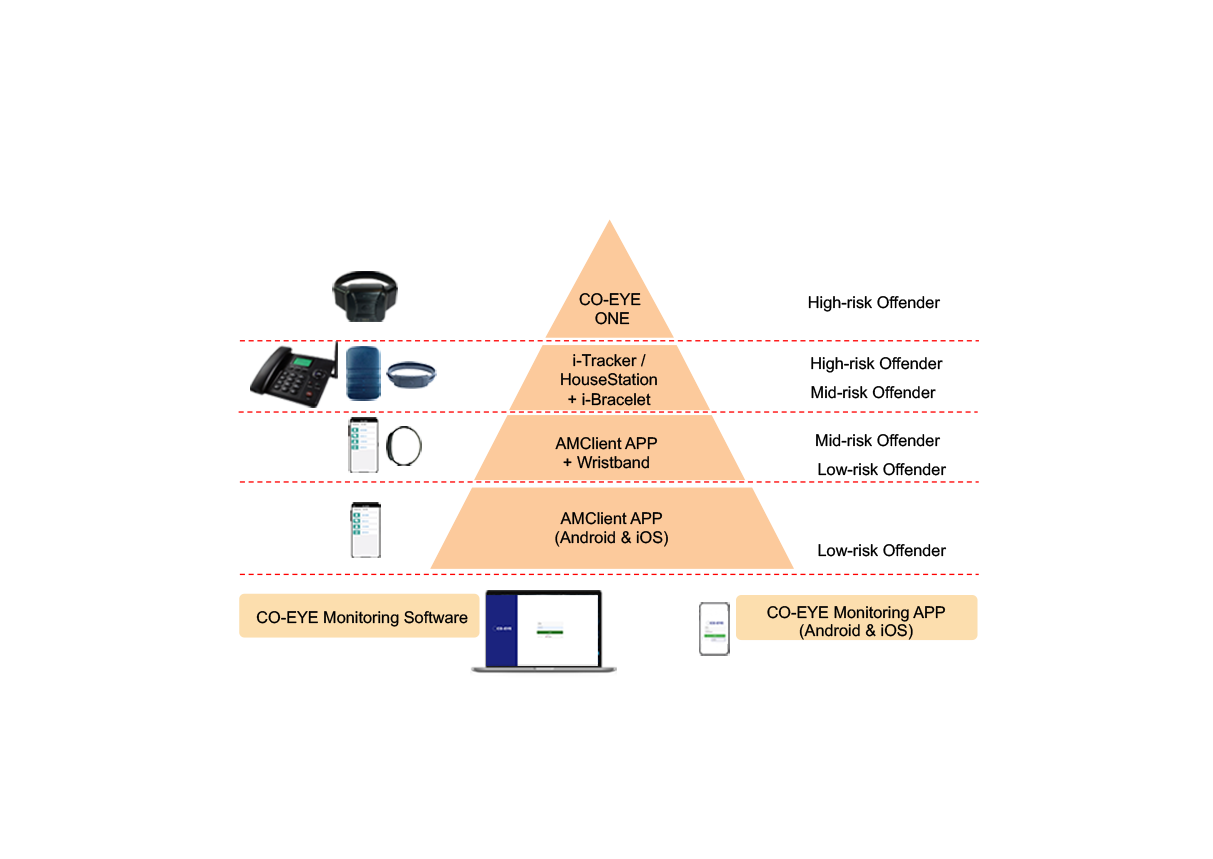
Days 1–10: inventory every strap by IMEI, SKU, carrier, and court order mapping; tag high-risk caseloads. Days 11–30: pilot LTE-M/NB-IoT devices in statistically noisy ZIP codes; log attach times, handovers, and tamper deltas. Days 31–60: negotiate swap kits, spares pools, and RMA logistics; train intake staff on new LEDs and charger colors. Days 61–90: execute phased swaps coordinated with courts, victim-notification partners, and billing so duplicate airtime charges do not appear on participant invoices. Communicate early: defendants experience sunsetting as punishment if messaging blames them for carrier engineering decisions.
Within each thirty-day window, assign a single accountable owner for data continuity: export historical tracks from legacy platforms before strap return so defense discovery obligations survive vendor migrations. Many programs forget that ankle monitor evidence is not only live dots on a map—it is archived polygons, tamper timelines, and officer acknowledgment logs that must remain readable after fleet turnover. Parallel-run at least ten percent of straps in shadow mode when feasible so monitoring staff can compare alert parity between generations before cutover weekend.
Vendor management should include explicit spike allowances: if carrier maintenance windows cluster, your helpdesk will drown unless the OEM stages on-site swap technicians or overnight RMA bins. Ask for named engineering contacts, not only account executives, and schedule a tabletop exercise where participants pretend a county-wide attach failure at 11 p.m. on a Friday before a holiday weekend.
Risk assessment table
| Risk | Signal | Mitigation |
|---|---|---|
| Silent bricking | Sudden attach failures cluster geographically | Carrier engineering tickets + temporary UMTS roam audits where still possible |
| Evidence gaps | Time jumps in replay timelines | Buffered event export policies + court stipulations on latency |
| Budget shock | Spares depleted faster than forecasts | Consortium purchasing + staged swaps by risk tier |
| Training drag | Officers confuse charger states | Photocard quick-reference + LMS microlearning |
Cost comparison
Model three TCO buckets: capital (hardware and spares), recurring (airtime, platform seats, monitoring center minutes), and hidden (false alert dispatch, charger support, revocations triggered by device faults). LTE-M/NB-IoT often lowers recurring payload costs versus legacy 3G PPP sessions, but only when firmware uses long-eDRX responsibly. Hidden costs dominate when swaps are rushed without training—assume temporary dual-airtime lines during overlap weeks and disclose them ethically if participants pay fees.
Add a fourth bucket—compliance and legal—covering contract amendments, victim-notification mail merges, and public-defender briefing time when device classes change mid-sentence. A fifteen-dollar-per-day participant fee may look trivial until multiplied across hundreds of defendants receiving duplicate billing notices during overlap. Finance committees respond better to transparent line items than to surprise budget transfers in Q4.
Compare replacement versus refurbishment honestly: some legacy housings cannot accept modern modem daughtercards due to antenna volume and thermal envelopes. If refurbishment quotes approach net-new hardware after labor, favor clean swaps with standardized charging cradles that reduce cable entropy in evidence rooms.
When scoring bids, weight future carrier optionality alongside sticker price. eSIM profiles can reduce per-swap logistics costs when a county changes carriers after a rebid; removable nano-SIMs still matter where local policy forbids fully embedded profiles. Dual-path designs hedge regulatory whiplash.
Document rollback paths: if a new LTE-M module fails attach in a rural county after go-live, can you temporarily reactivate legacy straps without voiding warranties, and who signs the risk acceptance? Executives hate discussing rollback until 2 a.m. on cutover night—write it down sober.
Participant communication templates should explain spectrum in plain English: carriers upgraded towers; your strap needs a radio that speaks the new language; this is not punishment. Plain empathy reduces helpdesk abuse and viral TikTok misinformation.
Finally, align grant funding calendars: many U.S. counties finance fleet refreshes through justice assistance or innovation grants with obligation deadlines. Missing a sunset-driven procurement window because paperwork sat in legal review can cost more than the devices themselves.
Procurement checklist
- Certified band matrix per carrier of record, attached as Exhibit A.
- eSIM profile ordering workflow documented with RMA fallbacks.
- OTA update policy with rollback plan.
- Tamper class and evidentiary admissibility statement from vendor counsel template.
- Charging cradle interchangeability across generations to reduce junk drawers of cables.
- API export formats compatible with your RMS and prosecutor portals.
- End-of-life notification contract clause with minimum 12-month warning where feasible.
- Participant-facing FAQ templates translated into the top three languages served by your county.
- Evidence export test vectors run against prosecutor LMS sandbox environments.
- Charging cradle inventory reconciliation so old 5 V bricks are not mixed with new USB-C supplies.
After award, run a thirty-day hypercare window: daily attach dashboards emailed to command staff, weekly vendor war rooms, and a single Slack bridge channel so field officers do not bounce between siloed helpdesks. Capture lessons learned into an internal wiki page titled for the next inevitable radio transition—because 3g sunset ankle monitor replacement will not be the last spectrum refarming your fleet survives.
FAQ
Is every 3G ankle monitor already offline?
Not universally, but relying on remaining roam agreements is unsafe; treat unsupported radios as technical debt with a dated payoff.
Does LTE-M satisfy voice-heavy check-in statutes?
Sometimes yes with VoLTE; sometimes no—match statutory verbs to modem capabilities.
What is the fastest procurement path?
Pilot in noisy cells first, then wave-swap by carrier region to keep helpdesk load bounded.
Can eSIM reduce swap mail costs?
Often yes, because profiles can be reprovisioned remotely after hardware is on ankle.
Where do I send fleet questions?
Use Contact Sales on ankle-monitor.com for structured evaluations.