
Bottom line first: The weight of recent electronic monitoring evidence points in one direction—when courts and agencies pair community sentences with well-run EM, cohort-level outcomes typically improve versus otherwise-similar supervision without EM. The headline numbers are striking: in UK RF electronic monitoring reporting for 2025–2026-style outcomes, reconviction on community orders lands near 17% with EM versus 22% without—a five percentage-point gap that equals roughly a 23% relative reduction ((22−17)/22). Breach rates fall from about 16% to 7% (a 56% reduction in breach incidence at those percentages), and completion rises from about 54% to 65%. Those are not abstract statistics; they are the operational proof points that justify continued GPS ankle monitor and ankle monitor program investment for offender monitoring leaders who must defend budgets to elected officials and the public. Program accountants should fold electronic ankle monitor advances in power and radio modules into the same ROI tables.
This article synthesizes UK RF EM statistics, a widely cited Florida electronic monitoring recidivism finding (about 31% reduction), Norwegian two-year results, and August 2025-era UK GPS tagging reporting for acquisitive crime cohorts—then translates the pattern into procurement language. For foundational definitions, pair this read with our electronic monitoring complete guide and the GPS ankle monitor buyer’s guide for agencies.
Why the Evidence Base Matters for GPS ankle bracelet Programs
Electronic monitoring is no longer a pilot novelty; it is infrastructure for pretrial, probation, parole, house arrest, and specialty dockets. When a monitoring center director is asked, “Do ankle bracelets actually work?” the answer should be grounded in published administrative outcomes and peer-reviewed or government statistics, not vendor anecdotes. The studies below differ in legal systems, device classes (RF presence versus GPS ankle bracelet tracking), and cohort definitions—exactly why we present them side-by-side rather than pretending one number fits every jurisdiction.
Still, a consistent theme emerges: structured supervision plus electronic monitoring correlates with lower reoffending, fewer breaches, and higher sentence completion in the datasets summarized here. That triad—public safety, compliance integrity, and court credibility—is what offender monitoring programs sell to stakeholders every budget cycle.
UK RF Electronic Monitoring: 2025–2026 Outcome Statistics
United Kingdom probation and justice reporting on radio-frequency (RF) electronic monitoring—often used for curfew and schedule enforcement—provides some of the cleanest head-to-head contrasts between orders with EM and orders without EM. The figures below reflect administrative outcomes as summarized for recent policy cycles (2025–2026 reporting windows); they describe cohort-level associations, not guaranteed causal effects for every individual case.
Reconviction: Community Orders and Suspended Sentences
| Sentence type | With EM (reconviction) | Without EM (reconviction) | Absolute gap | Relative change* |
|---|---|---|---|---|
| Community orders | 17% | 22% | −5 pp | ≈ −23% |
| Suspended sentences | 15% | 18% | −3 pp | ≈ −17% |
*Relative change approximates (rate without EM − rate with EM) ÷ (rate without EM). Community orders: (22−17)/22 ≈ 22.7%, rounded to ~23%.
For procurement teams comparing electronic monitoring modalities, the community-order row is especially relevant: it is where intensive offender monitoring and rehabilitative conditions intersect. A five-point reconviction gap at the population level translates into fewer victims, less court churn, and lower downstream incarceration expense—exactly the storyline finance committees expect when approving GPS ankle monitor line items. For comprehensive guidance, see our domestic violence GPS ankle monitor guide.
Compliance and Completion: Where Monitoring Centers Feel the Data
Reconviction is the lagging indicator; breach and completion are the leading indicators your command center sees on Monday morning. The same UK RF EM reporting framework describes:
- Breach rate: about 7% with EM versus about 16% without EM—roughly a 56% reduction in breach incidence when comparing those percentages directly ((16−7)/16 = 56.25%).
- Completion: about 65% completed requirements with EM versus about 54% without EM.
Those metrics should inform how agencies size staffing, how courts interpret “technical violations,” and how vendors are scored in RFPs. A program that slashes breach noise while improving completion is a program that preserves judicial trust—especially when ankle monitor alerts are scrutinized in high-visibility cases. For deeper operational guidance, see county corrections electronic monitoring and electronic monitoring program metrics.
Cross-Jurisdiction Comparison: UK, Florida, Norway, and GPS Tagging
The table below places the UK RF statistics alongside other frequently cited datasets. Effect sizes are not directly comparable—legal definitions of recidivism, follow-up windows, and EM modalities differ—but the directional consistency matters for global buyers standardizing on GPS ankle bracelet hardware.
| Source / focus | Modality | Highlighted outcome | Notes for agencies |
|---|---|---|---|
| UK RF EM (2025–2026 reporting) | RF EM (curfew / schedule) | ~23% relative reconviction reduction on community orders; large breach reduction | Strong administrative cohort contrasts; operational KPIs favor EM |
| Florida EM research | EM programs (GPS/EM mix by era) | ~31% recidivism reduction (widely cited policy figure) | Frequently used in U.S. ROI discussions for community supervision |
| Norwegian EM sentencing studies | EM sentences | ~10% lower 2-year recidivism overall; ~19% among those serving EM | Shows heterogeneity: impact larger when sentence actually delivered |
| UK GPS tagging (Aug 2025 reporting) | GPS tagging | ~20% reoffending reduction for burglars/robbers/thieves cohorts | Supports GPS-specific investment for acquisitive crime tracks |
Florida: The 31% Recidivism Reduction Anchor for U.S. Buyers
American agencies often anchor business cases to Florida electronic monitoring findings that describe roughly a 31% reduction in recidivism for monitored cohorts—a figure referenced across industry guides and policy summaries when comparing incarceration versus community supervision. While every state has different risk tools and sanctioning grids, the Florida anchor matters because it frames electronic monitoring not as “leniency technology” but as a public-safety instrument with measurable downstream effects when paired with officer oversight.
For pretrial applications, connect the dots to our pretrial electronic monitoring guide; for post-conviction community supervision, see probation GPS monitoring and parole electronic monitoring.
Norway: Overall and “Served EM” Effects
Scandinavian justice statistics remind us that electronic monitoring outcomes depend on whether the sentence is actually implemented as intended. Norwegian research summaries report roughly a 10% reduction in two-year recidivism overall for relevant EM comparisons, but roughly 19% among people who truly served EM sentences. That split is a workflow warning: buying the best GPS ankle monitor on paper accomplishes little if enrollment, charging, zone setup, and officer response are inconsistent.
UK GPS Tagging and Property Crime: The 20% Signal
By mid-2025, UK justice reporting on GPS tagging highlighted outcome gains for burglary, robbery, and theft cohorts—on the order of a 20% reduction in reoffending in the statistics publicized for those tracks. That matters technologically because it rewards precision geofencing, rapid location verification, and tamper integrity—the exact stress tests that separate consumer trackers from court-grade ankle monitor hardware. Agencies running house arrest or curfew hybrids should also review house arrest and home detention monitoring alongside GPS-first designs.
Interpretation Discipline: What These Numbers Do (and Do Not) Prove
Credible vendors lead with transparency. Administrative comparisons can reflect selection effects—judges may assign EM to defendants with different risk profiles than those placed on non-EM orders. Device class matters: RF EM answers “were you home for curfew?” while GPS ankle bracelets answer “where was the participant on the map?” Reporting intervals, sanction policies, and treatment overlays all move outcomes.
Even with those caveats, the convergent pattern across UK RF statistics, U.S. Florida discussions, Norwegian EM sentencing analyses, and UK GPS tagging pilots supports a practical conclusion for directors: electronic monitoring is an evidence-backed layer of community supervision when programs invest in reliable hardware, disciplined alert handling, and officer training. For tamper-sensor science, see ankle monitor tamper detection: optical fiber vs other sensing modes.
From RF Curfew Data to GPS Ankle Monitor Procurement: A Logical Bridge
Readers sometimes ask a fair question: if the headline UK contrasts describe RF electronic monitoring, why should a chief probation officer sign a GPS ankle monitor contract? The answer is layered. First, both modalities operationalize the same judicial theory—structured accountability in the community—with different sensing questions. RF excels at proving presence near a base station for curfew; GPS excels at continuous location accountability, exclusion zones, victim-proximity logic, and high-risk mobility. Second, the breach and completion deltas in UK reporting are as much about program discipline as about radio physics: when participants know supervision is verified and courts respond consistently, compliance rises. Third, the GPS tagging results for burglary, robbery, and theft cohorts provide a direct GPS-class outcome line that complements RF statistics. Procurement teams should therefore read the UK package as one coherent EM narrative: verified supervision correlates with better compliance and reconviction trajectories, and GPS extends verification into the geographic use cases that RF cannot address alone.
That is why hybrid programs frequently pair house arrest beacons with GPS for work or treatment travel—or standardize on one-piece GPS when maps, not just home presence, define the court order. The policy implication is not “RF beats GPS” or the reverse; it is that electronic monitoring maturity—clear rules, fair alerts, durable hardware—captures the benefits seen in administrative data. For architecture tradeoffs, see GPS vs RF ankle monitors and CO-EYE HouseStation for RF home-detention beacon options alongside GPS tracks.
Operational Translation: What a 56% Breach Reduction Implies for Staffing Models
A breach rate moving from about 16% to 7% is more than a spreadsheet victory; it is a workforce planning signal. Every technical violation triggers triage—call attempts, field visits, court filings, and sometimes jail sanctions. When false or ambiguous alerts inflate the numerator, officers stop trusting the system, courts fatigue, and participants perceive capricious enforcement. Conversely, when alerts are rare and meaningful, the same staffing pool can cover more participants with higher quality reviews. That dynamic shows up indirectly in the completion gap (about 65% vs 54%): participants who experience predictable rules and fair technology friction are more likely to finish conditions without a revolving-door revocation.
For monitoring vendors, the lesson is blunt: offender monitoring software must prioritize alert integrity, audit trails, and escalation playbooks. For agencies, the lesson is equally blunt: RFP scoring should penalize devices that export noise into the command center under the guise of “sensitivity.” This is where specifications for zero false-positive tamper fiber-optic sensing intersect with research—if UK-scale breach reductions are the policy goal, alert economics cannot be ignored. Review ankle monitor false alert rates for a deeper dive on industry noise benchmarks and how to write defensible tamper requirements.
Battery Life, Charging Policy, and the Sociology of “Technical” Violations
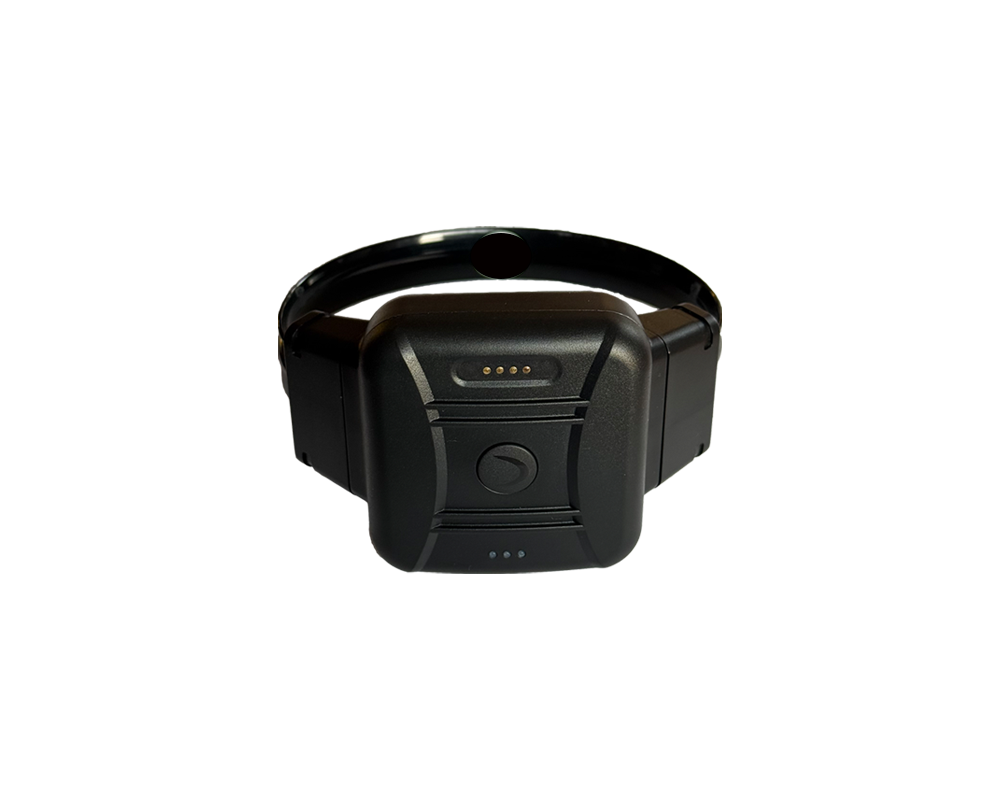
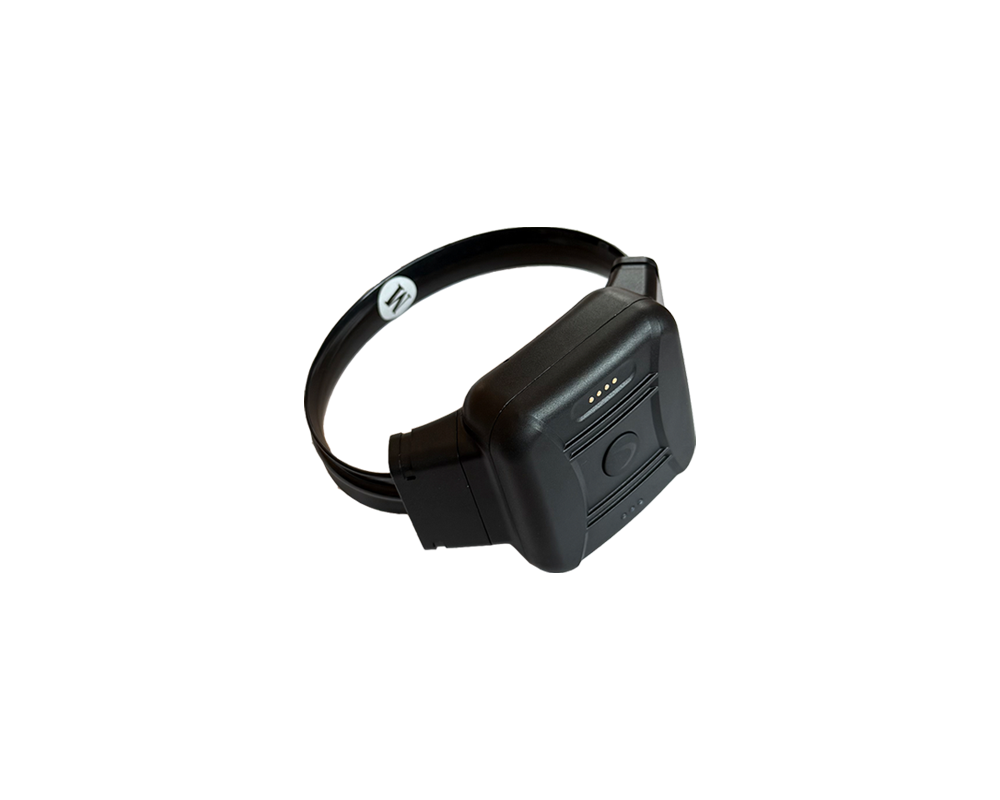
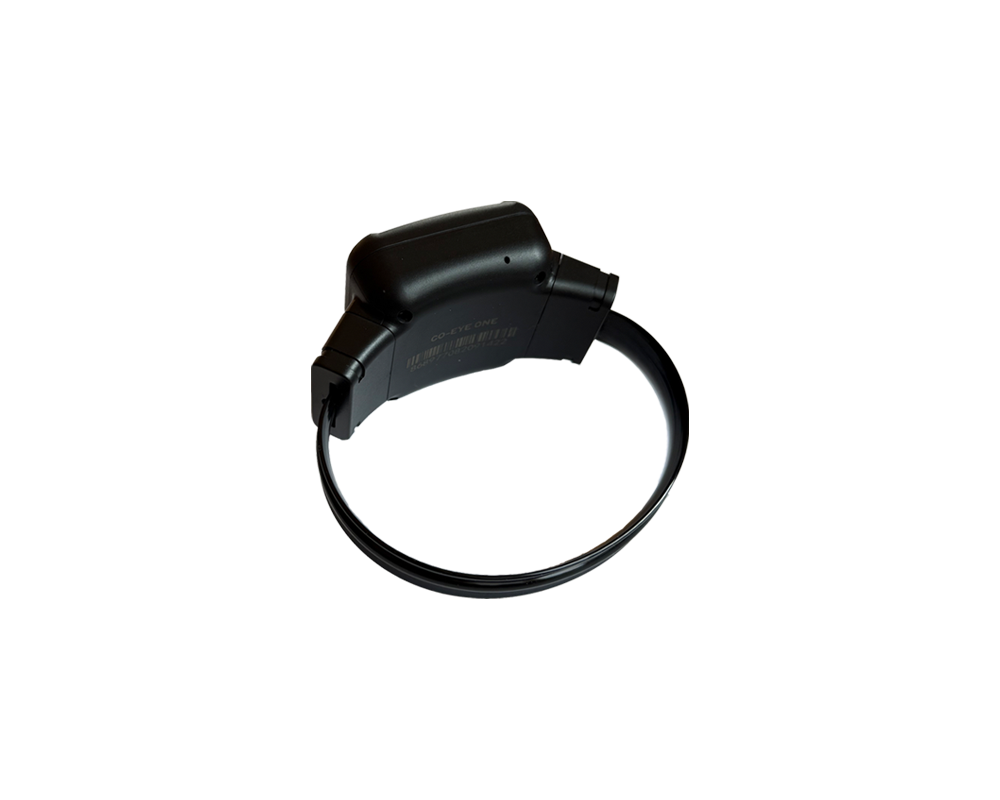
Research tables rarely list battery chemistry or charge times, yet field supervisors know that a large share of alleged noncompliance begins with a dead device, a lost charger, or a night shift without an outlet. When programs mandate dense location reporting but issue hardware that cannot sustain the interval, they manufacture violations that statistics later attribute to the participant. The CO-EYE ONE design target—on the order of seven days standalone life at a typical five-minute LTE-M/NB-IoT cadence, with roughly 2.5 hours to full charge—exists precisely to narrow that gap. Minimizing charging friction supports the compliance story embedded in UK breach statistics: electronic monitoring works best when the wearable is physically easy to live with and institutionally easy to support.
Agencies should align written policy with hardware reality: if a court expects twice-daily charging, say so explicitly and provision chargers and education accordingly; if a court expects continuous accountability, specify devices whose battery claims are tested at the mandated reporting interval, not in vendor demo mode. For comparative guidance, read ankle monitor battery life: what county programs need to know.
Geofencing, GNSS Accuracy, and the UK GPS Tagging Message
The approximate 20% reoffending reduction associated with GPS tagging for burglars, robbers, and thieves is a reminder that acquisitive crime supervision depends on place-based deterrence—knowing when a participant enters a high-risk shopping corridor, a transit hub pattern, or a victim proximity shell. Those scenarios punish vague accuracy claims. A GPS ankle bracelet that drifts tens of meters in urban canyons may still work for coarse county boundaries but fails for block-level exclusion zones. Multi-constellation GNSS (GPS, BeiDou, GLONASS, Galileo) with WiFi and LBS assistance is therefore not a marketing garnish; it is how programs approach the map fidelity implied by modern court orders.
Sub-two-meter-class performance also supports offender monitoring analytics—heatmaps, routine activity review, and post-incident reconstruction—that supervisors use to justify supervision levels to judges. When accuracy is trustworthy, officers spend less time explaining GPS ghosts and more time addressing real risk. Tie those operational wins back to the UK completion statistics: credible maps make completed orders more likely because participants and courts agree on what actually happened.
What This Means for Your Agency
- Fund EM as outcomes infrastructure, not accessories. The UK breach and completion gaps show that electronic monitoring changes behavior before reconviction shows up in annual statistics—your command center KPIs already tell the story.
- Standardize on modern GNSS + cellular roadmaps. GPS tagging results for acquisitive crime reinforce that location certainty matters; plan for LPWAN and multi-carrier resilience consistent with your geography.
- Attack false-alert load aggressively. When courts lose confidence because straps cry wolf, completion rates erode. Spec sheets should reward zero false-positive tamper engineering, not vague “advanced analytics” buzzwords.
- Align charging policy with battery reality. Programs that demand aggressive tracking must supply hardware whose battery life matches the reporting interval—otherwise you manufacture breaches that research attributes to “noncompliance” rather than equipment friction.
- Integrate software early. Norwegian heterogeneity (overall vs served EM) is a reminder that offender monitoring platforms must enforce enrollment, escalation, and documentation—see CO-EYE Monitoring Software for modular supervision workflows.
- Map solutions to docket risk. Pair high-intensity GPS ankle monitor tracks with pretrial and post-conviction guides: bail monitoring solutions, domestic violence electronic monitoring, and county-scale deployment playbooks.
To Achieve These Outcomes: Why Hardware Specifications Matter
Research validates electronic monitoring programs; your job is to remove implementation failure modes. CO-EYE ONE is engineered around the failure modes that erode the compliance gains shown in UK and international statistics:
- Zero false-alert tamper detection: Fiber-optic tamper sensing on strap and case is designed for zero false positives—reducing monitoring-center workload and preserving court trust when every alert must mean something.
- Seven-day battery life: About seven days standalone operation at a typical five-minute LTE-M/NB-IoT reporting profile (1700mAh cell, ~2.5-hour magnetic fast charge) minimizes charging-related gaps that show up as breach statistics.
- Sub-two-meter GNSS performance: GPS with BeiDou, GLONASS, and Galileo, augmented by WiFi and LBS, supports precise geofencing for orders that demand map-grade certainty.
- One-piece industrial design: 108g, 60×58×24mm, IP68 waterproofing, and <3 second tool-free installation eliminate the coordination failures common to legacy two-piece architectures.
- Future-ready cellular: 5G-compatible LTE-M / NB-IoT / GSM aligns procurement with network sunsets and global roaming realities.
- Security baseline: HTTPS/SSL transport with AES-128/256 encryption underpins chain-of-custody expectations for location and tamper telemetry.
If your agency is comparing vendors, use our GPS vs RF ankle monitor comparison and one-piece vs two-piece TCO analysis to connect research outcomes to architecture choices.
Conclusion: The Evidence Is Clear—Invest in Disciplined Electronic Monitoring
From UK administrative statistics showing roughly a 23% relative reconviction reduction on community orders with RF EM, to the widely cited Florida ~31% recidivism reduction framing, to Norwegian EM sentence effects and UK GPS tagging gains for property-crime cohorts, the evidentiary picture is coherent: electronic monitoring works best when programs pair court authority with reliable devices, fair alert economics, and trained officers. The next step is not another pilot—it is specifications that respect the data: accurate GPS ankle monitors, honest tamper semantics, batteries that match policy, and software that keeps participants enrolled and accountable. Contact CO-EYE sales for pricing, technical deep dives, and integration pathways.