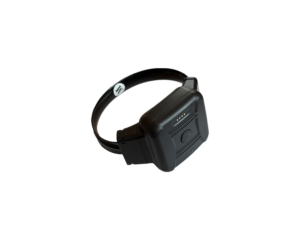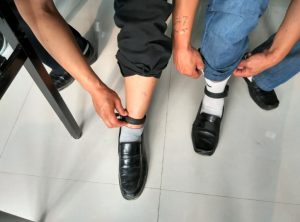
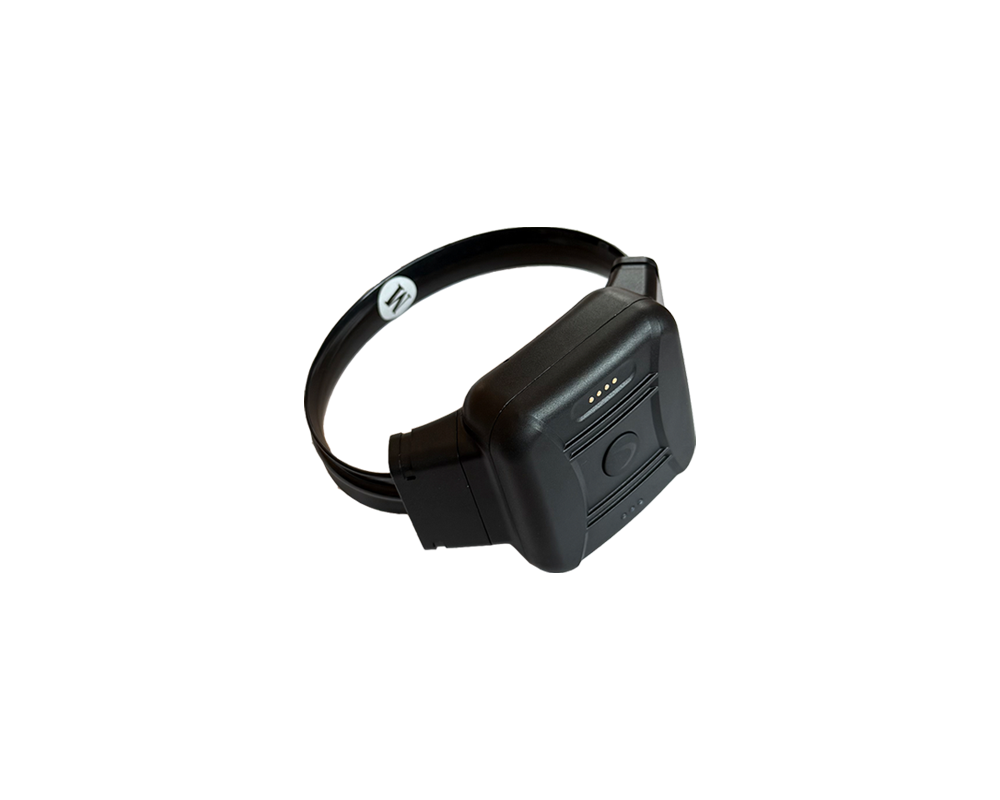
The modern GPS ankle bracelet is no longer a single-frequency puck on a rubber strap. It is a supervised-IoT package: multi-constellation GNSS, assisted fixes, tamper-evident enclosures, narrowband cellular, and platform analytics that must survive audits, discovery, and nightly news. For procurement officers, the shift from “buy a box” to “buy an evidence chain” makes standardized benchmarks essential—starting with NIJ Standard 1004.00 and the NIJ-sponsored market survey executed by Johns Hopkins University Applied Physics Laboratory (JHU/APL). This guide translates those references into a 2026 GPS ankle bracelet scorecard, then maps policy drivers, total cost of ownership (TCO), and CO-EYE ONE specifications from our authoritative product knowledge base.
Readers also search GPS ankle monitor, ankle monitor, electronic ankle bracelet, and electronic monitoring—those phrases describe overlapping supervision modalities. Here we keep the focus phrase GPS ankle bracelet because it matches how courts, legislators, and vendor RFPs specify continuous location accountability on the body.
From RF Proximity to Multi-Constellation GPS Ankle Bracelet Architectures
First-generation community supervision often meant radio-frequency (RF) proximity to a home beacon: powerful for curfew enforcement, weak for continuous route history. The contemporary GPS ankle bracelet stack usually combines GNSS fixes with assisted positioning, encrypted uplink, and software geofences that must survive judicial scrutiny. That evolution shifts procurement questions from “does it beep when the door opens?” to “what is the measurement uncertainty ellipse on this map tile, and who will explain it to a jury?”
Agencies should document three architecture classes in every modernization memo: (1) RF / home detention tethering, (2) continuous cellular GPS ankle bracelet tracking, and (3) hybrid models that step down to smartphone check-ins for stable cohorts. The same participant may traverse all three over a sentence; your electronic monitoring platform should normalize tier changes without losing chain-of-custody logs.
NIJ Standard 1004.00 — What GPS Ankle Bracelet Buyers Actually Test Against
NIJ Standard 1004.00, Offender Tracking Systems (published July 2016; NCJ 249810) is a voluntary U.S. performance and test-method standard for criminal-justice offender tracking systems (OTS). It addresses system-level requirements—device, communications, monitoring center interfaces, documentation, and labeling—not isolated components. For GPS horizontal accuracy, procurement teams routinely cite two circular error probabilistic thresholds:
- 10 m CEP50 — approximately half of reported horizontal fixes should fall within 10 meters of truth under the standard’s controlled test framework.
- 30 m CEP95 — approximately 95% of fixes should fall within 30 meters.
CEP (circular error probable) language matters in supervision because maps drive warrants, victim notifications, and revocation hearings. If half your fixes are allowed to wander past ten meters in the reference test geometry, real-world urban multipath and assisted fixes must be disclosed honestly in RFP responses. A GPS ankle bracelet that silently blends Wi-Fi or cellular assistance into “GPS” exports can look accurate on a brochure yet behave differently in discovery.
Operational translation: CEP50 sets the “typical” error envelope; CEP95 captures tail risk—the rare but legally explosive outliers where someone was two blocks away from an alleged geofence breach. Agencies should demand vendor test reports that state environment (open sky vs. obstructed), sample sizes, and whether fixes are raw GNSS or fused.
Why courts still cite NIJ 1004.00 in 2026: Even where the standard is voluntary, it is the closest thing U.S. corrections has to a shared vocabulary for lab versus field performance. When a GPS ankle bracelet vendor says “sub-meter accuracy,” ask: sub-meter under which sky view? With which assistive sensors engaged? At which duty cycle? NIJ’s framework is not the only test regime—ASTM-style milieu tests, vendor-internal rings, and state lab partnerships also appear—but NIJ language shows up in RFPs because grant auditors and county counsels recognize it.
Evidence handling note: Supervision platforms export KML, CSV, and PDF exhibits. If your GPS ankle monitor pipeline rounds coordinates before storage, smoothing algorithms can shift fence outcomes. Specify data retention, rounding rules, and whether raw pseudorange data is preserved for contested hearings.
CO-EYE ONE positioning: Manufacturer specifications list < 2 m CEP GPS accuracy with multi-constellation GNSS plus assisting references. Against the 10 m CEP50 benchmark alone, that is roughly five times tighter than the NIJ minimum threshold—useful when justifying premium hardware in high-risk dockets, provided your acceptance testing reproduces comparable conditions.
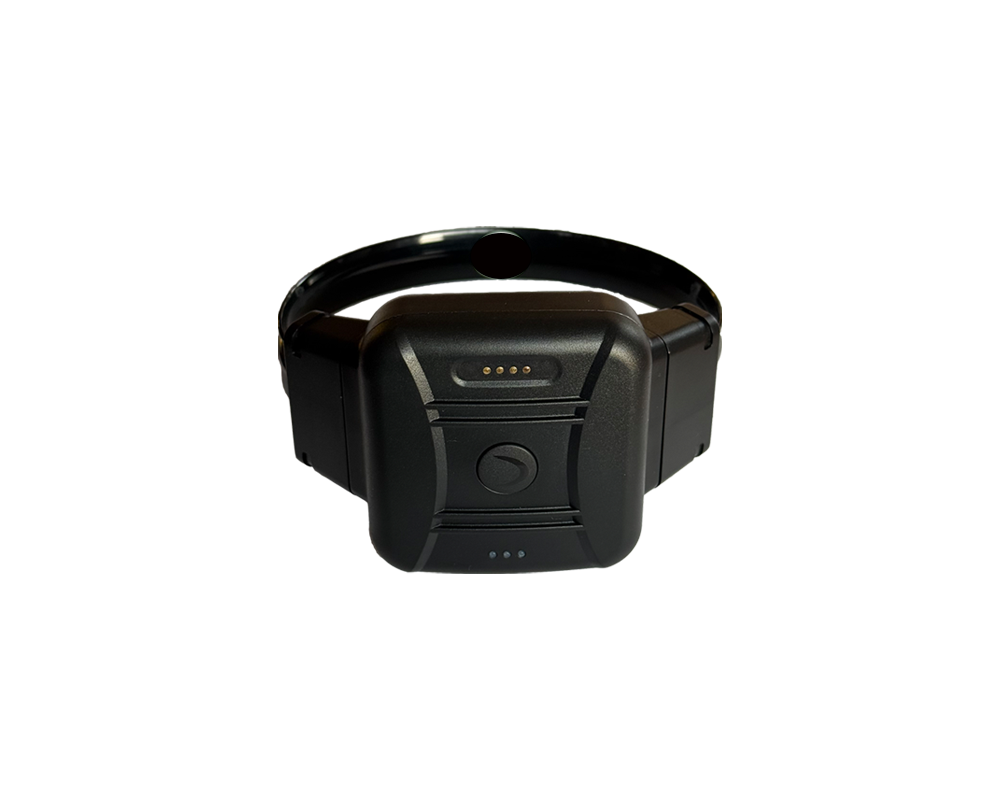
NIJ Market Survey — Sixteen GPS Ankle Bracelet Devices Under JHU/APL Evaluation
The companion Market Survey of Location-Based Offender Tracking Systems (JHU/APL; NIJ award context) systematically examined commercial offerings circa the NIJ 1004.00 era—reporting on form factors, features, and measured characteristics across a cohort that includes sixteen GPS ankle bracelet–class devices. The survey’s value is not “pick a winner” but variance: weight, power budgets, charging workflows, strap integrity strategies, and reported behaviors diverged widely across vendors.
Cross-cutting findings relevant to 2026 RFPs:
- Weight spread — Devices clustered from compact one-piece designs toward heavier two-piece stacks when separate cellular legs or beacons are carried on-body. That spread supports ergonomic and stigma arguments often dismissed in purely technical scoring.
- Battery and duty cycle — Endurance is not a single number; it is a function of fix rate, cellular heartbeat, assist modes, and whether RF home tethering is required. The survey underscores why apples-to-apples battery claims require identical reporting intervals.
- Tamper philosophies — Mechanical strap sensors, conductive loops, optical approaches, and case intrusion detection appeared across the sample—with different failure modes in rain, sweat, and field maintenance.
- Marketing vs. measured behavior — The survey environment revealed gaps between manufacturer claims and observed performance categories, reinforcing independent acceptance testing before statewide rollout.
For buyers, the lesson is procedural: treat any GPS ankle bracelet finalist as a system under test, not a catalog line item. Pilot two architectures under identical alert rules and measure analyst minutes, charging touches per hundred participant-days, and geofence adjudication outcomes.
How to read the survey alongside a live RFP: Use the JHU/APL cohort as a feature checklist—strap materials, charging contacts, dock geometry, on-device storage for store-and-forward, and audible/LED cues—then require bidders to map each feature to your state’s standards for dignity, accessibility, and religious accommodation. The GPS ankle bracelet category is not homogenous; two devices with similar per-diems can impose radically different participant burden.
Performance versus claims: When the survey highlighted divergence between advertised and observed characteristics, it reinforced a pattern still visible in modern procurements: marketing sheets optimize for showroom conditions, while probation caseloads optimize for bus terminals, metal roofs, and pocketed phones. Independent acceptance testing should include your county’s worst canopy and your victim-notification SLA, not the vendor’s demo lot.
Seven Critical Procurement Benchmarks for Any GPS Ankle Bracelet Program
1) GPS Accuracy — NIJ 10 m / 30 m vs. Field-Grade < 2 m
Score RFP responses against NIJ 1004.00 CEP50/CEP95 language, then demand urban and indoor fallback disclosure. A GPS ankle monitor that cannot explain fused fixes will struggle in DV proximity and school-exclusion enforcement.
Add scoring weights for time-to-first-fix after power loss, horizontal dilution of precision reporting, and whether the device marks network-assisted positions distinctly from pure GNSS. A transparent GPS ankle bracelet is defensible in court; a black-box dot is not.
2) Weight — Industry Spread vs. Best-in-Class 108 g
NIJ-era surveys documented a broad weight range across one- and two-piece GPS tracking hardware—often roughly 150–320 g class for many fielded stacks when accounting for on-body modules participants actually wear. CO-EYE ONE lists 108 g in a one-piece 60 × 58 × 24 mm envelope—relevant to wear compliance and officer perception alike.
Weight interacts with skin health: heavier electronic ankle bracelet modules increase pressure injury risk during sleep and employment shifts. Document strap width, padding options, and medical review pathways alongside grams on the spec sheet.
3) Battery Life — 1–3 Days Typical vs. 7 Days Standalone / 6 Months BLE Mode
Legacy aggressive reporting modes often yield about one to three days between charges for many programs. CO-EYE ONE specifies 7 days standalone (5-minute interval LTE-M/NB-IoT). CO-EYE ONE-AC adds BLE connected mode up to 6 months when paired per specification. Write your RFP interval assumptions explicitly.
Procurement teams should simulate worst-day duty cycles: motion-triggered bursts, victim-proximity polling, and firmware OTA events. A GPS ankle bracelet that survives a spreadsheet model but dies on day four in the field will generate false “non-compliance” narratives.
4) Tamper Detection — Resistive False-Alarm Pressure vs. Fiber Optic Zero False-Positive Strap Events
Conductive/resistive strap loops have been associated in industry discussions with aggregated false-positive bands on the order of 15–30% when program rules, maintenance hygiene, and environment interact poorly—enough noise to swamp warrant shops. CO-EYE’s fiber optic strap and case tamper path is specified for zero false-positive strap tamper indication in manufacturer documentation—validate in your pilot, but prioritize architectures that reduce phantom breaches.
Alert governance matters as much as sensor physics: define whether partial strap lift counts as tamper, whether hot-swapping chargers triggers events, and how maintenance technicians acknowledge tests without polluting evidentiary logs. The right GPS ankle bracelet policy paired with the wrong ticketing workflow still fails.
5) Cellular Connectivity — 3G Sunset Risk and 5G / LTE-M Readiness
Carrier sunsets turned “installed base” into a liability. CO-EYE ONE lists 5G compatible LTE-M / NB-IoT / GSM paths—modern narrowband cores matter for long battery states. Ask MVNOs about band support in your state, not just modem marketing.
Procurement should require a radio roadmap appendix: modem SKU, firmware branch, carrier certification dates, and planned end-of-life. A GPS ankle monitor contract without sunset language is a lawsuit waiting for a coverage hole.
6) Waterproof Rating — IP65 to IP68 Field Reality
Shower bans are legally fragile; IP68 is the CO-EYE ONE certified posture per knowledge base—specify immersion and dust requirements rather than trusting “water resistant” ad copy.
Field failures often trace to charging contacts corroding after winter road salt exposure—score docking systems, pogo-pin seals, and participant education as part of your electronic monitoring reliability model, not as aftermarket accessories.
7) Installation Speed — 5–15 Minutes Typical vs. < 3 Seconds Tool-Free
Enrollment throughput matters during mass-intake events. Traditional screw-down or multi-tool installs often consume 5–15 minutes of officer-vendor time. CO-EYE ONE documents < 3 seconds snap installation/removal with the patented strap—multiply by cohort size to see labor impact.
Fast install also reduces waiting-room security exposure: fewer tools in the room, less contact time, and quicker handoff to orientation materials explaining geofence rules for the assigned GPS ankle bracelet.
RFP Appendix — Scorecard Rows to Paste Into Solicitations
Borrow this table language verbatim into attachments:
- Horizontal accuracy — Report CEP50/CEP95 under NIJ 1004.00-style procedures; disclose assistive sensors.
- Mass & dimensions — Grams and mm for on-body module(s) only.
- Endurance — Hours at stated reporting interval; include OTA and motion-burst caveats.
- Tamper taxonomy — Strap, case, cradle, dock, and intentional test events.
- Cellular — LTE-M/NB/VoLTE certifications by carrier; sunset mitigation plan.
- Environmental — IP rating, operating temperature, charging chemistry.
- Enrollment labor — Mean install/removal time with confidence interval from pilot.
Scoring those rows transparently beats relying on reference calls alone—especially when every vendor claims their GPS ankle bracelet is “the most advanced.”
2026 Policy Drivers Expanding GPS Ankle Bracelet Workloads
Statutes do not replace silicon, but they compress procurement timelines. Several 2025–2026 threads illustrate how electronic monitoring mandates and modernization budgets reshape GPS ankle bracelet demand:
- Florida — CS/CS/HB 277 (2026 session) — Domestic violence and protective-injunction reforms that include electronic monitoring pilot programs (Pinellas County misdemeanor DV/injunction cohorts; Sixth Judicial Circuit felony DV pilot), with evaluation reporting to the Legislature and an effective date framework beginning July 1, 2026 pending enactment. Source: Florida Senate bill materials and enrolled bill text summaries.
- New York — statewide procurement modernization — New York State OGS maintains a multi-year Electronic Monitoring Products and Services NASPO ValuePoint award (for example, Award 23300, contract period August 2024–November 2026) covering RF and GPS monitoring services—evidence that large northeastern programs continue to centralize ankle-worn telemetry purchasing while carriers retire legacy 2G/3G backhaul.
- Texas — supervision practice and tamper penalties — Texas courts impose electronic monitoring under the Code of Criminal Procedure’s community-supervision toolkit; the 88th Legislature added Penal Code § 38.112 (effective September 1, 2023) creating felony and state-jail felony pathways for tampering with court-ordered tracking devices—raising the stakes for trustworthy strap semantics. Verify any specific bill number against enrolled text before citing in court filings; several 89th Legislature proposals address family violence and bond conditions separately from unrelated oil-and-gas bills that share numeric labels.
- California — high-risk parole GPS practice — CDCR publicly documents GPS supervision for designated high-risk parole cohorts (for example, sex offender and gang-intensive tracks), illustrating sustained statewide reliance on continuous tracking independent of any single headline bill.
Industry trackers and vertical media have catalogued concurrent electronic monitoring expansion or modernization measures across more than a dozen states in recent cycles—exact enrolled language changes quickly, so general counsels should attach compliance memos to the statute PDF, not to SEO summaries.
Practical takeaway for vendors and sheriffs: when a statute mandates pilot programs or victim-notification cadence, your GPS ankle bracelet backlog is not solved by hardware alone—monitoring centers must scale staffing, prosecutors need export templates, and indigent-fee policies must be updated before judges issue orders you cannot operationalize.

TCO — GPS Ankle Bracelet Per Diems vs. Incarceration Economics
Vendor quotes usually surface a daily monitoring fee; public program summaries often land near $5–$25 per day depending on risk tier, victim services, software modules, and whether counties subsidize indigent participants. Jail bookings, by contrast, routinely carry fully loaded costs above $100 per day in many U.S. jurisdictions once staffing, medical, and capital costs are included—implying on the order of 80–95% potential savings for supervised release cohorts when programs are well governed.
Participant-funded models shift line items: the county ledger looks cleaner, but collection costs, ability-to-pay hearings, and technical revocations for nonpayment can erase nominal savings. Any honest GPS ankle bracelet TCO model should include judicial economy and defender workload, not only per-diems.
Comparative effectiveness caveat: electronic supervision is not interchangeable with treatment, housing, or victim services. Savings claims assume the supervised cohort would otherwise occupy jail beds—an assumption policymakers should validate against local pretrial culture.
Hidden TCO lines that belong in every business case:
- Charging infrastructure — cables, spares, field visits for dead-battery participants.
- False-alert officer responses — warrant shop overtime tied to resistive strap noise.
- Replacement units and sunset swaps — 2G/3G retirement can forklift inventories faster than amortization schedules predict.
CO-EYE ONE — Specification Table (Authoritative Knowledge Base)
CO-EYE ONE is the REFINE Technologies flagship one-piece GPS ankle bracelet. Values below are copied from the internal knowledge_base.md specification matrix—do not interpolate.
| Parameter | CO-EYE ONE | CO-EYE ONE-AC |
|---|---|---|
| Size (mm) | 60 × 58 × 24 | 60 × 58 × 24 |
| Weight | 108 g | 111 g |
| Waterproof | IP68 | IP68 |
| Cellular | 5G compatible LTE-M / NB-IoT / GSM/GPRS/EDGE Nano SIM | 5G compatible LTE-M / NB-IoT / GSM/GPRS/EDGE eSIM + Nano SIM |
| Geo-location | GPS / BeiDou / Galileo / GLONASS / LBS / WiFi | |
| GPS Accuracy | < 2 m CEP | |
| Battery (standalone, 5 min LTE-M/NB) | 7 days | Standalone 7 days; BLE connected up to 6 months |
| Battery capacity / recharge | 1700 mAh; 2.5 hours recharge | |
| Anti-tamper | Fiber optic strap / case | |
| Install or removal | < 3 seconds | |
| Security | HTTPS/SSL, AES128/256; CyberSecurity EN 18031 | |
Pair hardware with CO-EYE Monitoring Software for alert governance, and explore 5G and eSIM roadmaps before your next statewide refresh.
Implementation note: When agencies migrate from legacy GPS ankle bracelet fleets, run parallel reporting for at least one billing cycle so prosecutors can compare event codes. Tamper semantics differ across generations; a “strap event” on an old device may not map one-to-one to a fiber-optic case event on a new platform.
Build Your GPS Ankle Bracelet Requirements Package
Use these internal resources to extend this benchmark essay into an RFP attachment library:
- CO-EYE ONE product page — engineering-facing specs and imagery.
- GPS ankle monitor buyer’s guide — agency checklist framing.
- One-piece GPS ankle monitor buyer’s guide — architecture trade-offs.
- Optical fiber anti-tamper technology explainer.
- GPS ankle bracelet complete guide (pillar companion).
- GPS ankle monitor guide — foundational supervision vocabulary.
Frequently Asked Questions
What is the NIJ accuracy standard for GPS ankle bracelets?
See NIJ Standard 1004.00 publications on NIJ OJP; horizontal GPS accuracy benchmarks are commonly summarized as 10 m CEP50 and 30 m CEP95 under the standard test framework.
How long does a GPS ankle bracelet battery last?
Expect highly variable field outcomes; modern one-piece narrowband designs target about a week standalone, with extended BLE-connected modes on advanced SKUs—always match vendor claims to your court-ordered reporting interval.
What is fiber optic tamper detection?
It uses optical continuity through the strap or case to detect cuts and defeats with high specificity compared with simple resistive loops.
How much does a GPS ankle bracelet cost per day?
All-in monitoring fees often fall near $5–$25/day in public program discussions, compared with $100+/day incarceration fully loaded—budget hidden alert and charging costs.
Can GPS ankle bracelets work indoors?
Only with assistance paths—Wi-Fi, cellular referencing, beacons, or tethered devices—disclose fusion behavior in RFP scoring.