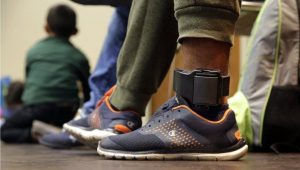
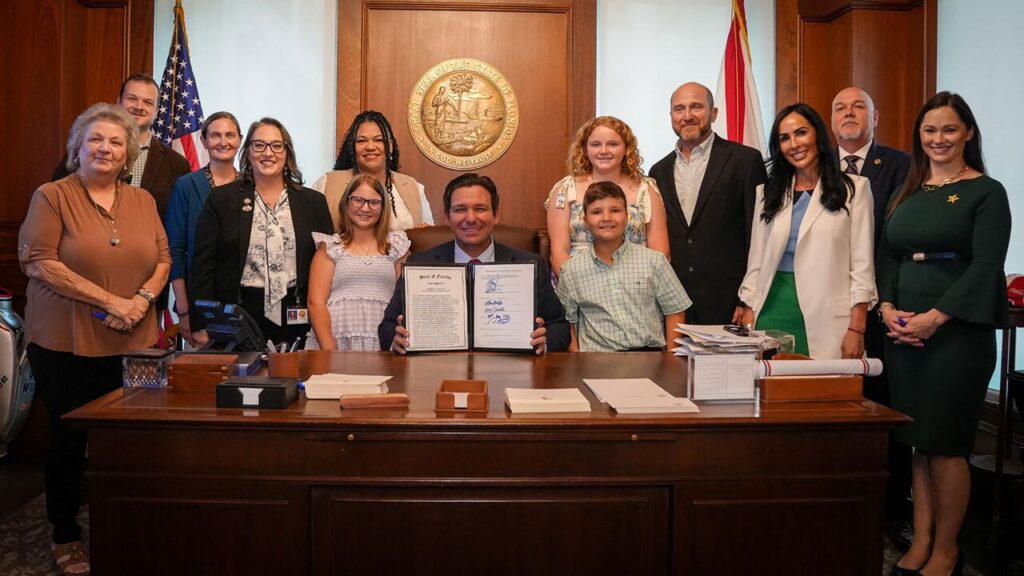
On May 21, 2026, Florida Governor Ron DeSantis signed House Bill 277 into law — and buried inside its 30 pages of penalty enhancements and protective-order reforms is a provision that should have every electronic monitoring equipment vendor, corrections agency, and victim advocate paying attention: America’s first dedicated GPS ankle monitor pilot program for domestic violence offenders.
The Pinellas County pilot, running from July 1, 2026 through June 30, 2028, authorizes — and in some cases mandates — courts to order GPS electronic monitoring for domestic violence offenders on probation who pose a continuing threat to victims. A parallel felony pilot covers the Sixth Judicial Circuit (Pinellas and Pasco counties) under Department of Corrections oversight. If the two-year data proves what practitioners already suspect, a statewide rollout follows.
This is not incremental policy. Florida processes nearly 107,000 domestic violence cases annually. The state’s domestic violence homicide rate — 217 deaths in the most recent reporting year — accounts for roughly 20% of all Florida homicides. And the legislation itself was shaped by survivors whose stories expose exactly why paper injunctions alone are failing.
What Does HB 277 Actually Require for Electronic Monitoring?
HB 277 creates two distinct electronic monitoring pilot programs under Florida Statutes § 741.2905 (misdemeanor) and § 741.2906 (felony). The bill text is specific about when GPS monitoring is discretionary and when it becomes mandatory.
Misdemeanor Pilot (Pinellas County, Sheriff-managed): For any person 18 or older convicted of misdemeanor domestic violence, violation of a DV injunction, or violation of a sexual/dating violence injunction — where a no-contact order is in effect as a probation condition — the court may order electronic monitoring. The court must order it if clear and convincing evidence shows the defendant poses a threat of violence or physical harm to the victim.
Felony Pilot (Sixth Judicial Circuit, DOC-managed): Identical trigger criteria apply to felony domestic violence convictions and felony injunction violations. The Department of Corrections manages supervision rather than the sheriff.
Both pilots require the monitoring entity to establish exclusion zones around victims’ residences and workplaces — Rep. Debra Tendrich, the bill’s sponsor, told WTSP that the program would create a 500-foot geofence monitored through an app, so the victim knows in real time if the abuser is approaching.

The Tragedies That Wrote This Law
HB 277 did not emerge from policy papers. It was written in the margins of police reports, obituaries, and 911 transcripts.
Jennie Carter traveled from a Texas conference with less than 24 hours’ notice to witness the signing. Shortly before Christmas 2006, her ex-husband killed their children — Crystal and Nelson — in a murder-suicide in Lake Worth. “I cannot just let my kids be a number,” Carter told WPTV. “I have to make a difference.”
Christine Maron’s teenage son Dominic Ferrell was stabbed to death in Miami last year while spending the night with his father. “I filed an injunction. I was given full custody of my four children. That injunction was violated 67 times,” Maron said. Sixty-seven violations. A piece of paper, violated sixty-seven times, and nothing stopped what came next.
The Tamarac triple murder in February 2025 was the tipping point. Nathan Gingles — against whom his estranged wife Mary had filed two domestic violence injunctions, in February 2024 and December 2024 — ambushed her father David Ponzer in their home at 5:39 a.m., then chased Mary across the street and killed her and neighbor Andrew Ferrin. A 246-page internal affairs investigation later revealed that Broward Sheriff’s deputies had multiple opportunities to intervene — including confiscating “numerous firearms, rifles, suppressors, magazines, ammunition, and a license to carry” a full year before the killings — but failed to properly document incidents or take necessary action when Mary Gingles expressed fear for her life. Six deputies were fired. Eleven more disciplined. Sheriff Gregory Tony said: “We failed Mary Gingles, David Ponzer, and Andrew Ferrin.”
Rachael Kerr, a 43-year-old mother, was killed despite doing “everything right” — filing protective orders, cooperating with law enforcement, relocating. Rep. Tendrich cited her case directly during committee hearings, telling lawmakers: “GPS monitoring could have saved Rachel’s life.”
The common thread: protective injunctions that existed on paper but provided no real-time awareness of an offender’s location. GPS ankle monitoring creates that awareness.
Why a Pilot — and Why Pinellas County?
Florida is not the first state to authorize GPS monitoring for DV offenders. At least 27 states already permit or require electronic monitoring in domestic violence cases. But Florida’s approach is distinctive in three ways:
- Mandatory trigger: When clear and convincing evidence shows the defendant poses a continuing threat, GPS monitoring is not discretionary — it is required. Most state statutes leave this entirely to judicial discretion.
- Built-in evaluation mandate: The sheriff must submit interim reports by March 1, 2027 and January 1, 2028, and a final evaluation by September 1, 2028. Each report must include the number of persons monitored, violation counts and reasons, program costs, and cost recovery from offenders. This is a data-collection exercise with statewide expansion explicitly on the table.
- Victim notification integration: The companion bill SB 682 defines “electronic monitoring” to include “active or passive global positioning system technology… which may also include electronic monitoring with victim notification technology capable of notifying a protected party.” The legislative intent is not just tracking the offender — it is actively alerting the victim.
Pinellas County was chosen because the Sixth Judicial Circuit has the infrastructure and political will to stand up the program quickly. The two-year window is tight, and legislators are explicit: the data from Pinellas will determine whether Florida’s 107,000 annual DV cases statewide get access to the same protection.
What This Means for Electronic Monitoring Technology
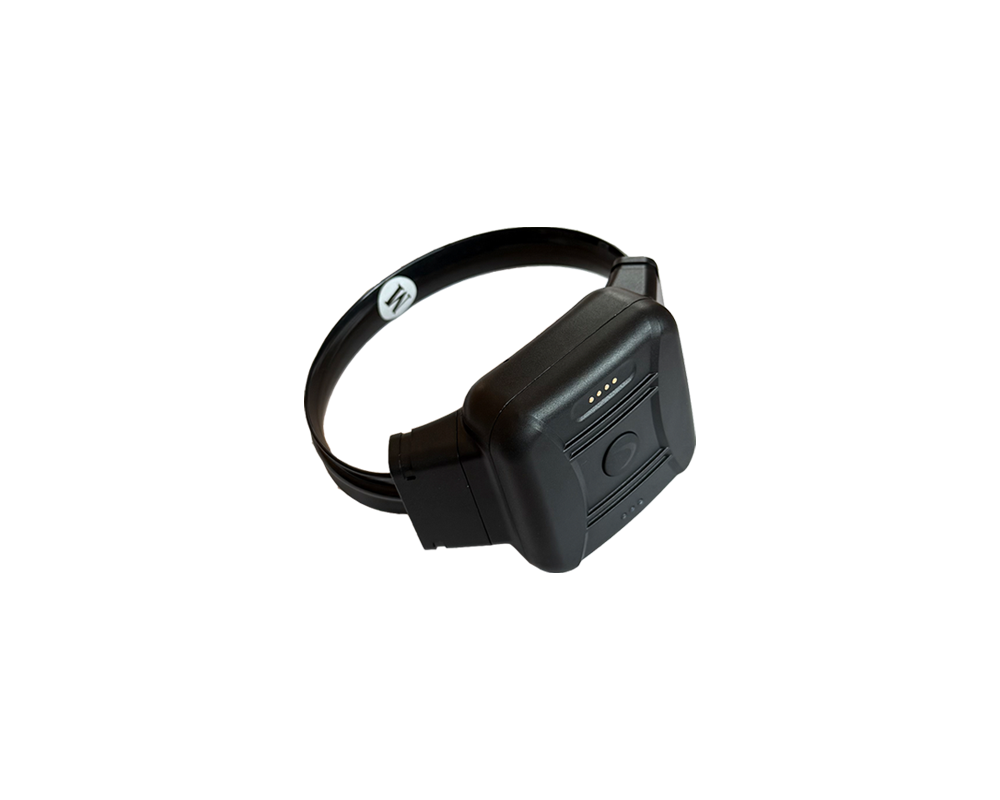
The bill’s technical requirements — real-time location tracking, exclusion zone geofencing with victim notification, continuous monitoring on probation — demand a specific class of GPS ankle monitor. Not every device on the market can deliver what Florida now requires by law.
Key technical requirements implied by HB 277:
- Real-time GPS tracking with exclusion zones: The 500-foot geofence around victim locations requires sub-5-meter positioning accuracy and near-instant zone-breach notification. Devices relying solely on periodic check-ins (common in older two-piece systems) cannot provide the response time victims need.
- Victim notification app integration: SB 682’s language explicitly contemplates technology “capable of notifying a protected party” — meaning the monitoring platform must support victim-facing mobile alerts, not just agency dashboards.
- Continuous uptime: DV monitoring has zero tolerance for device downtime. A low-battery dead zone at 3 a.m. is precisely when offenders act. Battery life measured in days rather than hours is not a luxury feature — it is a safety requirement.
- Tamper detection with court-grade reliability: Defense attorneys in DV cases already challenge electronic monitoring evidence. A device historically generated elevated false alert rates with legacy detection (common with legacy tamper sensors) undermines the very courtroom credibility the law is designed to create.
How Florida’s Pilot Compares to Other States’ DV Monitoring Programs
Florida joins a growing national movement. Some comparisons for procurement teams evaluating equipment needs:
| State | GPS DV Monitoring Authority | Mandatory or Discretionary | Victim Notification |
|---|---|---|---|
| Florida (HB 277, 2026) | Pilot in Pinellas/Pasco; statewide expansion pending data | Mandatory when clear/convincing evidence of threat | Yes — SB 682 defines EM to include victim notification tech |
| Texas (2019) | Statewide for repeat DV offenders violating protective orders | Mandatory for bond condition on repeat violations | GPS with victim notification required |
| Connecticut (2017) | Statewide for high-risk DV cases | Discretionary; judges encouraged | Yes — bilateral notification |
| Oklahoma (SB 1325, 2024) | Statewide for DV protective order violations | Mandatory for second violation | GPS with victim app |
| Portugal (2020 expansion) | Nationwide — 60% of all EM devices now DV-related | Mandatory for high-risk assessment | Yes — bilateral bilateral bracelet system |
Florida’s mandatory trigger standard — “clear and convincing evidence” — is among the strongest in the nation. Unlike states where GPS monitoring remains entirely at judicial discretion, Florida compels it when the evidence threshold is met. This signals to courts, prosecutors, and monitoring agencies alike: the default answer is monitoring, not another piece of paper.
The Broader Legislative Package: More Than Ankle Monitors
HB 277 is part of a comprehensive DV reform that includes:
- Enhanced penalties for repeat offenders: Violation classifications are reclassified one degree higher for those with prior DV convictions
- Increased victim relocation allowance: From $1,500 to $2,500 — reflecting, as Rep. Tendrich noted, “the real cost of relocating safely in our state”
- Pet protection in injunctions: Threats and cruelty to pets and service animals can now be included in protective orders — because abusers routinely threaten animals to control victims
- Military protective order coordination: Civilian courts can now consider military protective orders when issuing civilian injunctions, closing a gap that left service members’ families unprotected off-base
- Statewide injunction verification system: FDLE must enter dating violence and sexual violence injunctions into a unified database — ensuring officers in any jurisdiction can verify active orders
The companion bill SB 298, still awaiting the governor’s signature, would create a new 911 alert system specifically for abuse victims — adding another technology layer to the protection framework.
What Agencies Should Be Doing Now
July 1, 2026 is six weeks away. For the Pinellas County Sheriff’s Office and the Department of Corrections Sixth Circuit office, the clock is already running on vendor selection, system configuration, and officer training. For monitoring agencies nationwide watching this pilot, the implications are clear:
- Equipment procurement should prioritize victim notification capability. Florida’s law explicitly envisions bidirectional notification — the offender is tracked, and the victim is alerted. Agencies should evaluate whether their current GPS platforms support victim-facing mobile apps with real-time exclusion-zone alerts.
- Battery life and connectivity reliability are non-negotiable in DV cases. Unlike general probation monitoring where a delayed check-in is an administrative issue, a DV monitoring gap can be lethal. Devices should maintain continuous supervision across indoor, outdoor, and cellular-dead-zone environments.
- Tamper detection must withstand courtroom scrutiny. As GPS monitoring becomes mandatory rather than discretionary, defense attorneys will challenge every aspect of the evidence chain. Zero false-positive tamper detection is the difference between an enforceable court order and a legal liability.
- Plan for scale. If the Pinellas pilot demonstrates reduced reoffending and victim contact violations, statewide expansion is explicit legislative intent. Florida has 20 judicial circuits. The equipment and platform decisions made for the pilot will likely set the procurement template.
Rep. Tendrich is already planning a statewide listening tour to inform additional legislation. “If you’re one person screaming off a mountain top, you couldn’t be — you’re the only one who hears yourself,” she said after the signing. “But if you get a whole village, a whole community to scream that same message with you, that truly resonates.”
For Crystal and Nelson Carter, for Mary Gingles, David Ponzer, Andrew Ferrin, Dominic Ferrell, Rachael Kerr, and the 217 Floridians who die each year from domestic violence — that message is now Florida law. The question is whether the technology deployed in Pinellas County will match the ambition of the statute that demands it.
- GPS Ankle Monitors for Domestic Violence: The Technical Blueprint That Agencies Need
- From Tracking Offenders to Protecting Victims: How Real-Time GPS Notification Apps Work
- Spain’s $111M Wristband-to-Ankle Monitor Switch: Why Wrist-Worn EM Devices Fail
- How GPS Ankle Bracelets Are Changing Domestic Violence Protection in 2026
(see our comprehensive GPS ankle bracelet guide for detailed analysis)
About REFINE Technology (CO-EYE)
REFINE Technology is the leading electronic monitoring solutions provider in China with over 16 years of experience in the criminal justice industry. As the exclusive supplier for top security agencies, REFINE Technology has deployed 200,000+ devices across 30+ countries, monitoring 130,000+ individuals. The CO-EYE product line — featuring the next-generation all-in-one GPS ankle monitor, BLE wristbands, RF home beacons, and a unified monitoring platform — delivers high-security, low-stigma supervision for high-risk, mid-risk, and low-risk offender monitoring and victim protection. All CO-EYE devices carry full European NB CE directives (RED/Cybersecurity/LVD/SAR) and FCC certifications, with IP68 waterproof and REACH/RoHS/WEEE compliance. CO-EYE solutions are trusted in the USA, Europe, Africa, Bhutan, Papua New Guinea, Dominican Republic, Armenia, and expanding globally.
For more information, visit www.ankle-monitor.com or contact marketing@rfidcn.com.