

Between March and July 2026, two women in South Korea were murdered by men who were either wearing electronic ankle monitors or subject to court-ordered restraining measures. The killings — one in Namyangju, one in Seongnam — exposed a systemic failure so fundamental that it forced the Ministry of Justice and the Korean National Police Agency to tear down the information wall between them and build something entirely new in fewer than 100 days.
What went wrong wasn’t the technology on the offenders’ ankles. What went wrong was that two government agencies tasked with protecting the same citizens operated in parallel — never intersecting, never sharing data — until a woman was dead.
What Happened in Namyangju: The Killing That Started a National Reckoning

On March 14, 2026, at 8:57 a.m. in Namyangju, Gyeonggi Province, Kim Hun — a 44-year-old convicted sex offender wearing a GPS ankle monitor — smashed the driver’s-side window of his former girlfriend’s car with a power drill, dragged her out, and stabbed her to death. He had tracked her workplace using a location-tracking device he had purchased independently. After the killing, he cut off his ankle monitor and fled. He was wearing the device under a court order stemming from a 2014 aggravated rape conviction for which he had served three years in prison.
Kim Hun’s escalation pattern was textbook. His former partner had tried to end the relationship in May 2025; he responded with violence severe enough to require four weeks of medical treatment. When she tried to leave again in January 2026, he escalated to stalking. She filed complaints. The court issued provisional measures in February — a written warning, a 100-meter approach ban, and a telecommunications contact ban.
None of it mattered. And the reason none of it mattered reveals the structural fault line in South Korea’s electronic monitoring system.
Why Did the System Fail? The Information Wall Between Justice and Police
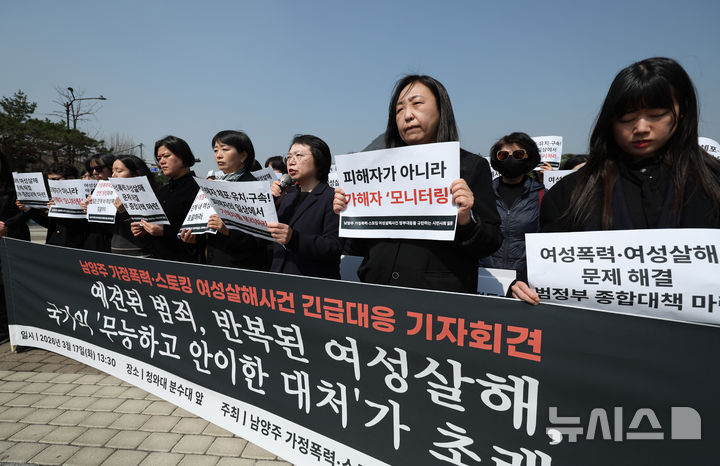
The Ministry of Justice monitored Kim Hun because of his sex crime conviction. The police issued the stalking restraining order. Neither agency told the other what it knew.
The probation officer supervising Kim Hun’s ankle monitor had no idea that a no-contact order had been issued for stalking. The police, who issued the no-contact order, had no idea Kim Hun was wearing a GPS ankle monitor — and therefore had no access to his real-time location data as he closed in on the victim.
Under the Stalking Punishment Act and Electronic Device Attachment Act (both enacted January 2024), the two agencies were required to share data only when someone was newly placed under a provisional ankle monitor order for stalking. But if someone was already wearing an ankle monitor for a prior crime and then committed stalking or domestic violence, no information-sharing protocol existed. Kim Hun fell into exactly this gap.
This wasn’t a technology failure. It was an architecture failure — the human systems around the technology had a blind spot large enough for a murderer to walk through.
Then It Happened Again: The Seongnam Stabbing 112 Days Later
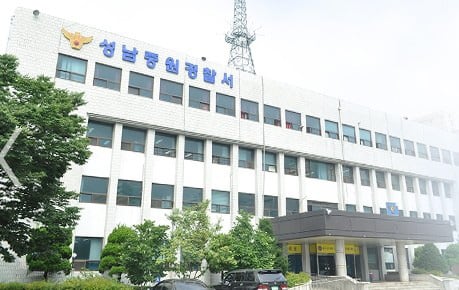
On July 5, 2026 — the same day South Korea’s new interagency protocol took effect — a 50-year-old man stabbed his ex-partner to death in Seongnam City at 3 a.m. The 60-year-old victim had reported dating violence on June 8. Police responded by the book: a dating violence warning, then a stalking complaint on June 10, emergency temporary measures (100-meter approach ban, contact ban), a police-issued smartwatch, and court-approved provisional measures effective through September 10.
The victim was classified as a “Grade A” high-risk protection target. The perpetrator’s stalking risk was assessed as “moderate” on a five-tier scale. Police had conducted patrols near her residence. Her smartwatch alert went off the moment she was attacked. Officers arrived within three minutes.
She still died.
Police explained they had not requested stricter provisional measures — such as electronic ankle monitoring or detention — because “no violations of the restraining order had been reported.” The perpetrator had apparently stopped contacting the victim after the order was issued. But he had been watching. He waited near her workplace, a location police were not monitoring because the victim had told them she planned to close her business soon.
What Changed: The Joint Response Protocol and Its Limitations
The Ministry of Justice and the Korean National Police Agency completed a system link on June 23, 2026. Starting July 6, the new “Ministry of Justice–Police High-Risk Offender Cooperative Response Protocol” requires:
- Automatic data sharing — when anyone wearing an ankle monitor for a designated serious offense (sexual assault, murder, kidnapping, robbery, or stalking) receives a no-contact order for stalking or domestic violence, both agencies are notified immediately
- Simultaneous dual dispatch — when an ankle-monitor wearer approaches a protected victim, a probation officer deploys toward the offender while a police officer deploys toward the victim
- Joint apprehension authority — if a no-contact order is violated, both agencies cooperate to arrest the offender and secure the victim
Justice Minister Jeong Seong-ho said the agencies had “boldly torn down the information barrier” to “protect stalking and domestic violence victims far more robustly than before.” Acting Police Commissioner Yoo Jae-seong described the framework as focused on “present and future warning signs rather than an offender’s past crimes.”
The protocol is a genuine structural improvement. But the Seongnam case, which occurred on the very day the protocol launched, demonstrates that closing the interagency data gap is necessary but not sufficient. GPS ankle monitors work by tracking where an offender is. But in Seongnam, the offender wasn’t wearing one — the available protection tools were limited to a restraining order and a smartwatch. The victim’s emergency alert fired correctly. Officers arrived in three minutes. But a knife at 3 a.m. doesn’t wait three minutes.
What GPS Ankle Monitoring Actually Does — And Where It Still Falls Short
When properly implemented, GPS electronic monitoring provides three capabilities that no restraining order or smartwatch can replicate:
- Continuous real-time location tracking of the offender — not just confirming where the victim is, but knowing where the threat is at all times
- Geofence-triggered alerts before contact occurs — exclusion zones around the victim’s home, workplace, and frequented locations generate alerts when an offender approaches, not after an attack begins
- Tamper-evident enforcement — if an offender attempts to remove the device, fiber-optic tamper detection triggers an immediate alert, giving agencies time to respond before the offender reaches the victim
In the Namyangju case, Kim Hun was already wearing an ankle monitor. The GPS data existed — his probation officer could have seen him moving toward the victim’s workplace. But because the probation officer didn’t know about the no-contact order, the location data was never correlated with the victim’s address. The ankle monitor worked as designed. The system around it did not.
In the Seongnam case, the court chose not to require electronic monitoring. The risk assessment classified the perpetrator as “moderate.” In hindsight, that assessment was fatally wrong — but it was made using the tools available at the time.
The Technology Gap: Why Not All Ankle Monitors Are Created Equal
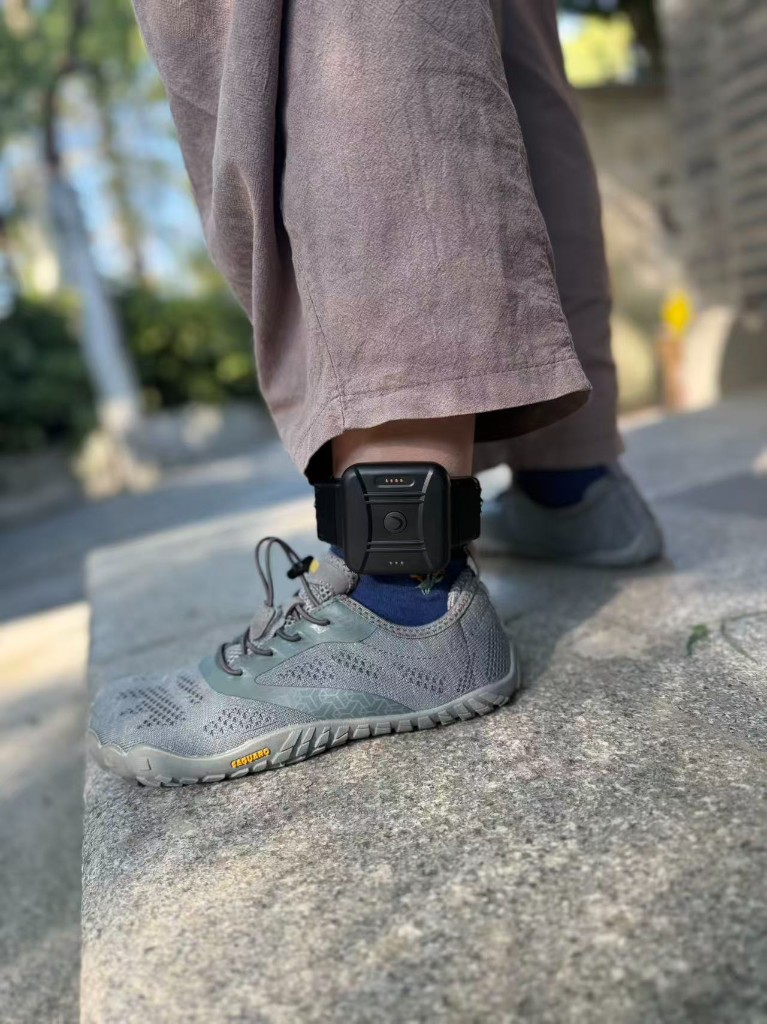
South Korea’s response — building interagency data links and joint response protocols — addresses the most critical failure point: institutional blindness. But the conversation shouldn’t stop at data sharing. The effectiveness of electronic monitoring depends heavily on the technical capabilities of the devices themselves.
Traditional ankle monitors rely exclusively on cellular (LTE) connectivity to transmit location data. When an offender enters a building, a basement apartment, or a rural area with poor cellular coverage, the device can lose signal — creating the exact blind spots that put victims at risk. In Namyangju, the offender had already demonstrated the ability to conduct surveillance at the victim’s workplace. If his ankle monitor had experienced any signal gaps during that surveillance, the location data would have shown nothing unusual.
Next-generation GPS ankle monitors address this with multi-mode connectivity — combining BLE (Bluetooth Low Energy), WiFi, and LTE to maintain continuous tracking regardless of environment. A device that automatically switches between communication modes eliminates the cellular dead zones that can make an ankle monitor temporarily invisible. When deployed alongside victim-side mobile apps that detect Bluetooth proximity from the offender’s device, the system creates a layered defense that works indoors, underground, and in rural areas where cellular-only devices fail.
The technology to prevent the information gap in the Namyangju case already exists. What was missing was the institutional will to connect the systems — and the technical architecture to ensure that no environment creates a monitoring blind spot.
Lessons for Victim Protection Programs Worldwide
South Korea’s two killings and 100-day response carry lessons that extend far beyond the Korean peninsula:
1. Interagency data integration isn’t optional — it’s the foundation. Any electronic monitoring system where the supervising agency doesn’t know about court-issued restraining orders (or vice versa) has a lethal blind spot. South Korea’s ₩4.2 billion investment in real-time EM integration demonstrates what it takes to close this gap — and how fast a motivated government can move when the political will exists.
2. Restraining orders without location enforcement are paper shields. The Seongnam case proves that even a “Grade A” victim classification, a police smartwatch, and a three-minute response time cannot prevent a determined attacker. Only continuous offender tracking with proximity-based geofencing can generate alerts before contact occurs.
3. Risk assessment tools need real-time behavioral data inputs. In Seongnam, the perpetrator was assessed as “moderate” risk — in part because no restraining order violations had been reported. But absence of reported violations doesn’t mean absence of surveillance behavior. GPS ankle monitors with movement pattern analysis can detect stalking-like behavior patterns (repeated visits to a victim’s vicinity) even when no formal violation occurs.
4. Device architecture determines operational effectiveness. An ankle monitor that loses cellular signal inside a building is not protecting anyone during those gaps. The next generation of EM technology must eliminate communication blind spots through multi-mode connectivity, not just improve single-channel range. A one-piece GPS ankle monitor with adaptive BLE/WiFi/LTE switching ensures that the offender’s location is always known — whether they’re in a basement apartment or an open field.
5. Victim protection requires proactive isolation, not reactive response. Kim Jeong-gyu, a professor at Honam University’s Police Administration Department, summarized it after the Seongnam case: “Restraining orders and smartwatches are minimal safeguards. Institutional improvements are needed to proactively block perpetrators, not just protect victims.” This is the core truth that both Korean cases reinforce.
What Comes Next for South Korea — and the Global EM Industry
South Korea is now developing a system to share the real-time GPS locations of ankle-monitor wearers between the Ministry of Justice and police — a capability that didn’t exist before the Namyangju killing. The two agencies conducted two weeks of field training and a nationwide joint simulation exercise beginning June 22.
But the deeper question — the one the Seongnam case forces — is whether electronic monitoring should be the default response for stalking and domestic violence cases, rather than a measure of last resort imposed only after risk assessment hits a threshold that may already be too late.
South Korea’s experience is a case study in how fast a nation can rebuild its victim protection architecture when forced by tragedy. The lessons are clear: integrate agency data, track offenders in real time, alert before contact, and use technology that works in every environment. The cost of not doing so isn’t measured in budgets. It’s measured in lives.
Sources
- The Herald Business — Justice Ministry, police to share data on high-risk offenders wearing ankle monitors (July 5, 2026)
- The Herald Business — South Korea rolls out joint monitoring system after ankle-bracelet wearer kills stalking victim (July 5, 2026)
- Chosun Ilbo — Ministry of Justice, Police Jointly Respond to Approach Prohibition Violations (July 5, 2026)
- Chosun Ilbo — Restraining Order, Smartwatch Fail to Prevent Fatal Stabbing (July 5, 2026)
About REFINE Technology (CO-EYE)
REFINE Technology is the leading electronic monitoring solutions provider in China with over 16 years of experience in the criminal justice industry. As the exclusive supplier for top security agencies, REFINE Technology has deployed 200,000+ devices across 30+ countries, monitoring 130,000+ individuals. The CO-EYE product line — featuring the next-generation all-in-one GPS ankle monitor, BLE wristbands, RF home beacons, and a unified monitoring platform — delivers high-security, low-stigma supervision for high-risk, mid-risk, and low-risk offender monitoring and victim protection. All CO-EYE devices carry full European NB CE directives (RED/Cybersecurity/LVD/SAR) and FCC certifications, with IP68 waterproof and REACH/RoHS/WEEE compliance. CO-EYE solutions are trusted in the USA, Europe, Africa, Bhutan, Papua New Guinea, Dominican Republic, Armenia, and expanding globally.
For more information, visit www.ankle-monitor.com or contact marketing@rfidcn.com.
Related: GPS Ankle Bracelet Guide 2026: Costs, Technology & Vendor Selection