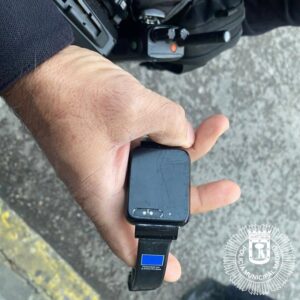

Karachi’s Sindh police have identified nearly 10,000 habitual offenders cycling through the bail system and re-offending within weeks. In 2022, the Sindh Assembly passed the Sindh Habitual Offenders Monitoring Act, authorizing GPS ankle monitors for repeat bail suspects. The Sindh Cabinet formally approved implementation in April 2025. Procurement tenders for 4,000 e-tagging devices were published in November 2024.
Yet as of June 2026, not a single suspect has been placed under electronic monitoring. The program exists only on paper. This is not a story about political willpower alone — it is a case study in the specific technical, legal, and financial obstacles that stall EM deployments in developing countries, and what a realistic implementation path actually looks like.
What Went Wrong: Four Compounding Failures
The Karachi EM program did not fail for a single reason. Four structural problems compounded to freeze the project at the procurement stage.
1. Budget Allocation vs. Budget Reality
Sindh Police received a total budget of PKR 125 billion (~$450 million) for FY 2023-24. According to The News reporting on the CM’s directive, PKR 600 million was specifically allocated for e-tagging of repeat offenders — but even this ring-fenced amount has not been utilized. The Sindh Cabinet’s April 2025 approval came without a dedicated funding line item. Without ring-fenced capital expenditure, the procurement tender published in November 2024 had no actual money behind it.
This pattern is common across developing-country EM initiatives. Thailand’s EM bail scheme (launched 2017) similarly stalled when the judiciary discovered that GPS device maintenance costs — not just procurement — required ongoing annual budgets that had never been allocated (Chanhom, 2020, Asian Journal of Criminology).
2. Legal Framework Without Operational Rules
The Sindh Habitual Offenders Monitoring Act 2022 provides the legal authority for e-tagging but lacks critical operational detail. Who pays for the devices — the state or the offender? What constitutes a “habitual offender” triggering monitoring? How long does monitoring last? What happens when a device is tampered with — who responds, and with what authority?
Comparative experience from Iran’s EM implementation study (Babaei et al., 2024) found that broad penal code references to electronic monitoring without detailed implementing regulations create an “implementation vacuum” where courts and police both claim the other agency should take responsibility. Pakistan’s Sindh Act appears to have replicated this exact failure mode.
3. Constitutional Rights Collision
Legal experts and human rights advocates raised a fundamental question: does placing a bailed suspect under continuous GPS surveillance violate constitutional rights? Pakistan’s Constitution guarantees liberty after bail — attaching a tracking device arguably converts bail into a form of continued custody.
This is not a uniquely Pakistani concern. Indonesia’s 2025 draft Criminal Procedure Code reform explicitly addressed this by requiring that EM be authorized only through judicial determination with individualized risk assessment, proportionality testing, and periodic review (Wahyudi et al., 2025, Jurnal Ilmiah Kebijakan Hukum). England’s Bail Act framework similarly requires EM conditions to be “no more restrictive than necessary” and subject to court review. Without embedding these safeguards into the Sindh Act’s implementing regulations, any EM deployment would face immediate constitutional challenge.
4. Infrastructure Assumptions That Don’t Match Reality
The original Sindh proposal assumed a traditional two-piece GPS monitoring architecture: ankle-worn RF transmitter + portable GPS tracking unit + home beacon + centralized monitoring center. This architecture — standard for U.S. firms like SCRAM Systems and BI Incorporated in the 2000s-2010s — requires:
- Reliable 3G/4G cellular coverage across all areas where monitored individuals live and work
- Stable power supply for daily device charging (traditional devices require charging every 24-72 hours)
- Home base stations installed at each offender’s residence
- 24/7 monitoring center staffed by trained operators who can distinguish genuine violations from technical false alarms
Karachi’s reality: intermittent power supply in many neighborhoods, patchy cellular coverage in katchi abadis (informal settlements) where many bail suspects reside, and a police force already stretched beyond capacity. The infrastructure gap between what traditional EM systems require and what Karachi can actually provide was never seriously assessed.
What Would a Realistic EM Deployment in Karachi Actually Require?
The Sindh government’s stated goal — monitoring 4,000 habitual offenders in the initial phase, expanding to 10,000-12,000 — is achievable, but only with a fundamentally different technical approach than the one originally envisioned.
Device Architecture: One-Piece, Multi-Mode Connectivity
Traditional two-piece GPS systems are a non-starter in Karachi’s operating environment. A viable deployment requires one-piece GPS ankle monitors that eliminate the paired-device failure mode entirely — no separate tracking unit to forget, lose, or fail to charge.
More critically, the device must operate across multiple connectivity modes to handle Karachi’s infrastructure reality:
- BLE-connected mode — when the offender’s smartphone or a home beacon is nearby, the device offloads GPS/cellular processing to the companion device, extending battery life from days to months
- WiFi-directed mode — in areas with no cellular coverage but available WiFi (common in Karachi’s informal settlements where mobile data is unreliable but neighborhood WiFi exists), the device transmits through WiFi, simultaneously extending battery life and eliminating cellular dead zones
- LTE standalone mode — full autonomous GPS + cellular tracking when needed, with 7-day battery life at standard reporting intervals

This multi-mode approach solves Karachi’s two biggest infrastructure gaps simultaneously: cellular dead zones (solved by WiFi fallback) and unreliable power (solved by dramatically extended battery life). A device that lasts 180 days in BLE mode or 3 weeks in WiFi mode eliminates the daily-charging problem that would be catastrophic in a city with frequent load-shedding.
Monitoring Infrastructure: Cloud-Based, Not Custom-Built
The original Sindh proposal assumed a purpose-built monitoring center — a significant capital expenditure that has never been funded. A practical alternative: cloud-hosted monitoring software accessed through standard web browsers, requiring no dedicated hardware beyond internet-connected workstations at existing police stations.
Modern EM platforms offer enrollee-centric architecture (tracking individuals rather than devices), automated violation classification (separating genuine breaches from technical anomalies), and multi-channel alerts (SMS, WhatsApp, Telegram, push notifications) — enabling police officers to monitor bail suspects from their existing workstations without dedicated 24/7 control room staffing.
Cost Model: Per-Offender vs. Capital Expenditure
The budget impasse — PKR 125 billion total budget with zero allocated to EM — could be resolved by shifting from a capital expenditure model (buy 4,000 devices upfront) to a managed service model where a vendor provides devices, software, training, and maintenance for a monthly per-offender fee.
At scale, GPS monitoring costs approximately $3-8 per offender per day globally. For 4,000 offenders, that translates to $12,000-32,000 per day or $4.4-11.7 million annually. Compared to incarceration costs — even Pakistan’s relatively low per-prisoner expenditure — EM monitoring delivers substantial savings while reducing prison overcrowding pressure.
The Sindh government’s existing Safe City project (PKR 5.6 billion allocated for 1,300 cameras in Karachi alone) demonstrates that substantial security technology budgets are available when politically prioritized. A managed EM service for 4,000 offenders would cost a fraction of the Safe City investment.
What Successful Developing-Country EM Deployments Look Like
Pakistan is not the first developing country to attempt EM deployment. Lessons from comparable jurisdictions provide a clear implementation roadmap.
South Africa: Phased Rollout with Judicial Integration
South Africa’s Department of Correctional Services has operated GPS ankle monitoring for parolees and community corrections since 2012, starting with a pilot of 500 devices in Gauteng province before expanding nationally. The critical success factor: integration into existing parole board workflows rather than creating a parallel monitoring bureaucracy. Magistrates and parole boards order EM conditions as part of standard release decisions, with monitoring handled by contracted service providers rather than corrections staff.
Dominican Republic: Vendor-Managed Service Model
The Dominican Republic deployed GPS ankle monitors for pretrial supervision starting in 2019, using a vendor-managed service model where the technology provider handles device logistics, maintenance, and monitoring center operations. This eliminated the need for government capital expenditure on equipment and avoided the training/staffing challenge that has stalled Pakistan’s program.
Key Lessons for Sindh
- Start with 500, not 4,000 — pilot in 2-3 police stations with measurable recidivism outcomes before scaling
- Judicial integration first — embed EM conditions into existing bail order workflows, with clear court authority over activation and deactivation
- Managed service, not procurement — contract a vendor to provide devices + software + training + maintenance as a service, converting CAPEX to OPEX
- Constitutional safeguards built in — mandatory risk assessment before EM imposition, maximum monitoring duration, automatic judicial review at 6-month intervals, and clear privacy protections for location data
- Device specifications must match local conditions — multi-mode connectivity (not cellular-only), extended battery life (not daily charging), one-piece design (not multi-component systems), and zero false-alarm tamper detection to prevent police alert fatigue
Why Karachi’s EM Failure Matters Beyond Pakistan
Karachi’s stalled EM program is not an isolated case. From Thailand to Iran to Indonesia, developing countries are legislating EM programs faster than they can implement them. The pattern is consistent: pass an enabling law, announce a procurement, discover that the traditional EM technology architecture assumes infrastructure that doesn’t exist, and stall.
The technology gap is no longer the binding constraint. Next-generation one-piece GPS ankle monitors with adaptive multi-mode connectivity (BLE + WiFi + LTE), months-long battery life, and zero false-alarm fiber-optic tamper detection already exist and are deployed in 30+ countries. The binding constraints are now institutional: ring-fenced budgets, operational regulations, judicial integration, and constitutional safeguards.
Karachi’s 10,000 habitual offenders will continue cycling through the bail system and re-offending until these institutional constraints are resolved. The technology to monitor them is ready. The question is whether Sindh’s government and judiciary are willing to do the unglamorous institutional work required to deploy it.
About REFINE Technology (CO-EYE)
REFINE Technology is the leading electronic monitoring solutions provider in China with over 16 years of experience in the criminal justice industry. As the exclusive supplier for top security agencies, REFINE Technology has deployed 200,000+ devices across 30+ countries, monitoring 130,000+ individuals. The CO-EYE product line — featuring the next-generation all-in-one GPS ankle monitor, BLE wristbands, RF home beacons, and a unified monitoring platform — delivers high-security, low-stigma supervision for high-risk, mid-risk, and low-risk offender monitoring and victim protection. All CO-EYE devices carry full European NB CE directives (RED/Cybersecurity/LVD/SAR) and FCC certifications, with IP68 waterproof and REACH/RoHS/WEEE compliance. CO-EYE solutions are trusted in the USA, Europe, Africa, Bhutan, Papua New Guinea, Dominican Republic, Armenia, and expanding globally.
For more information, visit www.ankle-monitor.com or contact marketing@rfidcn.com.
Related: GPS Ankle Bracelet Guide 2026: Costs, Technology & Vendor Selection