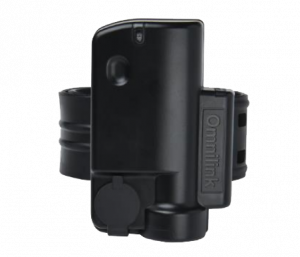

Three correctional officers guarding 88 inmates. That ratio—roughly 1:29—was all it took for prisoners at North Carolina’s Bertie-Martin Regional Jail to overpower staff, seize hostages, and trigger a 10-hour standoff on June 29, 2026. Two weeks later, Sheriff Ralph Kersey of Scotland County issued a formal public safety warning: his 109-bed detention center is housing 187 inmates with the same skeleton staffing—three to four officers per shift. “The situation is no longer sustainable,” Kersey told the Board of Commissioners. “Staff safety, inmate safety, and public safety are at risk.”
Scotland County is not an outlier. It is a symptom of a systemic collapse unfolding across North Carolina and, increasingly, across the United States. The question is not whether counties can afford electronic monitoring programs. The question is whether they can afford not to implement them.
What Is Actually Happening in Scotland County?
The numbers tell a stark story. Scotland County Detention Center, rated for 109 inmates, currently holds 187—171% of capacity. Housing units designed for 16 inmates now pack in 26 to 27 people per block. Dozens sleep on mats on the floor. Recent inspection reports flag violations in toilet, sink, and shower ratios. The county’s $8.4 million annual sheriff’s office budget includes no funding for facility improvements.
Jail administrator John Hunt and Captain Jason Butler laid out the operational reality in blunt terms during a July 10 briefing reported by Spectrum News: forced overtime for staff, inmates sleeping on floors, and rising risks of violence. Butler pointed to the Bertie-Martin takeover as a warning that should be “a wake-up call for a lot of facilities.”
The financial math is equally alarming. Butler estimates Scotland County spends approximately $100 per day per inmate—and that does not include bedding, uniforms, towels, or footwear. At 187 inmates, that is $18,700 per day, or $6.8 million per year, just for basic housing costs. The county is already discussing a jail expansion feasibility study—estimated at $78,000—while Commissioner Ed O’Neal has proposed adding 125 beds through an adjacent building, a project that would likely cost tens of millions of dollars.
Why Is This Crisis Exploding Across North Carolina Right Now?
Scotland County’s overcrowding did not appear overnight. But a specific policy change has accelerated the crisis statewide. North Carolina’s Iryna’s Law, which took effect December 1, 2025, tightened pretrial release rules—particularly for defendants accused of violent offenses. The law was designed to improve public safety after a deadly stabbing on a Charlotte light rail train, but it has produced dramatic unintended consequences in jail populations across the state.
The data from North Carolina’s six largest counties tells the story:
North Carolina Jail Population Surge Since Iryna’s Law (Dec 2025 – May 2026)
| County | Dec 2025 | May 2026 | Change | Capacity |
|---|---|---|---|---|
| Mecklenburg | 1,622 | 2,085 | +28.6% | 1,791 |
| Wake | 1,564 | 1,741 | +11.3% | 1,574 |
| Guilford | 973 | 1,140 | +17.2% | — |
| Forsyth | 907 | 953 | +5.1% | 800-850 est. |
| Durham | 434 | 519 | +19.6% | — |
| Scotland | — | 187 | 171% of capacity | 109 |
Sources: Charlotte Observer, WRAL, The Assembly NC, Spectrum News. Data compiled from county sheriff’s offices, May–July 2026.
Mecklenburg County’s jail population jumped 28.6% in five months, blowing past its 1,791-person capacity. Wake County is opening a long-closed detention annex to add 240 beds. Mecklenburg is reopening a former juvenile facility to house adult overflow. These are emergency measures, not solutions.
The national picture is just as bleak. According to the Prison Policy Initiative’s 2026 factsheet, 546,000 people sit in U.S. local jails on any given day. Eighty percent are pretrial detainees—people who have not been convicted. The annual cost of pretrial detention nationwide: $13.6 billion.
Why Building More Jail Beds Is the Wrong Answer
Scotland County’s instinct—build more beds—is understandable. It is also the most expensive, slowest, and least effective response available. The Prison Policy Initiative’s analysis of jail expansion documents a pattern that has repeated across hundreds of U.S. counties: new beds fill up within years, sometimes months, of construction completion. The underlying driver—overreliance on pretrial detention for defendants who do not pose serious flight or safety risks—remains unchanged.
Consider the math for Scotland County. Commissioner O’Neal proposed adding 125–150 beds at a cost that would run into the tens of millions. Construction timelines for similar projects in North Carolina have ranged from 2 to 5 years. By the time a new facility opens, population growth and policy changes may have already consumed the additional capacity.
Meanwhile, Mecklenburg County’s budget director reported a $5.3 million increase in jail operations funding this year, plus a $1 million surge in food costs alone—direct consequences of overcrowding. These are recurring costs that compound annually. Every dollar spent housing a pretrial defendant who could be safely supervised in the community is a dollar unavailable for law enforcement, mental health services, or community safety programs.
How Does Risk-Based Electronic Monitoring Actually Solve This?
Scotland County officials are already considering electronic monitoring for eligible inmates. Captain Butler described two funding models: an inmate-funded option at $4.50–$6.50 per day, or county-funded monitoring. Compare that to the $100 per day Butler cited for traditional incarceration—a 93–95% cost reduction per supervised individual.
But the real value of electronic monitoring is not simply cost savings. It is the ability to match supervision intensity to actual risk—something a jail cell cannot do. A concrete wall provides the same level of restraint whether someone is charged with shoplifting or armed robbery. That is not public safety. That is warehousing.
A properly designed risk-tiered electronic monitoring program segments the detained population into supervision levels based on validated risk assessment:
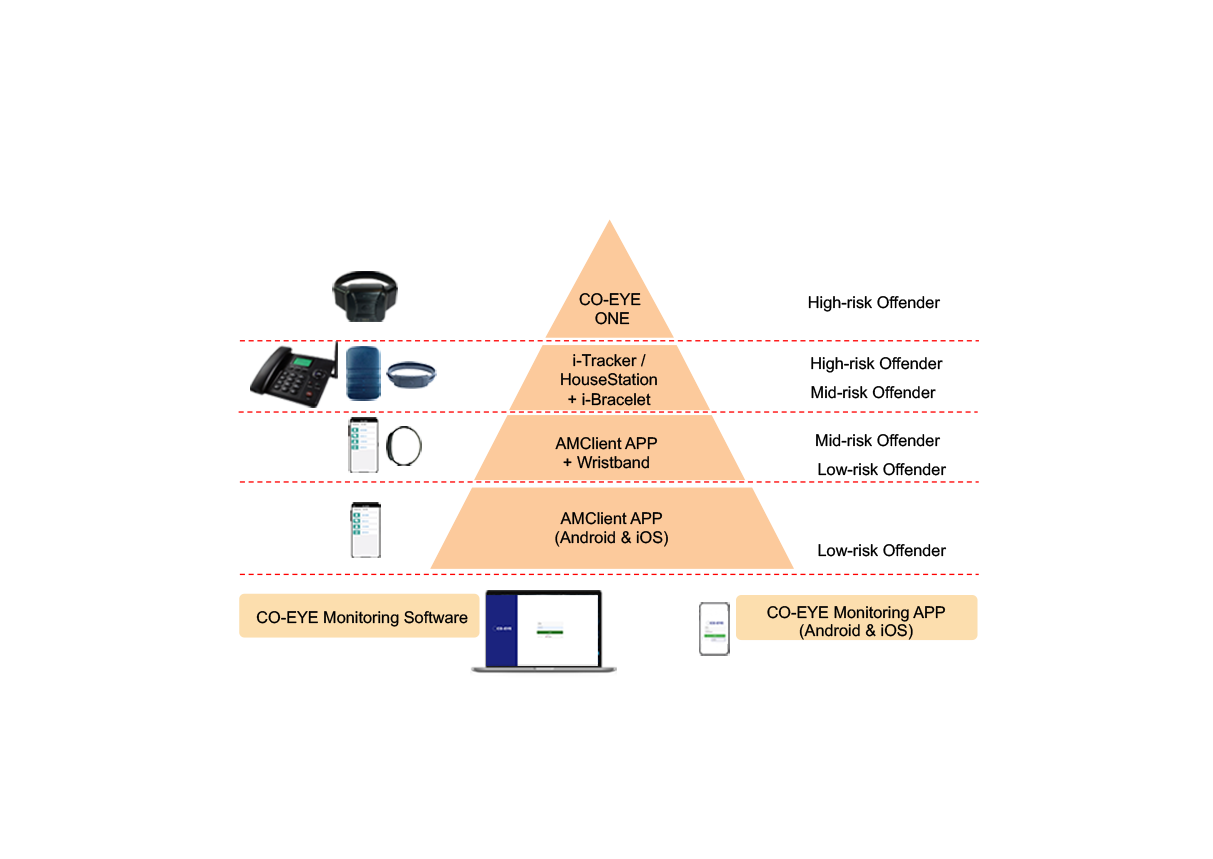
High-Risk Defendants: GPS Ankle Monitoring with Real-Time Alerts
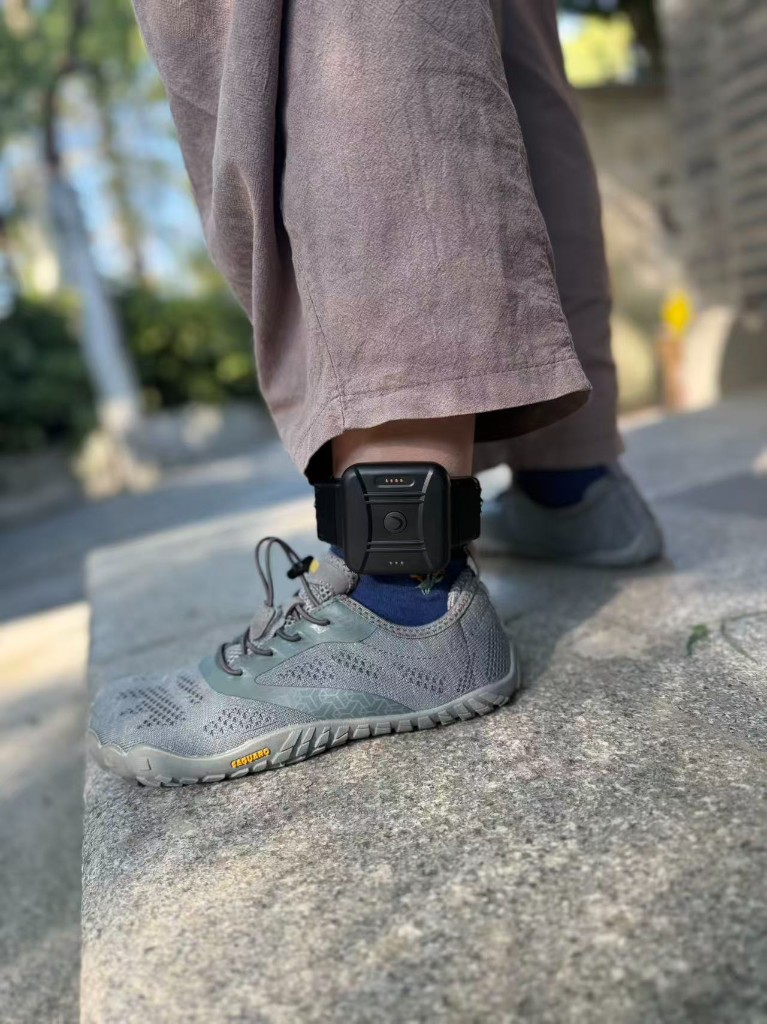
Defendants charged with violent offenses who a judge determines can be safely released under strict conditions require continuous GPS tracking, real-time geofence alerts, and tamper-proof hardware. These are the individuals Iryna’s Law was designed to keep detained—but when jail capacity physically cannot hold them, the choice becomes releasing them with no supervision at all, or releasing them with 24/7 GPS tracking.
The technology matters enormously at this tier. A GPS ankle monitor that runs out of battery in 24 hours creates false “lost signal” alerts that consume officer time—the exact resource Scotland County does not have. A device that maintains continuous monitoring for 7 days on cellular, 3 weeks on WiFi, or 6 months on BLE-connected mode eliminates the dead-battery crisis that plagues legacy two-piece systems.
Medium-Risk Defendants: BLE Wristband + Home Beacon
Defendants assessed as moderate risk—such as those charged with non-violent felonies or repeat misdemeanors with flight risk factors—need presence verification and curfew enforcement, but not necessarily continuous outdoor GPS tracking. A lightweight BLE wristband paired with a home beacon confirms whether the individual is at their approved residence during curfew hours, at a fraction of the cost and intrusiveness of full GPS monitoring.
At 17 grams, a BLE wristband looks and feels like a fitness tracker. It carries none of the social stigma of a visible ankle monitor, which matters because stigma directly affects employment retention—and employed defendants are significantly less likely to fail to appear in court.
Low-Risk Defendants: Smartphone App Supervision
The largest segment of any pretrial population consists of defendants who pose minimal flight or safety risk but remain in jail because they cannot afford bail. The Yale Law Journal has argued that electronic monitoring presents “a superior alternative to money bail for addressing flight risk”—and for low-risk defendants, that monitoring can be as simple as a smartphone application.
A supervision app delivers GPS check-ins, scheduled photo verification, court date reminders, and two-way messaging between the defendant and their supervising officer—all without any physical device. For Scotland County, where Captain Butler described monitoring costs of $4.50–$6.50 per day, smartphone supervision would fall at the lowest end of that range while covering the largest portion of eligible inmates.
What Does the Math Actually Look Like for Scotland County?
The economic case is not theoretical. Let us apply real numbers to Scotland County’s situation:
Scotland County: Jail vs. Electronic Monitoring Cost Comparison
| Scenario | Daily Cost | Annual Cost |
|---|---|---|
| Current: 187 inmates × $100/day (jail) | $18,700 | $6.83M |
| Reduced to capacity: 109 inmates (jail) + 78 on EM ($6/day) | $11,368 | $4.15M |
| Annual savings | — | $2.68M |
| Feasibility study cost (jail expansion) | — | $78,000 |
Cost estimates based on Scotland County officials’ statements (Spectrum News, July 2026). EM daily rate uses Butler’s upper estimate of $6.50/day. Actual jail costs likely higher when including bedding, uniforms, medical, and administrative overhead.
Moving 78 eligible inmates—the number needed to bring the facility back to its rated 109-bed capacity—onto electronic monitoring would save approximately $2.68 million annually. That is more than enough to fund the $78,000 feasibility study, hire additional detention officers for the remaining high-risk population, and operate a fully staffed EM program—with money left over.
Nationally, Cook County, Illinois demonstrated this at scale. Research published in the American Economic Journal: Applied Economics (Román Rivera, 2026) found that electronic monitoring “reduces overall costs relative to detention” while serving as an effective middle option between full release and incarceration. The study analyzed quasi-random assignment of bond court judges to estimate EM’s causal effects—the gold standard of empirical evidence.
What About Public Safety Concerns?
Scotland County residents have questioned whether electronic monitoring amounts to a “get out of jail free” option. The concern is legitimate. Here is what the evidence actually shows.
First, no responsible EM program releases everyone. Defendants charged with serious violent offenses—those Iryna’s Law specifically targets—would generally remain detained. Electronic monitoring is designed for the population that drives overcrowding: pretrial defendants charged with non-violent offenses, property crimes, drug offenses, and lower-level felonies who cannot afford bail.
Second, modern GPS ankle monitors are not the passive tracking devices of a decade ago. Today’s systems deliver real-time geofence alerts when a defendant enters a prohibited area, victim proximity warnings for domestic violence cases, and tamper detection that triggers immediate law enforcement response. An officer supervising 50 defendants on GPS monitoring has more actionable intelligence about their movements than an officer walking a housing block of 27 inmates crammed into a space built for 16.
Third, the research is clear on one point: brief pretrial detention for low-risk defendants actually increases future criminal behavior. The Prison Policy Initiative’s analysis of jail expansion notes that “even brief jail stays (particularly for low-risk defendants) can increase an individual’s chance of committing a future crime.” Keeping low-risk defendants in overcrowded conditions with violent offenders is not a public safety strategy. It is a recidivism factory.
What Comes Next for Scotland County — and Every County Facing the Same Crisis?
District Attorney Jamie Adams told Spectrum News that jail overcrowding “isn’t an issue just here. This is an issue that’s plaguing our entire state.” He is right—and it extends far beyond North Carolina. With 546,000 people in U.S. jails and 80% held pretrial, the pretrial monitoring infrastructure of most American counties was not built for current demand.
The path forward requires three parallel actions:
1. Immediate triage through risk-based EM deployment. Counties cannot wait 3–5 years for new construction. Electronic monitoring programs can be operational within weeks, diverting eligible pretrial defendants from cells to community supervision while maintaining—and in many cases improving—public safety outcomes.
2. Technology selection that matches the operational reality. A county with three officers per shift cannot manage an EM system that generates dozens of false alerts per day. The selection criteria must prioritize devices with minimal false alarm rates, extended battery life that eliminates daily charging management, and a unified monitoring platform that one officer can oversee efficiently.
3. Graduated supervision architecture. The most effective—and cost-effective—approach is not one-size-fits-all. High-risk defendants need continuous GPS ankle monitoring. Medium-risk defendants benefit from BLE wristband presence verification. Low-risk defendants can be effectively supervised through smartphone applications. Matching the supervision tool to the risk level prevents both under-supervision of dangerous defendants and over-supervision of low-risk individuals who would be better served by remaining employed and connected to their families.
Scotland County’s crisis is a warning. Bertie-Martin’s takeover was the alarm. The question for county commissioners, sheriffs, and district attorneys across North Carolina and the nation is straightforward: will they implement risk-based electronic monitoring proactively, or wait until their facility becomes the next headline?
About REFINE Technology (CO-EYE)
REFINE Technology is the leading electronic monitoring solutions provider in China with over 16 years of experience in the criminal justice industry. As the exclusive supplier for top security agencies, REFINE Technology has deployed 200,000+ devices across 30+ countries, monitoring 130,000+ individuals. The CO-EYE product line — featuring the next-generation all-in-one GPS ankle monitor, BLE wristbands, RF home beacons, and a unified monitoring platform — delivers high-security, low-stigma supervision for high-risk, mid-risk, and low-risk offender monitoring and victim protection. All CO-EYE devices carry full European NB CE directives (RED/Cybersecurity/LVD/SAR) and FCC certifications, with IP68 waterproof and REACH/RoHS/WEEE compliance. CO-EYE solutions are trusted in the USA, Europe, Africa, Bhutan, Papua New Guinea, Dominican Republic, Armenia, and expanding globally.
For more information, visit www.ankle-monitor.com or contact marketing@rfidcn.com.
Related: GPS Ankle Bracelet Guide 2026: Costs, Technology & Vendor Selection