

If you run an electronic monitoring (EM) program, you already know the feeling: another overnight ping, another “battery low” queue item, another officer deciding whether this is a real emergency or just another charging slip. For many agencies and EM service providers operating legacy LTE-heavy GPS ankle monitor fleets, SCRAM GPS charging problems are not a “user education” issue—they are a recurring operational tax on your staff, your budget, and your credibility in court.
This article is written for EM operators who are tired of paying that tax. We will walk through the mechanics of why GPS ankle monitor battery life collapses under always-on cellular architectures, translate that into dollars using a conservative caseload model, and show why the next generation of devices treats charging as a systems problem—not a nagging chore.
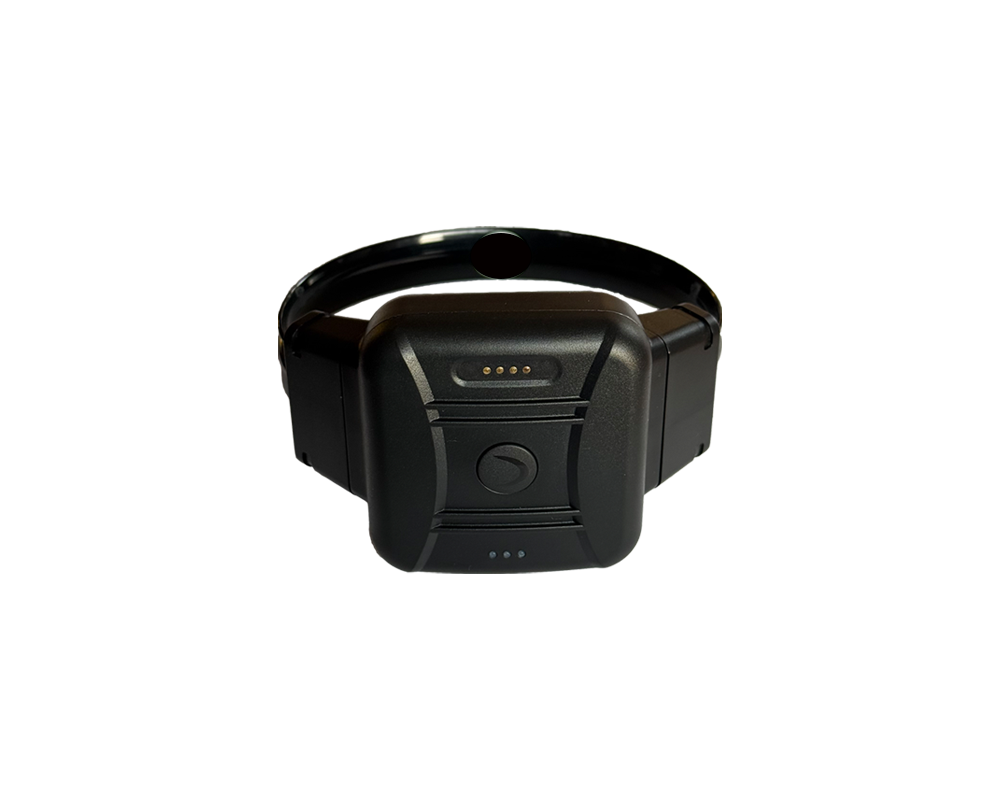
SCRAM GPS charging problems: why “daily charging” is a predictable outcome
Most legacy GPS ankle monitor programs are built around a simple engineering reality: continuous location supervision usually means continuous high-power subsystems—cellular modem activity, GNSS acquisition cycles, security checks, and event buffering. When a device has no lower-power pathway for common supervision states (home, work, indoors), GPS ankle monitor battery life compresses into a narrow window.
Across the industry, many one-piece and two-piece LTE-centric programs operate in a band of roughly 24–72 hours of usable runtime before recharge becomes urgent. That creates three structural consequences:
- High alert volume: low-battery warnings become routine rather than exceptional.
- High human load: staff must triage “is this a flight risk or a charger problem?” repeatedly.
- High participant friction: frequent charging competes with jobs, childcare, travel, and stable routines—raising non-compliance risk even when intent is good.
Electronic monitoring charging cost: translating alerts into dollars
A conservative caseload scenario
- 500 active participants on GPS supervision with short runtime windows
- 50–100 low-battery / power-management alerts per day
- ~$15 fully loaded cost per alert for officer/staff response time
Daily cost: 50 alerts × $15 = $750/day to 100 alerts × $15 = $1,500/day
Annualized: $750 × 365 ≈ $273,750/year to $1,500 × 365 ≈ $547,500/year
Even if your real number is half the low end, you are still describing a recurring six-figure budget leak tied to ankle monitor daily charging workflows.
From Gen 2/3 “charger programs” to Gen 4 “runtime programs”
- Gen 2/3 (legacy): LTE-centric supervision where the device pays the power bill 24/7.
- Gen 4 (next-generation): supervision that adapts connectivity to context—reserving full GNSS+LTE for moments that truly require it.
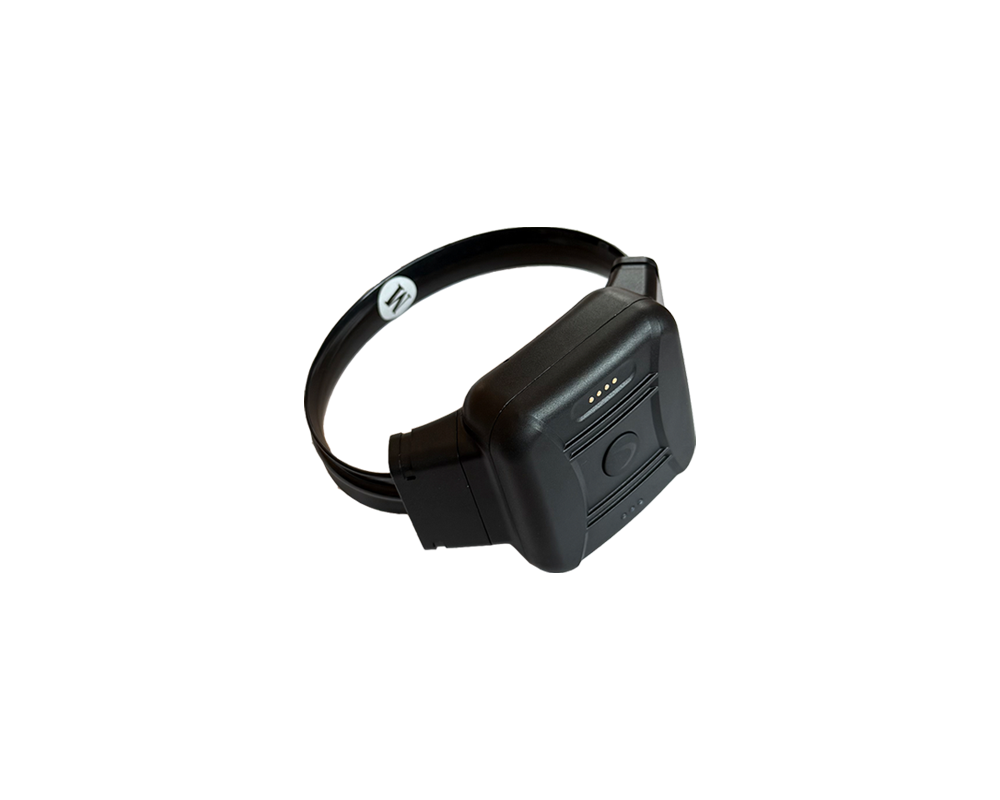
CO-EYE ONE-AC: three modes, one goal—fewer charging emergencies
- BLE connected mode: up to 180 days battery life when paired with a phone app or HouseStation.
- WiFi-directed mode: up to 20 days (~3 weeks) battery life.
- LTE standalone mode: up to 7 days battery life at a 10-minute reporting interval—already far beyond the 24–72 hour band typical of legacy devices.
When you combine longer stable runtime with faster recharge ergonomics—2.5 hours to full charge using a magnetic charging cradle—you change what “normal operations” looks like. Programs commonly model an ~85% reduction in charging-management workload.
Why “better reminders” cannot fix SCRAM GPS charging problems
Programs often try to solve charging pain with policy: more reminders, more call trees, more sanctions for missed charging. Those tools help at the margin, but they do not change the underlying constraint: if the fleet’s typical operational window is short, reminders simply schedule the pain more politely.
What to demand in an RFP
- Runtime under your reporting policy: What is expected battery life at your required fix interval?
- Indoor and dead-zone behavior: What happens in basements and rural edges?
- Operational alert budget: Expected weekly volume of power-state alerts per 100 enrollees?
- Charge time and field ergonomics: How long to meaningful charge?
- Architecture path: Does the vendor offer a multi-mode approach?
For a broader buyer-level view, see our pillar guides on GPS ankle bracelet technology and the GPS ankle monitor guide.
CO-EYE ONE: the operational package beyond battery
CO-EYE ONE is a 108g one-piece GPS ankle monitor with fiber-optic tamper detection supporting zero false tamper alarms. If you want the full product story, start here: CO-EYE ONE / ONE-AC product page.
Frequently asked questions
Are SCRAM GPS charging problems unique to SCRAM?
No. Short GPS ankle monitor battery life creates high alert volume across vendors with LTE-heavy always-on architectures.
How fast can electronic monitoring charging cost add up?
A 500-person caseload producing 50-100 low-battery events daily at ~$15 per triage/response can annualize to roughly $273K-$548K.
What does Gen 4 mean for ankle monitor daily charging?
Gen 4 hardware uses adaptive connectivity—BLE and WiFi when appropriate, LTE when needed—so programs avoid daily charging workflows.
How can we validate CO-EYE runtimes?
Ask for a supervised evaluation matching your fix intervals, then compare power-state alert exports against your incumbent fleet. Contact Sales for details.
Conclusion: stop paying interest on yesterday’s power architecture
Reframing SCRAM GPS charging problems as a line item (alerts × response cost) is the first step. The second step is choosing hardware that reduces the alert denominator: longer stable runtimes, smarter connectivity modes, faster recharge, and one-piece operational simplicity.
That is the CO-EYE ONE-AC proposition in one sentence: move from a charger-managed program to a runtime-managed program—and reclaim supervisor capacity for actual risk.
For a detailed analysis of how tamper detection technology affects program costs and courtroom credibility, see our guide to ankle monitor false alarms and tamper detection comparison.