
By Kevin Zhao, Senior Product Manager, REFINE Technology
I spent last week reading through hundreds of Reddit posts, Quora threads, and public forums where people under electronic supervision describe what it’s like to wear a GPS ankle monitor. The accounts were consistent — and troubling.
“I can’t play basketball anymore. The thing shifts around and it’s too heavy.” “I turned down a restaurant job because the manager saw it.” “My son won’t leave the house because people stare.” “It’s 90 degrees. I live by the beach. My officer tells me I can go, just don’t go in the water. Who does that?”
These aren’t edge cases. They represent the daily reality for an estimated 125,000–150,000 Americans wearing ankle monitors on any given day. And they point to something I’ve believed since we started developing CO-EYE products in 2004: effective monitoring and human dignity are not mutually exclusive. The technology exists to do both.
Why Does the Same Device Monitor a Misdemeanor Shoplifter and a Violent Offender?
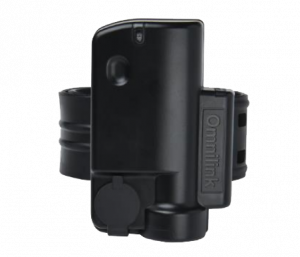
The electronic monitoring industry has treated all supervised populations the same for 40 years. A 19-year-old on pretrial release for a first-offense misdemeanor wears the same 200-gram GPS ankle device as a high-risk violent offender. A grandmother under house arrest for a nonviolent charge wears the same bulky hardware as a flight risk on federal supervision.
Cornell researcher Lauren Kilgour called this “the ethics of aesthetics” in her 2020 study — arguing that ankle monitors function as a “digital scarlet letter” because there is “no differentiation in the aesthetics of the different types of models used.” Every wearer, regardless of risk level or charge severity, is marked the same way.
This is not an engineering constraint. It is a product design choice that the industry has refused to revisit. At CO-EYE, we chose differently.
CO-EYE i-Bracelet: Justice-Grade Monitoring in a Fitness Tracker Form Factor
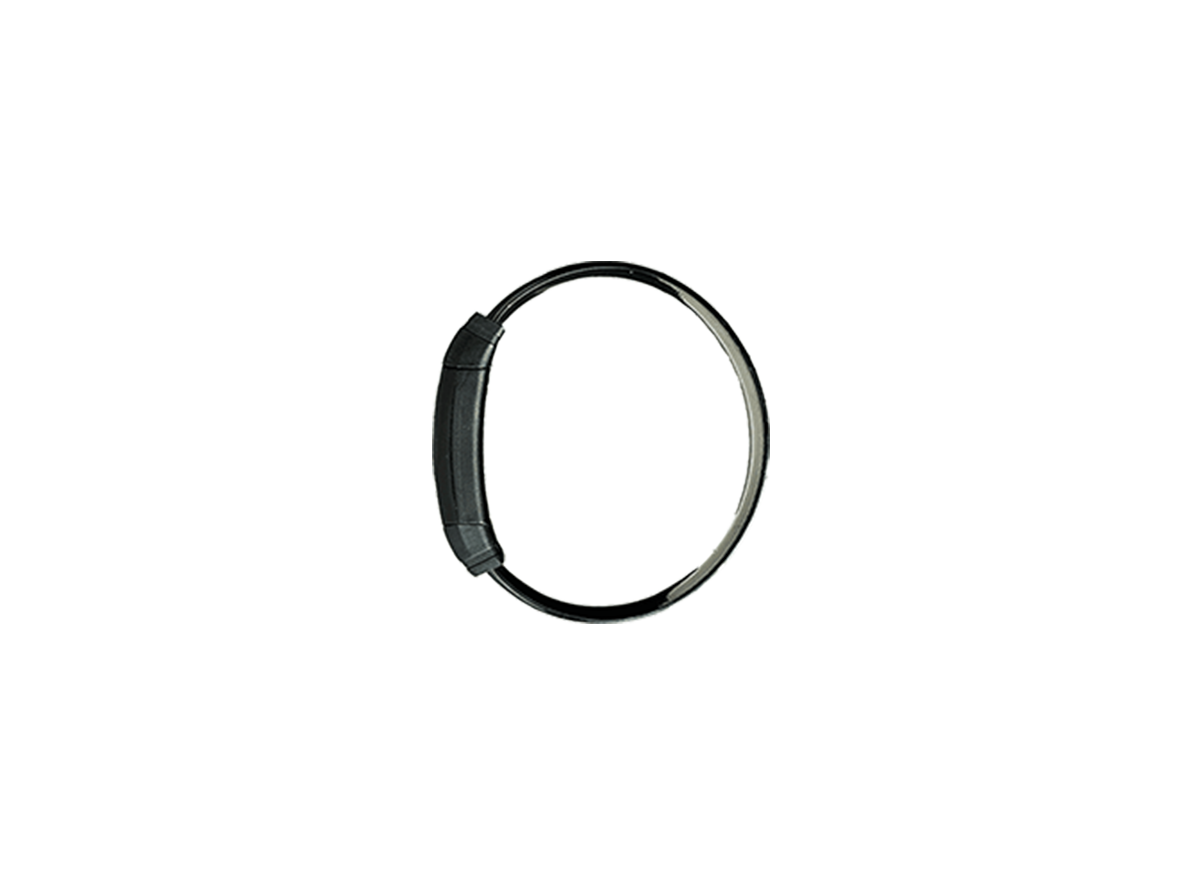
The CO-EYE BLE i-Bracelet was designed from the ground up for one purpose: to provide courts and agencies with a monitoring device that low-risk and moderate-risk populations will actually wear without the collateral damage documented by researchers at Vera, the ACLU, Cornell, and the Justice Policy Institute.
| Specification | CO-EYE BLE i-Bracelet | Typical GPS Ankle Monitor |
|---|---|---|
| Weight | 17 grams | 150–252 grams |
| Dimensions | 65 × 22 × 10 mm | 60–80 × 50–60 × 20–30 mm |
| Placement | Wrist | Ankle |
| Visual Profile | Indistinguishable from fitness band | Immediately identifiable as monitoring device |
| Battery Life | 2 years (no charging) | 24–72 hours (daily charging required) |
| Connectivity | BLE 2.4GHz → Smartphone app | GPS + LTE cellular (self-contained) |
| Tamper Detection | Strap integrity + BLE disconnect alert | Fiber-optic strap (most vendors); metal wire clasp (SCRAM); electronic lock (Geosatis) |
| Daily Charging? | No (2-year battery) | Yes (every 24–72 hours) |
| U.S. Certification | FCC Certified | FCC (varies by vendor) |
| Stigma Impact | Minimal — looks like a watch/fitness band | Severe — 60–80% of wearers report social stigma |
How Does the i-Bracelet + AMClient System Work?
The i-Bracelet does not contain GPS or cellular radios — that would make it as large and power-hungry as the ankle monitors it’s designed to replace. Instead, it operates as a secure BLE tether to the CO-EYE AMClient app running on the wearer’s smartphone (iOS or Android).
The system architecture works in three layers:
- Presence Verification: The i-Bracelet maintains a continuous encrypted BLE connection to the AMClient app using SHA-256 authentication and AES encryption. If the bracelet moves beyond BLE range (~60 meters in open space) from the phone — or if the strap is tampered with — the system generates an immediate alert to the monitoring dashboard.
- Location Tracking: The AMClient app on the wearer’s smartphone provides continuous GPS tracking, geofence enforcement, and location history — using the phone’s built-in GNSS, WiFi, and cellular positioning. All data is transmitted in real time to the CO-EYE Monitoring Software platform.
- Identity & Compliance: Scheduled and on-demand check-ins through the AMClient app include photo verification, biometric confirmation, SOS alerts, messaging, and calendar management. Officers can remotely configure all check-in parameters through the AMManager companion app.
This three-layer architecture provides courts with the same supervision capabilities as a GPS ankle monitor — location tracking, geofencing, tamper detection, identity verification — through hardware that weighs 17 grams and looks like a Fitbit.
Who Is the i-Bracelet + AMClient Solution Designed For?
We designed this system for the populations that researchers have documented as being most harmed by traditional ankle monitors — and where the risk profile does not justify maximum-security hardware:
- Pretrial defendants with nonviolent charges — the largest single segment of the U.S. EM population. Courts can offer supervised release that doesn’t destroy employability.
- Juvenile offenders — where a wristband that looks like a smartwatch eliminates school stigma, allows sports participation, and maintains peer relationships critical to healthy development.
- Women under supervision — where professional presentation and caregiving responsibilities are disproportionately impacted by visible ankle hardware.
- Elderly individuals — where device weight, skin sensitivity, and mobility limitations make ankle monitors a physical health concern beyond their monitoring function.
- Drug court and treatment court participants — where compliance monitoring should support recovery rather than create additional stress triggers. At $2–5/day for app-based monitoring versus $8–25/day for GPS ankle devices, the cost reduction also frees resources for treatment programming.
- Immigration monitoring — the Vera Institute documented over 340,000 people under ICE electronic monitoring by 2022, many of whom are asylum seekers with negligible flight risk.
For Software Companies & EM Service Providers: OEM Integration
The U.S. market has a growing ecosystem of supervision software companies — TRACKtech, Corrisoft, One Step Software, Talitrix, and others — that have built sophisticated app-based monitoring platforms. Many of these platforms lack a hardware tethering component: they rely entirely on the smartphone for presence verification, which creates gaps when a phone is left behind or handed to someone else.
The CO-EYE i-Bracelet is available as an OEM component specifically designed for integration into third-party supervision platforms. E-Cell (Fort Smith, Arkansas) has already integrated our BLE wristband technology into their FOB system, combining it with their House Arrest App and alcohol monitoring program to create a comprehensive wrist-worn alternative to ankle monitors.
For EM software providers evaluating hardware partnerships, the integration offer is straightforward:
- FCC-certified hardware ready for U.S. deployment — no additional regulatory approvals needed
- Standard BLE 2.4GHz protocol compatible with iOS 6+ and modern Android devices
- SDK and documentation for integrating BLE tethering, tamper detection alerts, and presence verification into existing apps
- 2-year maintenance-free battery — no charging infrastructure, no battery-related compliance failures
- Volume pricing that makes wristband deployment cost-competitive with app-only monitoring
- White-label options — the device can carry your brand or operate as a generic BLE tether
The Bigger Picture: Monitoring That Supports Reintegration
The bail reform movement has demonstrated that America’s pretrial system incarcerates too many people who pose minimal risk to public safety. Electronic monitoring was supposed to be the answer — release people from jail while maintaining oversight. But when the monitoring device itself creates employment barriers, social isolation, and psychological harm, it undermines the very reintegration outcomes the system is designed to support.
We built the i-Bracelet + AMClient system because we believe the question is not whether to monitor, but how. A 17-gram BLE wristband that looks like a fitness tracker and provides two years of maintenance-free operation alongside a smartphone app that delivers continuous location tracking, biometric check-ins, and geofence enforcement — this is what risk-proportionate supervision looks like when technology is designed for the wearer, not just the agency.
If you’re an EM service provider, software company, corrections agency, or bail bond operation exploring less intrusive monitoring options, we’d welcome the conversation.