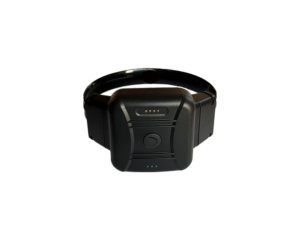
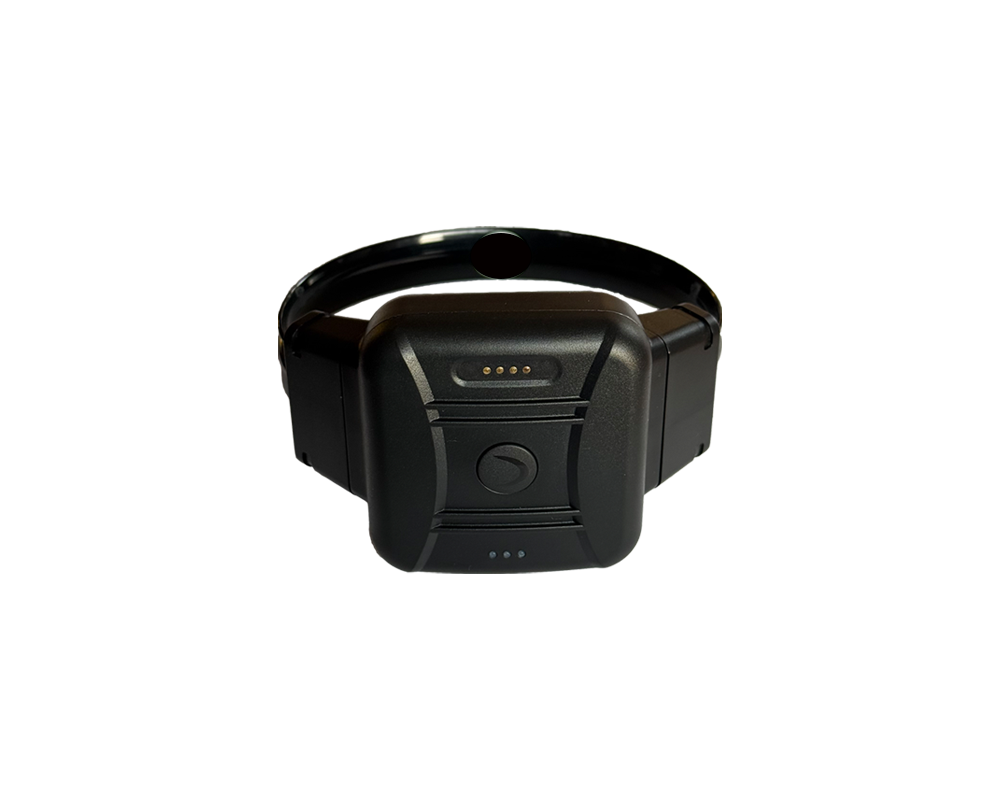
What Is a GPS Ankle Monitor?
A GPS ankle monitor—often called an electronic ankle bracelet or ankle monitor bracelet in court and probation paperwork—is a corrections-grade wearable that answers a simple supervision question with engineering rigor: where is the person, and is the device still physically intact? Unlike consumer fitness trackers, these systems are purpose-built for due process, audit trails, and 24/7 operations where a missed alert or a chronic false alarm can erode judicial confidence as quickly as a true security breach.
At the highest level, a GPS ankle monitor combines three cooperating subsystems: GNSS positioning (satellite navigation signals processed into latitude/longitude fixes), cellular data transmission (moving encrypted location and status packets to a monitoring center), and anti-tamper monitoring (continuous integrity checks on the strap and housing so that cut straps or forced entry are reported as high-priority events). Software platforms then apply rules—home curfews, exclusion zones around schools or victims, movement schedules—and notify officers when logic or hardware status demands action.
Who uses GPS ankle monitors? Deployment spans corrections and pretrial programs managing flight risk, probation and parole agencies applying graduated sanctions, bail bond and pretrial services organizations supporting court appearance compliance, domestic violence supervised release with victim-proximity considerations, and sex offender caseloads requiring geographically bounded supervision. International adoption mirrors U.S. use cases with different statutory labels but similar operational needs: durable hardware, dependable connectivity, and evidence-grade reporting.
Scale matters when evaluating vendor maturity. REFINE Technologies, the company behind the CO-EYE product line available through ankle-monitor.com, traces its work in electronic monitoring to 2004 and reports more than 200,000 devices deployed across 30+ countries, with 130,000+ individuals monitored in aggregated program statistics. Those figures do not replace your own pilot data—but they signal field hours accumulated across climates, carrier environments, and enforcement cultures.
Readers evaluating procurement options should pair this article with the structured decision framework in our GPS ankle monitor buyer’s guide and the engineering deep dive on the flagship CO-EYE ONE one-piece GPS ankle monitor, which embodies many of the technical themes discussed below.
Terminology in RFPs is intentionally inconsistent. Some jurisdictions write “electronic ankle bracelet,” others “ankle monitor bracelet,” and still others “OTS device” after exposure to NIJ documentation. Functionally, buyers are specifying the same operational envelope: a tamper-aware wearable with logged positions suitable for evidentiary discussion, configurable alerts, and integration into a case-management rhythm that already includes risk assessments, drug testing, and officer contacts. The hardware must therefore be boringly reliable—unremarkable when working, unforgettable when it fails.
Finally, distinguish commercial procurement from court-facing narratives. Judges and participants care about fairness, clarity of conditions, and proportionality; IT teams care about encryption, uptime, and data retention; field officers care about whether the strap survives a double shift in summer heat. A complete GPS ankle monitor evaluation addresses all three audiences with linked documentation: plain-language participant instructions, cryptographic and access-control specifications, and maintenance intervals grounded in measured failure rates rather than anecdotes.
How GPS Ankle Monitors Work: Technology Stack
Supervision buyers are often shown marketing maps with pretty breadcrumbs; the defensible analysis starts with the technology stack—the sensors, radios, power system, and back-end workflow that either holds up under caseload stress or collapses into noise.
Multi-constellation GNSS positioning
Global Navigation Satellite Systems (GNSS) power modern GPS ankle monitor designs. GPS remains the household name, but professional devices increasingly blend GPS, BeiDou, GLONASS, and Galileo observations to improve fix availability in urban canyons and mid-latitude sky obstructions. Leading one-piece hardware such as CO-EYE ONE pairs multi-constellation GNSS with WiFi and LBS (network-assisted) fallbacks where regulations and privacy policies permit—reducing “unknown location” gaps that trigger unnecessary officer callbacks.
Accuracy statements must be read carefully. CO-EYE ONE is specified at <2 m CEP for its GNSS performance class—meaning tight horizontal error under favorable conditions compared with many legacy trackers rated nearer <5 m CEP. Procurement teams should demand test protocols tied to fix intervals, sky view, and motion profiles, not billboard numbers alone.
Cellular backhaul: LTE-M/NB-IoT versus legacy GSM/WCDMA
Location fixes are useless until they reach the monitoring center. LTE-M and NB-IoT are low-power wide-area cellular layers designed for telemetry: they extend battery life versus classic smartphone-style LTE and often penetrate buildings better than aging 2G/3G radios—though many programs still operate legacy GSM/WCDMA units while carriers sunset older RATs. CO-EYE ONE uses 5G-compatible LTE-M / NB-IoT / GSM according to manufacturer specifications, a mix aimed at present coverage with a forward path as operators evolve networks.
Ask every vendor for a carrier roadmap letter: what happens to your inventory when a band is refarmed? Can firmware profiles be updated over the air? How does the device behave during tower handoffs so mobility is not mistaken for noncompliance?
Anti-tamper monitoring: physics beats storytelling
Tamper detection is not a single sensor—it is a claim about false positives and negative (missed cuts) under sweat, temperature swings, vibration, and deliberate attacks. Later sections contrast fiber optic integrity loops with PPG/heart-rate-style skin contact and capacitive approaches; here, note simply that tamper architecture drives more operational cost than any chipset badge.
Battery and power budgeting
Battery technology is constrained by ankle form factor and court expectations. Programs should model reporting interval (for example, 1-, 5-, or 15-minute fixes), RF environment, and auxiliary radios (WiFi scans, BLE). CO-EYE ONE advertises 7 days standalone at a 5-minute interval on LTE-M/NB-IoT with a 1700 mAh cell and roughly 2.5-hour recharge time—useful benchmarks when comparing against one-day endurance designs that implicitly export cost to field staff and participants.
Data flow: device → cellular → monitoring center → officer action
End-to-end, fixes and tamper states upload via encrypted cellular sessions to vendor or agency-hosted servers. Rules engines evaluate geozones and schedules; dashboards colorize exceptions; SMS, email, or voice escalations follow local policy. The weak links are almost always false tamper storms and benign RF brownouts misclassified as malice—so the stack must include discriminating sensor physics and supervisor workflows that triage before dispatching scarce officer time.
For standards-aligned discussion of performance testing vocabulary, see resources from the National Institute of Justice (NIJ) and companion explainers hosted on ankle-monitor.org.
Software, custody, and evidence hygiene
Hardware is only half the stack. Monitoring platforms store years of tracks, tamper logs, and officer annotations that may be subpoenaed. Ask how timestamps are synchronized (NTP discipline, server locale), how deletion requests interact with court orders, and whether exports arrive in open formats suitable for independent GIS verification. A GPS ankle monitor controversy in court rarely hinges on a nanosecond chipset upgrade; it hinges on whether counsel can replay the same map the officer saw, with the same alert definitions, on the firmware build actually worn that week.
Security architecture should align with institutional expectations: role-based access, multi-factor authentication for supervisors, immutable audit logs for configuration changes, and documented incident response when a vendor discovers a vulnerability. CO-EYE ONE’s specification sheet cites HTTPS/SSL transport and AES128/256 encryption—baseline table stakes you should verify end-to-end through penetration-test summaries rather than checkbox compliance alone.
Participant experience and dignity-preserving design
Thicker housings chafe; sharp edges tear skin; LEDs that blink unpredictably cause sleep deprivation and complaint volume. Ergonomic design is not softness—it is program integrity. Participants who cannot sleep or work safely with a device are more likely to seek unauthorized loosening, shielding, or removal attempts. Lightweight, IP68-sealed industrial designs that install in seconds reduce both medical callbacks and spurious “adjustment” events that some sensors misread as tampers.
One-Piece vs Two-Piece GPS Ankle Monitors
Architecture choice shapes everything from inventory SKUs to midnight phone calls. One-piece systems integrate GNSS, cellular, power, and tamper subsystems into a single ankle module. Two-piece systems separate functions—commonly a bracelet beacon plus a portable hub or tracker—trading lower per-component complexity for pairing logistics and dual points of failure.
One-piece advantages
One-piece GPS ankle monitor designs eliminate Bluetooth pairing drift between ankle and hub, reduce “participant left the hub on the dresser” failure modes, and simplify chain-of-custody photography during installation. They often carry higher unit cost but can lower total cost of ownership (TCO) when accounting for truck rolls, help-desk time, and spare-pool duplication.
CO-EYE ONE exemplifies the category at 108 g and 60×58×24 mm, with <3-second snap-on installation requiring no tools, fiber optic anti-tamper on strap and case, IP68 waterproofing, and the battery and cellular characteristics summarized earlier. For agencies comparing architectures with charts and failure-mode commentary, see our dedicated analysis: One-piece vs two-piece GPS ankle monitor.
Two-piece advantages and operational costs
Two-piece kits can make sense when regulations or contracts mandate explicit home-presence tethering via short-range RF, or when an agency standardizes on a separate voice-capable hub. Downsides include dual inventory, pairing failures, participant confusion about which component must charge, and more complex refurbishment. Lower unit price tags can mask higher fully loaded operating expense—measure both.
Comparison table
| Factor | One-piece GPS ankle monitor | Two-piece bracelet + hub/tracker |
|---|---|---|
| Pairing complexity | None (single module) | BLE/RF pairing management |
| Inventory / spares | Single SKU focus | Multiple components + chargers |
| Typical failure modes | Cellular/GNSS brownouts, strap attacks | Split components, beacon power loss, RF range disputes |
| Field labor | Often lower (one secure fit) | Often higher (two-point checks) |
| TCO outlook | Higher capex, potentially lower opex | Lower capex, potentially higher opex |
Use this table as a scoring starter, then validate with a 30–60 day pilot logging verified false tamper rate, median time-to-restore communications, and mean install minutes—metrics that predict contract renewal more honestly than brochure thickness.
Two-piece systems sometimes advertise “flexibility” because agencies can swap hub firmware or bracelet firmware independently. That flexibility is real—but so is the operational tax of diagnosing which side dropped link during a storm, which charger failed in a household with three similar USB bricks, and whether a participant genuinely violated curfew or merely walked trash to the curb without the hub. One-piece designs trade away that split-component flexibility for single-chain accountability: one serial number, one battery state machine, one tamper envelope.
When hybrid models are mandated, write contract language defining escalation if pairing cannot be restored within N hours and specify whether the participant must return to a service center or whether field techs will deploy. Those clauses surface hidden labor costs that unit price obscures. If your jurisdiction is not legally required to use hubs, revisit whether GPS + WiFi/LBS augmentation already satisfies the policy intent of “know where they are” without an extra RF tether point that can be left on a nightstand.
Anti-Tamper Technology: The #1 Cost Driver
If you remember nothing else from this guide, remember this: false tamper alerts can cost more than the hardware purchase price within a single reporting period. Every phantom alert consumes dispatcher attention, officer mileage, participant goodwill, and court patience. Programs that tolerated noisy sensors in the smartphone era should not import the same failure mode into corrections-scale workloads.
Fiber optic integrity detection
Fiber optic anti-tamper technology treats the strap and case as continuous optical circuits. While the loop remains intact, light propagates predictably; a cut, severance, or defined case breach breaks the path and registers as a high-confidence tamper. When implemented with rigorous mechanical design, this approach supports zero false-positive tamper detection for true integrity breaks—as claimed for CO-EYE ONE’s strap and housing sensors—because the event is structural rather than inferential.
From a supervision perspective, fiber-based alerts justify immediate escalation paths because the signal is not confounded by skin optics or temporary lift of a conductive plate.
PPG / heart-rate style skin contact
Photoplethysmography-style sensors infer skin contact through optical reflectance—useful in consumer wearables, fragile in justice applications. Environmental factors (sweat, temperature, strap torque, motion artifact) generate plausible-looking “loss of contact” events. In public reporting around Cook County electronic monitoring operations, heart-rate-based tamper alerts were described as exceeding 80% false positives in aggregate—an order of magnitude that can paralyze dispatch centers and train courts to ignore alarms. Even if your jurisdiction’s percentages differ, the shape of the problem is universal: probabilistic skin sensors multiply low-trust events.
Capacitive sensing
Capacitive tamper planes detect proximity of skin or conductive surfaces. They can outperform naive PPG in some mounts, but they still wrestle with moisture, dielectric shifts, and strap geometry. Treat capacitive claims as requiring field trials on your participant demographic, not lab demos on staff wrists.
Why false alerts dwarf device price
Model a conservative cost per unnecessary officer response—vehicle time, overtime, opportunity cost of forgone casework—and multiply by hundreds of spurious tampers annually. Add participant revocations triggered by alert fatigue, judicial hearings to explain “technical glitches,” and reputational loss when media conflates vendor noise with public safety. According to the National Institute of Justice, standardized offender tracking discussions (including NIJ Standard 1004.00) emphasize repeatable test methodologies precisely because justice systems require trustworthy event semantics, not colorful dashboards.
Procurement language should bind vendors to false tamper KPIs and remediation credits, the same way uptime SLAs bind data centers. For a parallel technical narrative, browse the standards-oriented articles on ankle-monitor.org.
Dispatchers learn heuristics quickly: if a device family cries wolf every humid afternoon, staff begin down-ranking its alerts, endangering everyone when a genuine strap cut finally arrives. That learned helplessness is difficult to unwind programmatically. Training can help, but training cannot defeat physics—only sensor selection can. Fiber optic integrity loops align incentives: the strap either is intact or it is not; there is no probabilistic “maybe sweaty” middle ground that consumes supervisor judgment.
Document your agency’s tamper playbooks alongside hardware selection. Define which alerts auto-page patrol, which route to call-center verification, and which require participant selfie verification with a timestamped token. Playbooks should explicitly discuss benign RF loss (parking garages, rural dead zones) versus integrity loss. Mixing those categories in software defaults is how programs end up defending vendor logic in hearings instead of discussing participant behavior.
GPS Ankle Monitor Specifications: What to Look For
RFP tables overflow with acronyms. Translate them into operational requirements your officers can defend in court.
Battery life
Industry devices may span roughly 24 hours to 7 days of standalone operation depending on radio generation and fix cadence. CO-EYE ONE’s specified 7-day endurance at 5-minute LTE-M/NB-IoT reporting is a reference anchor when vendors quote ambiguous “up to” ranges without interval constraints.
GPS / GNSS accuracy
Ask for CEP (circular error probable) under open sky and urban test vectors. Modern one-piece designs targeting <2 m outperform legacy <5 m modules common in older trackers—critical when exclusion zones are tight.
Waterproofing and wearability
Justice wearables should assume daily showers and occupational exposure. IP68 is the baseline language CO-EYE ONE publishes—superior to IP67 for many institutional risk reviews. Demand test reports, not icons.
Weight and ergonomics
Heavier units aggravate skin breakdown and participant noncompliance. At 108 g, CO-EYE ONE sits in the sub-110 g class procurement committees increasingly specify for long-duration wear.
Cellular bands and sunset risk
Map module SKUs to your carriers. Favor LTE-M/NB-IoT roadmaps; scrutinize any residual GSM-only dependency. CO-EYE ONE combines 5G-compatible LTE-M/NB-IoT with GSM per manufacturer datasheets.
Certifications and cybersecurity
International programs should verify European NB CE coverage (RED/EMC/SAR/LVD pathways), environmental directives (RoHS/REACH/WEEE), battery safety (IEC62133/62321/UN38.3), and cybersecurity posture such as EN 18031 alongside transport security (HTTPS/SSL, AES128/256 as specified for CO-EYE ONE).
Specifications comparison table (CO-EYE ONE vs typical benchmarks)
| Parameter | CO-EYE ONE (manufacturer spec) | Common industry benchmarks |
|---|---|---|
| Form factor | One-piece 60×58×24 mm, 108 g | One- or two-piece; often heavier if legacy modem |
| GNSS | GPS + BeiDou + GLONASS + Galileo + WiFi + LBS | GPS ± auxiliary constellations; variable WiFi/LBS |
| Typical accuracy claim | <2 m CEP | ~<5 m class on older trackers |
| Cellular | 5G compatible LTE-M / NB-IoT / GSM | Often GSM/WCDMA dependent |
| Battery (standalone) | 7 days @ 5-min LTE-M/NB; 1700 mAh; ~2.5 h charge | ~1–3 days common under active GPS |
| Anti-tamper | Fiber optic strap + case; zero false-positive claim | PPG/capacitive prone to environmental false positives |
| Environmental | IP68 | IP67 or IP68 depending on vendor |
| Install time | <3 s tool-free snap-on | Minutes if tools/proprietary screws |
| Certifications / security | NB CE stack, RoHS/REACH/WEEE, IEC62133/62321/UN38.3, EN 18031 | Varies; always request primary docs |
When this table feeds scoring matrices, weight tamper integrity and cellular longevity highest—they drive spend under real caseloads.
Beyond the table, insist on environmental qualification aligned to your geography: high-humidity coastlines, freeze-thaw mountain counties, desert heat bouncing off asphalt. Ask for storage temperature ranges, strap UV resistance, and whether charging contacts corrode after repeated sweat exposure. An ankle monitor bracelet that survives lab IPX tests but fails after 90 days of real-world soap exposure will not show up as a line item until your refurbishment queue explodes.
Radio regulatory paperwork also belongs in the packet. FCC filings and CE DoC summaries are tedious—that is why they are valuable. They demonstrate someone traced spurious emissions, SAR boundaries, and battery transportation rules seriously enough to sign a name. For multinational pilots, confirm whether roaming is permitted on the exact SIM profile you intend to deploy; “works in the lab city” is not “works on a rural county’s dominant carrier.”
Finally, connect specifications to supervision intervals. A device rated for seven-day endurance at five-minute reporting may fall faster if courts mandate one-minute bursts during curfew hours or continuous trace mode around high-risk events. Build those modes into the battery model up front; do not discover them the first Friday night a tournament floods your call center.
How Much Does a GPS Ankle Monitor Cost?
Sticker prices capture CFO attention; TCO captures operations. Hardware quotes for professional GPS ankle monitor units often fall roughly in the US$150–$500 range per device depending on generation, volume, and accessories—exact quotes require RFQs—but device cost is only the entry fee.
Daily supervision economics
Participant-paid or taxpayer-funded per diems vary, yet budget exercises frequently cite approximately $5–$15 per day for electronic monitoring program fees in public discussions—contrasted with $75–$200+ per day (and often far more all-in) for jail or detention bed days when detention is not strictly necessary. Washington, D.C., policy dialogues have contrasted roughly $750 per year supervision-oriented electronic monitoring figures against $50,000+ per year incarceration cost orders of magnitude—illustrating why legislatures push community alternatives when risk profiles allow.
TCO breakdown
In mature programs, device purchase often represents only 30–40% of multi-year TCO, while 60–70% flows to staffing call centers, verifying alerts, field services, swap inventory, training, software seats, and compliance reporting. A slightly more expensive tracker that halves false tampers or doubles battery life routinely pays for itself.
Volume pricing and lifecycle
Enterprise procurements should negotiate spare pools, RMA turnaround, OTA update policies, and strap refurbishment economics. Demand transparency on end-of-life modem retirement so capital plans include deliberate technology refreshes rather than emergency replacements.
When financing models blend vendor monitoring fees with in-house operations, align KPI contracts to verified false alert rates and mean time to restore, not vague “best effort” support tiers.
Insurance and risk pools increasingly ask whether electronic monitoring reduces exposure to pretrial detention liability or simply shifts it to device vendors. Be prepared to show chain-of-custody for installs, firmware versions, and alert handling. Cost models that look attractive on a spreadsheet fail when discovery requests require you to reproduce three years of tamper logic changes across vendor releases.
Grants and state reimbursement lines sometimes cap per diems or device counts. Map those caps to realistic spare ratios—industry practice often floats 10–20% additional units beyond active caseload to absorb RMA lag—so you are not borrowing from next year’s appropriation because a single carrier incident bricked a batch of modems.
International purchasers should add import duties, local carrier SIM economics, and translation of participant-facing instructions into TCO. A dollarized device price is not the landed cost; neither is a euro-denominated monitoring fee if FX swings mid-contract.
GPS Ankle Monitor Use Cases
Below, we map major program archetypes to the supervision outcomes GPS ankle monitors support, with links to pillar resources for deeper jurisdictional context.
Pretrial monitoring
Pretrial applications emphasize court appearance assurance and community safety with the least restrictive conditions. Electronic monitoring can complement check-ins and drug testing. A Florida study (2001–2007) reported a 31% reduction in recidivism among electronically monitored participants—a figure widely discussed in NIJ-aligned summaries of community supervision research—useful evidence when councils ask whether technology supervision moves outcomes or merely optics. Explore program design considerations in our pretrial electronic monitoring guide and county-level procurement framing in the county corrections electronic monitoring guide.
Probation supervision
Probation departments use GPS to enforce movement schedules, exclusion zones, and graduated sanctions linking violation severity to structured responses. Geofence analytics and officer dashboards reduce purely reactive supervision. See the probation GPS monitoring guide for module-based deep dives.
Parole monitoring
Parole stacks GPS on top of reentry planning: employment travel corridors, treatment appointments, and victim buffer zones. Reliable tamper semantics matter because parolees face swift revocation norms. Start with the parole electronic monitoring guide.
House arrest / home detention
Traditional RF home detention systems prioritized presence at a single dwelling; modern GPS adds roaming accountability for approved schedules (work, medical, treatment). Hybrid programs sometimes combine modalities. Architectural discussion continues in our house arrest & home detention monitoring guide.
Domestic violence
DV programs may require victim proximity alerts, exclusion buffers, and rapid dispatcher workflows. Hardware must minimize false tampers so real victim-safety events are not buried in noise. Read the domestic violence electronic monitoring guide.
Sex offender monitoring
Sex offender caseloads often mandate school and park exclusion zones, curfew rigor, and sometimes lifetime supervision tiers. GPS granularity and software rules engines must align with statutory geography. Consult the sex offender GPS monitoring guide.
Across use cases, smartphone apps such as CO-EYE AMClient can supplement officer workflows with participant check-ins and tethered modes where program design allows—always alongside policy governing privacy, consent, and device integrity.
Juvenile and behavioral-health cohorts—though not the headline of this guide—illustrate why ankle monitor bracelet comfort and clarity matter. Smaller limbs, sensory sensitivities, and school WiFi policies interact with GNSS sampling in ways adult-centric pilots miss. If your agency spans demographics, insist on strap sizing matrices and pediatric medical review protocols even when the base SKU is nominally “one size fits most.”
Work-release and employment corridors blur geofences: a participant may be authorized along a highway segment between two fixed addresses. Modern platforms should support corridor polygons rather than brute-force circles that either over-permit or over-restrict. GPS breadcrumbs become audit evidence; define data retention accordingly.
Finally, cross-agency information sharing (pretrial to probation handoffs) should be planned at procurement. If two divisions buy incompatible platforms, you export cost to participants who must swap hardware during already fragile transition windows. Standardizing on modular straps, shared charging docks, or at least unified alert taxonomy pays dividends when caseloads move across departments.
Major GPS Ankle Monitor Vendors
The global electronic monitoring market includes diversified incumbents and specialized hardware OEMs. The list below is illustrative, not exhaustive; always run your own RFP and reference checks.
- SCRAM Systems — Known widely for alcohol monitoring integrations and GPS offerings such as GPS 9 Plus with public emphasis on network resiliency (including FirstNet-oriented positioning in vendor materials) alongside supervision software ecosystems.
- BI Incorporated / GEO Group — Long-established player with deep historical footprint in U.S. government contracts and bundled services models spanning multiple monitoring modalities.
- Attenti — International vendor presence spanning various tracker form factors and multinational carrier certifications.
- Sentinel Offender Services — U.S.-focused supervision services organization integrating third-party hardware into monitoring operations.
- Track Group — Provides monitoring technology and services in multiple jurisdictions with a mix of hardware partners and proprietary platforms.
- CO-EYE / REFINE Technology — Engineering-forward OEM positioning emphasizing one-piece industrial design (108 g), 7-day LTE-M/NB-IoT endurance at a 5-minute reporting cadence, fiber optic tamper integrity, <2 m GNSS accuracy claims, IP68 ingress protection, NB CE certification stack, and EN 18031 cybersecurity alignment—aimed at agencies modernizing away from brittle legacy attachments.
Objective comparison does not require disparaging competitors; it requires testable specifications. Use NIJ-oriented language in scorecards so vendors answer the same questions with the same units.
How to Evaluate GPS Ankle Monitor Vendors: 10 Criteria
- Anti-tamper technology & false alert rate — Demand pilot KPIs on verified false positives; favor structural integrity sensors where appropriate.
- Battery life under real conditions — Tie claims to fix intervals, carrier bands, and temperature extremes.
- GPS accuracy across environments — Test downtown cores, rural highways, and transitional indoor/outdoor edges.
- One-piece vs two-piece design — Score operational failure modes, not only hardware BOM cost.
- Cellular technology (4G/5G readiness) — Map LTE-M/NB-IoT support and sunset exposure for GSM/WCDMA dependencies.
- Software platform capabilities — Geofence import/export, role-based access, audit logs, API/webhooks, SIEM integration.
- Installation & removal ease — Tool-free installs reduce officer time and torque errors; CO-EYE ONE cites <3 seconds snap-on fitting.
- Waterproofing & durability — IP68 documentation and strap replacement intervals.
- Certifications & compliance — CE/FCC/IEC battery docs, cybersecurity attestations, data processing agreements.
- Total cost of ownership — Model false alert labor, truck rolls, spare inventory, and expected refresh cycles—not per-unit price alone.
Formalize these criteria in weighted RFP matrices and attach lab or field evidence requirements. For a buyer-oriented narrative, revisit the GPS ankle monitor buyer’s guide.
NIJ Standard 1004.00: The Federal Benchmark
NIJ Standard 1004.00 for Offender Tracking Systems (OTS) frames how justice technologists discuss performance in a disciplined way. According to the National Institute of Justice (NIJ), the standard addresses acquisition, environmental robustness, reporting, and testing expectations so agencies can compare equipment on shared rubrics rather than marketing adjectives.
Key themes recurring in NIJ conversations include cold-start time-to-first-fix (often discussed on the order of minutes, with exemplary devices acquiring within a couple of minutes under defined tests), outdoor horizontal accuracy benchmarks (commonly cited thresholds such as 10 m at 90th percentile in standard test language), and indoor or degraded-sky capability expectations where satellite visibility collapses. Your evaluation team should translate vendor datasheets into a mapping table: which advertised metrics correspond to which NIJ-style procedures?
Verification strategy:
- Request third-party or self-certified test reports with apparatus descriptions.
- Run side-by-side pilots logging fix success rate, time-to-first-fix after motion, and indoor fallback behavior.
- Archive chain-of-custody for firmware versions tested—updates can shift RF performance.
Supplement federal context with independent technical commentary on ankle-monitor.org, where NIJ-aligned articles unpack accuracy and interference themes for practitioner audiences. Official NIJ publications and program pages are available via nij.ojp.gov.
NIJ framing is also useful politically: when councils ask why a premium tamper sensor matters, you can anchor the answer in test reproducibility rather than brand preference. Standards do not replace local law—they give procurement officers neutral language for scoring sheets so losing bidders cannot claim the process was arbitrary.
Interference and jamming deserve explicit mention. Supervision devices should detect or gracefully log anomalous GNSS or cellular loss patterns where technically feasible, but agencies must also train officers that benign urban RF clutter is not the same as adversarial jamming. NIJ discussions around interference classes help separate those scenarios instead of collapsing them into a single red alarm icon that encourages dangerous dispatch outcomes.
When writing RFP attachments, include a requirement that vendors supply a traceability matrix mapping each claimed specification to a test clause or internal validation report number. That single document accelerates legal review and prevents sales teams from improvising answers mid-demo.
Frequently Asked Questions
What is a GPS ankle monitor?
A supervised wearable that uses GNSS positioning, cellular reporting, and tamper sensors to help agencies verify location and device integrity for court-ordered programs.
How accurate are GPS ankle monitors?
High-end hardware may achieve sub-2 meter claims under favorable conditions; real-world accuracy varies with urban canyon multipath, indoor fade, and fix cadence. Align purchases to standardized test narratives such as NIJ 1004.00 discussions.
How long does the battery last on a GPS ankle monitor?
From about a day to a week depending on technology generation and reporting interval; CO-EYE ONE specifies seven days at five-minute LTE-M/NB-IoT reporting.
Can you swim or shower with a GPS ankle monitor?
IP68-rated justice wearables like CO-EYE ONE are designed for continuous wear including showering; confirm manufacturer immersion parameters.
How much does GPS ankle monitoring cost per day?
Public program economics often cite single-digit to low tens of dollars per day for monitoring compared with far higher jail bed costs; exact fees vary by jurisdiction and service model.
What is the difference between GPS and RF ankle monitors?
GPS devices report geographic coordinates via satellites and cellular backhaul; RF tether systems emphasize localized proximity to base units and may be used in classic house arrest models.
What happens if a GPS ankle monitor is tampered with?
Monitoring platforms raise tamper alarms; agencies dispatch verification workflows. Sensor quality determines whether those alarms deserve immediate dispatch or secondary triage.
Can GPS ankle monitors be tracked in real time?
Yes, within the limits of sampling intervals, cellular latency, and platform refresh rates—near-real-time for practical supervision but not cinematic instantaneity.
What is a one-piece GPS ankle monitor?
A single-module ankle device integrating radios, power, GNSS, and tamper sensing without a separate hub—see our architecture comparison.
How do I choose the best GPS ankle monitor for my agency?
Score tamper integrity, battery life, cellular roadmap, accuracy, certifications, software integration, and TCO; pilot before you standardize.
Ready for next steps? Contact our sales team for pricing, technical workshops, and pilot planning—no demo theater, just engineering-backed supervision hardware.