Electronic monitoring is one of the fastest-growing supervision tools in criminal justice: it lets courts and agencies enforce accountability in the community with electronic monitoring devices, mapping software, and structured alert workflows. This 2026 guide explains what EM is, the major technology types (including electronic ankle bracelets and electronic tagging architectures), how signals move from device to dashboard, who uses these programs, what equipment stacks look like, and how procurement teams compare vendors without drowning in marketing claims. For equipment selection, start with our GPS ankle monitor buyer’s guide and the flagship one-piece device page for CO-EYE ONE.
What Is Electronic Monitoring?
Electronic monitoring is an umbrella term for court- or agency-ordered supervision that uses hardware and software to verify compliance while a person lives at home, works, attends treatment, or travels along approved routes. In everyday language, people call the wearable an electronic ankle bracelet, GPS ankle monitor, or electronic tag; in procurement documents you will see electronic monitoring device, RF tether, or continuous alcohol monitoring depending on the modality.
At the program level, EM answers different questions for different cases. Sometimes the priority is continuous outdoor location for exclusion zones and curfews. Sometimes the priority is verifying overnight presence at a residence. Sometimes the priority is sobriety monitoring through a specialized bracelet class. Confusing those goals produces incompatible bids, frustrated participants, and alert queues that train staff to ignore alarms—so precise vocabulary matters as much as hardware specifications.
Electronic monitoring sits between jail and unsupervised release. Policy debates continue about fairness, fees, and privacy, but operationally EM is now embedded in pretrial services, probation and parole, domestic violence dockets, sex offender caseloads, and some immigration supervision frameworks. Independent industry reporting and research digests are available from sources such as Ankle Monitor Industry Report (ankle-monitor.org) for news and technical context alongside vendor-neutral commentary.
Standards and evaluation frameworks help agencies compare devices on shared rubrics. According to the National Institute of Justice (NIJ), structured guidance for offender tracking systems supports consistent testing narratives for performance, reporting, and field reliability—useful when translating datasheets into defensible procurement scores.
REFINE Technologies, the manufacturer behind the CO-EYE line referenced throughout this site, has supplied justice-sector hardware since 2004 and reports more than 200,000 devices deployed across 30+ countries. Deployment scale does not replace your pilot data, but it contextualizes environmental exposure across climates, carrier ecosystems, and enforcement cultures.
From a criminal justice perspective, EM is best understood as structured accountability: the device does not replace officer judgment, treatment, or sanctions—it produces time-stamped records that make compliance legible to courts. That is why procurement must include software audit trails, role-based access, and export formats compatible with discovery. It is also why participant orientation matters: people comply better when charging schedules, boundary buffers, and escalation steps are written in plain language and match what the rules engine actually enforces.
Finally, distinguish electronic tagging as a workflow concept from any single SKU. Tagging can mean a GPS bracelet, an RF tether, an alcohol bracelet, or a smartphone program. Courts and agencies reduce conflict when orders name the modality, the monitoring vendor responsibilities, and the participant’s duty to charge and report faults.
Types of Electronic Monitoring
GPS real-time tracking
GPS electronic monitoring (more precisely, multi-GNSS positioning with cellular uploads) is the default for higher-risk community supervision where agencies need continuous location histories, inclusion and exclusion geofences, and rapid escalation when integrity is compromised. Devices combine satellite navigation with assisted fixes (commonly WiFi and network location where policy allows) to reduce “unknown location” gaps in urban cores.
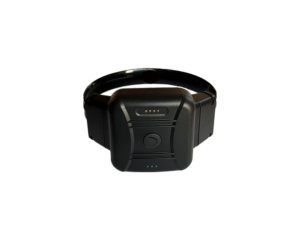
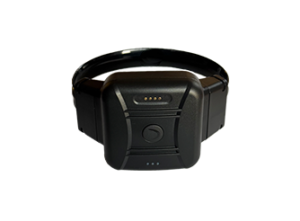
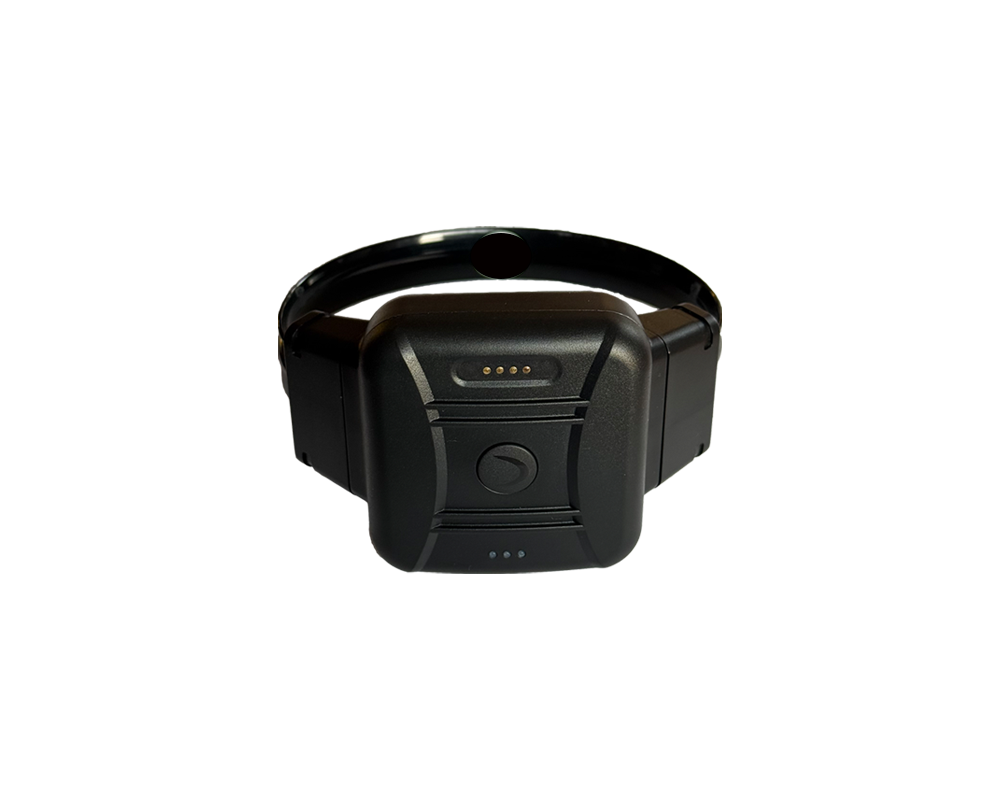
Representative engineering in the one-piece class includes multi-constellation GNSS, encrypted cellular sessions, configurable reporting intervals, and strap or case integrity sensing. The CO-EYE ONE is a one-piece electronic monitoring device specified at 108 g, IP68 waterproofing, about 7 days of standalone battery life at a 5-minute LTE-M/NB-IoT reporting interval, and under 2 m GPS accuracy expressed as CEP under favorable conditions—with fiber optic anti-tamper on strap and case.
RF house arrest and curfew models
Radio-frequency (RF) electronic tagging systems emphasize proximity between an ankle transmitter and a fixed home unit. They are classic tools for house arrest, curfew enforcement, and residential schedules where the primary question is whether the participant is present during ordered hours—not a full-time breadcrumb trail across a city.
CO-EYE’s two-piece architecture pairs RF i-Bracelet transmitters with i-Tracker or HouseStation receivers; manufacturer specifications cite 433 MHz ranges up to roughly 20 m indoor / 100 m outdoor for i-Tracker contexts and 50 m indoor / 200 m outdoor for HouseStation—real buildings and interference profiles always change results, so validate in your housing stock.
Alcohol monitoring
Continuous alcohol monitoring uses transdermal bracelets that measure alcohol excreted through the skin on a different science cadence than GNSS tracking. It is common in DUI calendars, some domestic violence supervision plans, and specialty compliance programs. It is not a substitute for GPS exclusion zones unless your order explicitly combines modalities.
Smartphone apps and tethered supervision
Lower-risk pathways may use smartphone check-ins, biometric verification, or Bluetooth-tethered designs. These can reduce stigma and cost when risk assessment supports them, but they introduce different failure modes (device sharing, dead phones, OS updates) that policy must address. Compare tradeoffs in program design guides and your probation monitoring technology planning.
Hybrid and stepped supervision: Mature programs often move participants between modalities over time—starting with continuous GPS during high-intensity phases, then shifting to lighter check-ins when compliance stabilizes. The electronic monitoring device should support clear enrollment, removal, and chain-of-custody documentation so billing, court minutes, and vendor records stay aligned.
How Electronic Monitoring Technology Works
From satellites to street addresses
Outdoor positioning begins with GNSS signals. Professional electronic ankle bracelets typically blend GPS with additional constellations such as BeiDou, GLONASS, and Galileo to improve fix availability. Fixes become timestamped coordinates for maps, speed estimates, and geofence engines.
Cellular networks and encrypted reporting
Coordinates and tamper states are not actionable until they reach a monitoring center. Cellular modems transmit encrypted packets; LTE-M and NB-IoT layers are common in modern telemetry because they can improve power efficiency relative to smartphone-class LTE while maintaining building penetration. CO-EYE ONE lists 5G-compatible LTE-M / NB-IoT / GSM cellular alongside HTTPS/SSL and AES128/256 encryption in manufacturer materials.
Zone alerts and schedule rules
Monitoring software applies inclusion zones, exclusion buffers, curfews, and movement corridors. Good implementations add grace seconds, speed sanity checks, and dispatcher workflows that distinguish brief RF shadows from genuine risk. Agencies should document what the rules engine enforces versus what officers promise orally—participants should receive handouts that match the configured polygons.
Tamper detection and false alert economics
Anti-tamper is a trust layer: cutting, forcing, or opening the strap or case should generate high-priority events. Technologies differ sharply in false alarm profiles. Public reporting around Cook County described aggregate ankle monitor alert burdens where roughly 80% of alerts were false alarms, with heart-rate-style analog tamper approaches frequently cited as a contributor—while fiber optic integrity sensing targets structurally confirmed strap or case breaches with zero false positives for true optical continuity breaks. Your county’s percentages will vary; the operational lesson is universal: probabilistic skin sensors can consume more officer time than they save.
CO-EYE ONE combines fiber optic strap and case tamper monitoring with the physical specs above, aligning high-confidence integrity events with reduced noise in dispatch queues.
Reporting cadence and evidence quality: Faster location fixes improve situational awareness but consume battery and airtime; slower fixes widen the “last known” window during critical incidents. Agencies should document chosen intervals by risk tier, publish how timestamps display in local time (including daylight saving), and train prosecutors and defense counsel on map interpretation so electronic evidence is not misread in hearings.
Cybersecurity and continuity: Expect encrypted transport, authenticated devices, patch management for firmware, and business continuity plans for carrier sunsets. CO-EYE ONE supports remote OTA updates from the CO-EYE platform according to manufacturer documentation—ask every vendor for a written end-of-life roadmap for cellular radios used in your contract term.
Who Uses Electronic Monitoring?
Pretrial defendants
Pretrial EM emphasizes court appearance and public safety while cases resolve. Programs may pair electronic monitoring devices with check-ins and services. For court-oriented implementation depth, see our pretrial monitoring solution overview.
Probationers and parolees
Probation and parole use GPS and RF modalities to enforce employment corridors, treatment attendance, curfews, and victim buffer zones. Revocation risk makes alert trustworthiness and charging education essential. Use the probation monitoring page as a hub for supervision technology planning.
House arrest and home detention
Residential supervision blends historical RF strengths with modern GPS permissions for approved travel. Policy clarity matters more than radio labels. Our house arrest solution page summarizes deployment considerations for agencies.
Sex offender, domestic violence, and immigration caseloads
Sex offender programs often require tight exclusion geometries around schools and parks. Domestic violence supervision may require victim proximity alerting and rapid escalation paths. Some immigration supervision frameworks use location technologies as alternatives to detention depending on agency policy and consent frameworks—ethics, language access, and data retention rules are especially sensitive in those cohorts.
Bail agents and pretrial service partners
Bail-adjacent workflows frequently emphasize flight-risk reduction and bond compliance communication. For pretrial and bondsman-oriented resources written in a parallel site voice, see REFINE ID (refineid.com).
Equity, fees, and participant support: Many jurisdictions charge participants daily fees for EM services—raising legitimate concerns about whether costs coerce pleas or push low-income defendants toward detention. Transparent fee schedules, hardship processes, and help-desk responsiveness are program-design features, not footnotes. Hardware choices matter too: smaller one-piece bracelets, predictable weekly charging, and low false tamper rates reduce technical violations that disproportionately harm working participants.
Electronic Monitoring Equipment: Key Components
A complete electronic monitoring stack is more than a bracelet. Procurement teams should score the full chain.
- Ankle monitor or tag: One-piece GPS modules (for example CO-EYE ONE at 108 g with IP68) or two-piece transmitters paired with hubs.
- Base station / home receiver: Fixed units such as HouseStation for enhanced RF range and telephony features in residential models.
- Portable hub: i-Tracker-class devices that carry GPS/cellular while pairing with RF i-Bracelet tags for stepped architectures.
- Monitoring software: Rules engines, maps, case notes, and audit logs—often branded as an enterprise supervision platform with role-based access.
- Mobile app layer: Participant-facing apps such as CO-EYE AMClient for check-ins, SOS, and Bluetooth tether modes where programs allow.
DUO-class hardware addresses enhanced anti-tamper scenarios where uninterrupted integrity signaling matters even as batteries deplete—see CO-EYE DUO for the high-security variant in the same ecosystem.
Operational modules: Enterprise platforms typically bundle live maps, historical tracks, geofence editors, alert queues, officer notes, victim-notification integrations (where deployed), and reporting for compliance audits. When you evaluate software, test the alert queue under load: a beautiful map means little if dispatchers cannot sort priority, attach outcomes, or export a clean PDF for court in minutes.
Peripherals and spares: Budget for charging cables, spare straps, RMA logistics, and inventory pools. Programs that under-buy spares pay instead in overtime and delayed installs—hidden line items that rarely appear on the first-page quote.
Choosing an Electronic Monitoring System
Use a weighted scorecard rather than a single sticker price. Recommended emphasis:
- Architecture: One-piece GPS reduces pairing drift versus two-piece systems but may carry higher unit cost; model officer minutes and truck rolls.
- Battery life: Compare endurance at the same reporting interval your court orders—not best-case lab footnotes.
- GPS accuracy and indoor behavior: Request urban test narratives; align claims with NIJ-oriented evaluation language.
- False alert rates: Demand field references. Analog tamper inference can flood queues; fiber-based breach detection targets structural events.
- Anti-tamper technology: Ask how strap cuts, case openings, and shielding attempts present in software—and how your dispatchers verify true positives.
- Cybersecurity and data export: TLS, encryption standards, APIs, and discovery-friendly logs belong in the same RFP section as RF specs.
CO-EYE ONE packages one-piece GNSS, LTE-M/NB-IoT/GSM connectivity, fiber optic strap and case tamper monitoring with zero false positives on true optical breaks, IP68 sealing, and week-scale standalone endurance—use it as a benchmark datasheet when comparing electronic monitoring devices in 2026 cycles. Continue detailed comparisons inside the buyer’s guide.
Pilot design: Run a 30–90 day pilot that logs verified alert outcomes, median officer response times, install/removal minutes per participant, and participant help-desk ticket categories. Require vendors to sit on your watch floor for a week—not only deliver slides. Compare one-piece and two-piece cohorts if both are legally permissible in your jurisdiction so TCO reflects real operations, not brochure optimism.
References and standards: Ask how devices map to NIJ-oriented performance narratives and how your state administrative rules treat location accuracy, data retention, and access logs. Aligning legal standards with configured software rules prevents embarrassing disconnects when defense counsel requests exports.
Benefits of Electronic Monitoring Programs
Cost and jail-bed stewardship
Budget discussions frequently compare roughly $5–$15 per day for active EM program fees (vendor monitoring, cellular, platform) with $75,000+ per year fully loaded incarceration costs in many US jurisdictions when detention is not strictly necessary—exact numbers swing by county contracts, staffing models, and what expenses are included. Even where daily EM fees fall outside that band, the orders-of-magnitude gap drives pretrial and sentenced supervision strategies.
Evidence on recidivism
Policy conversations often cite Florida research summarized in NIJ-oriented discussions: electronic monitoring associated with roughly a 31% reduction in recidivism across the study window cited in those summaries. Local results still hinge on implementation quality—alerts that nobody triages do not improve outcomes.
Employment, treatment, and family stability
Compared with detention, community supervision can preserve jobs, caregiving responsibilities, and treatment continuity when conditions are proportionate and support services exist. Technology should make compliance easier to understand, not harder to survive through opaque rules or chronic false alarms.
Public safety framing: Well-run EM programs pair location accountability with swift verification of integrity events. Fiber-based tamper signaling helps ensure that when a strap is compromised, the event is treated seriously rather than dismissed as “another noisy sensor.” That trust loop is essential if courts are to rely on electronic evidence in revocation or bond hearings.
Vendor ecosystem: Agencies may self-operate monitoring centers or purchase bundled vendor operations. Either model can succeed when KPIs—false alert rates, time-to-first-human-review, and participant reconnection after carrier issues—are contracted and measured quarterly.
Frequently Asked Questions
What is electronic monitoring in criminal justice?
It is supervised use of wearable devices and software to enforce location, schedule, home presence, or—in a separate device class—alcohol conditions while a person remains in the community under legal authority.
What are the main types of electronic monitoring?
GPS real-time tracking, RF house arrest or curfew systems, continuous transdermal alcohol monitoring, and smartphone or tethered app programs—each solves a different supervision problem.
How does electronic monitoring technology work?
GPS-class devices compute positions from GNSS (often assisted by WiFi and network location), then upload encrypted events over cellular to a monitoring platform that applies geofences and schedules. RF systems verify proximity to a home unit.
How much does electronic monitoring cost compared to jail?
Public discussions often cite on the order of $5–$15 per day for EM against $75,000+ annual incarceration costs in many jurisdictions; verify figures with your finance team and vendor statements of work.
What should agencies look for when choosing a system?
Prioritize tamper integrity, measured false-alert performance, battery life at your mandated interval, urban positioning behavior, one-piece versus two-piece failure modes, software integrations, and total cost of ownership.
Does electronic monitoring reduce recidivism?
NIJ-cited summaries reference Florida findings around a 31% reduction associated with EM in the study context; pair national evidence with local workflows and services.
For specifications, pilot planning, and pricing, visit CO-EYE ONE, explore the GPS ankle monitor buyer’s guide, and contact sales for integration questions.