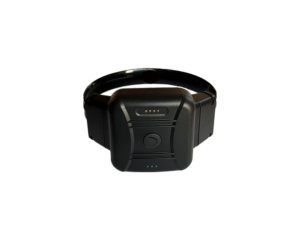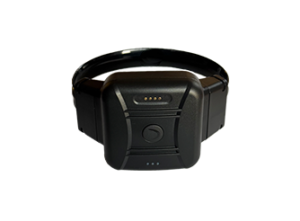
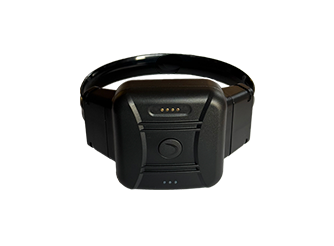
A GPS ankle bracelet—also called a GPS tracking bracelet, ankle bracelet GPS, or GPS leg monitor in court orders—is a corrections-grade wearable that answers two questions continuously: where is the supervised person, and is the hardware still physically intact? Unlike consumer fitness bands, these devices pair multi-constellation satellite positioning with encrypted cellular backhaul, geofence logic, and strap or housing integrity sensing so agencies can enforce pretrial conditions, probation rules, parole plans, and victim-safety zones without defaulting to jail when risk profiles allow community supervision.
This guide explains how GPS ankle monitor technology works in 2026, when to choose one-piece versus two-piece hardware, how major brands compare on published specifications, and what procurement teams should budget—including why public-finance discussions often cite roughly $5–15 per day for electronic monitoring program fees versus $75,000 or more per year for full incarceration when detention is not strictly necessary for public safety. For a structured buyer framework, start with our GPS ankle monitor buyer’s guide; for flagship hardware details see CO-EYE ONE.
Independent industry context and standards-oriented explainers appear on Ankle Monitor Industry Report (ankle-monitor.org). For pretrial-focused resources aimed at bondsman and defendant-supervision workflows, see REFINE ID (refineid.com).
What Is a GPS Ankle Bracelet?
A GPS ankle bracelet integrates a GNSS receiver, application logic, a rechargeable power system, and tamper sensors in an enclosure strapped to the ankle (or, in some programs, authorized alternate mounting per policy). The device periodically computes latitude and longitude, then transmits fixes and status flags to a monitoring platform over cellular data. Supervision staff see maps, schedules, exclusion zones, and alert queues; courts may later rely on exported tracks and tamper logs as part of compliance hearings.
RF ankle bracelets (radio-frequency tether systems) differ in purpose: they typically prove proximity between a bracelet and a home base unit rather than delivering continuous outdoor geolocation. Classic house arrest programs often combined RF presence checks with curfew schedules. A GPS ankle monitor adds full movement accountability—work corridors, treatment travel, and dynamic exclusion buffers—at the cost of higher power draw, cellular dependency, and more sophisticated tamper semantics. Many agencies today run hybrid policies: GPS for medium- and high-risk cohorts, RF or app-check-in modalities for lowest-risk tiers.
Terminology varies by jurisdiction. “Electronic ankle bracelet,” “ankle monitor bracelet,” and “GPS leg monitor” frequently refer to the same class of equipment in RFPs and court forms. What matters for procurement is the operational envelope: fix cadence, geofence precision, tamper evidence quality, carrier roadmap, and software evidence exports—not the label on the docket.
Procurement officers should also align language with participant-facing materials. Supervised individuals need plain explanations of charging windows, what constitutes a violation versus a transient signal loss, and how to request technical support without being accused of noncompliance. When hardware ergonomics fail—heavy housings, sharp edges, allergic reactions to strap compounds—programs see higher rates of unauthorized adjustment attempts that some sensor stacks misclassify as malice. Choosing a lighter, IP68-sealed module with fast installation reduces both medical callbacks and ambiguous tamper timelines.
How GPS Ankle Bracelets Work
Multi-GNSS positioning
Professional units process signals from multiple satellite families. Leading designs combine GPS, BeiDou, GLONASS, and Galileo to improve fix availability in urban canyons and partial sky view. Manufacturers often add WiFi fingerprinting and LBS (network-assisted) fallbacks where lawful and contractually permitted, reducing “unknown location” gaps that otherwise generate unnecessary callbacks.
Cellular transmission: LTE-M, NB-IoT, and GSM
Location fixes have no supervision value until they reach the monitoring center. LTE-M and NB-IoT are low-power wide-area cellular layers engineered for telemetry: they typically extend battery life versus smartphone-style LTE and can improve in-building penetration compared with legacy 2G/3G-only modules—though many inventories still include GSM for global coverage during carrier transitions. The CO-EYE ONE platform specifies 5G-compatible LTE-M / NB-IoT / GSM per manufacturer documentation, reflecting a common 2026 theme: maintain coverage while operators refarm spectrum.
Zone fencing and schedules
Platforms combine circular or polygon geofences with time windows—home curfew, approved employment corridors, treatment attendance, school or park exclusion rings for certain caseloads. Alert engines must distinguish brief GPS multipath noise from genuine boundary breaches; sub-2 meter class horizontal accuracy on one-piece multi-GNSS hardware supports tighter zones with fewer ambiguous edge cases than older ~5–15 meter class fixes often associated with two-piece hub reporting paths (exact performance depends on sky view, interval, and vendor implementation).
Tamper detection
Tamper subsystems monitor strap integrity and case intrusion. Approaches include optical fiber loops, skin-contact inference sensors, and capacitive planes. Sensor choice dominates false alert rates: probabilistic skin-contact methods can misread sweat, motion, or physiology, while deterministic optical-fiber breaks register structural integrity loss with high confidence when mechanical design is rigorous.
From fix to court-ready evidence
End-to-end, each position fix carries metadata: UTC timestamp, fix quality indicators, cellular routing, and firmware build. Monitoring platforms must preserve chain-of-custody semantics so prosecutors and defense counsel can replay the same map supervisors saw, using the same geofence definitions and alert thresholds active on the date of an alleged violation. According to the National Institute of Justice, standardized offender-tracking discussions emphasize repeatable test methodologies because justice systems require trustworthy event semantics—not dashboard colors alone. When vendors cannot explain how they distinguish integrity loss from benign RF fade, agencies inherit litigation risk and dispatcher cynicism toward the entire alert queue.
Security architecture extends beyond the strap. Require mutual authentication for device-to-cloud sessions, role-based access for staff, immutable audit logs for configuration changes, and documented incident response when vulnerabilities are disclosed. CO-EYE ONE’s published stack cites HTTPS/SSL and AES128/256; verify these claims through your own security questionnaire and, where appropriate, third-party penetration summaries rather than checkbox RFP responses alone.
One-Piece vs Two-Piece GPS Ankle Bracelets
One-piece designs integrate GNSS, modem, battery, and tamper sensors in a single ankle module. Two-piece systems separate an ankle transmitter or beacon from a portable GPS/cellular hub; participants carry or dock the hub for charging and reporting. Architecture drives inventory, pairing logistics, and failure modes.
| Factor | One-piece GPS ankle bracelet | Two-piece (bracelet + hub/tracker) |
|---|---|---|
| Pairing | None—single serial number | Short-range wireless link must stay stable |
| Typical GPS accuracy class | Often tighter (e.g., <2 m claims on advanced units) | Often coarser hub-reported fixes (commonly ~5–15 m class depending on generation) |
| Charging logistics | One device schedule | Two devices; higher risk of “hub left charging” events |
| Inventory / spares | Single SKU focus | Multiple components and chargers |
| Failure modes | Cellular/GNSS brownouts, strap attacks | Link drops mistaken for tampers, split-component confusion |
| TCO outlook | Higher unit capex, often lower field opex | Lower entry hardware cost possible, higher operational touches |
For a deeper total-cost discussion with field metrics, read One-piece vs two-piece GPS ankle monitor: total cost of ownership.
Key Features to Look For
- Battery life: Map mandated reporting intervals to measured endurance. CO-EYE ONE specifies 7 days standalone at a 5-minute interval on LTE-M/NB-IoT with 1700 mAh and about 2.5 hours to recharge—useful benchmark versus one- to two-day legacy cycles.
- GPS / GNSS accuracy: Request CEP or equivalent under open-sky and urban test vectors. CO-EYE ONE publishes <2 m CEP for its GNSS performance class.
- Anti-tamper technology: Fiber optic strap and case loops can provide deterministic integrity sensing; programs should pilot false tamper rates on their own demographics.
- Waterproofing: Continuous wear implies shower-safe designs. CO-EYE ONE lists IP68.
- Weight and ergonomics: Mass drives skin irritation and covert loosening risk. CO-EYE ONE is 108 g at 60×58×24 mm.
- Installation time: Tool-free installs reduce field labor. CO-EYE ONE advertises <3 second snap-on fitting.
- Certifications: International programs should verify European NB CE (RED/EMC/SAR/LVD), RoHS, and battery safety such as IEC62133 pathways—matching the CO-EYE ONE documentation set.
GPS Ankle Bracelet Applications
Pretrial: Courts use GPS ankle bracelets to manage flight risk while avoiding unnecessary jail days when conditions can be enforced in the community. Pair policy design with the pretrial monitoring solution overview.
Probation and parole: Officers enforce movement schedules, treatment attendance, and graduated sanctions; reliable tamper semantics matter because revocations hinge on alert credibility.
House arrest / home detention: Modern GPS adds roaming accountability for approved activities beyond classic RF-only presence checks. See house arrest monitoring for solution context.
Domestic violence: Programs may configure victim-proximity buffers and rapid escalation workflows—hardware that minimizes false tampers helps keep serious alerts visible instead of buried in noise.
Sex offender supervision: Statutory exclusion zones around schools, parks, and victim addresses require stable geofence performance and audit-grade exports.
Immigration alternatives to detention: Some programs use GPS leg monitors where statute and risk assessment support community supervision rather than bed days.
Evidence note on outcomes: A Florida study (2001–2007) reported a 31% reduction in recidivism among electronically monitored participants—a figure widely cited in NIJ-aligned summaries of community supervision research (use as contextual evidence, not a guarantee of any single vendor outcome).
Top GPS Ankle Bracelet Brands Compared
The table below summarizes publicly described positioning for four frequently evaluated names. Always validate current datasheets, carrier bands, and service models in your own RFP—specifications change by SKU and region.
| Brand / product | Architecture | Weight (indicative) | Battery (typical claims) | GPS accuracy (vendor framing) | Anti-tamper approach | Cellular notes |
|---|---|---|---|---|---|---|
| CO-EYE ONE | One-piece | 108 g; 60×58×24 mm | 7 days @ 5-min LTE-M/NB; 1700 mAh; ~2.5 h charge | <2 m CEP; GPS+BeiDou+GLONASS+Galileo+WiFi+LBS | Fiber optic strap + case; zero false-positive tamper claim | 5G-compatible LTE-M / NB-IoT / GSM |
| SCRAM GPS | Two-piece (tracker + RF strap) | ~155 g combined (generation-dependent) | ~40 hours typical reporting (interval-dependent) | Industry-standard; varies by model | Heart-rate / PPG-style skin sensing (vendor family) | 4G LTE-focused positioning in vendor materials |
| BI LOC8 | Two-piece | ~173 g class for LOC8 XT (public comparison sheets) | Often ~24–48 hours (model-dependent) | Vendor-specified; validate under your interval | Proprietary (often NDA detail) | Managed-service deployments common in U.S. programs |
| Buddi | Often one-piece GPS lines (SKU-dependent) | Compact form factor (model-dependent) | Confirm per datasheet and interval | Model-dependent | Model-dependent | Validate U.S. carrier bands and support footprint for North American bids |
REFINE Technologies, the company behind CO-EYE, reports more than 200,000 devices deployed across 30+ countries in public corporate materials—useful maturity signal alongside your pilot data. Detailed head-to-head articles on this site include CO-EYE versus SCRAM and CO-EYE versus BI for procurement workshops.
GPS Ankle Bracelet Cost Analysis
Per-day program fees: Budget narratives often anchor electronic monitoring at about $5–15 per day per participant when jurisdictions pass costs to users or bundle vendor monitoring services—exact figures vary by contract tier, risk assessment, and included call-center hours.
Incarceration contrast: The same discussions frequently compare those daily supervision fees with $75,000+ per year (or higher all-in) incarceration economics when a jail bed is used unnecessarily for a supervisee who could be safely monitored in the community. The comparison is not a claim that GPS replaces every detention decision—it illustrates why legislatures fund community alternatives.
Purchase vs lease / per-unit vs per-day: Hardware ownership transfers capex to the agency but can lower multi-year TCO when caseloads are stable and false-alert burden drops. Managed-service models bundle devices, cellular, software, and monitoring staff into a continuing per-diem—friendly for pilots, expensive at scale if daily rates never decay.
Total program cost: Beyond straps and modems, model staffing for alert triage, field swaps, training, spare pools (often 10–20% above active census), and evidence exports. Devices that charge daily instead of weekly multiply participant touchpoints and officer follow-up.
Hidden cost of false tampers: Estimate fully loaded cost per unnecessary officer response—vehicle time, overtime, opportunity cost of deferred casework—and multiply by annual spurious events. Programs that tolerated noisy capacitive or heart-rate-style stacks have seen aggregate false-positive rates high enough to train staff to down-rank alerts, endangering everyone when a genuine strap cut finally occurs. Fiber-based integrity sensing, where implemented with sound mechanics, narrows the gap between alarm raised and alarm worthy of dispatch.
Grants and multi-year TCO: Align capital plans with modem sunset dates. A low sticker price on GSM-only inventory becomes expensive when carriers refarm bands and you must emergency-refresh hundreds of units. Favor vendors who document OTA update policies, spare RMA turnaround, and explicit migration paths for LTE-M/NB-IoT profiles.
How to Choose a GPS Ankle Bracelet Vendor
Use this checklist during scoring and pilot design:
- Battery vs interval: Require written endurance at the exact fix schedule your court orders.
- Accuracy vs geofences: Tight exclusion zones need credible horizontal error budgets; pilot edge cases near zone boundaries.
- False alerts: Demand 30–60 day pilot statistics on verified false tamper rates. Public reporting around Cook County cited an aggregate 80% false alert rate tied to capacitive-style tamper sensing in that jurisdiction’s electronic monitoring operations—illustrating how sensor physics drives dispatcher load.
- Certifications: Collect CE/FCC documentation, SAR summaries, battery transport test references, and cybersecurity posture (e.g., EN 18031 alignment where applicable).
- Support and RMA: Define turnaround times, hot-swap inventory, and OTA firmware policies before award.
- Software evidence: Confirm export formats, timestamp discipline, and role-based access for prosecutors and defense review.
CO-EYE ONE combines HTTPS/SSL transport with AES128/256 encryption per specification sheets—baseline expectations you should trace end-to-end in security reviews.
Pilot design: Run parallel straps on a small cohort before full cutover—measure median install time, first-week false tamper count, and mean time to restore communications after deliberate indoor stress tests (elevators, basements, metal-roofed buildings). Weight scoring toward outcomes your dispatch center feels daily, not features demoed on a vendor bench.
Contract hooks: Where law allows, tie a portion of renewal fees to verified false-tamper KPIs and mean-time-to-restore metrics, mirroring how uptime SLAs govern data-center contracts. Vendors confident in optical-fiber integrity should not fear measurable operational commitments.
Research, Standards, and Next Steps
For NIJ-oriented vocabulary on performance testing, consult National Institute of Justice resources linked from our industry hub at ankle-monitor.org. Pretrial service providers and bail agencies evaluating supervision economics may also find practical framing on refineid.com.
When you are ready to evaluate hardware, request a structured pilot plan: defined cohort size, success metrics for false tampers, mean time to restore communications, and officer satisfaction scores. Contact sales for pricing, technical workshops, and deployment planning.
Frequently Asked Questions About GPS Ankle Bracelets
What is a GPS ankle bracelet?
It is a supervised wearable that uses satellite navigation and cellular networks to report location on a schedule, with tamper sensors on the strap and housing, used in criminal justice and immigration supervision programs.
How does a GPS ankle bracelet differ from an RF bracelet?
GPS bracelets report geographic coordinates in the field; RF tether bracelets primarily verify proximity to a home base unit for curfew-style monitoring rather than full outdoor tracking.
How accurate are GPS ankle bracelets?
High-end one-piece devices may achieve sub-2 meter claims under favorable sky view; two-piece systems often report coarser effective accuracy depending on hub geometry and reporting path—always pilot in your urban/rural mix.
How long does the battery last?
From about one day to one week or more depending on cellular generation and fix interval; CO-EYE ONE specifies seven days at five-minute LTE-M/NB-IoT reporting.
Can you shower with a GPS ankle bracelet?
IP68-rated professional units such as CO-EYE ONE are designed for continuous wear including showering; confirm the manufacturer’s immersion and charging guidance.
How much does GPS ankle monitoring cost?
Public program economics often cite roughly $5–15 per day for monitoring fees versus $75,000+ per year incarceration comparisons; exact numbers vary by jurisdiction and service bundle.
Which GPS ankle bracelet brands are most common?
North American procurements frequently evaluate SCRAM GPS, BI LOC8, and international one-piece options including CO-EYE ONE and Buddi—selection should follow RFP testing, not brand familiarity alone.
What causes false tamper alerts?
Probabilistic skin-contact sensors can misread sweat, motion, or physiology; deterministic fiber optic integrity sensing avoids many environmental false positives—still validate in your pilot.
Last updated: March 2026. Specifications for CO-EYE ONE are per manufacturer documentation; competitor rows reflect public materials—confirm before award.