A probation ankle monitor—also called an ankle monitor for probation or probation leg monitor in court paperwork—is a supervised wearable used to enforce the conditions of probation while a person remains in the community. When judges and supervision agencies choose probation GPS monitoring, they are usually trying to answer two questions continuously: where is the supervisee relative to approved zones and schedules, and is the hardware still physically intact? This guide explains how that technology works in 2026, what rules participants must follow, how long monitoring typically lasts, what happens when violations are alleged, and what procurement teams should evaluate when standardizing equipment.
For agency solution context, start with our probation monitoring overview and the GPS ankle monitor buyer’s guide. Product specifications for flagship hardware appear on the CO-EYE ONE page. Deeper technology primers include electronic monitoring: how it works and GPS ankle bracelet: complete guide. Independent industry reporting lives at ankle-monitor.org; pretrial and supervision-industry education appears at refineid.com.
What Is a Probation Ankle Monitor?
Probation monitoring is the umbrella: officers enforce court-ordered conditions such as treatment attendance, employment expectations, victim no-contact, curfews, and geographic restrictions. A probation ankle monitor is simply the hardware-and-software stack applied when those conditions require automated location accountability, tamper awareness, or both—rather than relying solely on office visits and self-reporting.
Courts order probation GPS monitoring when risk assessments, offense history, victim-safety geometry, or statutory triggers justify continuous movement oversight. GPS supervision can support graduated sanctions: stable compliance may eventually step down to lighter modalities, while repeated boundary issues may escalate reporting frequency or lead to revocation proceedings. The monitor does not replace officer judgment; it supplies time-stamped evidence and alert queues that staff must triage with policy and proportionality.
Terminology on dockets varies—“electronic monitoring,” “GPS tracking,” “EM bracelet”—but procurement teams should translate orders into engineering requirements: reporting interval, indoor assist behavior, geofence types, tamper semantics, retention, and export formats for hearings. Participants, in turn, deserve plain-language explanations of charging windows and what counts as a technical glitch versus a sanctionable violation.
From an officer’s perspective, GPS adds workload unless alert volumes stay proportionate. Programs that tune geofences too aggressively without pilot data often generate boundary “chatter” at apartment complexes, parking structures, and dense downtown grids—burning investigator hours and training supervisees to ignore notifications. Mature probation monitoring operations therefore pair hardware selection with alert-governance committees that revisit fence widths, dwell-time thresholds, and escalation matrices quarterly.
How Probation GPS Monitoring Works
GPS tracking and assisted positioning
Professional units compute position using satellite navigation, often augmented with multiple constellations and lawful indoor or network assists to reduce “unknown location” gaps. High-quality one-piece designs may publish sub-two-meter-class horizontal accuracy under favorable sky view—tight enough to support meaningful exclusion buffers when multipath is managed responsibly.
Zone alerts and schedules
Monitoring platforms combine maps with rules: inclusion zones (home, work corridors), exclusion rings (schools, parks, victim addresses where orders require them), and time windows for curfew or treatment travel. Alert engines should distinguish brief GPS noise at a fence line from sustained breaches; otherwise officers drown in false positives and participants lose faith in fairness.
Curfew enforcement
Curfew can be enforced with GPS alone—verifying that the ankle tag remains inside an approved geofence overnight—or paired with RF home anchoring in some legacy or hybrid programs. The legal question on the order should drive architecture: if the only issue is “be home by 9 p.m.,” RF plus a base receiver can suffice; if the issue is continuous community movement accountability, GPS is the core modality.
Tamper detection
Tamper subsystems detect strap cuts, case intrusion, and sometimes charge-port manipulation. Fiber-based strap integrity monitoring can register structural breaks with high confidence, supporting court narratives when defendants claim accidental damage. Agencies should pilot tamper behavior on their own demographics rather than trusting generic marketing claims alone.
Officer dashboard and monitoring center
Raw fixes become operational truth inside dashboards: live maps, histories, prioritized alerts, and acknowledgement trails. Strong programs integrate case-management workflows so GPS evidence appears where officers already work, not in a siloed portal supervisors forget to open.
According to the National Institute of Justice, discussions of offender-tracking performance emphasize operational testing in realistic environments—not laboratory sky views alone—because probation departments must defend alert semantics under scrutiny from prosecutors, defense counsel, and judges. That is why vendor demos should include walking routes through your downtown core, not only open-field tracks.
Cybersecurity extends past maps: field devices authenticate to cloud endpoints over encrypted transports; CO-EYE ONE’s published materials cite HTTPS/SSL and AES128/256. Agencies should still run their own security questionnaires, review firmware signing practices, and document incident response when vulnerabilities are disclosed—especially when contracts span multiple budget cycles.
Types of Probation Ankle Monitors
GPS ankle monitor (real-time tracking)
GPS probation ankle monitors suit medium- to high-risk supervisees who need outdoor movement visibility, dynamic exclusion zones, or investigative-quality timelines. They depend on cellular backhaul, disciplined power management, and clear policies for charging.
RF ankle monitor (home curfew emphasis)
RF systems emphasize proximity between an ankle transmitter and a programmed base unit—ideal when the supervision question is fundamentally residential presence rather than full-day geographic tracking. They can reduce cellular costs and simplify some curfew models but do not replace GPS when courts require continuous community location.
Alcohol monitoring ankle bracelet
DUI and alcohol-specific probation may add transdermal or breath-verification modalities alongside or instead of GPS. These devices answer a different sensor question—alcohol consumption patterns—so agencies should not confuse them with general-purpose location tags when drafting RFPs.
Smartphone app monitoring
Lowest-risk probationers may be supervised partially through smartphone check-ins, biometric or voice prompts, and GPS sampled from the handset. App programs can be cost-effective but differ materially from tamper-hardened ankle hardware; many jurisdictions use them as step-down tools rather than substitutes for high-risk GPS orders.
Probation Ankle Monitor Rules You Need to Know
- Keep the device charged. Two-piece ecosystems often require daily charging habits because separate hubs or trackers deplete faster. One-piece GPS modules such as CO-EYE ONE are engineered for longer standalone endurance—about seven days at a five-minute LTE-M/NB-IoT reporting context per manufacturer specifications—reducing the “forgot to charge” failure mode but not eliminating the need to follow your program’s written schedule.
- Stay within approved zones. Travel outside permitted corridors typically requires pre-approval; undocumented detours can trigger exclusion alerts or speed-of-approach logic in victim-protection scenarios. Keep written approvals (texts, emails, officer notes) synchronized with the monitoring vendor so temporary work relocations or family emergencies do not look like clandestine movement on the map.
- Report to your probation officer on schedule. Technology supplements but does not replace office reporting, treatment verification, and documentation requirements on your order.
- Do not tamper with or remove the device. Intentional removal or obstruction is often a separate offense or a direct violation; even accidental damage should be reported immediately to avoid misinterpretation.
- Understand liquid exposure limits. Policies vary. CO-EYE ONE lists IP68 waterproofing for shower-grade continuous wear per published specs—still confirm any program-specific restrictions on baths, pools, or chemical exposure.
- Allow home visits for equipment checks. Officers or vendor technicians may inspect fit, strap condition, and charging accessories to maintain chain-of-custody and firmware compliance.
How Long Do You Wear a Probation Ankle Monitor?
Duration is almost always order-specific. Some supervisees wear a probation ankle monitor for thirty to ninety days during an intensive supervision phase; others carry GPS conditions for the majority of a multi-year probation term. Judges consider offense class, risk scores, victim safety, compliance history, and statutory guidance.
In practice, many programs think in three- to twelve-month increments for GPS phases before reassessing step-down eligibility—but that window is illustrative, not a guarantee. Agencies should document review dates in case plans so participants know how to earn less restrictive modalities when data supports stability.
What Happens If You Violate Probation While Wearing an Ankle Monitor?
Alleged violations trigger a spectrum of responses. Minor or ambiguous events may yield warnings, increased reporting, or recalibrated zones after investigation. Sustained breaches, tamper episodes, or exclusion-zone entries tied to protected persons may prompt graduated sanctions, motions to modify conditions, or revocation hearings where GPS exports and alert logs become exhibits.
Because probation GPS monitoring generates detailed timelines, defense counsel and prosecutors alike may rely on the same underlying data—with disputes focusing on geofence definitions active on the date of the event, clock synchronization, and whether multipath could explain a transient alert. This is why agencies should invest in platforms with immutable audit trails and clear separation between device-reported events and human conclusions.
Probation GPS Monitoring Equipment for Agencies
CO-EYE ONE (one-piece GPS ankle monitor)
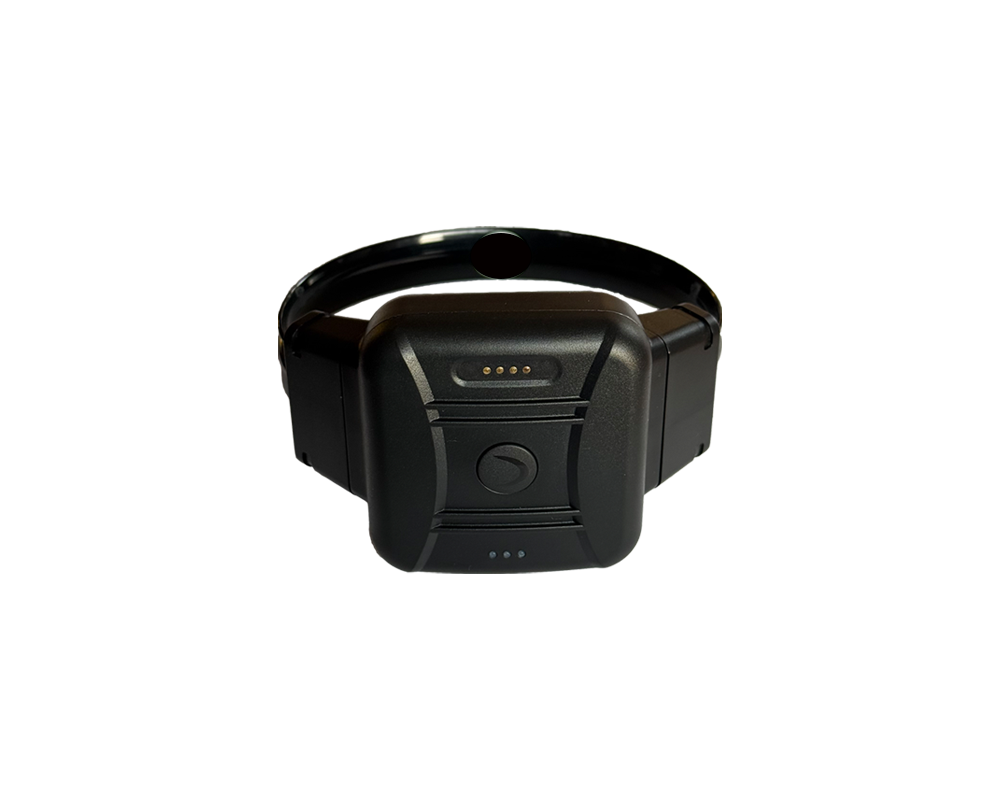
The CO-EYE ONE is a one-piece GNSS ankle monitor suitable for probation cohorts needing durable field performance: 108 g, 60×58×24 mm, tool-free install in about three seconds, standalone battery life of about seven days at a five-minute LTE-M/NB-IoT reporting context, 1700 mAh cell with roughly 2.5-hour recharge, multi-constellation positioning with < 2 m GPS accuracy class (CEP framing per datasheet), fiber optic anti-tamper on strap and case with zero false-positive integrity signaling when properly fitted, and IP68 waterproofing. Cellular pathways include 5G-compatible LTE-M / NB-IoT / GSM for coverage resilience during carrier transitions.
CO-EYE Monitoring Software
Field hardware requires an enterprise platform: the CO-EYE monitoring suite delivers a unified operations experience across modules—alert handling, user roles, zone management, and reporting workflows—so probation departments can produce court-ready exports and consistent escalation policies rather than ad hoc spreadsheets.
CO-EYE AMClient (smartphone supervision)
For lower-risk probation pathways or hybrid programs, the CO-EYE AMClient app on iOS and Android supports supervised smartphone features such as check-ins, SOS signaling, and Bluetooth-tether workflows aligned to vendor program design—useful when courts permit handset augmentation alongside ankle-mounted GPS for higher-risk tiers.
Procurement scorecards should weight evidence ergonomics alongside raw specifications: can a supervisor produce a single PDF bundle covering 72 hours around an alleged violation, including active geofence JSON, firmware build, and acknowledgement timestamps? Can your prosecutor’s office replay the same view the officer saw without vendor concierge support? If the answer is “only with a ticket and three days,” your probation GPS monitoring stack may fail the practical test even when datasheets look excellent.
Evaluate spare inventory, training, and help-desk capacity alongside device specs; the best hardware fails when charging cables, strap sizes, or officer training are underfunded.
Cost of Probation Ankle Monitoring
Budget narratives frequently compare participant fees of roughly $5–15 per day for active electronic monitoring tiers (exact amounts vary by contract, indigency waivers, and included services) with incarceration economics that often exceed $75,000 per year per bed when full facility costs are counted in policy debates. GPS does not replace every jail sanction—but it reframes supervision value for legislatures funding community alternatives.
Agency TCO should add monitoring-center staffing, alert triage, field officer overtime, spare devices, and evidence-export labor—not only per-diem vendor charges. Equipment that cuts false tamper volume and extends battery life often pays back through reduced dispatcher fatigue and fewer contested hearings over ambiguous sensor noise.
County finance officers sometimes ask whether to purchase hardware outright or lease through a managed service. Ownership shifts capital risk to the agency but can lower multi-year costs when caseloads are predictable and in-house technicians can swap straps. Per-diem bundles simplify pilots yet may embed premium cellular and call-center fees that compound across thousands of supervisee-days—model both scenarios with five-year net present value, not only year-one invoices.
Probation Ankle Monitor Statistics
- Recidivism research context: Summaries aligned with National Institute of Justice–oriented literature cite a Florida study finding roughly a 31% reduction in recidivism for electronically monitored participants—useful directional evidence, not a promise that any single vendor or program will replicate identical outcomes.
- Population scale: Policy surveys and industry analyses commonly describe more than 200,000 people under electronic supervision modalities in the United States during recent reporting windows, though exact counts fluctuate with definitions and agency participation. National counts mix probation, parole, pretrial, and immigration-adjacent programs differently depending on the researcher—always cite primary government releases (BJS, state annual reports) or peer-reviewed studies in grant applications rather than secondary blog estimates alone.
- Cost savings framing: When GPS supervision replaces unnecessary jail days, multi-year analyses may show net savings after monitoring fees—provided programs target appropriate risk tiers and maintain proportionate responses to alerts.
Key Takeaways
Probation ankle monitor programs succeed when court orders translate into clear technical rules, participants understand charging and travel procedures, and agencies deploy hardware with credible tamper semantics plus software that supervisors actually use daily. Pair this article with the probation monitoring solution page and buyer’s guide when drafting RFPs or participant handbooks.
Frequently Asked Questions
Can you shower with a probation ankle monitor?
Follow your program’s written policy. Many professional tags are shower-safe; CO-EYE ONE specifies IP68 waterproofing. When in doubt, ask your officer before assuming pools, hot tubs, or ocean swimming are permitted.
How often do you charge a probation GPS ankle monitor?
Two-piece systems often need daily charging; one-piece designs like CO-EYE ONE specify about seven days standalone at a five-minute LTE-M/NB-IoT interval—still build a routine so low battery never coincides with court dates or travel approvals.
What happens if your probation ankle monitor loses signal or powers off?
Contact your monitoring line immediately. Agencies may treat unexplained gaps as violations unless documented and resolved; keeping charger cables accessible reduces preventable outages.
Is probation monitoring the same as parole monitoring?
Hardware overlaps, but legal authority and conditions differ. Probation follows sentencing or diversion orders; parole follows release from incarceration—each needs tailored geofence and reporting policies.
Can a judge order GPS monitoring for any probation case?
Only where statute and risk assessment support it. Many low-risk cases use lighter modalities; GPS anchors medium- and high-risk supervision where location accountability is material to public safety or victim protection.
How much does probation GPS monitoring cost the probationer?
Fees vary by jurisdiction; public discussions often cite roughly five to fifteen dollars per day for active monitoring when costs are passed through—subject to indigency rules and contract scope.
What should agencies prioritize when buying probation GPS equipment?
Tamper integrity with low false-alert rates, battery life at your mandated interval, GNSS accuracy for your geofence geometry, cybersecurity, and exportable audit trails for hearings.
Can probation GPS ankle monitor data be used in court?
Yes, when preserved with proper metadata and clear geofence definitions; credible platforms supply officer acknowledgements, configuration histories, and device timestamps defensible under discovery scrutiny.