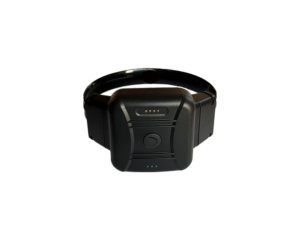
Quick answer: Electronic monitoring uses supervised wearable devices and software to verify location, curfews, or alcohol compliance in the community. Most U.S. criminal-justice programs combine GPS ankle monitors (real-time tracking), RF home-tether systems (presence), or smartphone supervision apps—plus a monitoring center that turns raw signals into officer-ready alerts.
- Who uses it: Pretrial, probation, parole, house arrest, domestic-violence dockets, sex-offender conditions, immigration supervision, and bail-related programs—each with different risk rules.
- Cost snapshot: Active GPS service tiers are widely discussed near roughly $5–$25/day, versus roughly $100+/day (often far higher annualized) for secure jail beds when fully loaded costs are included.
- Evidence note: A Florida-oriented study reported about a 31% reduction in recidivism for some monitored cohorts—inform policy conversations alongside local outcomes.
- Procurement reality: The cheapest hardware is rarely the cheapest program; false tamper alerts and pairing failures can consume more labor than device savings.
- Global lens: Nations scaling community supervision and tagging capacity—see UK multi-year investment discussions—signal that EM programs are infrastructure, not a pilot gadget.
If you supervise people outside a jail wall, electronic monitoring is the operational backbone: radios, maps, rules, and humans working together so courts can enforce conditions without unnecessary detention. This guide explains what the field means in 2026, how GPS and RF systems work, where programs deploy them, how costs compare to incarceration, and how to buy reliable electronic monitoring equipment—including how one-piece designs like the CO-EYE ONE address pain points common in legacy fleets. For deeper dives, see our GPS ankle monitor guide, offender monitoring guide, and GPS ankle bracelet guide; for program context, review pretrial and bail monitoring, house arrest monitoring, and probation GPS monitoring. To scope pricing, read ankle monitor cost guide. Ready to evaluate hardware? Contact Sales or Request a Quote—we do not offer demos or free trials.
What Is Electronic Monitoring?
Electronic monitoring (EM) is the umbrella term for court- or agency-ordered supervision technologies that verify compliance while a person remains in the community. In everyday language, people say “ankle monitor,” but procurement teams should think in terms of modalities: what exactly must be verified—continuous outdoor location, overnight curfew at home, alcohol consumption, or simple check-ins?
According to the National Institute of Justice (NIJ), standardized narratives around offender tracking systems help agencies compare devices on shared rubrics—location accuracy classes, tamper reporting, environmental robustness, and software interoperability—rather than marketing slogans alone. That discipline matters because EM is not one product; it is a system of hardware, carriers, platforms, and procedures.
In the United Kingdom and several Commonwealth programs, the public often hears electronic tagging or simply “tagging,” referring to the same supervised wearable ecosystem—GPS or radio-enabled ankle monitor programs scaled nationally. UK policy reporting has discussed large tagging and monitoring expansions on the order of roughly £700 million over multi-year horizons—signal that nations are investing in community supervision capacity rather than relying solely on bed space.
Offender monitoring is the operational sibling term agencies use when describing caseload workflows: assignment, enrollment, zone rules, violations, and evidence exports for hearings. Whether your RFP says offender monitoring or electronic monitoring, the evaluation goal is the same: trustworthy telemetry, defensible alerts, and sustainable staffing.
How Electronic Monitoring Works
Most electronic monitoring architectures share four layers: (1) a wearable sensor package, (2) a backhaul path (cellular, LPWAN, Wi-Fi assist, or RF to a base unit), (3) a secure monitoring platform with maps and rules, and (4) human review and field response.
GPS / GNSS positioning
GPS ankle monitors and GPS ankle bracelets typically combine multi-constellation GNSS (for example GPS plus Galileo/GLONASS/BeiDou), assisted fixes, and sometimes Wi-Fi or cellular fallback to improve urban and indoor-edge behavior. The device encrypts fixes and status packets for upload on a schedule set by risk tier—more frequent reporting improves accountability but consumes battery and cellular budget.
Wi-Fi positioning and hybrid fixes are not “cheating”—they are pragmatic ways to reduce hopeless outdoor-only fixes in dense urban cores. Your RFP should ask how vendors classify and label assisted locations so prosecutors and defense counsel see transparent chain-of-custody for each point.
Cellular and LPWAN backhaul
Modern one-piece devices increasingly target LTE-M / NB-IoT alongside legacy GSM families so programs survive carrier sunsets. Buyers should ask vendors for regional certification roadmaps; EM fleets outlast consumer phones and must not strand participants on decommissioned bands.
Anti-tamper and integrity sensing
Tamper subsystems detect strap cuts, case intrusion, and sometimes “simulated wear” attempts. Industry discussions increasingly focus on false-positive tamper storms—when motion, flex, or conductive contamination mimics a breach. According to NIJ-oriented procurement guidance, agencies should demand test evidence and pilot disposition statistics, not adjectives. CO-EYE’s one-piece CO-EYE ONE uses fiber-optic strap and case tamper detection with manufacturer-rated zero false-positive integrity signaling for true tamper conditions—validate alert distributions in your own environment alongside legacy devices.
Geofences, schedules, and workflows
Software turns coordinates into meaning: inclusion/exclusion zones, curfew windows, victim proximity buffers where law allows, and escalation playbooks. Strong programs tune rules to officer capacity—because a map full of red flags nobody can triage becomes a liability.
Security, logging, and evidence exports
Justice IT auditors increasingly expect TLS-protected backhaul, role-based access control, immutable audit logs for rule changes, and export formats that courts can authenticate. Treat the monitoring platform like any other criminal-justice information system: patch cadence, penetration-test summaries, and incident response runbooks belong in the vendor diligence packet alongside hardware IP ratings.
Types of Electronic Monitoring Devices
One-piece GPS ankle monitors
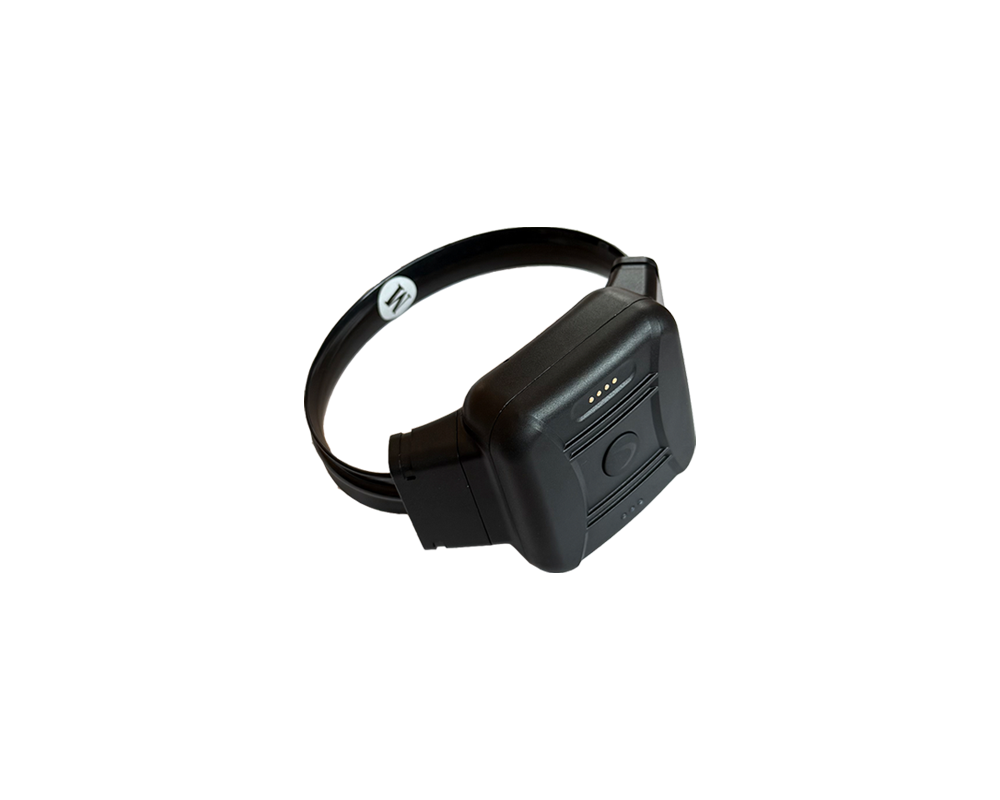
A one-piece GPS ankle bracelet integrates GNSS, modem, battery, and tamper in a single sealed module worn on the ankle. Traditional two-piece systems require a bracelet-to-hub or bracelet-to-phone Bluetooth pairing path that can drift, drain, or confuse participants—generating non-criminal “technical” violations and help-desk load. One-piece electronic monitoring removes that pairing layer for many high-accountability caseloads.
Representative engineering on the CO-EYE ONE includes roughly <2 m GPS accuracy (CEP), 108 g weight, IP68 ingress protection, 7-day standalone battery at a 5-minute LTE-M/NB reporting interval (manufacturer datasheet values), and 5G-compatible LTE-M/NB-IoT/GSM cellular—with the CO-EYE ONE-AC variant adding eSIM and extended BLE-connected modes for qualified architectures.
Two-piece GPS systems
Two-piece stacks separate the ankle radio from a pocket hub or relay. They can fit certain low-risk models or legacy contracts, but total cost of ownership should include spare pairs, pairing failures, and charger logistics for two components.
RF home tethering
RF proximity systems verify that an ankle transmitter is near a home base unit—ideal when court orders require curfew and presence rather than minute-by-minute outdoor tracking. They are a different answer than GPS ankle monitors; do not compare RF quotes to GPS quotes without aligning supervision goals.
Alcohol monitoring bracelets
Transdermal alcohol bracelets measure vapor through the skin on a timeline distinct from GPS fixes. They solve alcohol conditions—not location—and belong in their own service tier within comprehensive electronic monitoring portfolios.
Smartphone apps and low-risk check-ins
Verified smartphone applications can support check-ins, schedules, and victim-notification adjuncts where policy permits. They complement—not replace—high-risk GPS ankle bracelet orders for many agencies.
Procurement tip: when a single vendor portfolio spans GPS, RF, and alcohol modalities, you may still want competitive bids on each line item—bundled discounts help finance, but they should not eliminate apples-to-apples scoring on alert quality and battery life at your mandated reporting cadence.
Electronic Monitoring Programs by Application
Program design should match court authority, risk, and community resources. Below is a practical map—your statutes and orders still rule.
- Pretrial and bail supervision: Location accountability to reduce failure-to-appear while preserving liberty interests; see bail monitoring resources on this site.
- Probation and parole: Longitudinal compliance, zone restrictions, and movement analytics for officer caseloads; start with probation GPS monitoring and parole guides in our resources library.
- House arrest and home detention: Curfew-first models often blend RF presence with GPS for movements where allowed—see house arrest monitoring.
- Domestic violence and protective orders: May combine participant location rules with protected-party notification workflows where implemented; Canadian provinces such as Alberta have advanced victim-notification technology discussions in public safety contexts—useful example of how supervision ecosystems can extend beyond the defendant-only map layer.
- Sex offender registries and specialized conditions: Often require continuous GPS and strict inclusion/exclusion geometry; evidence exports must be hearing-ready.
- Immigration supervision: Program rules vary by jurisdiction; hardware must align with reporting intervals and cross-border carrier realities.
Across these dockets, the through-line is disciplined offender monitoring: clear rules, measurable alert quality, and documented officer response—regardless of whether the public calls the device an ankle monitor or a tag.
Supervision officers should document enrollment steps: baseline maps, charging expectations, exclusion buffers around schools or victim addresses where orders require them, and language-accessible instructions for participants. Small enrollment gaps—wrong time zone, misunderstood curfew, or a dead charger on day three—create preventable violations that show up in statistics as “EM failures” when the underlying issue was onboarding friction. Pair field procedures with dashboard QA: spot-check a random sample of active tracks weekly to catch carrier or firmware regressions before they become headlines.
Inter-agency coordination matters when a single participant sits at the intersection of pretrial, probation, and civil protective orders. Clarify which agency owns rule changes, which platform is authoritative for hearings, and how exports are authenticated. When multiple vendors appear on one wrist historically, transitions deserve written cutover plans so participants are not double-tagged without court approval or left untagged during inventory swaps.
Electronic Monitoring vs Incarceration: Cost & Effectiveness
Budget committees often ask a fair question: why fund electronic monitoring if jail already “works”? The answer pairs fiscal reality with supervision theory—detention is appropriate for many high-risk cases, but unnecessary detention wastes beds and severs employment, treatment, and family stabilizers that reduce future crime.
Public finance comparisons are never perfectly apples-to-apples, but recurring program math contrasts community EM per diems—commonly discussed near roughly $5–$25/day for active GPS tiers—with jail costs often cited at roughly $100+/day and frequently far higher when staffing, medical, food, capital, and debt service are fully loaded. Policy materials from jurisdictions such as Washington, D.C. have illustrated order-of-magnitude gaps between annualized community supervision costs and annualized secure bed costs—use your sheriff’s fully loaded marginal bed-day model rather than a stripped “per diem” brochure number when briefing elected officials.
The directional takeaway: where courts can safely supervise in the community, EM can shift spend from concrete to compliance infrastructure—if alert quality and officer capacity keep pace.
Effectiveness is not guaranteed by hardware alone. That said, research helps frame expectations: a Florida-oriented study reported roughly a 31% reduction in recidivism for monitored cohorts—present it as empirical context, not a promise. Pair outcomes with alert quality: programs that generate excessive false tamper events effectively re-import jail-like workload into community offender monitoring.
Finally, remember substitution effects: EM is not a universal substitute for custody. It is a precision tool for populations where location accountability, curfew verification, or alcohol testing satisfies the court’s risk calculus. Misapplied supervision orders—too loose for high risk or too punitive for low risk—show up later as FTAs, technical violations, and media controversies unrelated to GNSS chipsets.
Monitoring Centers, SLAs, and Operational Reality
Even perfect hardware fails if nobody answers the phone. Mature electronic monitoring programs contract for after-hours coverage, escalation paths, and measurable service levels: maximum time-to-first-human-review on priority alerts, dashboard uptime targets, and defined handoffs to probation or pretrial officers. Ask whether vendor operations are onshore, hybrid, or offshore—and whether your state ethics rules care.
Internal labor matters as much as vendor fees. Every geofence exception, charging reminder, and tamper review consumes minutes. When command staff model budgets, include sergeant review time, warrant paperwork, and transport if a violation ends in arrest. Those hidden lines explain why “cheap per diem” contracts sometimes explode in year two when alert volume surges.
Data retention and discovery are now standard discovery topics. Your IT and counsel should agree how long location histories live, who can export them, and how chain-of-custody is documented before the first high-profile case hits the news cycle.
Choosing Electronic Monitoring Equipment: Buyer’s Guide
Use this checklist when writing RFPs or scoring bids—aligned with NIJ-style rigor and field realities.
- Weight and wearability: Heavy straps drive complaints, skin issues, and tamper temptations; sub-120g one-piece designs such as the 108g CO-EYE ONE set a credible benchmark for GPS ankle monitors.
- Battery vs reporting interval: Demand battery life at your mandated fix rate; marketing numbers at unrealistic intervals mislead procurement.
- Tamper integrity: Ask for false-positive/false-negative methodology. Fiber-optic integrity paths aim to remove ambiguous “maybe tamper” churn.
- Connectivity roadmap: Confirm LTE-M/NB-IoT/GSM plans, SIM logistics, and whether eSIM matters for your carrier strategy.
- Environmental sealing: Showering, weather, and cleaning matter—IP68 is the CO-EYE rating per manufacturer specs.
- Mapping, audits, exports: Courts expect timestamped evidence chains; platforms should export cleanly for hearings.
When traditional two-piece systems require participants to keep a relay charged and paired, expect more support tickets. One-piece architectures eliminate that coupling for many high-risk use cases—reducing operational drag even when unit cost looks higher on page one of a spreadsheet.
Pilot design: Run parallel enrollment for 60–90 days with disposition-coded alerts (true tamper, false tamper, dead battery, zone breach, cleared). Require vendors to export CSV timelines with firmware versions and carrier IDs. Score median time-to-triage and officer satisfaction alongside sticker price—those metrics predict contract renewals better than a glossy brochure.
Training and change management: Budget refresher hours whenever geofence logic or dashboard UX changes. A GPS ankle bracelet program that frontloads training for line officers and monitoring-center staff sees fewer improper violations and cleaner hearing exhibits.
Electronic Monitoring Technology Trends in 2026
Four forces are reshaping EM markets:
- 5G-era IoT cellular and eSIM: Carriers and justice agencies want durable, certifiable modules; eSIM simplifies logistics for multinational vendors and some state contracts.
- Cybersecurity attestations: European frameworks such as EN 18031 and classical AES-128/256 transport security are increasingly expected alongside NIJ-style test evidence—CO-EYE publishes aligned claims on CO-EYE ONE datasheets.
- Analytics and reviewer queues: Risk scoring and clustering help monitoring centers prioritize true breaches over routine noise—especially valuable as caseloads grow.
- Victim-centered workflows: Jurisdictions experiment with notification layers and protected-party tools; Alberta’s public-sector technology conversations illustrate how supervision ecosystems can incorporate victim-notification innovation tied to EM programs.
- Hardware form factors: Compact one-piece GPS ankle bracelets continue to displace fragile two-piece kits where accountability demands continuous outdoor tracking.
Why Agencies Evaluate CO-EYE for Electronic Monitoring Fleets
REFINE Technologies has shipped EM hardware and platforms for more than a decade across dozens of countries. The flagship CO-EYE ONE translates field lessons into engineering: 108 g weight, fiber-optic tamper sensing with manufacturer-rated zero false-positive true-tamper signaling, 7-day standalone power, <2 m GPS accuracy, IP68, and 5G-compatible cellular—including eSIM on ONE-AC. It is a reference design for agencies modernizing legacy GPS ankle monitor inventories.
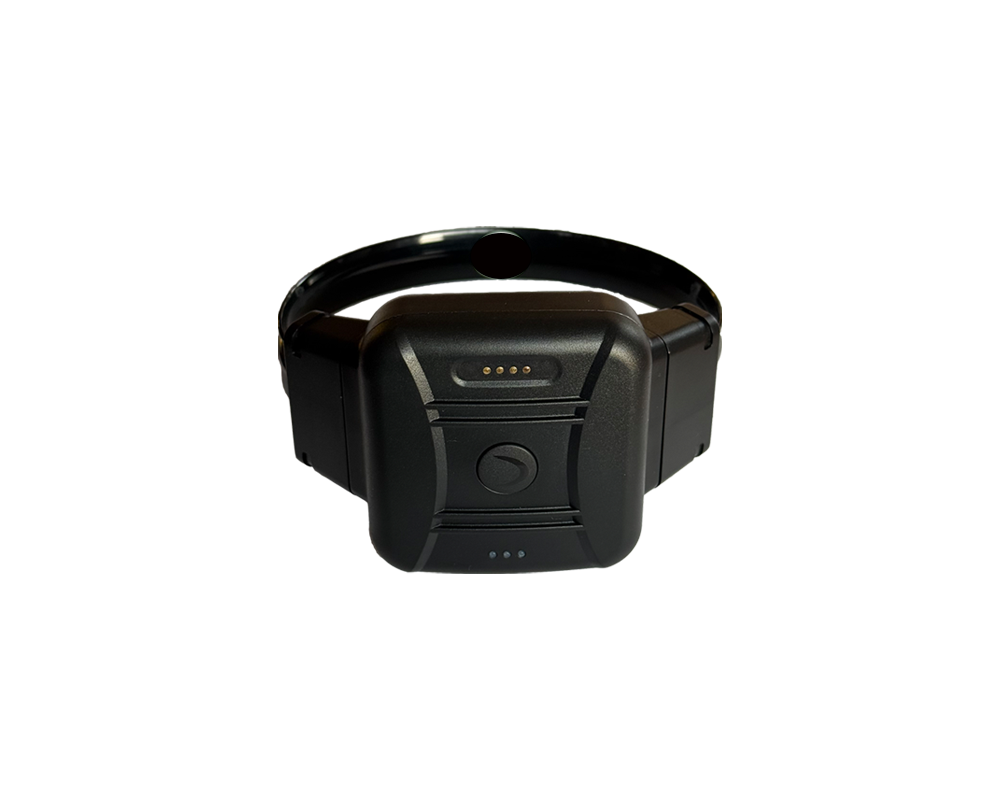
Community EM and national-scale tagging programs succeed when devices disappear into compliant routines—light, waterproof, quick to install (<3 seconds tool-free per CO-EYE spec), and honest about tamper events. If your state RFP demands fewer false alerts and lower pairing overhead, start a procurement conversation: Contact Sales for structured quotes.
Frequently Asked Questions
What is electronic monitoring?
It is supervised use of wearable devices, base stations, smartphone apps, and monitoring software to enforce court or agency conditions in the community—often involving a GPS ankle monitor or RF tether.
Is electronic tagging the same as electronic monitoring?
Usually yes in public discourse—electronic tagging is common UK wording for supervised ankle-worn trackers and related programs.
How accurate is GPS-based EM?
Commercial one-piece devices often target multi-meter accuracy under open sky; urban canyons and indoor edges degrade fixes—platforms apply rules and supplemental assists. CO-EYE ONE advertises <2 m CEP GPS accuracy on its datasheet.
Can participants shower with a GPS ankle bracelet?
Programs should specify ingress protection; CO-EYE ONE is rated IP68 per manufacturer documentation—always follow clinical/skin-care guidance from your medical authority.
Does electronic monitoring reduce recidivism?
Outcomes vary; Florida-oriented research has cited roughly 31% recidivism reduction for some monitored cohorts—use as context with local data.
What is the difference between GPS and RF supervision devices?
GPS-class devices answer “where outdoors?” continuously; RF home systems answer “are you at home during curfew?” They are different tools inside the EM toolbox.
How do I buy electronic monitoring equipment?
Run a structured pilot, score tamper integrity and battery at real reporting intervals, and demand NIJ-aligned evidence. Request a Quote from CO-EYE when you are ready to compare modern one-piece hardware.
What trends matter for EM in 2026?
LPWAN cellular roadmaps, eSIM logistics, analytics-assisted review, victim-notification integrations, and migration from fragile two-piece kits to sealed one-piece GPS ankle monitors.