Electronic monitoring is evolving beyond ankle-only deployments. The emerging standard for community supervision, probation monitoring, and pretrial electronic monitoring is hybrid—pairing a purpose-built GPS ankle monitor where courts demand continuous, body-worn location proof with a smartphone-centered ankle monitor app experience for check-ins, schedules, treatment nudges, and step-down caseloads. Scale explains the pressure: roughly 69% of the U.S. correctional population is under community supervision, while probation and parole operations have historically received only about 12% of state corrections spending—a structural gap widely cited from BJS (2018) population summaries and Pew (2009) budget analyses. Hybrid programs stretch scarce officer time and vendor dollars by matching sensor intensity to risk instead of defaulting every file to maximum hardware. Participants should receive plain-language GPS ankle bracelet rules whenever courts require continuous strap verification.
This guide defines hybrid electronic monitoring, walks through seven proven benefits agencies use in procurement and policy workshops, maps the CO-EYE product continuum, and adds an implementation checklist plus cost framing. For deeper buyer criteria, see our GPS ankle monitor guide and GPS ankle monitor buyers guide. To scope hardware, app, and platform bundles, use Contact Sales or Request Quote—we do not offer free trials or demo devices; deployments are scoped from written requirements.
What Is Hybrid Electronic Monitoring?
Hybrid electronic monitoring means operating multiple complementary technologies inside one supervision program—typically a dedicated GPS ankle monitor for continuous GNSS reporting and tamper-evident hardware, plus smartphone software for engagement, reminders, remote reporting, and (when policy permits) lighter-touch location modes. The critical operational requirement is a unified monitoring platform: officers should not swivel between disconnected consoles for strap alerts, app check-ins, and tether breaks. When architecture is unified, probation monitoring and pretrial electronic monitoring teams can document step-downs, automate tier-specific alert rules, and produce auditable timelines for courts and auditors.
Hybrid is not “app replaces GPS ankle bracelet.” It is “right device for the right risk band,” with explicit consent, data-retention policy, and discovery practices that cover both body-worn telemetry and mobile application events. That distinction matters for community supervision integrity: periodic smartphone confirmation without tethering is a different assurance class than continuous strap-based tracking—something professional associations have emphasized when comparing smartphone workflows to traditional tracking systems.
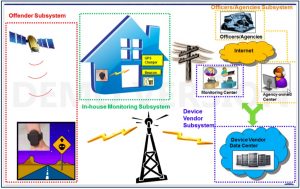
Operationally, think of hybrid architecture as three synchronized layers: hardware integrity (strap tamper, battery telemetry, GNSS continuity), mobile workflow (calendars, acknowledgments, officer chat, optional biometric checks), and case governance (tier rules, escalation SLAs, exports for court). When those layers share one vendor-agnostic data model—or a single vendor stack like CO-EYE—supervisors avoid the classic failure mode where a participant satisfies the app while the ankle device shows a conflicting state, or vice versa, without a documented precedence rule.
Why unified software matters for hybrid programs
Split platforms multiply training costs and slow incident response. Officers should see one timeline per participant, with events normalized to severity codes regardless of whether the source was ONE, AMClient, or BLE tether loss. Reporting for prosecutors should not require merging CSVs from two portals. Procurement teams evaluating electronic monitoring suites should therefore score APIs, webhook reliability, and role-based access for partner agencies (pretrial, probation, sheriff, treatment) as highly as raw device specs.
Seven Proven Benefits of Hybrid Electronic Monitoring
The following seven benefits align with published practitioner guidance, courts innovation summaries, and peer-reviewed supervision research. They are written for chiefs, program directors, and procurement officers evaluating blended GPS ankle monitor and ankle monitor app stacks.
Benefit 1: Risk-Proportionate Supervision
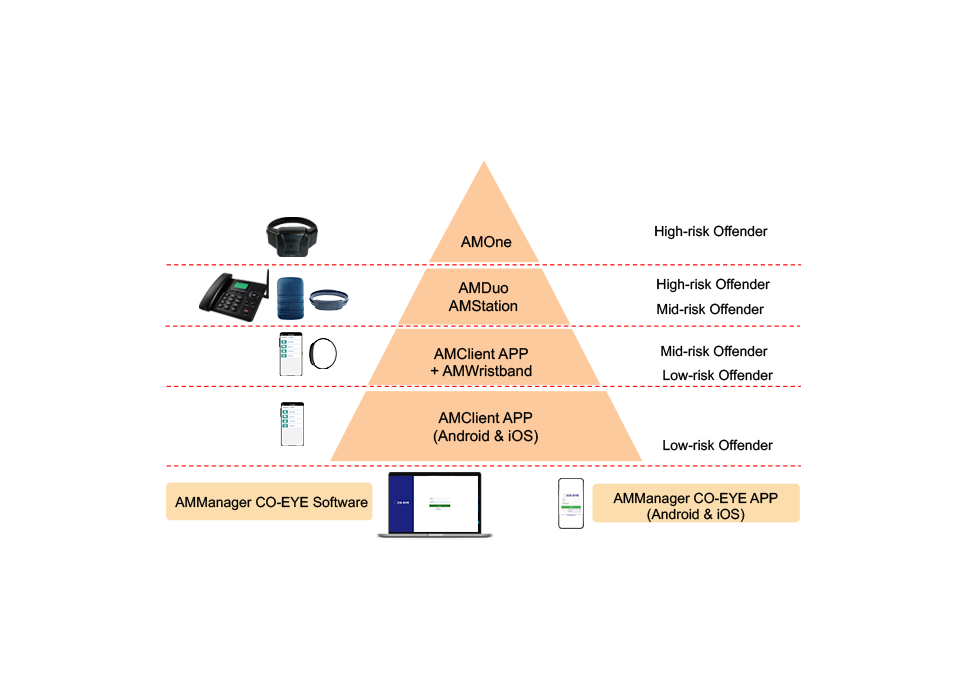
Hybrid models let agencies align technology with validated risk scores and court conditions. High-risk dockets—many pretrial electronic monitoring programs, intensive probation monitoring tracks, and victim-proximity orders—still benefit from continuous GNSS on a dedicated bracelet with hardware tamper semantics. Medium-risk cohorts can move to smartphone-led workflows augmented by short-range Bluetooth confirmation between a wearable band and the handset. Low-risk participants may qualify for scheduled check-ins and calendar-driven accountability when orders and policy allow.
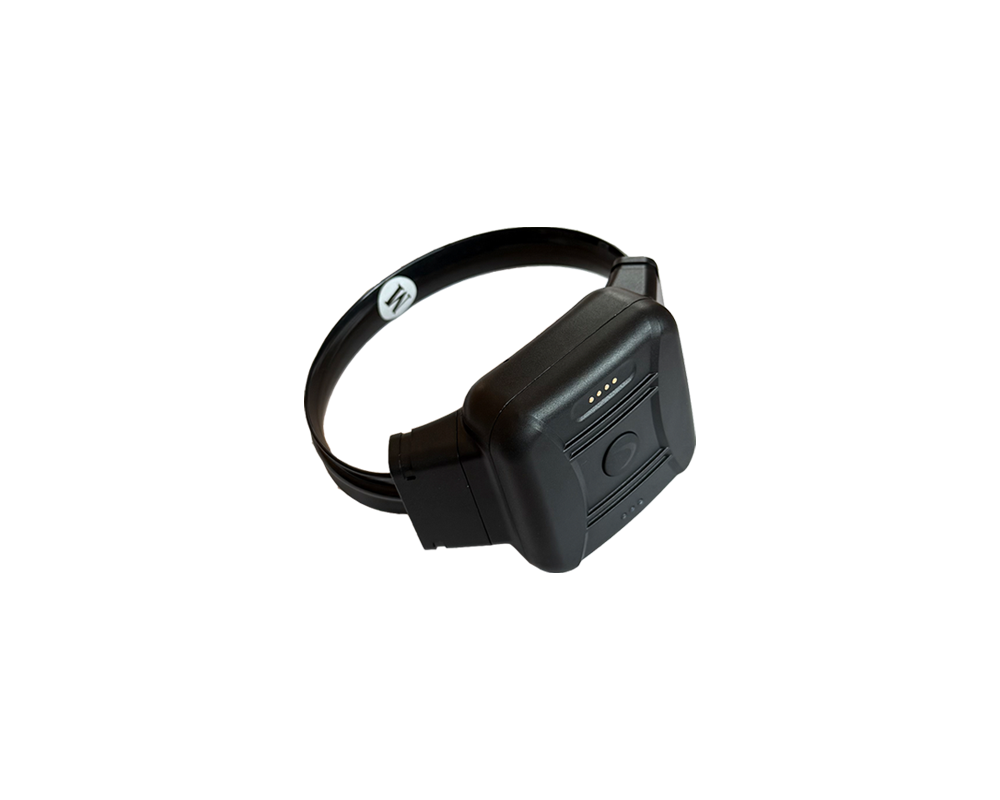
Evidence-based supervision practice stresses proportionality: intensifying conditions without a risk rationale can increase technical violations and officer workload. A tiered electronic monitoring architecture encodes proportionality in equipment choices rather than only in office visit frequency. CO-EYE ONE anchors the high-risk tier with a one-piece GPS ankle monitor at 108 g, about seven days of standalone battery life on typical LTE-M/NB-IoT reporting plans (5-minute interval), fiber-optic tamper sensing on strap and case with zero false-positive tamper signaling per CO-EYE design specifications, and < 2 m CEP-class GNSS performance—specifications teams can transcribe into RFP acceptance tests.
Benefit 2: Reduced Stigmatization
Visible hardware carries social and employment costs. APPA’s smartphone supervision analysis notes participant-facing realities that procurement packets sometimes skip—including stigmatization associated with bulky ankle bracelets—and contrasts purely punitive framing with mobile tools that can support prosocial engagement. Hybrid programs reduce unnecessary visibility by graduating compliant participants from ankle-primary tracking to smartphone pathways, or by starting medium-risk cases on a compact BLE wearable plus phone when courts approve that model.
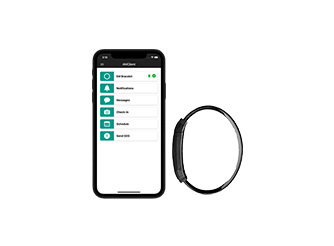
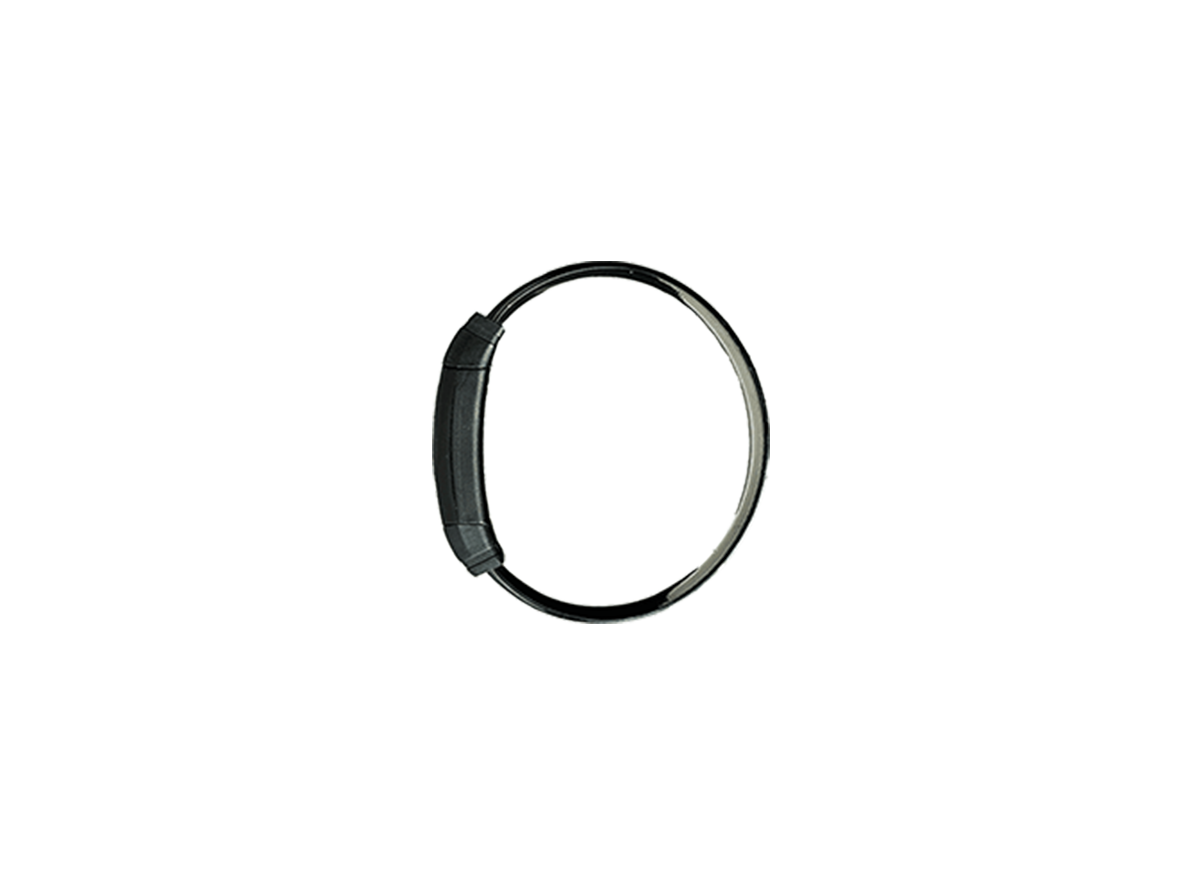
CO-EYE BLE wristband (i-Bracelet) supports tether-class proximity at about 17 g with roughly two-year battery life on dual CR1632 cells and IP68 waterproofing—far less conspicuous than traditional ankle hardware for many employment contexts while still feeding integrity signals to the monitoring platform when paired with CO-EYE AMClient.
Benefit 3: Enhanced Behavioral Change
Smartphone channels can deliver timely prompts, treatment reminders, and access to reentry resources—mechanisms that shift supervision from surveillance-only to accountability-plus-support. In work on drug-involved probationers, Spohr, Taxman & Walters (2015) reported that clients who received electronic reminders participated in more days of treatment and showed favorable substance-use patterns compared with controls—evidence that lightweight digital nudges can change behavior when embedded in services.
APPA similarly describes how smartphone applications can deliver positive reinforcement and structured engagement beyond traditional strap-centric narratives. Practically, agencies should tie any gamification or point systems to concrete obligations—court dates, treatment attendance, curfew compliance—so reinforcement reinforces court orders rather than trivializing them. CO-EYE AMClient on iOS and Android supports continuous supervision workflows (location, tethering where enabled, SOS, officer messaging, and scheduled tasks) so community supervision teams can pair accountability with participant-facing structure.
Benefit 4: Lower Total Cost of Ownership
Budget officers compare daily supervision costs to jail bed-days. Industry planning figures commonly cite GPS electronic monitoring all-in daily costs in the $5–$25 per day range during active strap monitoring (device, cellular, and service components vary by county contract). Smartphone-centric tracks often land near $2–$5 per day when programs leverage participant-owned handsets and shift effort to software licenses and help-desk support—again variable by policy and vendor mix.
Hybrid monitoring optimizes total program spend by stepping cases from higher-cost continuous ankle GNSS to lighter app-led supervision as risk falls, without ripping out the core platform. The key is to model TCO across the full cohort: ankle-primary for the highest-risk slice, tethered phone plus wearable for the middle, and app-led check-ins for the long tail. Financing should include officer time—false tamper storms and redundant alerts are hidden costs that unified rules engines in CO-EYE Monitoring Software are meant to reduce.
Benefit 5: Improved Compliance
Reminder and notification strategies are among the lowest-cost compliance interventions courts can adopt. Practitioner materials from the National Center for State Courts (NCSC, 2018) cite implementations where calendar-style reminders and court-date notifications helped reduce failure to appear (FTA) by up to roughly 30%—a magnitude supervisors should localize with their own data, but a useful benchmark for pretrial services building the business case for smartphone augmentation.
On the outcomes side, Florida juvenile justice research on electronic monitoring has been widely summarized as showing roughly a ~31% reduction in recidivism for monitored cohorts versus controls—use precise figures only when citing the original study context. For operational design, combine reminder logic on the ankle monitor app with continuous integrity on the GPS ankle monitor where courts require uninterrupted location proof; each modality addresses different failure modes (missed dates versus strap tamper).
Benefit 6: Seamless Step-Down Capability
Step-down is where hybrid programs prove their maturity. Successful agencies publish written criteria: minimum compliance streaks, risk-score thresholds, victim-safety constraints, and prosecutorial or judicial approval gates. Technically, step-down should be a configuration change inside one supervision platform—new device assignment, altered alert rules, adjusted reporting intervals—not a migration to a different vendor stack.
CO-EYE Monitoring Software provides 13 functional modules spanning caseload views, alert handling, reporting, and device lifecycle management so probation monitoring and pretrial electronic monitoring teams can record when a participant moves from CO-EYE ONE to AMClient plus BLE wristband, or from tethered smartphone supervision to app-only check-ins, with consistent history for audits.
Benefit 7: Future-Proof Technology
Cellular sunsets and analytics expectations are rewriting EM procurements. Modern ankle hardware should ship with 5G-compatible LTE-M/NB-IoT bearers, and smartphone stacks should accept OTA feature updates as legislatures add reporting rules. CO-EYE ONE-AC extends the flagship with eSIM options and BLE-connected modes that can reach on the order of six months battery life under approved tether configurations—reducing truck rolls while staying on current radio infrastructure.
Agencies should score APIs, module extensibility, and security baselines—not only yesterday’s strap datasheet. Pair this article with the GPS ankle monitor buyers guide for NIJ-informed evaluation criteria and checklist language you can paste into RFPs.
How CO-EYE’s Product Matrix Enables Hybrid Monitoring
- High-risk — CO-EYE ONE: 108 g one-piece GPS ankle monitor, about 7-day standalone battery (LTE-M/NB-IoT, 5-minute interval), fiber-optic strap and case tamper detection with zero false-positive tamper reporting, < 2 m CEP-class GNSS, IP68, magnetic charging (about 2.5 hours to full charge).
- Medium-risk — CO-EYE AMClient + CO-EYE BLE wristband: Continuous BLE tether between the 17 g wrist-worn band and the smartphone app for proximity confirmation; band rated IP68 with multi-year battery life; app on iOS/Android for messaging, SOS, schedules, and location workflows as policy enables.
- Low-risk — CO-EYE AMClient only: Periodic check-ins, remote reporting, and officer communications on standard smartphones when orders do not require continuous body-worn GNSS or tethering.
- Unified platform — CO-EYE Monitoring Software: Thirteen modules consolidating alerts, caseload dashboards, and device management so hybrid tiers coexist in one operational picture.
Implementation Guide for Agencies
- Assess the population. Stratify by risk instrument, offense category, victim-safety needs, and FTA history. Decide which dockets remain ankle-primary by default.
- Define risk tiers. Publish hardware pathways (ONE, AMClient + wristband, AMClient-only), required orientation hours, and charging responsibilities.
- Select the technology mix. Map tiers to SKUs, cellular plans, and MDM/BYOD rules; specify evidentiary requirements for each tier.
- Train officers and participants. Build plain-language modules explaining when the GPS ankle monitor is authoritative versus when the ankle monitor app governs check-ins, and what Bluetooth loss means for tethered tracks.
- Monitor, measure, adjust. Track time-to-acknowledgment by severity, tamper signal quality, step-down conversion rates, and help-desk volumes; tune alert rules quarterly.
Throughout rollout, align discovery and retention policies with defense access rules; hybrid stacks generate more event types (push receipts, tether disconnects, app heartbeats) and need explicit schedules for export and redaction.
Pretrial, probation, and parole nuances
Pretrial electronic monitoring programs often face acute FTA risk and rapid docket churn; smartphone reminders can complement—but not replace—court-ordered continuous tracking when judges specify ankle-based GNSS. Probation monitoring and parole caseloads may emphasize longitudinally stable compliance, making structured step-down from CO-EYE ONE to AMClient plus wristband a realistic incentive for participants who maintain employment and treatment attendance. Document how each modality satisfies statutory language in your jurisdiction: some statutes reference “electronic monitoring device” explicitly; others allow “electronic supervision” language that accommodates tethered smartphone models when counsel agrees.
Participant orientation and digital equity
Hybrid tracks assume participants can maintain a charged smartphone, understand notification permissions, and troubleshoot Bluetooth pairing. Agencies should budget multilingual quick-start cards, video walkthroughs, and a small pool of agency-owned handsets for indigent participants—otherwise smartphone-first tiers can skew toward socioeconomic bias. Orientation should rehearse failure scenarios: airplane mode accidentally enabled, OS updates revoking background location, employer policies blocking cameras used for check-in selfies. Pair those materials with clear escalation phone numbers so technical gaps do not convert into contempt motions.
Case for Cost Savings
Jail and prison bed-days remain the expensive comparator. Figures vary by state, but agency planners often use $100+ per day fully loaded incarceration costs when building diversion math. Against that baseline, $5–$25/day continuous GPS ankle monitor programs and $2–$5/day smartphone-led tracks are not “cheap”—they are directionally less costly than detention while preserving community employment and treatment access. Hybrid designs optimize the blend: spend ankle-GNSS dollars where courts demand strap-grade proof; shift compliant cases to app-centric workflows to free vendor capacity and officer attention for higher-risk files.
Remember that cost savings should never outrank victim safety or statutory minimums. The business case is strongest when legal thresholds are explicit and step-down criteria are published—so hybrid electronic monitoring reads as evidence-based policy, not budget gimmicks.
When commissioners ask for “hard savings,” present scenario models: a 200-person pretrial cohort with 40% eligible for smartphone-led reporting after 60 compliant days might reallocate tens of thousands of vendor-month dollars back into officer FTE or victim services—exact numbers depend on local per-diem rates and which alerts remain officer-supervised versus automated clears in CO-EYE Monitoring Software. Always pair financial slides with public-safety guardrails so finance and legal leadership sign the same assumptions.
Frequently Asked Questions
What is hybrid electronic monitoring? It combines body-worn GPS ankle monitor hardware for high-assurance tracking with smartphone ankle monitor app workflows for engagement, reminders, and lighter-touch reporting—managed through one monitoring platform.
Why not use only smartphones? Non-tethered phones introduce different circumvention and continuity risks than strap-based devices. Hybrid programs reserve continuous tamper-evident GNSS for orders that require it while using apps where risk and policy align.
How does step-down work operationally? Agencies define eligibility, document approvals, then change device assignments and alert rules inside software such as CO-EYE Monitoring Software so histories remain auditable.
What does CO-EYE recommend for pretrial vs probation? Map court conditions first—many pretrial electronic monitoring orders specify continuous location; probation monitoring may allow faster progression to tethered or app-only tracks when compliance is demonstrated.
Where can procurement teams learn evaluation criteria? Start with the GPS ankle monitor guide and buyers guide, then Contact Sales or Request Quote for CO-EYE ONE, AMClient, wristband, and platform scoping.