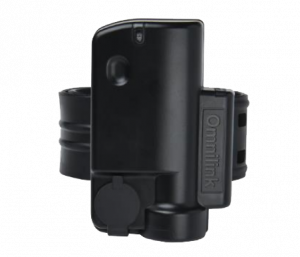

Every law enforcement professional understands a basic truth about handcuffs: they work because they are rigid metal, locked tight around the narrowest point of the wrist, and used for minutes to hours — not months or years. Now consider the challenge of electronic monitoring, where a device must remain securely attached to a person 24 hours a day, 7 days a week, for six months to several years, while being comfortable enough to wear during sleep, work, and daily life.
This article examines why the human wrist is fundamentally unsuitable for long-term secure monitoring — and why every credible electronic monitoring program in the world relies on ankle-worn devices.
The Biomechanical Problem: Wrist Bones Allow Removal
The human wrist and hand have a specific skeletal geometry that creates an unsolvable security problem for any wrist-worn monitoring device.
According to U.S. military anthropometric research (Garrett, 1971), the average male hand circumference at the knuckles measures 21.1–21.7 cm, while the wrist circumference at the styloid process measures approximately 16.5–17.5 cm — a 3–5 cm gap. The hand, however, is not a rigid structure. By folding the thumb inward and compressing the palm, a person reduces their hand’s effective cross-section to approach the wrist diameter. This is the same principle used to slip out of poorly-fitted handcuffs — and it defeats any strap that has even minimal slack.

The Handcuff Analogy Every Officer Understands
Metal handcuffs work on wrists because they are rigid steel with zero elasticity, locked extremely tight, and used temporarily. Electronic monitoring requires flexible material, comfortable fit, and year-long duration. You cannot have all three and also have security. The physics are non-negotiable.
Why Heart Rate Sensors Do Not Solve This
Some wrist-worn manufacturers claim PPG (photoplethysmography) sensors detect removal. The reality:
- 15–30% false alarm rate under real-world conditions (sweat, movement, dry skin)
- 5–15 minute detection delay after removal — an eternity for an absconder
- Warm objects and silicone prosthetics can maintain a false “skin contact” signal
- Compare: fiber-optic tamper detection is instantaneous and binary — the light path is intact or severed, with zero false positives
 ankle monitor – the protruding heel bone prevents device removal” style=”width:100%;max-width:700px;display:block;margin:0 auto;” />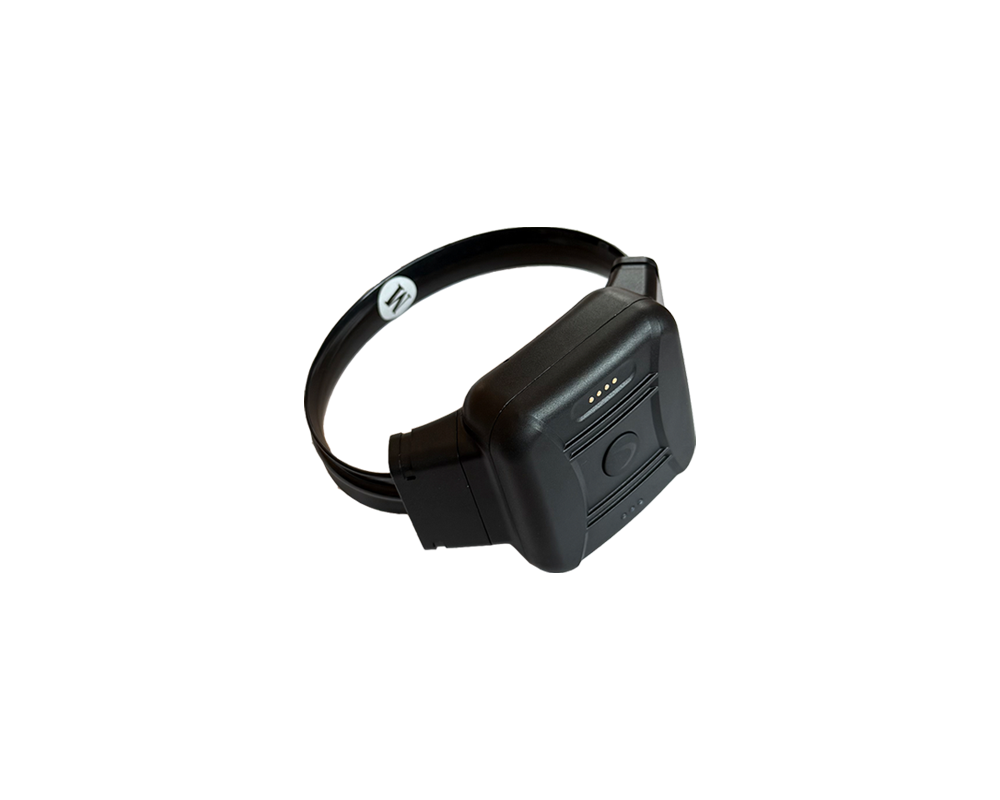
Installation Practicality
Many wrist-worn devices use screw-lock straps borrowed from consumer watch design. Installing such a device on an ankle requires an officer to kneel on the ground and use a screwdriver — impractical in a booking environment and creating a vulnerable position. Professional ankle monitors use tool-free snap-on mechanisms: the CO-EYE ONE installs in under 3 seconds while the officer remains standing.
Procurement Guidance
For any agency evaluating wrist-worn monitoring devices, request documented answers to:
- What is the real-world removal rate across all deployments?
- Has the device been tested against the soap-and-compress removal method?
- What is the sensor false alarm rate over 90-day field deployments?
- What is the time-to-alert upon actual device removal?
- Which U.S. state corrections department has adopted wrist-worn GPS for medium/high-risk supervision?
The answer to question 5: none. Every professional EM program relies on ankle-worn devices because the biomechanics leave no alternative.