
On April 30, 2026, China’s National People’s Congress Standing Committee voted to adopt a comprehensive revision of the Prison Law — the first major overhaul since the original statute was enacted in 1994. Scheduled to take effect on November 1, 2026, this landmark legislation expands from 78 articles in seven chapters to 121 articles across eight chapters, reshaping the legal framework for incarceration, rehabilitation, and post-release supervision across the world’s largest corrections system.
For the global electronic monitoring industry, this revision carries profound implications. China is not merely updating a law on paper — it is codifying a shift toward technology-driven, human-rights-centered prison management that directly creates demand for advanced monitoring solutions. REFINE Technology, which has operated at the intersection of Chinese criminal justice and electronic monitoring technology since 2004, is uniquely positioned to interpret what these changes mean in practice.
Why China Revised Its Prison Law After 30 Years
The original Prison Law was drafted in an era when China’s prison population was managed through a fundamentally different paradigm. Over three decades, the country’s criminal justice system has undergone transformative changes: the adoption of the Community Corrections Law in 2020, the expansion of non-custodial alternatives, and the integration of information technology into supervision workflows. The old law simply could not accommodate these developments.
The revision was prompted by several converging pressures. First, China’s prison system manages approximately 1.7 million incarcerated individuals across over 680 prisons — a scale that demands modern management tools. Second, the country’s emphasis on “governing the nation according to law” (依法治国) required that prison operations be brought into alignment with contemporary legal standards, particularly around human rights protections. Third, the rapid digitization of Chinese society — from facial recognition to mobile payment ecosystems — made the absence of technology provisions in prison law increasingly anachronistic.
The Standing Committee conducted three readings of the draft revision between September 2025 and April 2026, incorporating input from legislators who specifically called for establishing a “unified information-sharing platform for penalty execution” to synchronize digitized case files across prisons, courts, procuratorates, and public security agencies in real time.
What Does the Revised Law Actually Change?
The revision touches virtually every aspect of prison operations. Here are the changes most relevant to the electronic monitoring and corrections technology sectors:
Article 14: Technology Mandate
“Prisons should strengthen informatization construction, apply modern scientific technology, and enhance prison management levels and the quality of criminal reformation work.” This is the first time Chinese prison law explicitly codifies the use of technology in corrections management. While the provision is broadly worded, it establishes the legal basis for deploying electronic monitoring systems, biometric verification, real-time location tracking, and data analytics within prison and community corrections frameworks.
Human Rights Written Into General Provisions
Article 4 now states that prison work “shall respect and protect human rights, reform criminals into law-abiding citizens, and promote their reintegration into society.” This is not merely symbolic. In practice, it creates legal obligations to ensure that monitoring technologies — whether GPS ankle monitors for parolees or in-prison tracking wristbands — meet standards of proportionality, data protection, and dignity.
Strengthened Parole and Temporary Release Procedures
Articles 44-48 significantly expand the framework for temporary execution outside prison (暂予监外执行) and parole, introducing multi-tier review committees, mandatory public disclosure periods, and explicit requirements for community corrections agencies to receive and supervise released individuals. This directly increases demand for electronic monitoring equipment, as every parolee and temporarily released prisoner requires supervision technology.
Rehabilitation and Social Reintegration
An entirely new emphasis on reintegration permeates the revised law. Article 58 requires pre-release education programs. Article 60 mandates that local governments provide employment assistance and social insurance guidance. Article 62 explicitly prohibits discrimination against released prisoners in employment, education, and social security access. These provisions mirror the global trend toward graduated reentry programs — programs that typically rely on electronic monitoring as a bridge between full incarceration and unsupervised release.
Mental Health and Individualized Assessment
Article 96 mandates psychological counseling, crisis intervention, and mental health treatment in prisons. Article 93 requires individualized rehabilitation plans based on crime type, sentence length, risk level, age, health, and psychological profile. In 2024, 99% of new inmates in China underwent psychological testing, with mental health education coverage reaching 99.9%. This data-driven, individualized approach to rehabilitation aligns with the evidence-based supervision models that electronic monitoring platforms support.
How China’s Community Corrections System Already Uses Electronic Monitoring
The 2026 Prison Law revision does not exist in isolation. It builds upon the Community Corrections Law of 2020, which established the legal framework for non-custodial supervision and explicitly authorized the use of electronic positioning devices for community corrections subjects.
REFINE Technology has been at the center of this evolution. In 2011, the Shanghai Municipal Bureau of Justice introduced REFINE’s electronic ankle monitors for community corrections supervision — a deployment that fundamentally changed China’s approach to non-custodial monitoring. Before this, community corrections in China relied almost entirely on manual reporting and periodic check-ins, with no real-time location verification capability.
That initial deployment led to several landmark firsts in Chinese judicial practice:
- The first court-ordered electronic monitoring condition attached to a parole decision anywhere in China
- The first criminal sentence explicitly requiring real-time electronic supervision as a condition of community placement
- Integration with China’s BeiDou satellite navigation system through a joint project with the PLA General Armament Department’s Yangtze River Delta BeiDou Demonstration Project, which passed national acceptance in 2014
Over the past 16 years, REFINE Technology’s electronic monitoring products have been deployed across 16 provinces and municipalities in China, supervising over 130,000 individuals. The company’s CO-EYE product line — including GPS ankle monitors, BLE wristband tags, home stations, and the comprehensive monitoring software platform — covers the full spectrum of non-custodial supervision scenarios: community corrections, bail supervision (取保候审), residential surveillance (监视居住), and compassionate leave from prison (离监探亲).
What the Revision Means for Electronic Monitoring Demand in China
Several provisions in the revised law will directly expand the market for electronic monitoring technology in China:
1. Expanded Parole and Temporary Release = More Monitoring Subjects
By standardizing and streamlining parole and temporary release procedures, the revised law is expected to increase the number of individuals transitioning from full incarceration to community supervision. Each of these individuals represents a potential electronic monitoring subject. The law’s emphasis on procuratorial oversight (Article 6) and transparency (Article 8) also means that supervision agencies will face greater accountability for monitoring quality — which favors reliable, auditable electronic monitoring systems over manual supervision.
2. Article 14’s Technology Mandate Creates Budget Authority
In China’s government procurement system, legal mandates translate directly into budget allocations. Article 14’s requirement that prisons “strengthen informatization construction” provides the statutory basis for corrections agencies to procure electronic monitoring equipment, surveillance systems, and data platforms. Combined with Article 7’s provision that “the state shall guarantee the construction and operation of prisons, and prison funds shall be included in the budget as prescribed,” this creates a clear procurement pathway.
3. The Community Corrections Linkage
In February 2026, China’s Supreme People’s Court, Supreme People’s Procuratorate, Ministry of Public Security, and Ministry of Justice jointly issued updated Guidelines on Strengthening Community Corrections Work Coordination, refining the handoff procedures between prisons and community corrections agencies. These guidelines mandate that receiving community corrections agencies cannot refuse transferred individuals based on non-local household registration — a significant policy change that expands the geographic scope of electronic monitoring deployment.
4. International Cooperation Provisions
Article 9 introduces a novel provision: “The state encourages and supports international exchanges in crime prevention and penalty execution, to enhance mutual judicial trust and cooperation.” For the first time, Chinese prison law explicitly acknowledges the value of international cooperation in corrections — opening doors for technology transfer, joint research, and standards harmonization between China and other jurisdictions.
REFINE Technology’s Role: 22 Years Bridging Chinese Justice and Global EM Innovation
Founded in Shenzhen in 2004, REFINE Technology (锐帆科技) has spent over two decades developing electronic monitoring solutions specifically for the Chinese criminal justice system while simultaneously serving 30+ countries worldwide with its CO-EYE product line. This dual perspective — deep understanding of Chinese judicial requirements combined with global best practices — positions the company uniquely as China’s corrections system modernizes under the revised Prison Law.
Key aspects of REFINE’s China practice include:
- BeiDou-GPS dual constellation positioning: All CO-EYE devices support both China’s indigenous BeiDou Navigation Satellite System and GPS/GLONASS/Galileo, meeting China’s requirements for sovereign satellite navigation while maintaining global interoperability
- Compliance with Chinese cryptographic standards: REFINE holds military-grade product security certification (军密C+), public security product qualification from the Ministry of Public Security, and commercial cryptography certification from the State Cryptography Administration — essential credentials for any technology deployed in China’s justice system
- Enrollee-centric software architecture: The CO-EYE monitoring platform uses an enrollee-centric data model (以被监管人为中心) rather than a device-centric model, aligning with the revised law’s emphasis on individualized rehabilitation and assessment
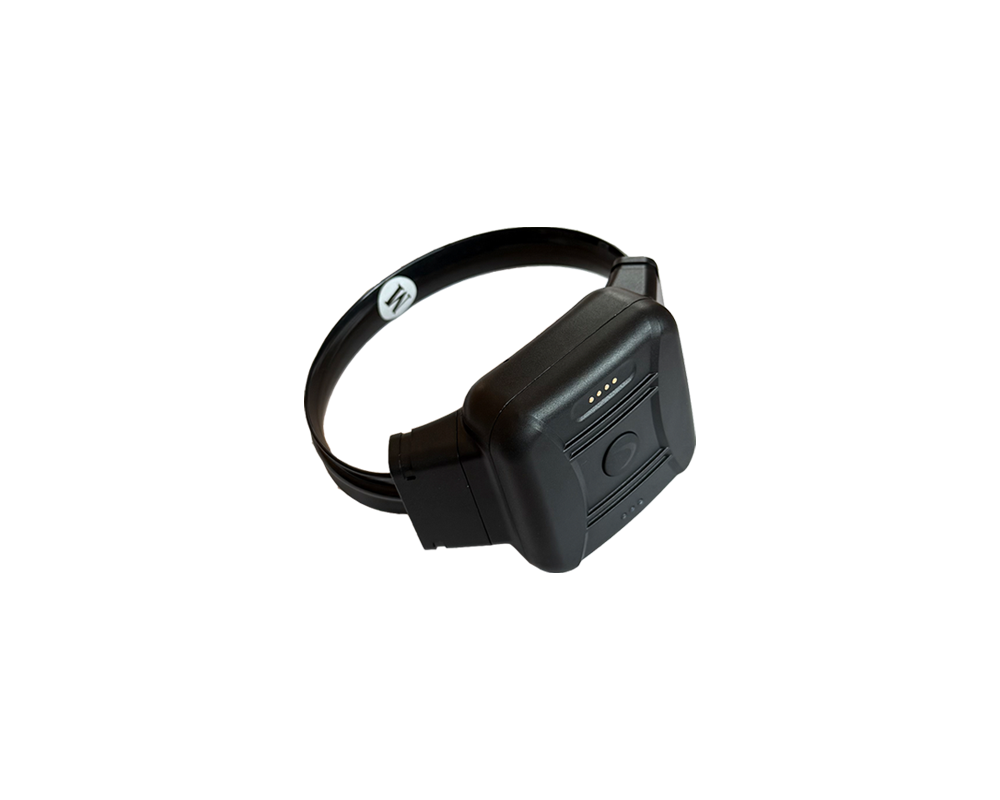
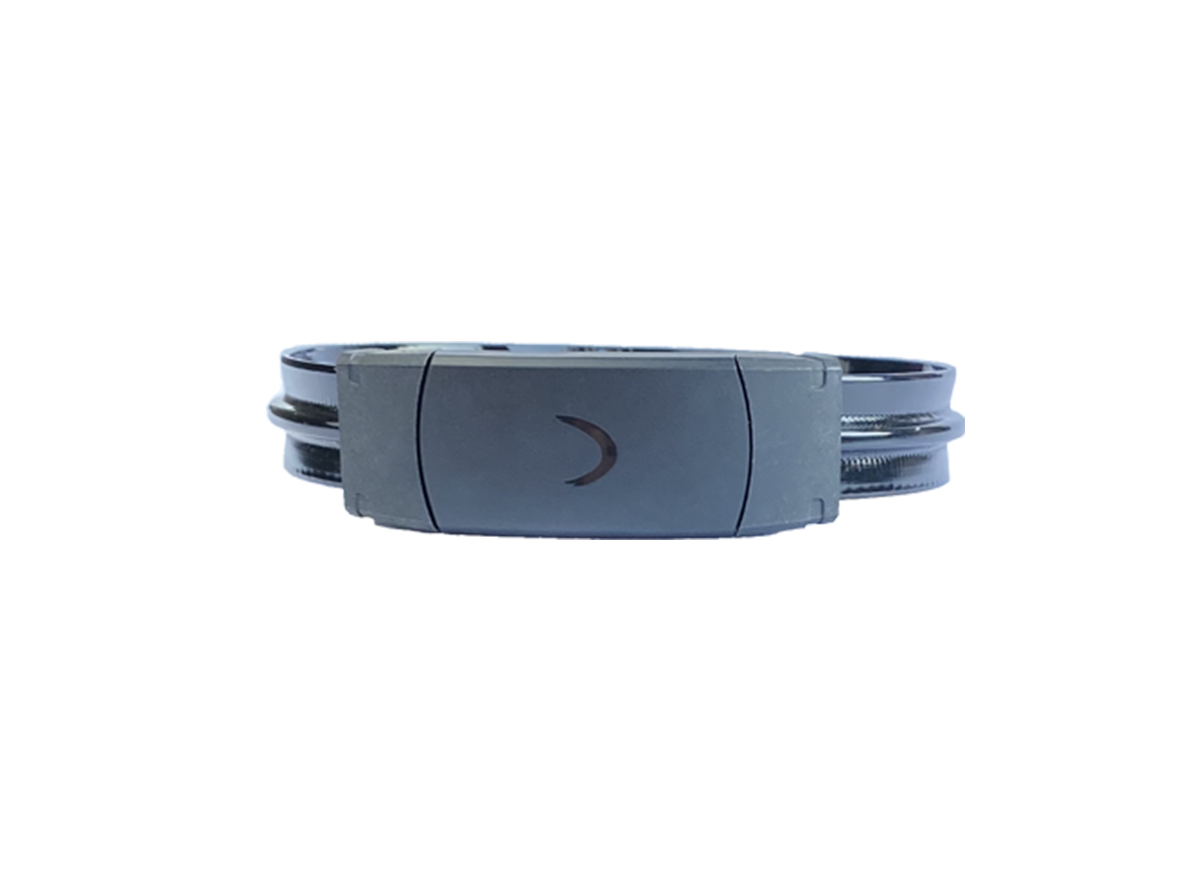
- Full-scenario coverage: From the CO-EYE ONE GPS ankle monitor (108g, the lightest one-piece GPS ankle monitor globally) to the i-Bracelet BLE wristband (17g) for in-prison tracking, REFINE provides technology for every point on the custody continuum that the revised law addresses
Global Context: How China’s Reform Compares to International Trends
China’s 2026 Prison Law revision aligns with and in some cases advances global trends in corrections reform:
European parallels: The Council of Europe’s European Prison Rules similarly emphasize rehabilitation, proportionality, and technology-assisted supervision. In May 2026 alone, Switzerland began piloting real-time GPS tracking for domestic violence offenders, Germany amended its Violence Protection Act to include electronic ankle monitoring, and Sweden proposed electronic bracelets for children at risk of gang recruitment.
U.S. comparison: While the United States monitors approximately 150,000-200,000 individuals on electronic monitoring at any given time (according to the Vera Institute of Justice), China’s community corrections population — currently numbering in the hundreds of thousands — represents a much larger potential electronic monitoring market as the revised law’s provisions take effect.
Technology convergence: The global electronic monitoring industry is moving from single-mode cellular devices toward multi-mode connectivity (BLE + WiFi + LTE), extended battery life, and zero false-alarm tamper detection. China’s technology mandate under Article 14 positions Chinese corrections agencies to adopt these next-generation capabilities rather than legacy systems — an opportunity that REFINE Technology’s Gen 4 CO-EYE platform is designed to address.
What Happens Next
The revised Prison Law takes effect on November 1, 2026. Between now and then, China’s Ministry of Justice, provincial corrections bureaus, and community corrections agencies will be developing implementation regulations and procurement plans. Key developments to watch:
- National informatization standards: The Ministry of Justice is expected to issue detailed technical standards for prison informatization under Article 14, which will define requirements for monitoring systems, data platforms, and interoperability
- Provincial procurement cycles: Individual provinces and municipalities will issue tenders for monitoring equipment and software platforms aligned with the new legal requirements
- Cross-agency data platform: The “unified information-sharing platform for penalty execution” recommended during legislative deliberations — if implemented — would represent one of the world’s most comprehensive corrections data integration projects
- International cooperation initiatives: Article 9’s international cooperation provision may catalyze new bilateral exchanges on corrections technology and standards
For corrections professionals and technology providers worldwide, China’s 2026 Prison Law revision signals that the world’s largest criminal justice system is moving decisively toward technology-enabled, rights-based corrections management. Understanding this shift — and the 22-year track record of companies like REFINE Technology in bridging Chinese justice requirements with global EM innovation — will be essential for anyone operating in or observing the electronic monitoring industry in the years ahead.
See how these legal reforms translate into practice: REFINE Technology deploys CO-EYE electronic monitoring at Bengbu Huaishan Community Corrections Center — a case study in GPS ankle monitor deployment under China’s new regulatory framework.