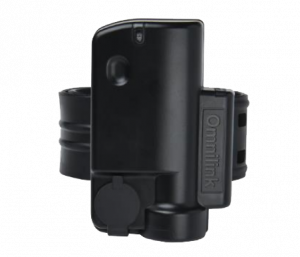

Why Connectivity Technology Matters for Ankle Monitors
Every GPS ankle monitor is, fundamentally, an IoT device: it collects location data from satellites, processes it locally, and transmits it over a cellular network to a monitoring center. The cellular technology used for that transmission directly affects four critical performance parameters: battery life, coverage reliability, data latency (how quickly alerts reach monitoring staff), and global roaming capability.
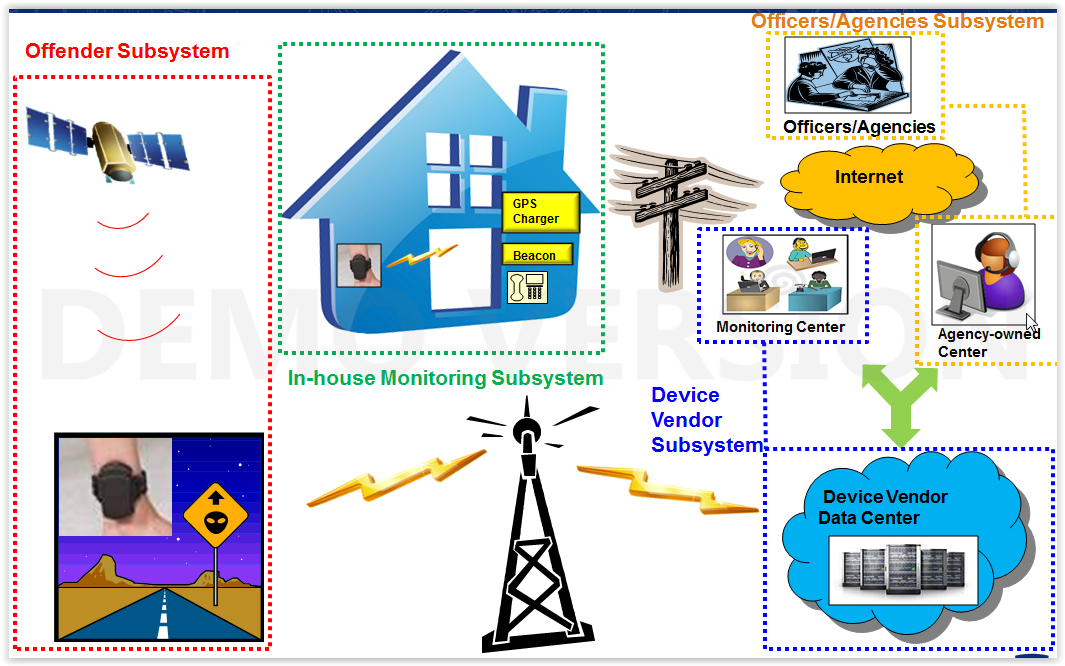
The cellular landscape is undergoing a generational shift. Legacy 2G (GSM) and 3G networks — which powered the first two decades of electronic monitoring — are being decommissioned worldwide. The replacement technologies (LTE-M, NB-IoT, and eventually 5G) offer significant advantages but also create procurement urgency: agencies still using 2G/3G devices face network shutdowns that will render their entire fleet inoperable.
The 2G/3G Sunset: Procurement Urgency
Carrier 2G/3G network shutdowns are well underway:
| Carrier | 2G Status | 3G Status |
|---|---|---|
| AT&T (US) | Shutdown Feb 2022 | Shutdown Feb 2022 |
| T-Mobile (US) | Shutdown Dec 2022 | Shutdown Jul 2022 |
| Verizon (US) | N/A (never deployed) | Shutdown Dec 2022 |
| Vodafone (EU) | Ongoing 2024-2027 | Planned 2025-2028 |
| Telstra (Australia) | Shutdown 2024 | Shutdown Jun 2024 |
Agencies still operating 2G/3G ankle monitors must migrate to LTE/4G or LTE-M/NB-IoT devices. This is not a future consideration — it is an immediate procurement requirement.
New Connectivity Technologies Explained
LTE Cat-1 / Cat-4
Standard 4G LTE connectivity. High bandwidth (10-150 Mbps) but higher power consumption than IoT-specific alternatives. Used in ankle monitors that also support voice communication or firmware-over-the-air (FOTA) updates.
LTE-M (Cat-M1)
Purpose-designed for IoT devices. Lower bandwidth (1 Mbps) but significantly lower power consumption than standard LTE — extending battery life by 30-50% for the same tracking configuration. LTE-M supports mobility (device handoff between cell towers during movement), making it ideal for GPS tracking applications where the device is frequently in motion.
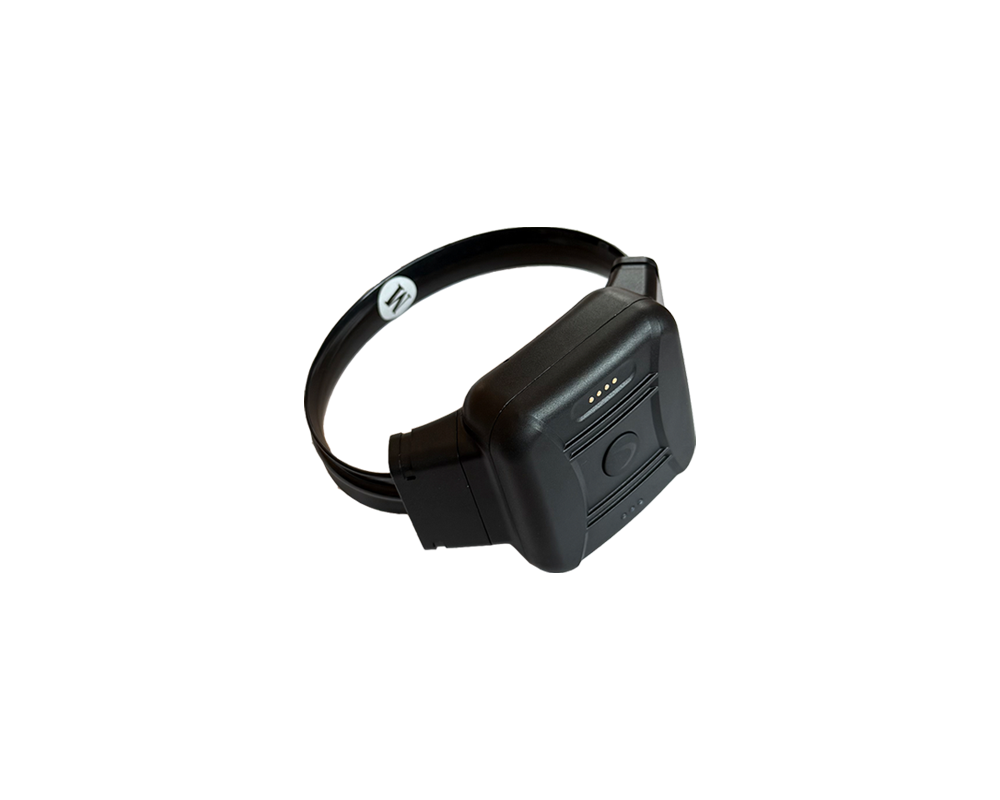
The CO-EYE ONE supports LTE-M as a primary cellular technology, leveraging the power efficiency to deliver 40+ hours of battery life with standard GPS tracking intervals.
NB-IoT (Cat-NB1/NB2)
Narrowband IoT is optimized for stationary or low-mobility devices that transmit small data packets infrequently. It offers the lowest power consumption but does not support mobility handoff, making it less suitable for continuous GPS tracking of moving subjects. NB-IoT is better suited for home-monitoring base stations or check-in devices that transmit periodically from a fixed location.
5G (NR)
5G offers ultra-low latency (1-10ms vs 30-50ms for LTE) and massive device density support. For ankle monitoring, the latency improvement is mostly theoretical — monitoring systems don’t require sub-10ms data delivery. The primary future benefit of 5G for EM is network slicing: carriers can provide dedicated, guaranteed-quality network segments for public safety applications, ensuring monitoring data is prioritized during network congestion.
Impact on Ankle Monitor Performance
| Parameter | 2G/3G (Legacy) | LTE-M (Current Best) | 5G (Future) |
|---|---|---|---|
| Battery impact | Moderate | Low (30-50% better than 3G) | Variable (depends on mode) |
| Data latency | 100-500ms | 30-100ms | 1-10ms |
| Indoor coverage | Good (low-frequency penetration) | Good (700-900 MHz bands) | Mixed (mmWave poor; sub-6 good) |
| Global roaming | Excellent (universal 2G) | Growing (carrier rollouts ongoing) | Limited (early deployment) |
| Network longevity | Shutting down now | 10+ year lifespan | 15+ year lifespan |
What Agencies Should Require in Next Procurement
- LTE-M support minimum: Any device purchased in 2026+ should support LTE-M as the primary connectivity. 2G/3G-only devices are non-viable.
- Multi-band LTE fallback: For areas where LTE-M coverage is incomplete, the device should fall back to standard LTE Cat-1.
- FOTA capability: Firmware-over-the-air updates allow the vendor to push connectivity improvements and new band support without physical device replacement.
- eSIM or multi-SIM: For agencies with nationwide coverage needs, eSIM technology allows carrier switching without physical SIM replacement — critical if a local carrier’s coverage is insufficient.
- 5G-ready roadmap: While 5G ankle monitors are not yet necessary, vendors should demonstrate a 5G migration path for devices purchased in current procurement cycles.
Frequently Asked Questions
Will 2G/3G ankle monitors stop working?
Yes. US carriers have already shut down 2G and 3G networks (AT&T and T-Mobile in 2022, Verizon 3G in 2022). European and Australian carriers are completing shutdowns through 2027-2028. Agencies still using 2G/3G devices must migrate to LTE-M or LTE-based devices immediately.
What is LTE-M and why is it important for ankle monitors?
LTE-M (Cat-M1) is a cellular technology designed for IoT devices like GPS trackers. It consumes 30-50% less power than standard LTE, extending ankle monitor battery life significantly. LTE-M supports mobility (cell tower handoff during movement), making it ideal for continuous GPS tracking. It operates on licensed cellular spectrum with carrier-grade reliability.
Do agencies need 5G ankle monitors now?
No. 5G’s primary benefit — ultra-low latency — is not critical for current monitoring operations. LTE-M provides excellent performance for ankle monitoring at lower power consumption. However, agencies should require vendors to have a 5G migration roadmap for devices purchased in current procurement cycles, as 5G will become the standard network within 5-10 years.
How does cellular technology affect GPS ankle monitor battery life?
Cellular data transmission is one of the three main battery consumers in a GPS ankle monitor (alongside GPS positioning and anti-tamper monitoring). LTE-M reduces cellular power consumption by 30-50% compared to 3G/standard LTE, directly extending operational battery life. This is why LTE-M-equipped devices like the CO-EYE ONE achieve 40+ hour battery life.
What happens if cellular coverage is lost?
GPS ankle monitors store location data locally when cellular coverage is unavailable and transmit the backlog when connectivity resumes. This “store and forward” approach ensures no location data is lost during temporary coverage gaps. The monitoring platform flags these delayed reports but the complete location trail is preserved.