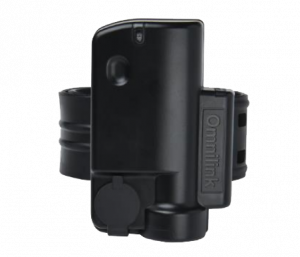

Pretrial Supervision Technology Options
Pretrial services agencies must choose among several electronic monitoring technologies to supervise released defendants. Pretrial supervision GPS tracking, RF home monitoring, and smartphone-based solutions each suit different risk levels and court conditions. This comparison helps courts and pretrial directors evaluate pretrial GPS supervision systems, digital pretrial supervision systems, pretrial monitoring compliance alerts, and pretrial supervision compliance tools against program goals and budget.
Pretrial release decisions increasingly rely on risk instruments and structured supervision tiers. The GPS ankle bracelet tier is appropriate when courts need continuous location assurance, victim proximity protection, or high flight-risk profiles. Lower tiers may still involve an ankle monitor with RF presence confirmation, or smartphone-based check-ins — each with different evidence standards and staffing impacts.
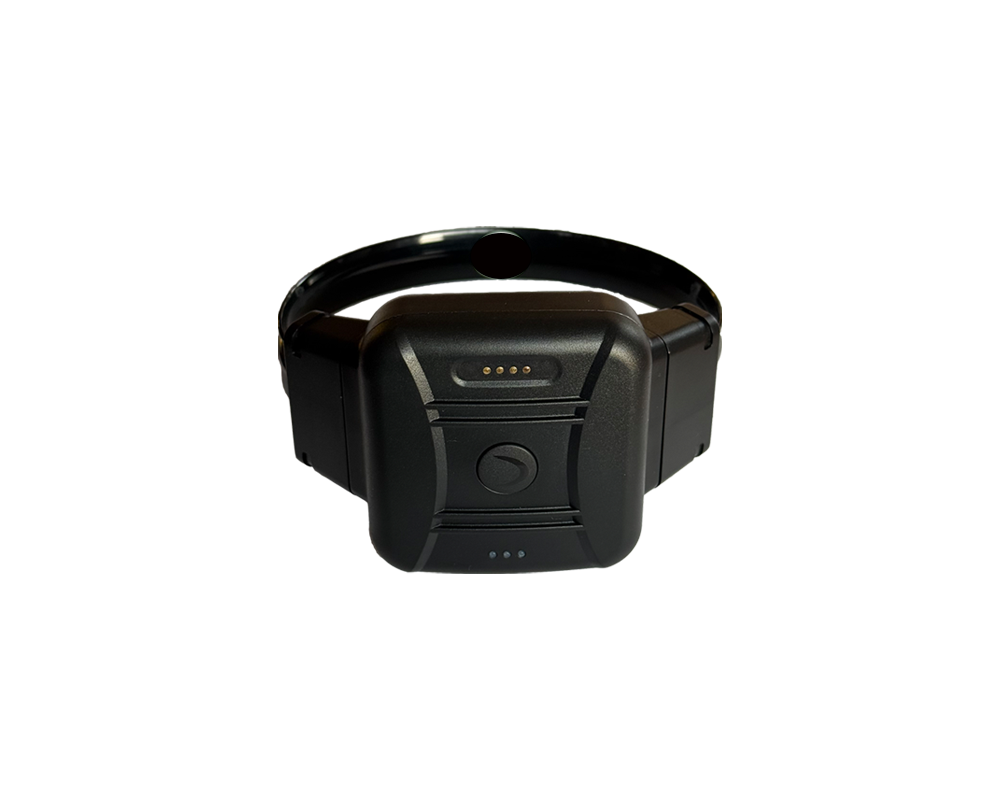
Pretrial reform has expanded alternatives to detention. Jurisdictions using risk-based release need technology that scales — from low-risk defendants on phone check-in to high-risk defendants on continuous GPS. A tiered approach reduces jail crowding while maintaining supervision. The right mix of pretrial supervision technology depends on your caseload distribution, court expectations, and staffing capacity.
Judges and magistrates often ask whether a GPS ankle bracelet condition is the least restrictive means to address flight risk or victim safety. That proportionality analysis should appear in the bond order’s written findings so monitoring staff know which alerts justify immediate arrest referrals versus officer outreach. Clear findings also help defendants’ counsel advise on motion strategy and charging logistics.
Courts should align bond conditions with measurable telemetry: reporting intervals, zone logic, and tamper adjudication. NIJ-sponsored research illustrates how offender devices, vendor processing, agency workstations, and court reporting interlock; supervisors who understand that chain write clearer orders and fewer ambiguous conditions.
Neutral comparison shopping still benefits from a concrete reference device: review GPS ankle bracelet fundamentals alongside what is an ankle monitor so clerks, pretrial officers, and IT vendors parse the same vocabulary. When courts specify “GPS” generically, vendors may propose smartphone-only solutions that do not meet victim-exclusion intent; tighten definitions when the docket requires strap-level integrity.
When Should a Court Order Continuous GPS vs a Smartphone Check-In?
Continuous GPS is justified when exclusion zones, victim safety buffers, or high flight-risk scores require real-time location assurance. Smartphone programs fit lower tiers where verified presence and rapid communication matter more than strap-level tamper evidence.
Courts can reduce litigation risk by specifying technology tiers in the bond order (vendor-neutral language plus performance thresholds). Reference GPS ankle bracelet fundamentals and what is an ankle monitor when drafting conditions so defendants understand charging obligations and zone rules.
How Do Pretrial Programs Contain Electronic Monitoring Costs Without Sacrificing Safety?
Use tiered assignment, pooled charging support, and alert rules tuned to risk — not one-size-fits-all 5-minute GPS for every defendant. Cost explosions usually trace to alert volume and officer overtime, not device lease lines alone.
Finance teams should read ankle monitor cost guide alongside pretrial census projections. Hardware choices matter: LTE-heavy reporting burns batteries and creates charging noncompliance that masquerades as risk on a dashboard. CO-EYE ONE-AC documents BLE-assisted and WiFi-directed modes for extended runtimes — relevant when courts want electronic monitoring but need realistic charging expectations.
What Evidence Standards Should Pretrial GPS Supervision Meet?
Timestamped maps, chain-of-custody for tamper events, officer acknowledgment logs, and machine-readable exports reduce admissibility disputes and speed bond revocation hearings when serious violations occur.
Judges benefit from one-page violation summaries with map context, not raw CSV dumps. Agencies should validate exports during vendor selection, not after the first contested hearing. Technical readers should pair this section with GPS ankle monitor guide and one-piece vs two-piece GPS ankle monitors for architecture context.
Technology Comparison: GPS vs RF vs App-Based
| Factor | GPS Ankle Monitor | RF Home Monitoring | App-Based / Smartphone |
|---|---|---|---|
| Location tracking | Continuous — anywhere with cellular | Presence only — home base station | GPS when phone is on; background tracking varies |
| Exclusion zones | Yes — real-time alert on approach | No — home curfew only | Yes — if app supports; depends on phone availability |
| Tamper evidence | Optical fiber or electronic; IP68 waterproof | Band removal detection; physical evidence | Limited — phone can be left behind |
| Cost per defendant | Highest — device, cellular, platform | Moderate — base station + band | Lowest — app license only; defendant supplies phone |
| Flight risk fit | High and moderate | Low — home curfew compliance | Low — verification and check-in |
| Installation | Field officer — snap-on, no tools | Home installation — base station setup | Self-install — app download |
Pretrial supervision technology selection should align with risk assessment. High-flight-risk defendants need pretrial GPS supervision systems that report location continuously. Defendants with home curfew orders and stable housing may qualify for RF. Low-risk defendants with phones can use digital pretrial supervision systems that rely on check-in and geolocation.
Cellular sunsets and indoor dead zones are not abstract “IT risks” for pretrial: they determine whether a GPS ankle bracelet defendant appears compliant during employment hours in steel-framed buildings or rural counties. Agencies should document carrier coverage assumptions in the release plan and budget for WiFi repeaters, charging visits, or device swaps when assumptions fail — costs belong in the same worksheet as daily per-participant fees.
Pretrial directors should also rehearse bond-revocation workflows with defense bars: define what “exigent” means for after-hours alerts, who authorizes arrests, and how ankle monitor data packets are transmitted to booking staff. Clear protocols reduce Fourth Amendment friction and improve defensibility when high-profile cases draw media scrutiny.
Pretrial Supervision Alert Systems and Compliance Tools
Pretrial monitoring compliance alerts must reach officers quickly and include sufficient detail for response. Pretrial supervision alert systems typically generate:
- Zone violations: Defendant enters an exclusion zone (victim residence, school, bar). Alert includes timestamp, location, and zone name.
- Curfew violations: Defendant leaves home during curfew or fails to return. RF systems detect absence from base station; GPS systems use location vs scheduled zones.
- Tamper events: Strap cut, stretch, or obstruction. Optical fiber anti-tamper provides deterministic detection with physical evidence.
- Device offline: No location report within expected interval — possible cellular outage, dead battery, or device removal.
- Battery low: Early warning so officer can arrange charging before loss of supervision.
Pretrial supervision compliance tools should support configurable alert thresholds, escalation rules, and integration with case management. Officers need mobile access to acknowledge alerts and document response.
Integration with Risk Assessment Tools
Pretrial risk assessment instruments (e.g., PSA, Virginia Pretrial Risk Assessment) classify defendants by flight risk and recidivism. Pretrial supervision technology should map to those tiers:
- Tier 1 (low risk): Release on recognizance or with phone check-in; app-based digital pretrial supervision systems may suffice.
- Tier 2 (moderate risk): Home curfew with RF; or GPS with reduced reporting frequency if exclusion zones apply.
- Tier 3 (high risk): Continuous GPS with exclusion zones; optical fiber anti-tamper and IP68 waterproof for high-compliance supervision.
Some platforms integrate risk scores into device assignment workflows — suggesting technology tier based on assessment output. Verify that pretrial GPS supervision systems support CJIS-compliant data handling when risk assessment data is criminal justice information.
Court Reporting and Evidence
Courts require violation reports with timestamped location data for bond revocation hearings. Pretrial monitoring compliance tools should produce court-ready exports: zone violation maps, curfew compliance summaries, tamper event documentation. One-click evidence packaging reduces officer time and improves admissibility.
Test reporting during vendor demos. Ask vendors to generate a sample violation report from simulated data — including map, timestamps, and chain-of-custody for tamper events. Verify export format (PDF) matches your court’s filing requirements. Manual report assembly from raw exports introduces errors and delays; automated packaging should be a standard feature, not an add-on.
Device interoperability matters for tiered programs. If you run GPS for high-risk and RF for low-risk defendants, a unified platform that supports both reduces training and simplifies caseload management. Some pretrial GPS supervision systems integrate with smartphone apps — the same officer can view GPS defendants and app-based defendants in one interface. Avoid separate silos for each technology tier. Pilot new technology with a subset of defendants before full rollout; validate alert accuracy, staff workload impact, and defendant compliance with the new system.
For hardware due diligence on continuous GPS tiers, review CO-EYE ONE specifications and Request Quote / Contact Sales for agency pricing — pretrial offices should not assume retail narratives map to secured justice pricing.
Document language translations and ADA accommodations where defendants have limited English proficiency or dexterity barriers to charging small GPS ankle bracelet docks — human factors drive noncompliance that risk scores alone will not predict.
County counsels sometimes require indemnity clauses for algorithmic risk scores when those scores auto-adjust supervision tiers; if your pretrial platform blends risk engines with raw ankle monitor tracks, separate the data lineage in audit logs so bond hearings do not commingle inadmissible predictions with verified location facts. Document those separations clearly for appellate review.
Why Pretrial GPS Technology Requirements Differ From Post-Conviction Monitoring
Pretrial supervision operates under fundamentally different constraints than post-conviction monitoring, and the technology must reflect this. A pretrial defendant is legally presumed innocent. The monitoring is not punishment — it is a court-ordered condition of release designed to ensure two outcomes: the defendant appears for court dates and the community remains safe.
This distinction creates specific technology requirements that many GPS ankle monitor vendors, originally designed for post-conviction parole monitoring, fail to adequately address:
| Requirement | Pretrial Priority | Post-Conviction Priority | Technology Implication |
|---|---|---|---|
| Enrollment speed | Critical — defendant must be enrolled immediately after bail hearing, often in a crowded courthouse | Important — but enrollment typically occurs during a scheduled intake appointment | Sub-30-second tool-free installation eliminates courthouse bottlenecks. CO-EYE’s snap-on design with pre-sized straps achieves this; most legacy devices require 5-15 minute installation with tools |
| Victim proximity alerts | Essential for DV/stalking cases — real-time alerts when defendant approaches protected person or location | Less common — victim contact prohibitions less frequent in standard parole | Requires sub-2-meter GPS accuracy + low-latency cellular connectivity + reliable indoor detection (DV victims may be inside buildings) |
| False alarm tolerance | Zero tolerance — every false tamper alert at 2 AM is a potential 4th Amendment challenge to the monitoring condition | Low tolerance — but officers are more accustomed to managing false alerts for convicted enrollees | False tamper alerts in pretrial cases generate defense motions to remove monitoring. Fiber-optic detection (zero false positives) eliminates this legal vulnerability |
| Data admissibility | Every GPS data point must be admissible as evidence in violation hearings | Same, but evidentiary challenges are less common | Requires anti-spoofing validation, tamper-evident audit logs, secure chain of custody for stored data, and expert witness availability from the vendor |
| Defendant experience | Must be minimally burdensome — an overly intrusive device generates constitutional challenges | Less scrutiny — but good practice still favors comfort and discretion | Lighter weight (108g vs. industry 150-250g), smaller profile, and less frequent charging all reduce defense arguments that monitoring is punitive |
The Court Appearance Rate Question: What the Evidence Actually Shows
Courts considering GPS monitoring for pretrial defendants ask a straightforward question: does it reduce failures to appear?
The honest answer is: yes, substantially, but the technology alone is not the mechanism. GPS monitoring improves court appearance rates through a combination of accountability (the defendant knows their location is tracked), structured contact (regular check-ins with supervision staff), and automated reminders (the monitoring platform sends court date notifications). Programs that combine GPS tracking with active supervision contact consistently achieve 85-95% appearance rates, compared to 70-80% for unsupervised release.
The technology contribution is creating the infrastructure for this accountability — continuous location visibility, automated compliance alerts, and court-ready evidence when violations occur. A more reliable device (fewer false alarms, longer battery life, fewer connectivity interruptions) directly improves program effectiveness by allowing officers to focus on genuine compliance issues rather than managing technology failures.
For pretrial programs evaluating GPS equipment: Request the vendor’s data on false alarm rates, battery-related alerts, and connectivity loss events from active pretrial deployments. These operational metrics predict your program’s efficiency more accurately than any specification sheet.
CO-EYE’s Pretrial-Specific Advantages
We designed the CO-EYE ONE and ONE-AC with pretrial requirements specifically in mind:
- 3-second enrollment — tool-free snap-on installation with pre-configured S/M/L/XL straps eliminates courthouse installation delays. No tools, no strap cutting, no complex pairing procedures
- Zero false tamper alarms — fiber-optic detection means your pretrial program never generates a tamper alert that turns out to be nothing. Every alert is real. This eliminates the defense attorney’s most common challenge to GPS monitoring conditions
- 7-day to 6-month battery life — pretrial defendants should not have their daily routines (work, childcare, medical appointments) disrupted by daily charging requirements. Multi-mode connectivity ensures the device stays operational without enrollee intervention for days to months
- Victim proximity protection — sub-2-meter GPS accuracy combined with the AMClient companion app enables dynamic exclusion zones around protected persons, with dual notification to both officers and victims
- Court-ready evidence chain — tamper-evident GPS data with anti-spoofing validation, stored on secure on-premise or cloud servers with complete audit trails. Our deployment team provides expert witness support for violation hearings
Request evaluation units for your pretrial program: Contact Sales for a technical consultation and 30-day live comparison with your current equipment.
Related Resources
- Bail & Pretrial Electronic Monitoring — solution overview
- Pretrial Electronic Monitoring Guide — pillar resource
- CO-EYE ONE GPS Ankle Monitor — specifications and deployment data
- CO-EYE Monitoring Software — pretrial supervision platform capabilities