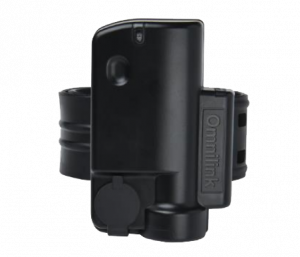

The Complete Signal Chain: From Satellite to Supervision
A GPS ankle monitor is a self-contained IoT device that combines satellite positioning, cellular communication, tamper detection, and power management into a unit strapped to a human ankle — then operates autonomously for days or weeks while transmitting court-critical data to a monitoring center. Understanding how each subsystem works helps procurement officers evaluate vendor claims and corrections administrators troubleshoot field issues.
Layer 1: Satellite Positioning
Multi-Constellation GNSS
The positioning engine in a modern ankle monitor receives signals from multiple Global Navigation Satellite System (GNSS) constellations simultaneously:
- GPS (US, 31 satellites) — the baseline system available globally
- GLONASS (Russia, 24 satellites) — improves accuracy in northern latitudes
- BeiDou (China, 35+ satellites) — strongest coverage in Asia-Pacific
- Galileo (EU, 30 satellites) — highest accuracy specification (sub-meter future roadmap)
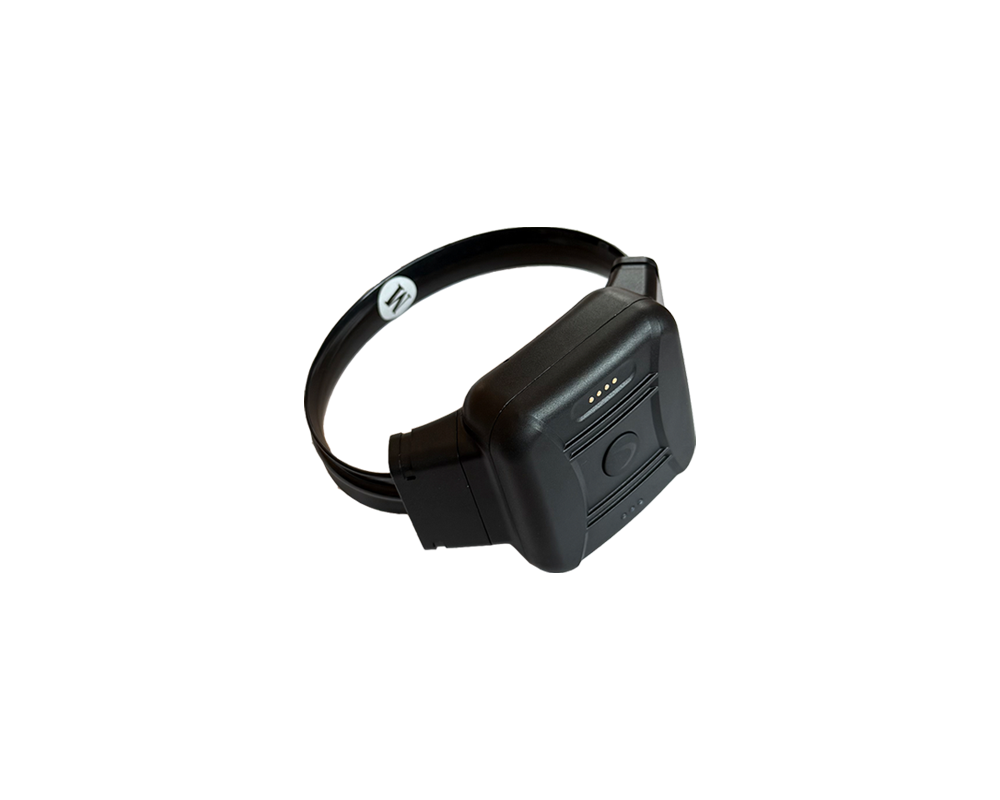
Multi-constellation receivers like the CO-EYE ONE access 120+ satellites simultaneously versus ~31 for GPS-only devices. More visible satellites means faster position fixes, better accuracy in urban canyons (tall buildings blocking sky view), and fewer dead zones where tracking drops out entirely. The practical result: CO-EYE ONE achieves < 2-meter CEP (Circular Error Probable) — meaning 50% of position fixes land within a 2-meter radius of true position.
Indoor Positioning Fallback
Satellite signals degrade indoors. When GNSS accuracy drops, ankle monitors fall back through a positioning hierarchy:
- WiFi positioning: The device scans nearby WiFi access points and matches their MAC addresses against databases of known AP locations (crowdsourced, like Google’s WiFi positioning). Accuracy: 5–15 meters indoors.
- LBS (Location Based Service) / Cell Tower: The device measures signal strength and timing from nearby cellular towers to estimate position. Accuracy: 50–300 meters depending on tower density.
- Bluetooth beacons: If paired with a home station (like CO-EYE HouseStation or i-Tracker), BLE proximity indicates the wearer is within the home environment — sufficient for curfew verification even without precise coordinates.
Layer 2: Cellular Communication
Network Technologies
Position data must reach the monitoring server. Ankle monitors use cellular networks optimized for IoT applications:
| Technology | Generation | Data Rate | Power Draw | Building Penetration |
|---|---|---|---|---|
| LTE-M (Cat-M1) | 4G/5G | 1 Mbps | Very low | Excellent |
| NB-IoT | 4G/5G | 250 kbps | Lowest | Best-in-class |
| GSM/GPRS/EDGE | 2G | 114–384 kbps | Moderate | Good |
| LTE Cat-1/4 | 4G | 10–150 Mbps | Higher | Standard |
CO-EYE ONE supports LTE-M, NB-IoT, and GSM with automatic network selection and fallback. LTE-M and NB-IoT are specifically designed for IoT devices — they consume dramatically less power than standard 4G while providing superior building penetration. This is why the ONE achieves 7-day battery life at 5-minute reporting intervals: the cellular radio is the largest power consumer, and low-power IoT networks reduce that draw by 70–80% compared to legacy 2G or standard 4G.
Data Payload
Each transmission from the ankle monitor to the server typically contains:
- Latitude / longitude / altitude (from GNSS or fallback)
- Timestamp (UTC, from satellite atomic clocks)
- Position accuracy estimate (HDOP or CEP metric)
- Battery level (percentage and voltage)
- Tamper sensor status (normal / alert / event history)
- Motion state (moving / stationary, from accelerometer)
- Cell tower ID and signal strength (for network diagnostics)
- Event flags (SOS button pressed, charging connected, etc.)
All data is encrypted using AES-128 or AES-256 before transmission and sent over HTTPS/SSL connections. The CO-EYE platform uses EN 18031 cybersecurity-certified protocols end-to-end.
Layer 3: Anti-Tamper Detection
The tamper detection system is what separates a criminal-justice-grade ankle monitor from a consumer GPS tracker. Three technologies dominate the market:
Optical Fiber (CO-EYE)
A continuous loop of optical fiber runs through the strap and device housing. An LED emits light into one end; a photodetector reads it at the other. If the fiber is cut, stretched beyond tolerance, or obstructed, light transmission drops to zero and the device triggers an immediate tamper alarm.
Advantages: deterministic (binary cut/no-cut), zero false positives from motion or skin variation, physical evidence persists after tamper attempt. The CO-EYE DUO variant adds an independent tamper circuit that continues operating even when the main battery is depleted — the anti-tamper subsystem has its own power source.
Heart-Rate / PPG Sensing
A green-light LED and photodetector on the device bottom detect blood flow patterns through the skin. Presence of a pulsatile signal confirms the device is on a living person. Absence triggers a tamper event. Weakness: false positives during physical activity, sleep (reduced peripheral circulation), from tattoo ink absorption, from edema/swelling, and from variable skin tones.
Capacitive Sensing
Electrodes on the strap measure the dielectric properties of skin contact. When the strap separates from skin, capacitance changes trigger a tamper alert. Weakness: sweat, strap looseness from weight change, and environmental humidity can cause false readings.
Layer 4: Geofencing and Zone Management
Raw position data becomes actionable through geofencing — the software layer that compares real-time coordinates against court-ordered geographic restrictions:
Inclusion Zones
The monitored person must be inside a defined geographic area during specified times. Common use: home curfew (must be within 150 feet of registered address from 8 PM to 6 AM). Violation: any position fix outside the zone boundary during active hours.
Exclusion Zones
The monitored person must stay outside a defined area at all times. Common use: domestic violence protection orders (must remain 500+ feet from victim’s home, workplace, children’s school). Violation: any position fix inside the zone boundary.
Buffer Zones and Proximity Alerts
Advanced platforms create concentric zones: a warning zone (e.g., within 1,000 feet of exclusion zone) that generates a caution alert, and the exclusion zone itself that generates a critical violation. This gives officers advance warning before a full violation occurs and allows the monitored person to self-correct.
Dynamic and Schedule-Based Zones
Courts may define complex schedules: work zone (employer address, Mon-Fri 8 AM–5 PM), treatment zone (counseling center, Tuesdays/Thursdays), home zone (all other times). The monitoring platform manages multiple overlapping zones per person with independent schedules.
Layer 5: The Monitoring Platform
The software platform (CO-EYE uses AMManager) is where all data converges into operational intelligence:
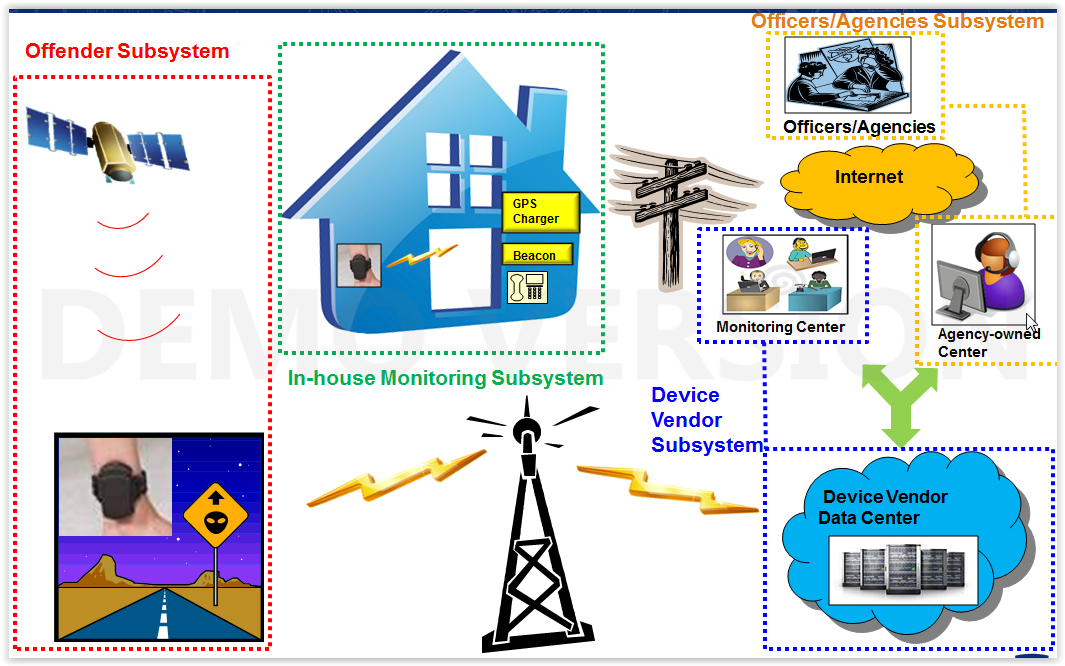
- Real-time dashboard: Map view showing all monitored individuals, color-coded by compliance status
- Alert queue: Prioritized list of violations and events requiring officer response
- Case management: Offender profiles, court orders, supervision conditions, contact history
- Reporting: Automated court reports, compliance summaries, zone violation histories
- Analytics: Pattern detection, behavioral risk scoring, caseload management metrics
- Mobile access: Field officers manage caseloads and respond to alerts from smartphones
Platform quality directly affects officer productivity. A system that generates 50 false alerts per day per officer creates alert fatigue and missed critical events. A system with accurate tamper detection and intelligent alert filtering lets officers focus on genuine violations.
Power Management: Why Battery Life Matters
Battery capacity determines how often monitored individuals must charge their devices — and charge compliance is one of the largest operational burdens in EM programs. The math:
| Battery Life | Charges per Month | Compliance Events (500 offenders) |
|---|---|---|
| 24 hours | 30 | 15,000 |
| 40 hours | 18 | 9,000 |
| 7 days | 4 | 2,000 |
| 6 months (BLE mode) | ~0 | ~0 |
Every missed charge creates a potential monitoring gap and a compliance violation that an officer must investigate. CO-EYE ONE’s 7-day battery at a 5-minute reporting interval is achieved through low-power LTE-M/NB-IoT cellular, efficient GNSS chipset management, and a 1,700 mAh battery optimized for duty cycling. The ONE-AC variant in BLE-connected mode extends this to 6 months by offloading cellular transmission to the paired i-Tracker or AMClient device.
What the Technology Cannot Do
Setting expectations correctly is important for agencies and courts:
- GPS ankle monitors cannot prevent a crime — they detect and report location violations after they occur
- They do not record audio or video — location and tamper data only
- Indoor positioning accuracy (5–300 meters) is not sufficient for room-level tracking inside buildings
- Signal gaps in underground areas, parking garages, or remote rural areas will produce data holes
- Battery depletion disables all tracking (except CO-EYE DUO’s independent anti-tamper circuit)