
Related guide: For the full 2026 overview of programs, devices, and procurement, read our pillar on electronic monitoring—GPS ankle monitors, costs, and technology trends.
Quick orientation: If you searched “ankle monitor,” you may be a corrections buyer writing an RFP, a defendant trying to understand court conditions, a family member worried about charging rules, or a journalist fact-checking a story. This guide explains—in plain English—what an ankle monitor is, how the technology works, which types exist, who wears them, what rules typically apply, what programs cost, and where the industry is heading. For a deeper procurement and architecture focus, continue with our GPS ankle monitor guide and the flagship hardware page for the CO-EYE ONE one-piece GPS ankle monitor.
What Is an Ankle Monitor?
An ankle monitor is a tamper-resistant electronic device worn around the ankle that tracks the wearer’s location and/or enforces geographic or schedule rules set by a court, parole board, probation department, pretrial services agency, or other supervising authority. You will see the same technology called an ankle bracelet, electronic ankle bracelet, electronic ankle monitor, or ankle monitor bracelet in court orders, vendor contracts, and news coverage—those phrases usually refer to the same class of supervised wearable, even when the underlying radio technology differs.
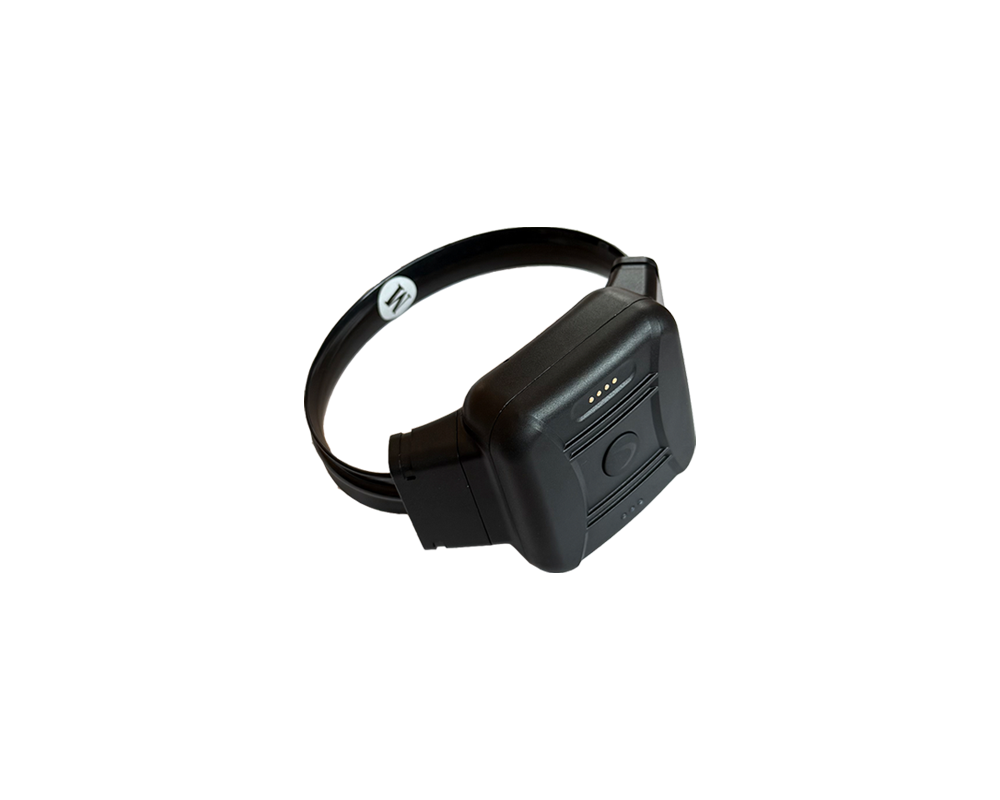
At a conceptual level, an ankle monitor answers two supervision questions: where is the person relative to authorized zones and curfews, and is the device still physically intact on the body? The first question is addressed with positioning technologies (satellite navigation, WiFi assistance, cellular network location, and—in home-detention architectures—short-range radio proximity to a base unit). The second is addressed with anti-tamper engineering on the strap and housing so that cutting, forcing, or unauthorized removal produces high-priority alerts for a monitoring center.
Ankle monitors are used worldwide in criminal justice and related programs: pretrial bail monitoring while a case proceeds, probation and parole in the community, house arrest and home detention, domestic violence supervision with victim-safety geographies, sex offender caseloads with exclusion zones, and—depending on jurisdiction—immigration supervision models that rely on electronic reporting as an alternative to detention. The common thread is community supervision at scale: technology that supports accountability without automatically defaulting to jail for every risk profile. See also: bail monitoring GPS ankle monitor benefits guide.
Manufacturing maturity matters because failures become courtroom problems. REFINE Technologies, the company behind the CO-EYE line featured on this site, has supplied offender monitoring hardware since 2004 and reports more than 200,000 devices deployed across 30+ countries. Those deployment statistics do not replace your agency’s pilot data, but they contextualize field exposure across climates, carrier environments, and enforcement cultures.
Readers should distinguish location monitoring from alcohol monitoring. A GPS-style ankle monitor bracelet emphasizes movement, schedules, and geofences. A transdermal alcohol bracelet measures alcohol through the skin on a different cadence and policy framework. Many jurisdictions use both modalities for different case types; conflating them produces confused RFPs and confused participants.
Finally, vocabulary shifts by stakeholder. Judges and defendants care about fairness, clarity, and proportionality. Officers care about alert quality and install time. IT teams care about encryption, APIs, and uptime. A complete understanding of “what is an electronic ankle monitor?” bridges those perspectives: a supervised wearable with evidentiary logging, not a consumer gadget with cosmetic durability.
When people ask “what is an ankle monitor bracelet in plain terms?”, the shortest honest answer is: a court- or agency-supervised wearable that proves where you are allowed to be, when you are allowed to be there, and whether the strap and housing are still intact. The longer answer—the one procurement teams need—includes sampling intervals, map artifacts, audit logs, and how alerts escalate from software queues to officer action. The same device can be described as an ankle bracelet in a docket entry and as an electronic ankle bracelet in a vendor datasheet; aligning language across judges, participants, and monitoring centers prevents costly misunderstandings during incidents.
Public discourse sometimes treats ankle monitors as either “soft punishment” or “surveillance overreach.” Operationally, they are conditions of release or supervision—a structured alternative to detention when a court or agency determines that continuous jail is not proportionate to risk. That framing matters for policy: the legitimacy of a program rests on clear rules, humane charging practices, prompt technical support, and alert workflows that distinguish true risk from sensor noise. Poor implementation can make a community sentence feel harsher than necessary; thoughtful implementation can preserve employment, family stability, and treatment engagement while maintaining accountability.
Journalists and researchers evaluating programs should request transparency on false alert rates, median time-to-contact after priority alarms, and participant complaint resolution SLAs. Hardware specifications alone never tell that story. Likewise, defendants researching “what is an ankle bracelet legally allowed to do?” should start with the written order and the monitoring agreement, then ask their officer for the participant handbook rather than relying on informal social media summaries.
For program-specific implementation depth, use our pillar guides on pretrial electronic monitoring, probation GPS monitoring, parole electronic monitoring, house arrest and home detention, domestic violence electronic monitoring, sex offender GPS monitoring, and immigration electronic monitoring. County procurement teams may also start from the county corrections electronic monitoring guide and the GPS ankle monitor buyer’s guide.
How Do Ankle Monitors Work?
Modern ankle monitors are best understood as three cooperating layers: positioning, communications, and tamper detection. Each layer has failure modes that show up in supervision—not as abstract “technical issues,” but as missed court dates, unnecessary arrests from false alerts, or—worst cases—undetected integrity loss. The sections below walk through how a typical one-piece electronic ankle bracelet functions end-to-end.
1) Positioning: from satellites to urban streets
Outdoor location for GPS-class devices begins with GNSS signals. Besides the United States GPS constellation, professional hardware often blends BeiDou, GLONASS, and Galileo observations to improve fix availability in urban canyons and mid-latitude obstructions. Fixes are converted into latitude/longitude coordinates and time stamps for mapping and compliance rules.
GNSS alone weakens indoors and in dense downtown cores, so credible platforms add WiFi and LBS (network-assisted) positioning where law and policy allow. The goal is fewer “unknown location” gaps that waste officer time or create ambiguous violation narratives. The CO-EYE ONE platform, for example, is specified with GPS + BeiDou + GLONASS + Galileo + WiFi + LBS positioning and under 2 meter GPS accuracy expressed as CEP under favorable conditions—always read vendor claims alongside test protocols and your local RF environment.
2) Communication: moving encrypted data to the monitoring center
Coordinates and tamper states are not useful until they reach a monitoring platform. Cellular modems transmit packets over mobile networks. Newer low-power IoT-oriented layers such as LTE-M and NB-IoT are common in current-generation telemetry hardware because they can extend battery life compared with smartphone-style broadband LTE, while many deployed fleets still include GSM compatibility for coverage continuity during carrier transitions.
CO-EYE ONE uses 5G-compatible LTE-M / NB-IoT / GSM cellular according to manufacturer specifications. Reporting intervals are configurable; public discussions often cite 1–5 minute cadences for active supervision, but your program’s legal standards and risk tiers should dictate the final schedule. The architecture is straightforward: device → encrypted cellular session → vendor or agency-hosted servers → rules engine → dashboards and officer notifications.
3) Tamper detection: integrity beats storytelling
Anti-tamper is not a single sensor—it is a claim about trust under sweat, temperature swings, vibration, and deliberate attack. High-confidence designs monitor physical integrity of the strap and case. CO-EYE ONE implements fiber optic strap and case tamper monitoring with zero false-positive detection for true integrity breaks: when the optical path is severed, the event is structural rather than inferred from skin optics.
Programs should define escalation trees that separate confirmed tamper events from benign RF brownouts or temporary charging issues, but the sensor physics matter: noisy tamper technologies can cost more in officer time than the hardware purchase price within a single budget cycle.
Integration in one-piece designs
One-piece electronic ankle monitors integrate GNSS, cellular modem, battery, and tamper subsystems into a single ankle-worn module. CO-EYE ONE packages this at 108 grams and 60×58×24 mm with IP68 waterproofing, magnetic charging, and under 3 second tool-free snap-on installation. That integration reduces pairing failures common in two-component systems where a participant must keep both a bracelet and a hub charged and linked.
For standards-aligned vocabulary on performance testing, see materials from the National Institute of Justice (NIJ); NIJ discussions help agencies compare devices on shared rubrics rather than marketing adjectives.
Participants sometimes worry whether normal life breaks the technology. Professional programs account for subway tunnels, brief indoor gaps, and charging sessions through policy and device state machines—if officers configure reasonable grace periods and if participants follow documented charging windows. From the agency side, the operational goal is to minimize unnecessary failure-to-report events caused by carrier handoffs or temporary RF shadows while preserving rapid escalation for genuine integrity loss. That balance is why modern platforms emphasize multi-path positioning and why fiber-based tamper sensors matter: they reduce the ambiguity that turns benign environmental interference into a midnight compliance crisis.
Reporting cadence is where marketing language often collides with supervision reality. A common operational band is one location report every one to five minutes during active community tracking, but courts may require different tiers for curfew hours, employment corridors, or lower-risk caseloads. Faster fixes consume more battery and airtime; slower fixes create wider “last known” windows during critical incidents. Agencies should document the chosen interval in policy, train participants on what it implies for map displays, and validate that dashboards show timestamps in a legally intelligible timezone—especially where daylight saving shifts or cross-county travel complicate schedules.
Security architecture extends beyond maps. Expect encrypted transport (for example TLS-class sessions), device authentication, role-based access on dashboards, and audit logs suitable for discovery. CO-EYE ONE lists HTTPS/SSL and AES128/256 in manufacturer materials alongside EN 18031 cybersecurity alignment—use those items as checklist starters when your IT security team reviews vendor questionnaires.
What Are the Different Types of Ankle Monitors?
There are four main types of ankle monitors: GPS ankle monitors that continuously track location using satellite navigation, RF (radio frequency) ankle monitors that verify home curfew compliance, SCRAM alcohol monitors that detect alcohol consumption through sweat, and combination devices that integrate GPS tracking with alcohol sensing. Smartphone monitoring apps are emerging as a fifth category for low-risk supervision.
Buyers and participants both benefit from a clean taxonomy. “Ankle monitor” is an umbrella term; the correct type depends on risk level, statutory requirements, indoor/outdoor needs, and budget. Below are four major categories you should recognize in RFPs and court orders.
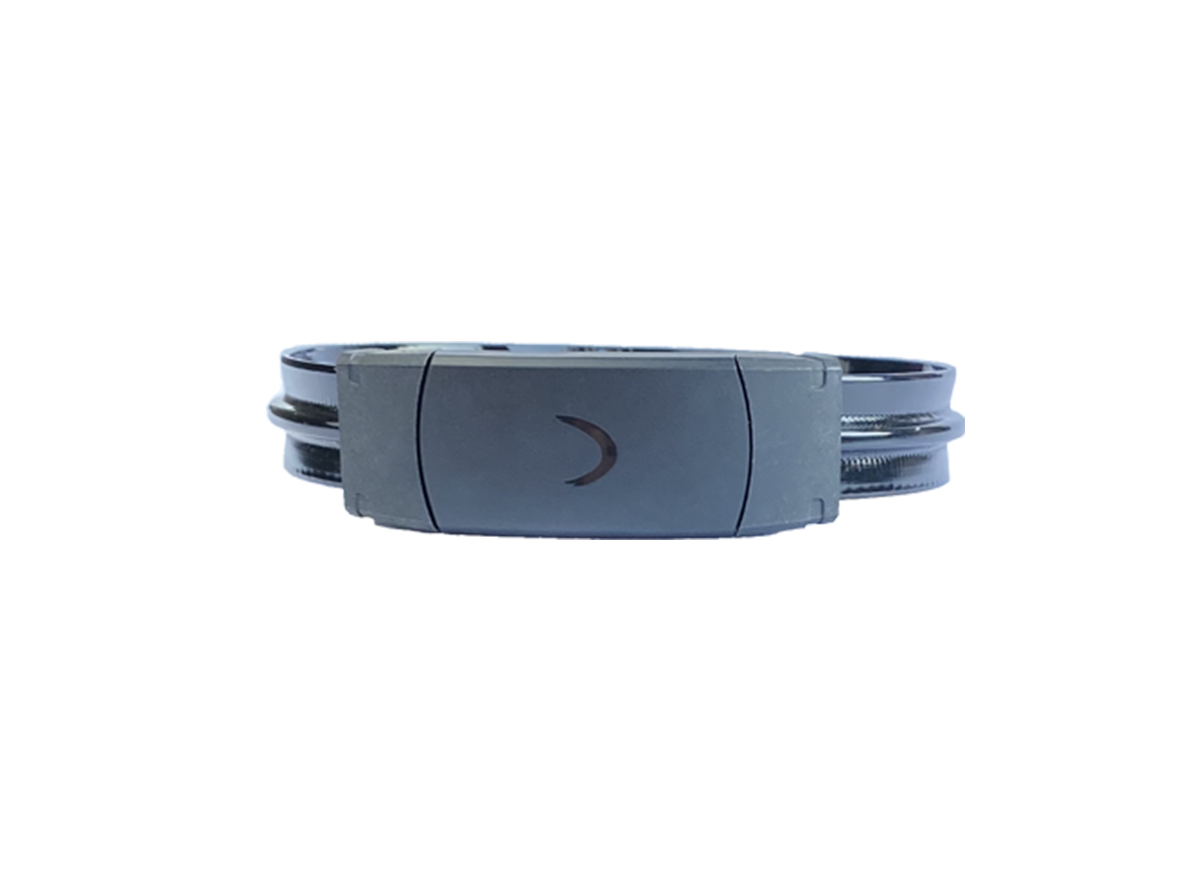 ankle bracelet and handheld unit” style=”width:100%;height:auto;border-radius:8px;box-shadow:0 2px 8px rgba(0,0,0,0.1);”/>
GPS ankle monitors
GPS ankle monitors (more precisely, multi-GNSS devices with cellular backhaul) provide continuous outdoor location tracking and software-defined geofences. They are standard for higher-risk community supervision where the court must know where a person is throughout the day, not only whether they are home at night.
Representative engineering targets include multi-constellation satellite positioning, WiFi/LBS assistance, LTE-M/NB-IoT/GSM cellular, and tamper-resistant straps. CO-EYE ONE exemplifies the one-piece GPS class with 7-day battery life in standalone mode at a 5-minute LTE-M/NB-IoT reporting interval, 1700 mAh capacity, and about 2.5 hours to recharge—useful benchmarks when comparing datasheets.
Agency takeaway: choose GPS when you need exclusion zones, route accountability, and granular histories—not merely nightly curfew confirmation.
RF (radio frequency) ankle monitors
RF ankle monitors focus on proximity between a bracelet transmitter and a fixed base station (sometimes called a home unit or home beacon). They are classic tools for house arrest and curfew models where the primary question is whether the participant is present at a programmed location during scheduled hours.
CO-EYE’s architecture pairs RF i-Bracelet transmitters with i-Tracker or HouseStation receivers. Manufacturer specifications cite 433 MHz ranges of 20 m indoor / 100 m outdoor for i-Tracker contexts and 50 m indoor / 200 m outdoor for HouseStation—actual performance varies with wall materials, interference, and antenna placement. RF programs can be cost-effective where full GPS traces are unnecessary.
Alcohol monitoring ankle bracelets
Alcohol monitoring ankle bracelets—often associated with transdermal continuous alcohol monitoring (for example SCRAM CAM-class devices)—measure alcohol excreted through the skin rather than reporting GNSS coordinates as their primary story. They serve DUI/DWI dockets, domestic violence cases with sobriety conditions, and specialty compliance calendars.
These devices solve a different supervision question than GPS. Some participants wear alcohol monitoring on one ankle and location monitoring on another in high-risk matrices; policies should explicitly define alert priorities and officer workflows when both modalities apply.
One-piece vs two-piece systems
One-piece systems integrate cellular, GNSS, battery, and tamper into a single ankle monitor bracelet. Advantages include simpler chain-of-custody during installs, no Bluetooth pairing drift between components, and often lower long-run operational labor. Tradeoffs include higher unit cost and participant ergonomics considerations—though modern one-piece designs such as CO-EYE ONE now reach 108 g with week-scale battery life.
Two-piece systems separate an ankle transmitter from a portable GPS/cellular hub or rely on smartphone tethering in some low-risk models. They can reduce per-component cost and support stepped-down supervision, but they introduce dual points of failure: lost hubs, uncharged secondary devices, and disputes about who forgot to pair.
TCO framing: one-piece often wins on officer minutes per week and false alert triage even when the sticker price is higher. Model both capital expense and fully loaded operating expense before you standardize.
Explore complementary reading on CO-EYE HouseStation, CO-EYE i-Bracelet and i-Tracker, and the architecture discussion in our GPS ankle monitor guide.
Procurement committees often ask for a decision matrix. A pragmatic approach scores each candidate on (1) tamper integrity and false-alert history, (2) battery life at your mandated fix interval, (3) cellular roadmap through expected contract life, (4) indoor/urban performance in your county seat, (5) officer install/removal time, (6) software integrations and data export, (7) spare-pool and RMA logistics, and (8) total cost of ownership—not unit price alone. Include a pilot phase that logs verified outcomes rather than trusting slide decks.
Finally, remember that “RF versus GPS” is not always either/or. Hybrid supervision models may use GPS for community accountability while retaining RF-style anchors for specific residence rules, or may step participants down from GPS to lighter modalities after sustained compliance. The technology should follow a validated risk assessment instead of forcing every case into the heaviest SKU.
Alcohol bracelets versus location bracelets: Confusion here derails RFPs. A GPS ankle monitor answers movement questions; a transdermal alcohol bracelet answers chemistry questions on a different measurement cycle. They use different sensors, different alert semantics, and often different vendor ecosystems. If your court order mandates sobriety monitoring, specify the alcohol modality explicitly. If it mandates exclusion zones and curfews, specify GNSS-class tracking. Mixing the two under a single vague “ankle bracelet” line item invites incompatible bids and unhappy participants who thought they were getting one thing and received another.
Selection checklist for agencies: Before you standardize on a SKU, validate indoor behavior in your courthouse district, measure officer time per install/removal, and review a month of anonymized alert histograms from a reference site if the vendor can share them. Ask how firmware updates ship, how strap inventory is replenished, and how international roaming is handled if your caseload includes travel conditions. The best electronic ankle monitor on paper is the one your watch floor can actually run without alert fatigue.
Who Is Required to Wear an Ankle Monitor?
Ankle monitors sit at the intersection of law, risk assessment, and social policy. The same hardware family can appear in superficially different dockets. Below are the major populations, what supervision typically emphasizes, and how to think about costs and outcomes.
Pretrial defendants
Pretrial use focuses on appearance assurance and community safety while cases move through court. Electronic conditions can accompany release orders that might otherwise default to detention for defendants who cannot post bail or who present moderate risk profiles. Supervision may combine GPS ankle bracelets with check-ins, drug testing, and treatment referrals depending on jurisdiction.
Probationers
Probation departments apply electronic ankle monitors to enforce movement schedules, treatment attendance, employment corridors, and exclusion zones. The emphasis is graduated sanctions: proportionate responses to violations that preserve rehabilitation goals while protecting victims and the public.
Parolees
Parole supervision layers GPS accountability on top of reentry planning: housing stability, employment, treatment compliance, and victim buffer zones. Because parole revocation can be swift, programs need trustworthy tamper semantics and clear participant education about charging.
House arrest / home detention participants
House arrest models historically leaned on RF presence detection; many modern programs blend GPS ankle monitors with schedule-based permissions for approved travel (work, medical, legal). The policy design matters as much as the radio—officers need realistic geofences and exception workflows.
Domestic violence defendants
Domestic violence programs may require exclusion zones, victim proximity alerts, and rapid dispatcher workflows. Hardware that minimizes false tamper storms helps ensure real victim-safety events are not buried in noise.
Sex offenders
Sex offender caseloads often involve school and park buffer zones, rigid curfews, and long monitoring horizons—including, in some states, lifetime supervision tiers for certain offenses. GPS granularity and software rules must align with statutory geography.
Immigration detainees
Some immigration supervision programs use ankle-mounted location devices or related reporting technologies as alternatives to detention, depending on agency policy and consent frameworks. Program ethics, language access, and data retention rules are especially sensitive here.
Economics and evidence
Budget discussions frequently compare roughly $5–$15 per day for electronic monitoring program fees with $75–$200+ per day for jail or detention when detention is not strictly necessary—exact figures vary by jurisdiction and what costs are included. Washington, D.C., policy dialogues have contrasted on the order of $750 per year supervision-oriented electronic monitoring figures with $50,000+ per year incarceration cost magnitudes.
On outcomes, a Florida study summarized in NIJ-oriented discussions associated electronic monitoring with a 31% reduction in recidivism across a multi-year window—evidence frequently cited when councils ask whether supervision technology moves metrics or merely optics. Evidence should always be paired with local implementation quality: alerts nobody triages do not improve safety.
Continue with pillar pages linked from our resources hub and contact sales for hardware questions on CO-EYE deployments.
Family members supporting a monitored loved one should anticipate practical needs: accessible outlets, extension cables approved by the program, child-care coverage during charging windows when applicable, and a written chain of contact for after-hours device faults. Agencies that publish a single-page “household FAQ” reduce panic calls and avoidable technical violations.
Defense counsel and pretrial services officers sometimes collaborate on least restrictive conditions that still satisfy public safety. Location monitoring can be paired with treatment, employment plans, or housing stabilization supports. The ankle monitor is then an accountability layer—not a substitute for services, and not a magical predictor of behavior. Courts increasingly expect that distinction to appear in supervision plans rather than treating the device as a stand-alone solution.
Victims’ advocates and family members often ask what data a program retains. While specifics belong to local policy and privacy statutes, the general pattern is that location histories become evidentiary business records subject to discovery rules, retention schedules, and access controls. That is another reason precision matters: sloppy geofence drawing can produce narratives that misrepresent intent. Good programs pair technology with human review before severe sanctions.
Employers and landlords sometimes discover an ankle bracelet visually before paperwork explains it. Stigma is real; some jurisdictions restrict who may disclose monitoring status. From a hardware perspective, smaller one-piece designs and waterproofing reduce unnecessary attention during lawful work—another practical reason agencies compare mass and IP ratings alongside radio specs.
What Are the Rules When Wearing an Ankle Monitor?
Rules are set by the court order, agency policy, and participant agreement—not by a blog article. That said, most programs share recurring themes participants should expect.
- Charging: GPS-class ankle monitor bracelets must be charged on a schedule. Some devices require daily charging; modern LTE-M/NB-IoT designs may reach multi-day endurance—CO-EYE ONE specifies about 7 days standalone at a 5-minute reporting interval. Follow the written charging routine provided at installation.
- Geographic conditions: Stay inside authorized inclusion zones and away from court-ordered exclusion zones (schools, victim addresses, bars, etc.). GPS uncertainty means agencies sometimes add buffers; participants should not “edge test” boundaries.
- Schedules and curfews: Software enforces time windows for approved movement. Work overtime, medical emergencies, and family crises require pre-approved exceptions where possible—not retroactive excuses.
- Tamper prohibitions: Do not submerge non-waterproof legacy devices; IP68 modern units are engineered for showering when used as directed. Never attempt to remove, shield, or physically defeat the strap or case.
- Check-ins: Some programs add voice, app, or in-person verification on top of automated tracking.
Consequences of violations usually follow graduated sanctions: warnings, stricter schedules, device swaps, hearings, or revocation to detention depending on severity and intent. Technical failures can look like violations from the outside—this is why credible programs document charging education, cable issuance, and help-desk responsiveness.
Agency designers: publish plain-language participant handouts that match what your software actually enforces. Mismatches between oral instructions and configured geofences generate preventable technical violations.
Travel and emergencies deserve explicit protocols. Medical emergencies should map to documented “verify-first” steps so dispatchers do not misread an ambulance route as an abscond attempt. Employment travel across county lines may require pre-approval polygons in software—not verbal assurances. Holiday schedules, daylight saving changes, and shift work should be reflected in monitoring calendars so night-shift workers are not punished by default curfew templates built for nine-to-five assumptions.
Participants: if you move residences, change jobs, or need recurring appointments, request formal modifications before relying on informal officer texts. Software rules eat informal texts; courts read exported logs.
Work, gym, and medical imaging: Some legacy devices were sensitive to submersion or certain electromagnetic environments. Modern IP68 units are engineered for showers and rain when used as directed, but MRIs and similar procedures require explicit medical protocols—often temporary device removal under documented chain of custody. If your program has not published imaging guidance, ask before you schedule scans. Similarly, metal detectors and body scanners at courthouses can trigger anxiety; knowing whether your ankle monitor bracelet is expected to remain on through security reduces preventable panic.
Household rules of thumb: keep the charging cable where it cannot be tripped over, photograph serial numbers at intake if your jurisdiction allows, and teach minors not to unplug supervised hardware. Many technical violations are simply domestic chaos, not criminal intent—clear written rules reduce those edge cases.
How Much Do Ankle Monitors Cost?
Costs split across participants, taxpayers, and service providers depending on jurisdiction. Think in terms of device acquisition, daily monitoring fees, and fully loaded program labor.
For agencies and vendors
Hardware quotes for professional electronic ankle monitors often fall roughly in the $150–$500 per unit range depending on generation, volume, spares, straps, and chargers—always request formal RFQs rather than relying on round numbers. Daily monitoring service fees in public discussions frequently land near $5–$15 per day for active GPS supervision tiers, with lower costs for minimal-check RF or app-assisted models.
For defendants and participants
Many jurisdictions charge participants $5–$25 per day (or equivalent weekly/monthly bundles) for electronic monitoring as a condition of release. Fee structures raise equity concerns; advocates monitor whether costs coerce guilty pleas or push low-income participants toward detention. Agencies should publish fee schedules and hardship processes transparently.
Program TCO
In mature deployments, device purchase often represents only 30–40% of multi-year total cost of ownership, while 60–70% flows to monitoring center staffing, alert verification, field services, inventory, training, software seats, and compliance reporting. A slightly more expensive ankle monitor that halves false tamper alerts or doubles battery life routinely pays for itself in officer hours.
Compare those figures with incarceration economics: when detention is not strictly necessary for public safety, electronic monitoring can reallocate jail bed days while preserving accountability—but only if alert workflows are disciplined and participant support is real.
Insurance, grants, and interagency cost-sharing sometimes obscure line items. When you build a budget, separate capital (devices), service (per-diem monitoring), integration (API work), training (rollout and refreshers), and lifecycle (strap replacement, RMA freight, spare pool). Hidden costs often appear in truck rolls—each unnecessary field visit driven by false tamper equals fuel, overtime, and opportunity cost. A vendor premium that reduces truck rolls can be net cheaper in year one.
Small agencies should pay special attention to minimum contract quantities and shared monitoring centers. Medium and large counties may operate in-house watch floors; rural programs may purchase bundled vendor monitoring. Either model can work if KPIs and data ownership are clear in the contract.
How Long Do You Wear an Ankle Monitor?
Duration is case-specific. A pretrial defendant might wear a unit for days to months until resolution; probationers can be ordered to months or years; parolees might see six months to multi-year terms tied to release conditions; house arrest spans weeks to months in many models; some sex offender supervision frameworks extend for many years or, in certain statutes, lifetime tiers with ongoing judicial review.
Judges and supervising officers set conditions; vendors supply tools. Because duration interacts with battery and ergonomics, agencies should select hardware that matches realistic charging cadence and participant demographics for the full term—not only the first thirty days after installation.
If you are a participant, your paperwork beats any internet summary: read the written order, ask your officer where approved travel is documented, and keep charging logs if disputes arise.
Case milestones that reset clocks: new charges, probation violations, or parole holds can extend monitoring even when a participant expected termination. Conversely, successful completion of treatment phases sometimes triggers step-down from continuous GPS to lighter check-ins. Because vendors bill by enrolled days, align court orders with vendor enrollment dates so nobody pays for “ghost” supervision after a lawful end date.
Termination of monitoring is a process, not a guess. Do not remove hardware until official removal is documented; premature self-removal remains a common source of technical violations even when someone “knows” their case ended. Officers should provide written closure steps and receipts where local rules require them.
Attorneys sometimes ask how duration interacts with appeals or case resets. Jurisdictions differ. The key is to align court minutes, monitoring vendor enrollment dates, and actual device return timestamps so nobody is supervised off-calendar due to administrative lag.
Ankle Monitor Technology: Past, Present, and Future
Electronic monitoring began in earnest with RF-only house arrest tether systems in the 1980s—technology that answered a narrow question about presence near a landline-era base unit. The 2000s accelerated GPS monitoring for community corrections as cellular data became practical for routine location uploads. Each decade layered better maps, better software rules, and harder cybersecurity expectations.
Today’s leading one-piece GPS ankle monitors reflect converged engineering: multi-constellation GNSS, LTE-M/NB-IoT low-power cellular, fiber optic tamper integrity, IP68 environmental sealing, and tool-free installs measured in seconds. CO-EYE ONE illustrates the present state with 108 g mass, under 2 m GNSS accuracy claims, 7-day standalone endurance at five-minute reporting, and under 3 second installation.
Future directions visible in manufacturer roadmaps include eSIM logistics and BLE-connected modes that extend battery life when a paired hub or smartphone provides intermittent backhaul—CO-EYE ONE-AC advertises up to 6 months battery life in BLE connected mode alongside standalone week-scale operation. Expect continued pressure on AI-assisted alert triage—not to remove human judgment, but to prioritize officer attention toward high-risk windows and confirmed integrity events.
Procurement tip: ask vendors for sunset letters on cellular radios, OTA update policies, and encryption standards. The device you buy today should survive a three-to-five-year contract without becoming a stranded asset.
On the horizon, supervision platforms will continue blending sensor fusion (GNSS + WiFi + behavioral cues) with better officer dashboards—highlighting anomalies rather than drowning staff in raw breadcrumbs. The ethical line is accountability without performative punishment: technology should make compliance easier to understand, not harder to survive through opaque rules.
For historical context, remember that early RF tethering solved a narrow problem well—home presence—with minimal data retention complexity. GPS introduced richer evidence and tougher privacy questions. Tomorrow’s systems must keep encryption strong, retention bounded, and participant notices plain-spoken as statutes evolve.
Interoperability and standards: Buyers increasingly expect APIs, bulk exports, and audit-friendly logs rather than proprietary silos. That pressure benefits public safety: when courts, prosecutors, defense counsel, and monitoring centers can agree on timestamps, coordinate systems, and tamper event codes, disputes shrink. NIJ-oriented narratives around offender tracking systems help agencies compare devices on shared rubrics instead of slogan sheets—useful whether you are refreshing a 1990s RF program or launching a new pretrial GPS cohort.
Participant experience as a design input: Charging friction and false tamper storms are not “soft” issues; they drive revocation hearings. The move toward one-piece ankle monitors under ~110 grams, week-scale battery life, and tool-free installs reflects field lessons from officers who got tired of hour-long truck rolls and from participants who lost jobs over dead batteries. Technology trends are meaningful only when they reduce harm and workload together.
Frequently Asked Questions About Ankle Monitors
What is an ankle monitor used for?
It supports court- and agency-ordered community supervision: location accountability, home detention verification, and—in different device classes—alcohol monitoring. Programs span pretrial, probation, parole, DV, sex offenses, and some immigration contexts.
Can you shower with an ankle monitor?
Follow your program’s rules. Many professional devices with IP68 ratings are designed for showering when used as directed; legacy or damaged units may not be. When in doubt, ask your officer before exposing hardware to water beyond everyday splashes.
How far can you go with an ankle monitor?
GPS devices track nationwide or internationally subject to cellular coverage and court geographies. RF home systems verify proximity to a base station with range limits that depend on the installation and hardware class.
Do ankle monitors have microphones or cameras?
Mainstream GPS ankle monitors focus on location and tamper integrity. Do not assume audio/video capabilities; if present on a specific model, they should be documented in policies and contracts.
Can ankle monitors detect drugs or alcohol?
Standard GPS bracelets do not. Continuous alcohol monitoring uses transdermal bracelets; drug use is typically addressed through separate testing programs.
What happens if your ankle monitor dies?
Reporting stops; most programs require immediate charging and prompt contact with the monitoring center. Preventive charging avoids the problem.
Can you remove an ankle monitor yourself?
Unauthorized removal is unlawful and triggers tamper alerts on well-designed equipment. Always use official removal procedures.
How accurate is an ankle monitor’s GPS?
High-end one-piece devices may claim under 2 meter accuracy under favorable sky view; urban and indoor performance varies. Align purchases with standardized testing discussions such as NIJ Standard 1004.00 themes.
For product specifications and pilot planning, visit CO-EYE ONE, browse resources, and contact sales for pricing and integration questions.