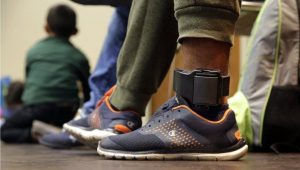

A GPS tracking bracelet is the everyday name courts, probation officers, and pretrial services use for a corrections-grade wearable that continuously answers two supervision questions: where is the person in the community, and is the hardware still physically intact? In procurement documents the same class of equipment may appear as an ankle GPS tracker, electronic ankle bracelet, offender tracking bracelet, or GPS monitoring bracelet—different labels, similar operational job: GNSS positioning, encrypted cellular reporting, tamper-aware straps, and software rules for geofences and schedules.
This 2026 guide explains how modern GPS tracking bracelet hardware works under the hood, which architectures agencies actually buy (one-piece versus two-piece, GPS versus RF assist, active versus passive logging), who uses them across the justice system, what specifications matter in RFPs, how leading platforms compare on published datasheets, what programs cost relative to jail, and where hardware is heading next. For equipment selection workflows, pair this article with our GPS ankle monitor buyer’s guide, the flagship one-piece page for CO-EYE ONE, and related deep dives on how electronic monitoring works (2026) and the GPS ankle bracelet complete guide.
Independent standards vocabulary and industry reporting are summarized by the National Institute of Justice (NIJ) and companion explainers on ankle-monitor.org. For pretrial and surety-adjacent education written for a parallel audience, see REFINE ID (refineid.com).
What Is a GPS Tracking Bracelet?
At a functional level, a GPS tracking bracelet is a supervised wearable that combines a GNSS receiver, power management, tamper sensors, and a cellular modem in a tamper-evident enclosure strapped to the ankle (or another court-approved mount in some policies). It is not interchangeable with consumer fitness wearables: justice-sector ankle GPS trackers are engineered for continuous wear, evidentiary logging, and integration with monitoring centers that triage thousands of alerts per month.
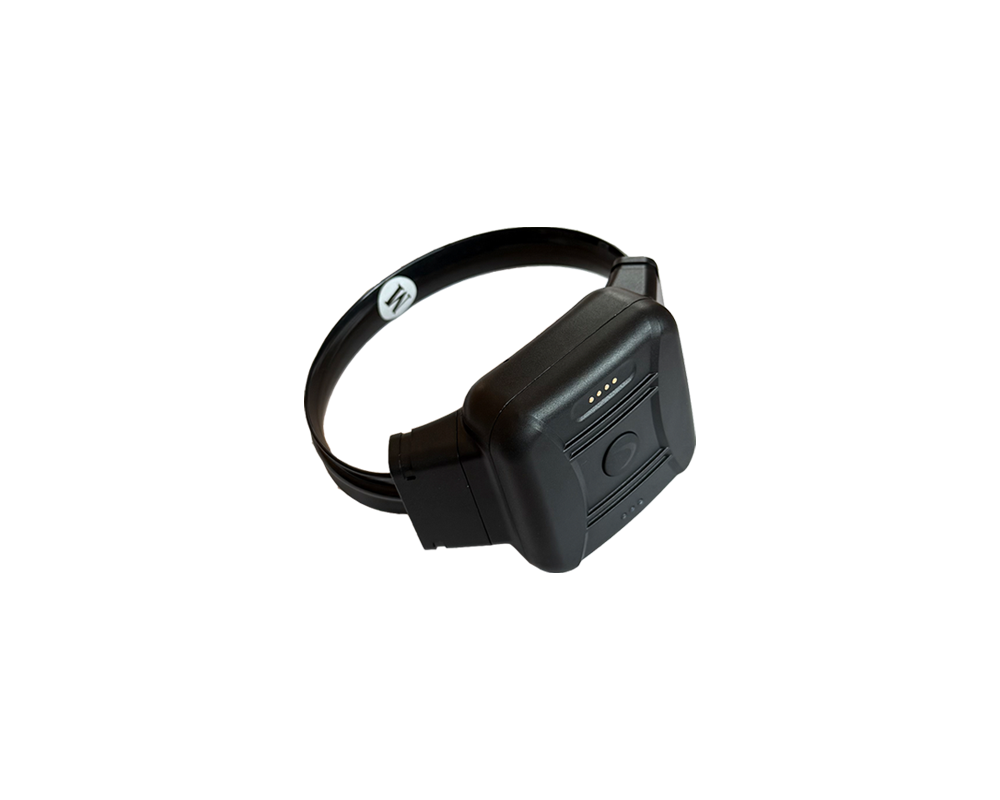
When people search for an ankle GPS tracker, they usually mean this same class of hardware—real-time location accountability with strap integrity signaling. An electronic ankle bracelet can be GPS-primary, RF-tethered to a home unit, or hybrid depending on program design; this article focuses on GPS-primary bracelets while noting where RF and smartphone modalities fit.
Terminology on dockets and bond forms varies. “Offender tracking bracelet” and “GPS monitoring bracelet” often refer to identical SKUs in vendor catalogs. What procurement teams must pin down is the operational envelope: fix cadence, horizontal accuracy class under urban test vectors, tamper false-positive behavior, carrier roadmap, export formats for discovery, and total cost of ownership including officer triage time—not the marketing noun in the court order.
REFINE Technologies, manufacturer of the CO-EYE line referenced on this site, reports more than 200,000 devices deployed across 30+ countries in public materials. Scale signals field exposure across climates and carrier ecosystems; it does not replace your agency’s own pilot statistics.
How GPS Tracking Bracelets Work
GNSS technology (GPS and beyond)
Global Navigation Satellite Systems power every serious community-supervision bracelet in this class. GPS is the familiar U.S. constellation, but professional units blend GPS, BeiDou, GLONASS, and Galileo to improve fix availability in urban canyons and partial sky view. Many designs add WiFi fingerprinting and LBS (network-assisted) positioning where law and contracts permit, shrinking “unknown location” gaps that otherwise generate unnecessary callbacks.
Representative high-end one-piece hardware such as CO-EYE ONE is specified at under 2 m GPS accuracy expressed as CEP under stated conditions—tighter than many legacy hub-reported paths—while combining GPS+BeiDou+GLONASS+Galileo+WiFi+LBS per manufacturer documentation.
Cellular communication
Coordinates are not actionable until they reach the monitoring platform. LTE-M and NB-IoT are low-power wide-area layers built for telemetry: they typically improve battery life versus smartphone-style LTE and can penetrate buildings better than aging 2G-only modules, while GSM remains relevant for global coverage during carrier transitions. CO-EYE ONE lists 5G-compatible LTE-M / NB-IoT / GSM alongside HTTPS/SSL and AES128/256 encryption in published specs—baseline security questions your IT security office should still verify end-to-end.
Tamper detection
Anti-tamper subsystems watch strap continuity and case intrusion. Technologies include optical fiber loops, capacitive planes, and biometric-style skin-contact inference. Sensor physics drives false alert economics: probabilistic skin sensors can misread sweat, temperature, and motion, while deterministic fiber optic strap and case monitoring targets structural integrity. CO-EYE ONE advertises fiber optic tamper detection on strap and case with a zero false-positive claim for true optical continuity breaks in manufacturer materials—validate in your own pilot rather than assuming identical rates across demographics.
From fix to officer workflow
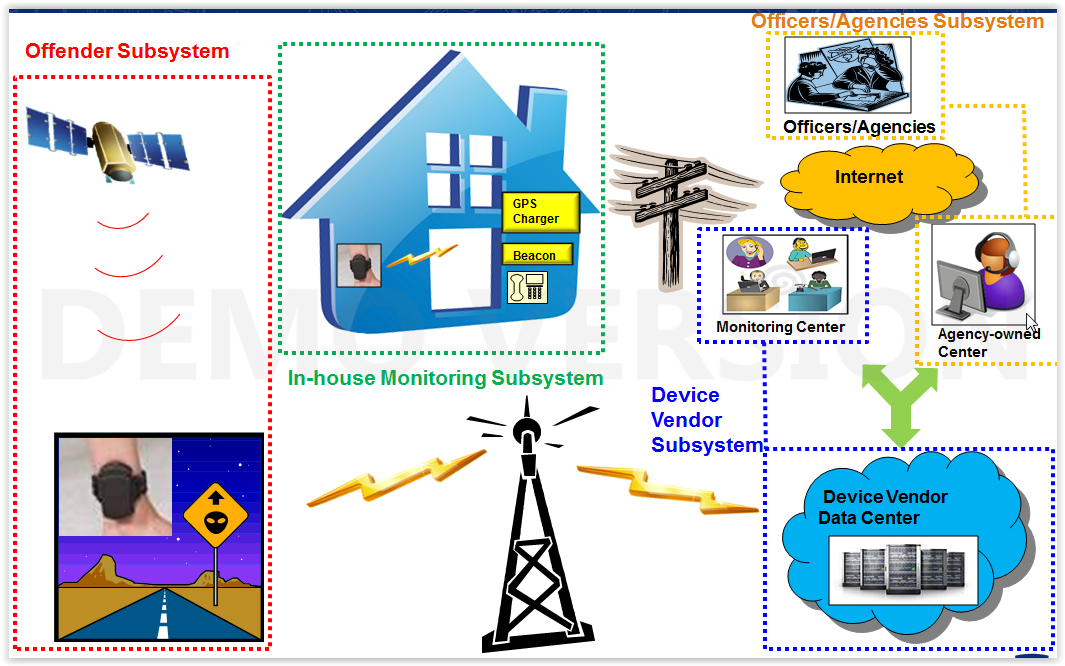
Each fix carries metadata: UTC timestamp, fix quality, firmware build, and cellular routing. Platforms apply inclusion corridors, exclusion zones, curfews, and speed sanity checks. According to NIJ-oriented discussions of offender tracking, repeatable test language matters because courts need trustworthy event semantics—not dashboard colors alone.
Types of GPS Tracking Bracelets
One-piece vs two-piece
One-piece designs integrate GNSS, modem, battery, and tamper sensors in a single ankle module—no separate hub to pair or forget on a charger. Two-piece kits separate a short-range ankle beacon from a portable GPS/cellular hub; they can fit certain stepped-supervision models but introduce pairing drift and dual-component inventory. CO-EYE ONE illustrates the one-piece approach at 108 g and 60×58×24 mm with under 3 second snap-on, tool-free installation.
GPS-primary vs RF-centric
A GPS monitoring bracelet reports geographic coordinates in the field. RF-centric bracelets emphasize proximity to a fixed home receiver for curfew enforcement; many legacy house arrest programs began as RF-only before GPS roaming permissions expanded approved travel corridors.
Active vs passive (logging) orientations
Active (real-time) bracelets transmit on a schedule—commonly one- to fifteen-minute intervals for higher-risk cohorts. Passive or logger-style architectures buffer fixes for later download; they suit niche workflows but are uncommon where courts expect near-real-time exclusion zone enforcement.
Who Uses GPS Tracking Bracelets
Pretrial and courts
Pretrial programs deploy GPS tracking bracelet programs to manage flight risk and community safety while cases resolve. Policy design should align reporting intervals with risk tiers. See electronic monitoring: how it works (2026) for modality definitions that match court orders.
Probation and parole
Community supervision teams enforce employment corridors, treatment attendance, graduated sanctions, and victim buffer zones. Alert credibility matters because revocations hinge on whether supervisors trust the queue.
House arrest and home detention
Residential supervision blends historical RF strengths with GPS permissions for approved movement. Modern ankle GPS tracker deployments often replace ambiguous “home only” narratives with geofenced schedules participants can understand in plain language.
Domestic violence, sex offender, and immigration caseloads
Domestic violence dockets may require rapid escalation when exclusion geometries are breached. Sex offender statutes frequently mandate school and park buffers where horizontal accuracy and stable geofence engines matter. Some immigration supervision frameworks use location technologies as alternatives to detention depending on agency rules—data retention and language access deserve explicit policy attention. See also our sex offender GPS monitoring guide.
Evidence note: Florida research summarized in NIJ-aligned discussions associated electronic monitoring with roughly a 31% reduction in reoffending in the cited study window—useful population-level context, not a guarantee for any single vendor or county workflow.
Key Features to Look For
- Battery life: Demand written endurance at your mandated fix interval. CO-EYE ONE specifies about 7 days standalone at a 5-minute interval on LTE-M/NB-IoT with a 1700 mAh cell and roughly 2.5 hours to recharge.
- Accuracy: Map vendor horizontal error claims to your urban test plan; sub-2 m class specs support tighter geofences with fewer ambiguous edge crossings when sky view cooperates.
- Waterproofing: Continuous wear implies shower-safe sealing. CO-EYE ONE lists IP68.
- Tamper detection: Score fiber-based integrity sensing versus probabilistic skin inference; measure false positives during pilot.
- Form factor and install time: Mass and edges drive skin complaints and covert loosening risk; fast installs reduce field labor—CO-EYE ONE cites 108 g, compact dimensions, and under 3 second snap-on fitting.
- Certifications and roadmap: International bids should verify CE/FCC documentation, battery transport tests, and explicit cellular sunset migration plans.
Continue scoring vendors inside the GPS ankle monitor buyer’s guide and compare narrative context in the GPS ankle bracelet complete guide.
GPS Bracelet Technology Comparison 2026
The table summarizes publicly described positioning for frequently evaluated platforms. Confirm current datasheets, bands, and service models in your RFP—SKUs change by region and generation.
| Platform (indicative) | Architecture | Weight / size (vendor framing) | Battery (typical claims) | GNSS / accuracy | Anti-tamper (high level) | Cellular |
|---|---|---|---|---|---|---|
| CO-EYE ONE | One-piece | 108 g; 60×58×24 mm | ~7 days @ 5-min LTE-M/NB; 1700 mAh; ~2.5 h charge | GPS+BeiDou+GLONASS+Galileo+WiFi+LBS; <2 m CEP (stated) | Fiber optic strap + case; zero false-positive on true optical breaks (mfr.) | 5G-compatible LTE-M / NB-IoT / GSM |
| SCRAM GPS (family) | Two-piece (tracker + strap) | Combined mass varies by generation | Often ~40 hours class (interval-dependent) | Model-dependent | PPG / skin-contact family approaches (vendor) | 4G LTE-focused in vendor materials |
| BI LOC8 (family) | Two-piece | ~173 g class for LOC8 XT in public comparison sheets | Often ~24–48 h (model-dependent) | Vendor-specified; validate under your cadence | Proprietary (often NDA detail) | Common managed-service deployments in U.S. programs |
| Buddi (SKU-dependent) | One-piece lines available | Compact (model-dependent) | Confirm per datasheet | Model-dependent | Model-dependent | Validate North American bands and support footprint |
For a broader brand narrative and procurement checklist, cross-read GPS ankle bracelet: complete guide and the product specification tables on CO-EYE ONE.
How Much Does a Supervised GPS Bracelet Cost?
Per-day program fees: Budget stories often anchor active GPS supervision near roughly $5–$15 per day per participant when counties bundle vendor monitoring, cellular, and platform fees—exact figures swing by risk tier, call-center hours, and payer rules.
Jail contrast: The same narratives frequently compare those daily fees with $75,000+ per year fully loaded incarceration costs when detention is not strictly necessary for public safety. The comparison illustrates fiscal pressure toward community supervision; it does not claim GPS suits every defendant or offender profile.
Total cost of ownership: Model spare pools (often 10–20% above active census), alert triage labor, field swaps, training, and evidence exports. A noisy offender tracking bracelet that false-alarms constantly can cost more in officer time than a higher sticker-price unit with quieter integrity semantics.
The Future of GPS Tracking Bracelets
Three forces shape the next generation of the GPS tracking bracelet category: carrier evolution (LTE-M/NB-IoT migration as legacy RATs sunset), sensor fusion (tighter indoor/outdoor handoff with disciplined privacy governance), and analytics (better triage, not just more dots on a map). NIJ-influenced language on testing and reporting will keep pushing vendors toward reproducible performance claims rather than billboard numbers.
Procurement teams should write RFPs that reward documented OTA update policies, spare RMA turnaround, and measured false-tamper rates from reference sites—not slide decks alone. pretrial-focused education on community release economics remains useful on refineid.com.
Choosing Your Next Ankle GPS Platform
Use a weighted scorecard when procuring any GPS tracking bracelet: battery at your mandated interval, GNSS accuracy in your built environment, tamper trust, cybersecurity posture, software integrations, and fully loaded operating cost. Pilot parallel devices on a small cohort before county-wide cutover; log verified false tampers, median reconnect time after indoor stress tests, and officer satisfaction.
When you are ready to evaluate CO-EYE hardware, start with CO-EYE ONE specifications and contact sales for pricing, workshops, and deployment planning.
FAQ: Supervised GPS Bracelets
What is a GPS tracking bracelet?
It is a justice-sector ankle-worn device that uses GNSS positioning and cellular networks to report location on a schedule, with tamper sensors on the strap and housing, used in pretrial, probation, parole, and related supervision—not a consumer fitness wearable.
How does a GPS tracking bracelet work?
It receives satellite navigation signals, computes fixes, encrypts data, and transmits location and tamper states over cellular links to a monitoring platform that applies geofences, schedules, and alerts.
Is an ankle GPS tracker the same as an electronic ankle bracelet?
Often yes in everyday language; “electronic ankle bracelet” can also include RF-only or alcohol-monitoring modalities, so RFPs should name the supervision goal (continuous GPS, home presence, sobriety, etc.).
How accurate are GPS monitoring bracelets?
Advanced one-piece designs may claim sub-2 meter horizontal accuracy under favorable sky view; always validate in your urban mix and document test methodology.
How long does the battery last on an ankle GPS tracker?
Typical industry devices range from about one day to one week or more depending on radios and interval; CO-EYE ONE specifies about seven days at five-minute LTE-M/NB-IoT reporting.
How much does GPS bracelet monitoring cost?
Public program discussions often cite on the order of $5–$15 per day for monitoring compared with far higher incarceration costs when jail is unnecessary—confirm with your vendor statement of work.
Does electronic monitoring reduce reoffending?
NIJ-cited summaries reference Florida findings around a 31% reduction associated with electronic monitoring in the study context; local results still depend on implementation quality.
Last updated: March 2026. CO-EYE ONE specifications are per manufacturer documentation; competitor rows reflect public materials—confirm before award.